Showing posts with label Poetry. Show all posts

16 February 2022

The death of Giosuè Carducci – poet

National poet’s work inspired the fight for a united Italy

Carducci's funeral procession drew huge crowds on to the streets of Bologna
Carducci's funeral procession drew
huge crowds on to the streets of Bologna
The poet Giosuè Carducci, who was the first Italian to win the Nobel prize in Literature, died on this day in 1907 in Bologna.

Aged 71, he passed away at his home, Casa Carducci, near Porta Maggiore, a kilometre and a half from the centre of the Emilia-Romagna city. He had been in ill health for some time and was not well enough to travel to Stockholm to receive his prize, awarded in 1906, which was instead presented to him at his home.

His funeral at the Basilica di San Petronio in Piazza Maggiore followed a procession through the streets that attracted a huge crowd.

Carducci had been one of the most influential literary figures of his age and was professor of Italian literature at Bologna University, where he lectured for more than 40 years.

The Italian people revered Carducci as their national poet and he was made a senator for life by the King of Italy in 1890.

Carducci was born in 1835 in the hamlet of Val di Castello, part of Pietrasanta, in the province of Lucca in Tuscany and he spent his childhood in the wild Maremma area of the region.

After studying at the University of Pisa, Carducci was at the centre of a group of young men determined to overthrow the prevailing Romanticism in literature and return to classical models.
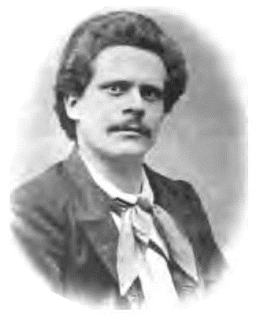
Carducci's poetry became an inspiration to patriots fighting for a united Italy
Carducci's poetry became an inspiration
to patriots fighting for a united Italy
Carducci was attracted to Greek and Roman authors and also studied the works of Italian classical writers such as Dante, Torquato Tasso and Vittorio Alfieri.

The poets Giuseppe Parini, Vincenzo Monti and Ugo Foscolo were influences on him, as is evident from his first book of poems, Rime, produced in 1857.

In 1863, Carducci showed both his great power as a poet and the strength of his republican, anticlerical feelings in his Inno a Satana - Hymn to Satan - and, in 1867, in his Giambi ed epode - Iambics and Epodes - inspired by the politics of the time.

The best of Carducci’s poetry came in 1887 with Rime nuove - New Rhymes - and Odi Barbare - Barbarian Odes - which evoke the landscape of the Maremma and his childhood memories, the loss of his only son, and also recall the glory of Roman history.

Carducci’s enthusiasm for the classical led him to adapt Latin prosody to Italian verse and to imitate Horace and Virgil. His poetry was to inspire many Italians fighting for independence and for a united Italy.

The poet became the first Italian to receive the Nobel Prize for Literature in 1906. According to the Swedish Academy this was awarded ‘not only in consideration of his deep learning and critical research, but above all as a tribute to the creative energy, freshness of style and lyrical force, which characterise his poetic masterpieces’.

Carducci also wrote prose prolifically in the form of literary criticism. biographies, speeches and essays and he translated works by Goethe and Heine into Italian.

After his funeral on 19 February he was laid to rest at the Certosa di Bologna, the city’s monumental cemetery.

Pietrasanta's Cattedrale di San Martino
Pietrasanta's Cattedrale
di San Martino
Travel tip:


Pietrasanta, the town where Carducci was born, is on the coast of northern Tuscany, to the north of Viareggio. It had Roman origins and part of a Roman wall still exists. The medieval town was built in 1255 upon the pre-existing Rocca di Sala fortress of the Lombards and the Duomo (Cathedral of San Martino) dates back to the 13th century. Pietrasanta grew in importance in the 15th century due to its marble, the beauty of which was first recognised by the sculptor, Michelangelo.

Find accommodation in Pietrasanta with Booking.com


Leonardo Bistolfi's monument to Giosuè Carducci in the garden of the Casa Carducci in Bologna
Leonardo Bistolfi's monument to Giosuè Carducci
in the garden of the Casa Carducci in Bologna
Travel tip:

The Museum of the Risorgimento in Bologna is now housed on the ground floor of the house where Carducci died in Piazza Carducci in the centre of the city. The museum has exhibits and documents that chronicle the history of the Risorgimento from the Napoleonic invasions of Italy to the end of the First World War. The museum was first inaugurated in 1893 and moved to Casa Carducci, the last home of the poet, in 1990.  In the garden, there is an imposing monument to Carducci by the sculptor Leonardo Bistolfi.

Stay in Bologna with Booking.com


More reading:

How the revolutionary Ugo Foscolo expressed Italian sentiment in verse

Why Dante Alighieri remains in exile from his native Florence

The nobleman whose poetry inspired the oppressed

Also on this day:

1740: The birth of type designer Giambattista Bodoni

1918: The birth of designer Achille Castiglioni

1935: The birth of vocalist Edda Dell’Orso

1970: The birth of footballer Angelo Peruzzi

1979: The birth of motorcycle world champion Valentino Rossi

(Picture credits: Pietrasanta cathedral by Stephencdickson; Bologna monument by Nicola Quirico; via Wikimedia Commons)

Home


18 November 2021

Attilio Bertolucci - poet

Pastoral scenes and family life inspired writer from Parma

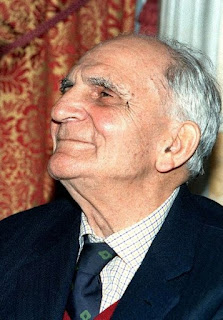
Attilio Bertolucci was an important figure in 20th century Italian poetry
Attilio Bertolucci was an important
figure in 20th century Italian poetry 
Writer and poet Attilio Bertolucci was born on this day in 1911 in San Lazzaro, a hamlet in the countryside near Parma in Emilia-Romagna.

Bertolucci wrote about his own family life and became renowned for the musicality of his language while describing humble places and human feelings. He became an important figure in 20th century Italian poetry and was the father of film directors Bernardo and Giuseppe Bertolucci.

Attilio Bertolucci was born into a middle-class, agricultural family. He began writing poems at the age of seven and published his first collection of poems, Sirio, when he was 18.

He went to study law at the University of Parma when he was 19, but soon gave it up in favour of literary studies. He also went to the University of Bologna to study art history. He went on to teach art history at the Maria Luigia boarding school in Parma.

He became a book reviewer and theatre and film critic for the Parma newspaper, La Gazzetta, and developed anti-fascist feelings along with other intellectuals at the time. He worked as foreign editor for the poetry publisher, Guanda, and introduced a range of modern poetry from overseas to Italy.

When he was 20, his work, Fuochi di Novembre, earned him the praise of the Italian poet Eugenio Montale, which enhanced his reputation.

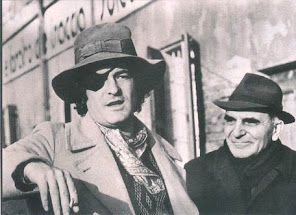
Bertolucci with Bernardo (left), the elder of his two sons, during the shooting of his 1975 epic, Novecento
Bertolucci with Bernardo (left), the elder of his two
sons, during the shooting of his 1976 epic, Novecento 

Bertolucci married Ninetta Giovanardi in 1938 but they continued to live in his parental home near Parma. They had their first son, Bernardo, in 1941 and their younger son, Giuseppe, in 1947.

In 1951 he published La capanna Indiana, which won the Viareggio Prize for Literature. In the same year the family moved to Rome. Among the readers who admired his work was the film director Pier Paolo Pasolini, who became a close friend.

In Rome, Bertolucci worked for the publisher, Garzanti, for Italian radio, and for the daily newspaper, La Repubblica.

From the 1960s onwards the Bertolucci family alternated between their apartment in Rome, their 17th century house in the Apennine village of Casarola, which they visited  in the spring and summer, and their home by the sea in the Ligurian village of Tellaro, where they lived during the autumn. In nearby Lerici, Bertolucci became president of the committee for the Lerici Prize and biennial literary conference.

The cover of Bertolucci's first published poetry
The cover of Bertolucci's
first published poetry

He published Viaggio d’inverno in 1971, which is considered one of his finest works. It was seen as marking a change to a more complex style from that of his earlier works, where he used humble language to describe pastoral situations.

From 1975, he directed the prestigious literary review magazine Nuovi Argomenti, along with Enzo Siciliano and Alberto Moravia. In 1984 he won another Viareggio Prize for the narrative poem Camera da letto.

His last work was La lucertola di Casarola, a collection of works from his youth, which he published in 1997.

Attilio Bertolucci died in Rome in 2000 at the age of 88. Selections of his poetry have been translated into English by the poets and translators, Charles Tomlinson and Allen Prowle.

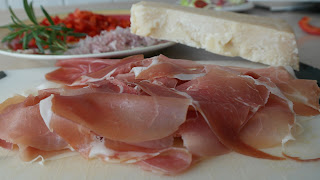
Parma is famous for Prosciutto di Parma and Parmigiano-Reggiano cheese
Parma is famous for Prosciutto di Parma and
Parmigiano-Reggiano cheese
Travel tip:

Parma is an historic city in the Emilia-Romagna region, famous for its ham (Prosciutto di Parma) and cheese (Parmigiano-Reggiano), the true ‘parmesan’. The city was given as a duchy to Pier Luigi Farnese, the illegitimate son of Pope Paul III, and his descendants ruled Parma till 1731. The composer, Verdi, was born near Parma at Bussetto and the city has a prestigious opera house, the Teatro Regia. Parma is divided into two parts by a stream. Attilio Bertolucci once wrote about it: ’As a capital city it had to have a river. As a little capital it received a stream, which is often dry.’ This refers to the time when Parma was capital of the independent Duchy of Parma.

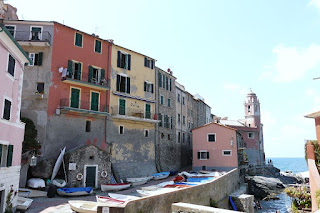
Boats fill the tiny quayside at the fishing village of Tellaro in Liguria, where Bertolucci had a home
Boats fill the tiny quayside at the fishing village
of Tellaro in Liguria, where Bertolucci had a home
Travel tip:

Tellaro, where the Bertolucci family had a seaside home, is a small fishing village on the east coast of the Gulf of La Spezia in Liguria and a frazione of the comune of Lerici. Tellaro has been rated as one of the most beautiful villages of Italy by the guide, I Borghi più belli d’Italia. The Romantic poet Percy Bysshe Shelley and his writer wife, Mary Shelley, lived there in the rented Casa Magni in the early 1820s and drew inspiration from their beautiful surroundings for their writing until Shelley’s death at sea in 1822.

Also on this day:

1626: The consecration of St Peter’s Basilica in Rome

1630: The birth of Eleonora Gonzaga, Holy Roman Empress

1804: The birth of Alfonso Ferrero La Marmora, military leader and statesman

1891: The birth of architect and designer Gio Ponti


Home


20 April 2020

Pietro Aretino – writer

Satirist was both admired and feared by the nobility


Pietro Aretino, captured by his friend, the Venetian painter Titian in around 1545
Pietro Aretino, captured by his friend, the
Venetian painter Titian in around 1545
Poet, playwright and prose writer Pietro Aretino was born on this day in 1492 in Arezzo in Tuscany.

Aretino became famous for his satirical attacks on important figures in society and grew wealthy from the gifts he received from noblemen who feared being exposed by his powerful pen.

Although he was the son of an Arezzo shoemaker, he pretended to be the natural son of a nobleman and took his name from Arretium, the Roman name for Arezzo.

He moved to Perugia while still very young and lived the life of a painter, but in 1517 when he was in his early twenties, Aretino moved on to Rome, where he secured the patronage of the rich banker, Agostino Chigi.

When Pope Leo X's pet elephant, Hanno, died, Aretino wrote a satirical pamphlet, The Last Will and Testament of the Elephant Hanno, cleverly mocking the leading political and religious figures in Rome at the time. This established his fame as a satirist. He then wrote a series of viciously satirical lampoons supporting the candidacy of Giulio de’ Medici for the papacy. Giulio duly became Pope Clement VII in 1523.

Despite being supported by the Pope and his patron, Chigi, Aretino was finally forced to leave Rome because of writing a collection of ‘lewd sonnets’, sonetti lussuriosi, in 1524.

The painter Titian became a good friend
and supporter of Aretino
By 1527 Aretino had settled in Venice where he was admired but also feared by those in power and he received enough money to be able to live in a grand - albeit dissolute - style.

He became a close friend of the painter Titian and sold paintings on Titian’s behalf to Francis I, the King of France.

Titian’s portrait of Aretino, painted in around 1545, shows him wearing a gold chain that he had received as a gift from the King of France.

It is claimed Francis I of France and Charles V of Spain both paid him a pension at the same time, each hoping he would damage the reputation of the other.

Aretino wrote six volumes of letters that were published from 1537 onwards which reveal his cynicism and justify the name he gave to himself, ‘flagello dei principe’ - scourge of princes.

He was particularly vicious in his attack on Romans, not forgetting that they had forced him to move to Venice. In his Ragionamenti - Discussions - written between 1534 and 1536, Roman prostitutes reveal to each other the moral failings of many of the important men in the city and in his Dialogues, he examines the carnality and corruption among Romans at the time.

Aretino’s dramas present well observed pictures of lower-class life, free from the conventions that burdened other contemporary dramas. The best known is Cortigiana - The Courtesan - published in 1534, a lively and amusing insight into the life of the lower classes in Rome.

Aretino captured in another portrait  by Titian, painted in 1512
Aretino captured in another portrait
by Titian, painted in 1512
Aretino also wrote a tragedy, Orazia, published in 1546, which has been judged to be the best Italian tragedy written in the 16th century.

Pietro Aretino died in 1556 in Venice aged 64. It was claimed at the time that he either suffocated because he could not stop laughing, or fell backwards and hit his head while laughing.

He was buried in the Church of San Luca, which lies between St Mark’s Square and the Rialto bridge in Venice.

In 2007, the composer Michael Nyman set some of Aretino’s Sonetti lussoriosi to music under the title 8 Lust Songs. Aretino’s texts again caused controversy when the songs were performed in London in 2008 as the printed programmes containing extracts had to be withdrawn after there were allegations of obscenity.

The interior of the 13th century Basilica di San Francesco in Piazza San Francesco in the heart of Arezzo
The interior of the 13th century Basilica di San Francesco
in Piazza San Francesco in the heart of Arezzo
Travel tip:

Arezzo, where Pietro Aretino was born and acquired his surname, is an interesting old town in eastern Tuscany, which was used as the location for the 1997 film Life Is Beautiful. One of the scenes in the film took place in front of the Badia delle Sante Flora e Lucilla, a medieval abbey. Right in the centre of the town, the 13th century Basilica di San Francesco in Piazza San Francesco is the most famous sight in Arezzo and attracts many visitors as it contains Piero della Francesco’s cycle of frescoes, The Legend of the True Cross, painted between 1452 and 1466 and considered to be his finest work.

The church of San Luca in Venice, which can be found between Piazza San Marco and the Rialto bridge
The church of San Luca in Venice, which can be found
between Piazza San Marco and the Rialto bridge
Travel tip:

Pietro Aretino was buried in the Church of San Luca close to Salizzada San Luca in the St Mark’s sestiere of Venice. On his tombstone was the epitaph: ‘Here lies Aretino, poet Tosco, that everyone spoke poorly about, except Christ, who apologised saying: ‘I do not know him.’’ This inscription was later removed, either by the Inquisition, or during restoration work on the floor of the church in the 18th century. It is claimed many journalists, writers and non-believers used to visit the church looking for Aretino’s tomb. On either side of the altar there used to be paintings from the 16th century, in which Aretino was portrayed as part of the crowd. It has been claimed that the paintings were removed by one of the priests in the 19th century to discourage the interest and they have still not been put back.

Also on this day:

1317: The death of Sant’Agnese of Montepulciano

1949: The birth of Massimo D’Alema, Italy’s first Communist prime minister

1951: The death of anti-Fascist politician Ivanoe Bonomi


Home

12 December 2019

Robert Browning – English poet

Writer who called Italy his ‘university’


Robert Browning pictured in 1888, about  a year before he died in Venice,  aged 77
Robert Browning pictured in 1888, about
 a year before he died in Venice,  aged 77
Victorian poet and playwright Robert Browning died on this day in 1889 at his son’s home, Ca’ Rezzonico, a palazzo on the Grand Canal in Venice.

Browning was considered one of the most important Victorian poets, who had made contributions to social and political debate through his work, and he was given the honour of being buried in Poets’ Corner in Westminster Abbey.

The poet’s early career had begun promisingly with his work being well received by the critics, but his long poem, Sordello, produced in 1840, was judged to be wilfully obscure and it was to take many years for his reputation to recover.

In 1846 Browning secretly married the poet, Elizabeth Barrett, who was six years older than him and had been living the life of an invalid in her father’s house in London. A few days later they went to live in Italy, leaving their families behind in England forever.

Elizabeth’s poetry became increasingly popular and after the death of Wordsworth in 1850 she was considered as a serious contender to become the next Poet Laureate. However, the position eventually went to Alfred Tennyson.

The Brownings lived in Pisa at first but then moved to Florence, where they lived in an apartment in a 15th century house, Casa Guidi, in the Oltrarno district.

A younger Robert Browning in a portraint by
 Italian painter Michele Gordigiani in 1858
Their only child, Robert Wiedeman Barrett Browning, who they nicknamed Penini, or Pen, was born to them in 1849.

Browning became fascinated with the art and cultural environment of Italy and would in later life describe the country as his ‘University’.

While Elizabeth continued to write and achieved fame through her poetry, Browning’s own work was still being dismissed by other writers and critics.

While in Florence, Browning worked on the poems that would eventually comprise his two-volume Men and Women, for which he is now well known.

But in 1855 when they were first published they made little impact.

When Elizabeth’s health began to deteriorate, the Brownings moved to the Villa Alberti in Siena.

They moved to Rome in 1860, but when Elizabeth’s health became worse they returned to Florence. Elizabeth died in Browning’s arms in June 1861, aged 55. She was buried in a white marble tomb, designed by Frederic, Lord Leighton, in the protestant English Cemetery of Florence.

Now a widower, Browning returned to London with his 12-year-old son, Pen. Through years of hard work he gradually built up his reputation again and became part of the London literary scene.

A portrait of Robert Browning painted by his son, Pen, in aroud 1882
A portrait of Robert Browning painted by
his son, Pen, in aroud 1882
In 1868, after five years of intensive writing, he published The Ring and the Book, his most ambitious project,and considered by some to be his greatest work. The poem was a commercial and critical success and brought him the recognition he had long been hoping for.

In his later years, Browning travelled frequently to Italy, finding peace and inspiration in the small hilltop town of Asolo in the Veneto. However, he never visited Florence again.

After one last visit to Asolo in the summer of 1889, Browning, accompanied by his sister, Sarianna, travelled to Venice to visit Pen and his wife at the end of October.

Pen, who had by then become a successful painter, had recently bought and renovated Ca’ Rezzonico.

Browning would spend the mornings at the Lido, the afternoons visiting his friend, Katharine Bronson, at her residence Ca’ Alvisi, and the evenings at Ca’ Rezzonico with his family.

In December, Browning became unwell and was diagnosed with bronchitis and a weak heart.

On December 12 he received the news that his last volume of poetry, Asolando, had sold out on the same day it was published. Browning knew there was an advertisement for a new edition of Mrs Browning’s poetry on the back of the book.  He told his son he was ‘more than satisfied’ and died a few hours later. He was 77 years old.

The elegant Ca' Rezzonico on the Grand Canal in Venice, which Browning's son, Pen, owned
The elegant Ca' Rezzonico on the Grand Canal
in Venice, which Browning's son, Pen, owned
A private funeral service was held in the sala (dining room) of Ca’ Rezzonico.

At the end of the service, eight pompieri (firemen) in blue uniforms and brass helmets, carried Browning’s body downstairs and on to a municipal barge, which conveyed the poet to the chapel on San Michele, the ‘isle of the dead’.

Two days later, Browning’s manservant escorted the coffin back to London by train.

On 31 December 1889, Browning was conveyed to Westminster Abbey along a route lined by thousands of people for a service, followed by an interment in Poets Corner, where he now lies surrounded by the great names of literature.

Casa Guidi in Florence, which has now been converted into a study centre
Casa Guidi in Florence, which has now
been converted into a study centre
Travel tip:

A plaque marks Casa Guidi, the home of Elizabeth Barrett Browning and her husband Robert Browning in Piazza di San Felice in the Oltrarno district of Florence. The Brownings lived in the piano nobile apartment between 1847 and 1862. The New York Browning Society restored the apartment and then gave it to Eton College to be converted into a study centre. Casa Guidi is open to the public on Monday, Wednesday and Friday afternoons from 3-6pm between April and November.

The main square - Piazza Giuseppe Garibaldi - at Asolo in the Veneto, which Browning made his home
The main square - Piazza Giuseppe Garibaldi - at Asolo in
the Veneto, which Browning made his home
Travel tip:

Robert Browning’s beloved Asolo is a hilltop town in the Veneto region of northern Italy. It is known as ‘the pearl of the province of Treviso’ and also as ‘the city of a hundred horizons’ because of its beautiful views over the countryside and the mountains. Browning published Asolando, a volume of poetry written in the town, in 1889 just before his death. The main road leading into the town is named Via Browning in his honour. One of the main sights is the Castle of Caterina Cornaro, which now houses the Eleonora Duse Theatre.

Also on this day:

1685: The birth of composer Lodovico Giustini

1901: Guglielmo Marconi receives the first transatlantic radio signal

1957: The birth of author Susanna Tamaro

1969: The Piazza Fontana bombing kills 17


Home


8 July 2019

Gian Giorgio Trissino – dramatist and poet

Innovative playwright spotted the potential of Palladio


Vincenzo Cateno's portrait of the  dramatist Gian Giorgio Trissino
Vincenzo Catena's portrait of the
dramatist Gian Giorgio Trissino
Literary theorist, philologist, dramatist and poet Gian Giorgio Trissino was born on this day in 1478 in Vicenza.

As well as his contribution to Italian culture, Trissino is remembered for educating and helping Andrea di Pietro della Gondola, a young mason he discovered working on his villa in Cricoli, just outside Vicenza.

He took the young man on two visits to Rome that profoundly influenced his development into a great architect and he gave him the name Palladio, after the Greek goddess of wisdom, Pallas Athene.

Trissino had been born into a wealthy family and was able to travel widely, studying Greek in Milan and philosophy in Ferrara. He was part of Niccolò Machiavelli’s literary circle in Florence before he settled in Rome, where he associated with the humanist and poet, Pietro Bembo. He became a close friend of the dramatist, Giovanni Rucella, and served Popes Leo X and Clement VII.

Trissino’s most important dramatic work was the blank verse tragedy Sofonisba, published in 1524 and first performed in 1562.

Andrea Palladio was Gian
Giorgio Tressino's protégé
The play was based on a story about the Carthaginian wars by the Roman historian Livy. It employed the dramatic techniques of Sophocles and Euripides. It was the first time blank verse had been used extensively in Italian drama and many later European tragedies were modelled on it. The play was translated into French and performed in 1556 at the Château de Blois.

Trissino later wrote a verse comedy based on a work by the Roman playwright Plautus. He wrote the first Italian odes modelled on the verse of the Greek poet, Pindar, and the first Italian versions of the Horatian ode.

Trissino died in Rome in 1550. An edition of his collected works was published in Verona in 1729.

Vicenza's Piazza dei Signori
Travel tip:

Vicenza, where Gian Giorgio Trissoni was born, has become known as the city of his protégé, Andrea Palladio, and the buildings the great architect designed are all around the city. There is a statue of Palladio close to Piazza dei Signori, the main square. Palazzo del Valmarana and Loggia del Capitaniato are examples of his work that can be seen close to the centre.

Andrea Palladio worked as a stonemason on the Villa Trissoni, which can be found at Cricoli, near Vicenza
Andrea Palladio worked as a stonemason on the Villa
Trissoni, which can be found at Cricoli, near Vicenza
Travel tip:

The Villa Trissoni is located at Cricoli, just outside the centre of Vicenza. Most of it was built in the 16th century and it is associated with Andrea Palladio, who worked on it as a mason. Since 1994 the villa has been part of a World Heritage Site designated to protect the Palladian buildings of Vicenza. Gian Giorgio Trissoni was personally responsible for organising the remodelling of the villa at Cricoli, which he had inherited from his father.

Read more:

Andrea Palladio - the world's famous architect

The poet who was Lucrezia Borgia's lover

Leo X - visionary Renaissance pope

More reading:

1593: The birth of painter Artemisia Gentileschi

1822: The death of the English poet Shelley

1918: American author Ernest Hemingway injured by Austrian mortar fire in the Veneto

Home

23 May 2019

Giuseppe Parini – writer

Satirist avenged bad treatment though his poetry


The poet and satirist Giuseppe Parini was  identified with the Age of Enlightenment
The poet and satirist Giuseppe Parini was
 identified with the Age of Enlightenment
Poet and satirist Giuseppe Parini was born on this day in 1729 in Bosisio in Lombardy.

A writer associated with the Age of Enlightenment in Europe, he is remembered for his series of Horatian odes and for Il giorno - The Day - a satirical poem in four books about the selfishness and superficiality of the aristocracy in Milan.

The son of a silk trader, Parini was sent to Milan to study under the religious order, the Barnabites. In 1752 his first volume of verse introduced him to literary circles and the following year he joined the Milanese Accademia dei Trasformati - Academy of the Transformed - which was located at the Palazzo Imbonati in the Porta Nuova district.

He was ordained a priest in 1754 - a condition of a legacy made to him by a great aunt - and entered the household of Duke Gabrio Serbelloni at Tremezzo on Lake Como to be tutor to his eldest son.

Parini was unhappy there and felt he was badly treated, but he twice got his revenge on his employer through his writing. In 1757 he wrote his Dialogo sopra la nobilità, a discussion between the corpse of a nobleman and the corpse of a poet about the true nature of nobility. Later, in his masterpiece, the satirical poem, Il Giorno, he sent another powerful message.

The poem, which contained ironic instructions to a young nobleman about the best ways to spend his days, also marked an advance in Italian blank verse and established his literary reputation.

Mozart composed an operatic score for one of Parini's plays, Asconio in Alba
Mozart composed an operatic score for one of
Parini's plays, Asconio in Alba
As a result, Parini became editor of the Gazzetta di Milano and later, a humanities professor in the Palatine and Brera schools in Milan.

He met the young Wolfgang Amadeus Mozart in Milan, who composed an operatic score for Parini’s play, Ascanio in Alba. The opera was performed in 1771.

Parini held a Government post as a magistrate after the French took Milan in 1796 but then retired to continue writing.

Younger poets admired Parini for his morality and free thinking, in particular, Ugo Foscolo, who portrayed Parini as serious and dignified and criticised the rich town that he felt had forgotten him, in two of his poems.

Parini died in 1799 in Milan. His body was interred at the Mojazza Cemetery, not far from the Porta Garibaldi railway station.

Bosisio Parini sits on the shore of Lake Pusiano in the Brianza, north of Milan
Bosisio Parini sits on the shore of Lake Pusiano in the
Brianza, north of Milan
Travel tip:

Bosisio in the province of Lecco in Lombardy, where Parini was born, is now called Bosisio Parini in honour of the poet. A village of about 3,500 inhabitants, it is situated about 11 km (7 miles) southwest of Lecco on the shores of the Lake of Pusiano. The lakefront is named after the sports journalist Gianni Brera, who died in 1992.  Bosisio Parini is part of the area between Monza and Lake Como known as the Brianza, an area of outstanding natural beauty popular with Milan residents as a holiday or weekend destination.

The monument the poet Giuseppe Parini in Piazza Cordusio in the heart of Milan's city centre
The monument the poet Giuseppe Parini in Piazza Cordusio
in the heart of Milan's city centre
Travel tip:

In Piazza Cordusio in Milan there is a monument to Parini by the architect Luca Beltrami.  The piazza takes its name from the Cors Ducis (Ducal court) which was found in the square during Longobard times. Sometimes known as Piazzale Cordusio, it is well known for its turn-of-the-19th-century Neoclassical and Art Nouveau buildings, banks and post offices, such as the Palazzo delle Assicurazioni Generali, the Palazzo del Credito Italiano and the Palazzo delle Poste, as well as the former Borsa di Milano (former Milan Stock Exchange). The square hosts the Cordusio metro station and is the starting point of the elegant pedestrian Via Dante which leads to the imposing medieval Castello Sforzesco.

More reading:

Why Gaspara Stampa was the greatest female poet of the Renaissance

Carlo Goldoni, the Venetian playwright whose work still entrances audiences today

Giuseppe Gioachino Belli, the writer who satirised life in 19th century Rome

Also on this day:

1498: The execution of hellfire preacher Girolamo Savonarola 

1670: The death of Ferdinando II de' Medici, Grand Duke of Tuscany

1933: The birth of Sergio Gonella, the first Italian to referee a World Cup final


Home

23 April 2019

Gaspara Stampa – poet

Gaspara Stampa is seen by some as Italy's greatest female poet
Gaspara Stampa is seen by some
as Italy's greatest female poet

Beautiful sonnets were inspired by unrequited love


Gaspara Stampa, the greatest female poet of the Italian Renaissance, died on this day in 1554 in Venice at the age of 31.

She is regarded by many as the greatest Italian female poet of any age, despite having had such a brief life.

Gaspara was born in Padua and lived in the city until she was eight years old. Her father, Bartolomeo, had been a jewel and gold merchant, but after he died, Gaspara’s mother, Cecilia, took her three children to live in Venice. They were accommodated in the house of Geronimo Morosini, who was descended from a noble Venetian family, in the parish of Santi Gervasio and Protasio, now known as San Trovaso. 

Along with her sister, Cassandra, and brother, Baldassare, Gaspara was educated in literature, music, history and painting. She excelled at singing and playing the lute and her home became a cultural hub as it was visited by many Venetian writers, painters and musicians, among them Francesco Sansovino, a poet and writer who was the son of the great Florentine architect, Jacopo Sansovino.

Gaspara dedicated most of her poems to Count Collatino di Collalto of Treviso, with whom she had an affair.

Much of Gaspara Stampa's best work came after she had suffered a break-up with her lover
Much of Gaspara Stampa's best work came after she
had suffered a break-up with her lover 
When he broke off the relationship she was devastated and suffered from depression, but she wrote some of her most beautiful poems at this time, creating for herself a lasting literary reputation.

Only three of her poems were published during her lifetime although many were circulated among her literary friends in Venice.

Gaspara went to live in Florence for some time because of poor health, hoping that the milder climate might help her. But on her return to Venice in 1554 she became ill with a fever and died after 15 days on April 23. The parish register recorded the cause of her death as ‘fever, colic and mal di mare', which today would be understood as 'seasickness', although the theory has also been put forward that it could have been a suicide.

The first edition of Gaspara Stampa’s poetry, Rime di Madonna Gaspara Stampa, was published in Venice six months after her death.

Gaspara’s 311 poems are considered to be the most important collection of female poetry of the 16th century. They were edited by Gaspara’s sister, Cassandra, and the edition was dedicated to the Florentine poet and writer, Giovanni della Casa.

The 19th century German poet, Rainer Maria Rilke, refers to Gaspara Stampa in the first of his Duino Elegies, which were written while he was staying at Duino Castle on the Adriatic coast near Trieste. The Duino Elegies are now considered his greatest work.

Giotto's extraordinary decoration of the Scrovegni Chapel. which is one of the highlights of a visit to Padua
Giotto's extraordinary decoration of the Scrovegni Chapel.
which is one of the highlights of a visit to Padua
Travel tip:

The city of Padua in the Veneto, where Gaspara Stampa was born, is one of the most important centres for art in Italy. Padua has become acknowledged as the birthplace of modern art because of the Scrovegni Chapel, the inside of which is covered with frescoes by Giotto, an artistic genius who was the first to paint people with realistic facial expressions showing emotion. His scenes depicting the lives of Mary and Joseph, painted between 1303 and 1305, are considered his greatest achievement and one of the world’s most important works of art.

The two facades of the Chiesa di San Trovaso, the  centrepiece of the neighbourhood of the same name
The two facades of the Chiesa di San Trovaso, the
centrepiece of the neighbourhood of the same name
Travel tip:

San Trovaso is a neighbourhood within the Dorsoduro sestiere of Venice, just across the Accademia Bridge from the bustle of San Marco. At its heart is the Chiesa di San Trovaso, a church dedicated to the saints Gervasio and Protasio, rebuilt in 1584 on the site of a former church built in the 11th century. The church contains works of art by Domenico Tintoretto as well as his father, Jacopo, and by Michele Giambono and Palma il Giovane. The church is unusual in that it has two facades, one looking out across the Rio de San Trovaso canal, the other facing the Rio del Ognisanti. San Trovaso is also home to Venice’s oldest working gondola yard, the 17th-century Squero di San Trovaso, one of only two surviving squeri in Venice.

More reading:

Giovanni della Casa - the 16th century advocate of etiquette and good manners

Petrarch - the Renaissance poet whose work helped shape the modern Italian language

The death in Florence of English poet Elizabeth Barrett Browning

Also on this day:

1857: The birth in Naples of opera composer Ruggero Leoncavallo

1939: The birth of Stefano Bontade, a Sicilian Mafia boss with links to ex-PM Giulio Andreotti

1964: The birth of orchestral conductor Gianandrea Noseda


Home

24 March 2019

Guido Menasci - poet, librettist and biographer

Respected writer and historian who found fame from an opera


Guido Menasci (right) with fellow librettist Giovanni  Targioni-Tozzetti, flanking composer Pietro Mascagni
Guido Menasci (right) with fellow librettist Giovanni
Targioni-Tozzetti, flanking composer Pietro Mascagni
The writer Guido Menasci, who is best known as a co-author of the libretto for composer Pietro Mascagni’s successful opera Cavalleria rusticana but was also a respected historian, was born on this day in 1867 in the Tuscan port of Livorno.

Menasci, a law graduate from the University of Pisa and briefly a prosecutor at the Court of Appeal in Lucca, wrote for a number of literary magazines in Italy and beyond and produced a biography of the German poet and playwright Johann Wolfgang Goethe that is considered a definitive work.

Fluent in French as well as Italian, he published books and gave lectures in Paris, often on the subject of art history, which was another of his fascinations.

Yet he was most famous for his work with Mascagni and his fellow librettist, Giovanni Targioni-Tozzetti, whom he met through his involvement with literary and cultural societies in Livorno, where all three grew up.

They collaborated on a number of operas, the most famous of which by some way was Cavalleria rusticana, which was performed for the first time in 1890, at the Teatro Costanzi in Rome.

The tenor Roberto Stagno and soprano Gemma Bellincioni in the premiere of Cavalleria rusticana in Rome
The tenor Roberto Stagno and soprano
Gemma Bellincioni in the premiere
of Cavalleria rusticana in Rome
Based on a novella of the same name by Giovanni Verga, Cavalleria Rusticana is a simple story of betrayal and revenge involving two men and two women in a Sicilian village. Its success turned Mascagni, a modest music teacher, into a composer of international fame, not least for the beautiful intermezzo that has become a popular piece standing alone from the opera.

Menasci inherited his gift for writing from his father, who was a shopkeeper but also a published author of a number of books of verse and was a councillor in Livorno involved with education.

He began to write poetry at the same time as he was studying law, amusing his fellow students by composing summaries of lectures in verse.

Soon, his poetry was appearing regularly in the pages of publications such as Lettere e arti, a well-known Bolognese magazine founded by Enrico Panzacchi, others in Italy and in foreign periodicals such as the French daily Le Siècle , the Austrians Neue Freie Presse and Neue Wiener Tagblatt, and the English monthly The English Illustrated Magazine.

His collaboration with Targioni-Tozzetti, whose father, Ottaviano, had taught him literary studies at high school, began in 1899 and included the libretti for several other operas in addition to Cavalleria rusticana, including I Rantzau and Zanetto, also by Mascagni, and Umberto Giordano’s Regina Diaz. He and Targioni-Tozzetti also edited an Italian version of Werther by Jules Massenet.

At the same time, Menasci was working independently for other composers, such as the Germans August Scharrer and Ignaz Brüll. During a lengthy stay in Germany he compiled his biographical study of Goethe (1899), which was considered remarkable even among the many works dedicated to the German poet.

Menasci devoted much time to the study of other German writers and to figures in French literary and civil history. He wrote elegantly in French and was able to address conferences and deliver lectures in Paris with full confidence in his command of the language.

His versatility extended to writing stories for children and numerous studies devoted to the history of art.

In his later years, he returned to Livorno and became a professor at the prestigious Naval Academy. He died in Livorno in 1925 after a period of declining health.

Livorno's elegant promenade Terrazza Mascagni was named after the composer Pietro Mascagni
Livorno's elegant promenade Terrazza Mascagni was
named after the composer Pietro Mascagni
Travel tip:

The port of Livorno is the second largest city in Tuscany after Florence, with a population of almost 160,000. Although it is a large commercial port with much related industry, it has many attractions, including an elegant sea front – the Terrazza Mascagni - an historic centre – the Venetian quarter – with canals, and a tradition of serving excellent seafood.  The Terrazza Mascagni is named after the composer Pietro Mascagni, who was born in Livorno. Menasci is commemorated rather less grandly in the name of a fairly nondescript street in a residential area close to the city’s main railway station.

Find a Livorno hotel with Booking.com

The Teatro Costanzi, in Via del Viminale, a short distance from Piazza della Repubblica, is now known as Teatro dell'Opera
The Teatro Costanzi, in Via del Viminale, a short distance from
Piazza della Repubblica, is now known as Teatro dell'Opera
Travel tip:

Known today as the Teatro dell'Opera di Roma - Rome’s main opera house - the Teatro Costanzi was built in 1879-80. Financed by Domenico Costanzi, a contractor, it was designed by the Milanese architect Achille Sfondrini, a specialist in the building and renovation of theatres. Built on the site of the house of the Roman emperor Elagabalus, the theatre was inaugurated in November 1880 with a performance of Semiramide by Gioachino Rossini.  Sfondrini paid particular attention to the acoustics of the theatre, the dome of which was adorned with frescoes by Annibale Brugnoli. As well as the world premiere of Cavalleria rusticana, the theatre staged the first production of Tosca by Giacomo Puccini in January 1900 and introduced Roman audiences to Puccini’s La fanciulla del West, Turandot and Il trittico, Richard Wagner’s Parsifal and Modest Mussorgsky’s Boris Godunov among other compositions that would become famous.

6 February 2019

Girolamo Benivieni – poet

Follower of Plato, Dante and Savonarola


Girolamo Benivieni, pictured as an old man in a painting attributed to Ridolfo Ghirlandaio
Girolamo Benivieni, pictured as an old man in
a painting attributed to Ridolfo Ghirlandaio
The poet Girolamo Benivieni, who turned Marsilio Ficino’s translation of Plato’s Symposium into verse, was born on this day in 1453 in Florence.

His poem was to influence other writers during the Renaissance and some who came later.

As a member of the Florentine Medici circle, Benivieni was a friend of the Renaissance humanists Ficino, Giovanni Pico della Mirandola and Angelo Poliziano, commonly known as Polician.

Ficino translated Plato’s Symposium in about 1474 and wrote his own commentary on the work.

Benivieni summarised Ficino’s work in the poem De lo amore celeste - Of Heavenly Love - These verses then became the subject of a commentary by Pico della Mirandola.

As a result of all these works, Platonism reached such writers as Pietro Bembo and Baldassare Castiglione and the English poet, Edmund Spencer.

Benivieni later fell under the spell of Girolamo Savonarola, the fiery religious reformer, and he rewrote some of his earlier sensual poetry as a result. He also translated a treatise by Savonarola into Italian, Della semplicità della vita cristiana - On the Simplicity of the Christian life - and he wrote some religious poetry of his own.

Benivieni's tombstone behind the statue of Savonarola in the Church of San Marco
Benivieni's tombstone behind the statue of
Savonarola in the Church of San Marco
He took part in Savonarola’s Bonfire of the Vanities and documented the destruction of art works worth ‘several thousand ducats’ at the time.

Lucrezia de’ Medici supported him in his writing and they shared an interest in the works of Dante Alighieri. In 1506 Benivieni published an edition of Dante’s Divine Comedy with maps by Antonio Manetti and commentaries by Benivieni and Manetti.

He drafted a letter for Lucrezia to send to her brother, Pope Leo X, seeking his assistance in bringing Dante’s body back to Florence from Ravenna where he was buried.

Benivieni also used his connection with Lucrezia to advance his ideas on church reform with her brother, and later with her cousin, Pope Clement VII.

In 1530 he wrote a letter to Pope Clement in defence of Savonarola, seeking to have his reputation restored within the Church.

He died in 1542, a few months before his 90th birthday and was buried in the Church of San Marco in Florence next to his friend, Pico della Mirandola.

The Church of San Marco in Florence is close to where the fiery priest Girolamo Savonarola lived
The Church of San Marco in Florence is close to where
the fiery priest Girolamo Savonarola lived
Travel tip:

The Church of San Marco, where Girolamo Benivieni and Giovanni Pico della Mirandola are buried together, is in Piazza di San Marco to the north of the Galleria dell’Accademia, which houses Michalangelo’s David. The original tombstone is in Latin. It says: ‘Here lies Giovannni Mirandola; known both at the Tagus and the Ganges and maybe even the antipodes. He died in 1494 and lived for thirty-two years. Girolamo Benivieni, to prevent separate places from disjointing after death the bones of those whose souls were joined by Love while living, provided for this grave where he too is buried. He died in 1542 and lived for eighty-nine years and six months.’ Next to the church is the convent of San Marco, now the Museo Nazionale di San Marco, where Savonarola and the painters, Fra Angelico and Fra Bartolomeo, once lived.


The tomb of Dante Alighieri adjoins the Basilica of San Francesco in Ravenna
The tomb of Dante Alighieri adjoins the
Basilica of San Francesco in Ravenna
Travel tip:

A tomb built for Dante in the Basilica di Santa Croce in Florence still remains empty. Dante died while living in exile in Ravenna in about 1321. He was buried at the Church of San Pier Maggiore in Ravenna and a tomb was erected there for him in 1483. Florence has made repeated requests for the return of Dante’s remains to the city but Ravenna has always refused.


More reading:

The Bonfire of the Vanities - preacher Savonarola's war on Renaissance 'excesses'

Giovanni Pico della Mirandola – the philosopher who wrote the 'Manifesto of the Renaissance'

Pietro Bembo - the poet and scholar who became Lucrezia Borgia's lover

Also on this day:

1577: The birth of Roman heroine Beatrice Cenci

1778: The birth of the poet and revolutionary Ugo Foscolo

1908: The birth of six-times Italian prime minister Amintore Fanfani


Home