Showing posts with label Fashion. Show all posts

October 12, 2026

Vincenzo Monti - entrepreneur

Son of street vendor whose clothing brand became a household name

The Monti logo as it appeared on 500,000 garments a year produced at the company's peak in the '60s
The Monti logo as it appeared on 500,000 garments
a year produced at the company's peak in the '60s
Vincenzo Monti, an entrepreneur whose Monti clothing became one of the biggest mass-market fashion brands in Italy in the 1960s, was born on this day in 1906 in Civitella del Tronto, a medieval hilltop town in the Abruzzo region.

At its peak, his company, Monti Confezioni d'Abruzzo, employed over 4,000 workers in three large factories, turning out 500,000 garments a year, supplying not just Italy, but exporting to the rest of Europe and the United States.

Monti opened their own flagship department stores - Grandi Magazzini Monti - as well as boutiques in Rome, L'Aquila, Chieti and Ascoli Piceno. Recognising a market for ready-to-wear fashion at affordable prices, and harnessing the power of TV advertising, Vincenzo turned the Monti brand into a household name.

It was a business phenomenon built on humble beginnings, Vincenzo taking over his father Attilio’s modest textile business in Civitella del Tronto at the age of just 15.


Attilio sold rolls of fabric via street markets in Abruzzo and the neighbouring Marche region. In the Italian tradition, Vincenzo, an only child, was always destined to take over from his father in running the business but the moment he would do so was brought forward when his father suffered an accident and was forced to retire.

Despite his lack of education, having left school at 11, Vincenzo not only maintained the business but expanded it, investing in a truck as soon as he was old enough to drive and, after the family moved from Civitella to the coastal city of Pescara, transitioning from street vending to become a wholesale supplier at the age of just 24. It was not long afterwards that he opened a shop, selling fabrics directly to the public.

Vincenzo Monti took over his father's  textile business at the age of 15
Vincenzo Monti took over his father's 
textile business at the age of 15
Both his wholesale and retail premises were badly damaged during World War Two, when Pescara’s strategic position made it a major target for Allied bombing raids.

Yet the conflict ultimately became the turning point for Vincenzo’s business as money was pumped into Italy’s post-war regeneration. 

He had already decided that selling fabrics had its limitations and believed that increasingly fashion-conscious Italian customers were ready to move away from buying clothes from old-fashioned tailors and embrace ready-to-wear.

Using funding provided by the Cassa per il Mezzogiorno - a government initiative aimed at developing Southern Italy - Vincenzo founded Monti srl in 1950 and opened his first factory manufacturing finished garments in  Pescara the following year, providing employment, in the offices and on the shop floor, for 200 people.

Within three years, with sales going well, he had built a much bigger, state-of-the-art manufacturing plant in Roseto degli Abruzzi, just along the coast from Pescara, employing another 300 people, and officially launched Monti Confezioni Spa.

His ambition, though, was to grow bigger still. To that end, he travelled to the United States to study American mass-production factories. On returning to Italy, he completely modernised his clothing production. 

Monti’s factories were soon equipped with mainframe computers from Olivetti to automatically calculate and process garment patterns. This dramatically reduced production times and slashed costs, allowing the company to sell high-quality garments at a fraction of the price compared with traditional tailors.

Monti Confezioni's headquarters in the Porta Nuova area of Pescara now houses offices and apartments
Monti Confezioni's headquarters in the Porta Nuova
area of Pescara now houses offices and apartments
In tandem with this technological upgrade, Vincenzo launched a major marketing initiative. He understood that the increasingly popular vehicle of television was the ultimate way to reach the Italian public and invested heavily in an advertising campaign via Carosello, a popular evening light entertainment show on Italian television. 

Monti Confezioni commercials were shown several times during the show and it was not long before viewers could recite the company’s slogans without even seeing the ads. ‘Monti: abiti belli, abiti pronti’  - Monti: beautiful clothes, ready-to-wear clothes - became part of the shopper’s vocabulary.

The company cemented its 1960s dominance by adding storefronts to its assembly lines in the form of its Grandi Magazzini Monti department stores and a chain of brand-exclusive retail boutiques across major cities, including Rome.  In Pescara, two of the city’s best-known tailors - Mariani and Tritapepe - were effectively put out of business by Monti’s success. 

In 1969, in nearby Montesilvano, Vincenzo built a new plant, which began operations in 1970 employing 2,000 workers, producing for the most part high-quality men's jackets and coats.

Perhaps what marked Vincenzo Monti as a successful businessman was that, as well as having an eye for an opportunity, he knew when the time was right to walk away. By 1974, only four years after the Montesilvano plant had gone online, he had sold the business to ENI, the state-owned oil company that was diversifying into textiles.

There were a number of factors. Increasingly hostile relations between employers and the trade unions in the late 1960s led to strikes and demonstrations that badly affected production, forcing the company to lay off 500 workers.

At the same time, the landscape of Italian fashion began to shift away from industrial mass production to high-end designers, such as Armani and Versace. As labels began to acquire as much importance as the garment itself, manufacturers such Monti began to be seen as somewhat downmarket. 

Vincenzo, whose wife, Domenica, gave him two sons, Orlando and Attilio, and a daughter, Olga, stepped away from the clothes business, becoming president of the Banca Popolare di Teramo e Città Sant'Angelo, based in Teramo - about 20km (12 miles) from his birthplace in Civitella del Tronto.

He used his personal wealth in charitable projects in his later years, including a substantial contribution in cash and clothing to help the victims of the 1980 Irpinia earthquake. He died in February, 1981, at the age of 74.

The skyline of Civitella del Tronto is dominated by the massive 16th century fortress
The skyline of Civitella del Tronto is dominated
by the massive 16th century fortress
Travel tip:

Civitella del Tronto, where Vincenzo Monti was born, is an historic hilltop town in the province of Teramo, in Abruzzo region, about 25km (16 miles) inland from the Adriatic coast and a similar distance southeast of the city of Ascoli Piceno. Perched dramatically on a travertine cliff at an altitude of 590m (1,936ft) above sea level, within the Gran Sasso e Monti della Laga National Park, it has a well preserved medieval centre and is officially listed among I Borghi più belli d'Italia (The Most Beautiful Villages of Italy).  The town is dominated by the huge Fortezza di Civitella del Tronto, which is the largest fortress in Italy and the second largest in Europe, occupying 25,000msq and stretching for 500m. It was built in the 16th century by King Philip II of Spain over an existing medieval castle, sitting on the border between the Kingdom of Naples and the Papal States. It was famously the last bastion of the Bourbon Kingdom of the Two Sicilies to surrender to the Piedmontese forces during the Unification of Italy, put under siege but not capitulating until March 20, 1861 - three days after the official proclamation of the unified Kingdom of Italy. The fortress, which houses a museum of historical weapons, offers spectacular views from its ramparts. In the village, a maze of alleys between stone-built houses, look out for La Ruetta, which is recognised as one of the narrowest streets in Italy, barely wide enough for a single person to squeeze along.

Stay in Civitella del Tronto with Expedia

Pescara Vecchia, the city's historic quarter, draws visitors to its bars, restaurants and nightlife
Pescara Vecchia, the city's historic quarter, draws
visitors to its bars, restaurants and nightlife
Travel tip:

Pescara, where Vincenzo Monti built his business, is a city of almost 120,000 people on the Adriatic in the Abruzzo region. It is known for its 10 miles of clean, sandy beaches, yet is only 50km (31 miles) from the Gran Sasso mountain range, the snow-capped peaks of which are visible even from the coast on a clear winter’s day. The city is the birthplace of the poet, patriot and military leader, Gabriele D’Annunzio. His childhood home, the Casa Natale di Gabriele D’Annunzio, which can be found in the historic centre of the city on the south side of the Fiume Pescara, which bisects the city, houses a museum about his life and works. The Museo delle Genti d'Abruzzo has exhibitions on regional industries like ceramics and olive oil. Pieces by Miró and Picasso are on view at the Vittoria Colonna Museum of Modern Art. The city’s old quarter, known as Pescara Vecchia, has become a bustling hub of nightlife with wine bars and restaurants lining Corso Manthonè, the menus of many of which feature the local arrosticini - charcoal-grilled mutton skewers. Being by the sea, many fish and seafood dishes are also on offer. The city straddles the Pescara river, which can be crossed near its mouth by the Ponte del Mare, a cable-supported cycle and pedestrian bridge which, at 466m (1,529ft), is the longest such bridge in Italy and one of the longest in Europe. It was built, in part, to facilitate the continuity of the Adriatic Cycle Route, which stretches from Trieste in the north all the way down to Santa Maria di Leuca at the southernmost tip of Puglia, a distance of around 1,000 miles (1,600km).

Pescara accommodation by Hotels.com

More reading:

How Luciano Benetton turned a family clothing company into a worldwide success story

Nino Cerruti, the budding journalist who became a fashion giant

Why designer Roberto Capucci rejected ready-to-wear

Also on this day:

1490: The birth of musician and priest Bernardo Pisano

1492: The death of Renaissance painter Piero della Francesca

1812: The birth of chemist Ascanio Sobrero

1935: The birth of tenor Luciano Pavarotti

2006: The death of film director Gillo Pontecorvo


Home

January 14, 2024

Leonardo Servadio - entrepreneur

Tailor from Perugia whose Ellesse brand found global success

The Ellesse logo came to symbolise the style and quality associated with the brand's range
The Ellesse logo came to symbolise the style and
quality associated with the brand's range 
The tailor and businessman Leonardo Servadio, who founded the Italian sportswear company Ellesse, was born on this day in 1925 in Perugia.

Ellesse - the name is taken from Servadio’s initials as they are spelled in the Italian alphabet, elle and esse - was a groundbreaker in its field, the first manufacturer to display its brand name on the outside of a garment.

Under Leonardo’s management, it grew to become one of the best known names in sportswear, particularly in the worlds of tennis and skiing, and acquired a glamorous image that enabled it to expand successfully into the leisurewear market.

Now owned by the Pentland Group, a British company with a large portfolio of sportswear brands, at its peak Ellesse sponsored tennis stars such as Chris Evert and Boris Becker, the skier Alberto Tomba and the racing driver Alain Prost, as well as the New York Cosmos football team.

Leonardo, whose parents owned a textile business in Perugia, became interested in making clothes as a young man. He learned tailoring skills at the age of 14 so that he could work in the family shop.

The brilliant Chris Evert was one of  the tennis greats signed up by Ellesse
The brilliant Chris Evert was one of 
the tennis greats signed up by Ellesse
In 1959, after 20 years working for his father, he struck out on his own, acquiring a workshop in the Pallotta suburb, before opening his first factory in Via Mario Angeloni, to the west of the city centre. Trading as L & S, his initial speciality was trousers, designed for everyday use but smartly cut. They were so popular it was not long before they became a bestselling line and Leonardo stepped up production to become the second largest trouser manufacturer in Italy.

The company grew, taking on more employees and Leonardo’s brother in law, Franco D’Attoma, who would later become president of the city’s football team, joined the company, taking charge of administrative matters to allow Leonardo to focus on design.

Setting his sights first on skiing, which had always been a passion, he produced high quality skiing trousers, to which he added a distinctive touch in the form of a penguin logo attached to the thighs, and the company name on the lower part of the leg, a marketing device that at the time was unique.

He ploughed his profits into acquiring a plot of land to the west of the city at Ellera di Corciano, where he built a modern factory and warehouse, which remains the company headquarters today. It was around this time that the Ellesse name was born and a decision was taken to sponsor the Italian national alpine skiing team, the brand’s profile receiving a massive boost when Gustav Thöni won the giant slalom world cup wearing the Ellesse name and logo.

A new type of ski garment, which was dubbed the jet pant and featured protective knee pads and a flared bottom worn outside the boot, brought the company further success before Leonardo turned his attention to his other major sporting love, tennis.

With individual and tournament sponsorship as its marketing drivers, Ellesse soon became one of the most visible names in tennis. The Italian number one male player, Corrado Barazzutti, was the first to sign a clothing contract, sporting a new logo, the now-familiar red-and-orange symbol, a semi-circle said to represent the top of a tennis ball bisected by two ski tips.

Leonardo Servadio was often seen at tennis tournaments
Leonardo Servadio was often
seen at tennis tournaments
When stars such as Wimbledon champions Chris Evert and Boris Becker joined the Ellesse stable, along with four-times Grand Slam winner Guillermo Vilas of Argentina, the brand had positioned itself as one of the world’s leading tennis wear manufacturers, further cementing its market status by sponsoring a series of international tournaments that became known as the Ellesse Women’s Circuit.

At the time Leonardo sold 90 per cent of the company’s shares to the Pentland Group in 1993, having already struck a deal with Reebok for the sale of Ellesse’s United States operations, the company had annual sales in excess of £80 billion and a workforce of more than 450 employees.

Although he retained an interest in Ellesse as company president, Leonardo devoted much of his time thereafter to projects closer to home.

He turned the large rooms with mediaeval vaults in the city centre that were once home to his father's business into the Caffè di Perugia, which became popular with local people and a great attraction for tourists, including a bar, restaurant and wine shop.

Leonardo Servadio died in Perugia in January 2012 at the age of 87.

The Fontana Maggiore at the heart of Perugia's main square, Piazza IV Novembre
The Fontana Maggiore at the heart of Perugia's
main square, Piazza IV Novembre
Travel tip:

Perugia, Leonardo Servadio’s home city and the capital of the Umbria region, is an ancient city that sits on a high hilltop midway between Rome and Florence. In Etruscan times it was one of the most powerful cities of the period.  It is also a university town with a long history, the University of Perugia having been founded in 1308.  The presence of the University for Foreigners and a number of smaller colleges gives Perugia a student population of more than 40,000.  The centre of the city, Piazza IV Novembre, has a mediaeval fountain, the Fontana Maggiore, which was sculpted by Nicolo and Giovanni Pisano.  The city’s imposing Basilica di San Domenico, built in the early 14th century also to designs by Giovanni Pisano, is the largest church in Umbria, with a distinctive 60m (197ft) bell tower and a 17th-century interior, designed by Carlo Maderno, lit by enormous stained-glass windows. The basilica contains the tomb of Pope Benedict XI, who died from poisoning in 1304.

A panorama over the skyline of Corciano, the beautiful town just outside Perugia
A panorama over the skyline of Corciano, the
beautiful town just outside Perugia
Travel tip:

Corciano, a beautiful town in Umbria of which Ellera di Corciano is a neighbouring village, can be found about 12km (7 miles) west of the city of Perugia. Surrounded by the mediaeval walls built in the 13th and 14th centuries, it is characterised by small streets and stairways and houses built in limestone and travertine, dominated by the . The village is dominated by a majestic castle, the Rocca Paolina, a monumental fortress built to a design by Antonio da Sangallo the Younger between 1540 and 1543. The town has an imposing gateway, the Porta Santa Maria, while the town's main church, dedicated to Santa Maria Assunta contains an altarpiece painting of the Assumption of the Virgin by Pietro Vannucci, known as il Perugino. 


Also on this day:

1451: The birth of composer Franchino Gaffurio

1507: The birth of painter Luca Longhi

1552: The birth of lawyer Alberico Gentili

1883: The birth of fashion designer Nina Ricci

1919: The birth of politician Giulio Andreotti


Home


November 22, 2023

Beatrice Trussardi – entrepreneur

Art promoter chosen among the 100 most successful Italian women

Beatrice Trussardi has become an important promoter of art and design
Beatrice Trussardi has become an
important promoter of art and design
Art and design promoter and business woman Beatrice Trussardi, the daughter of fashion designer Nicola Trussardi, was born on this day in 1971 in Milan.

Since 1999, Beatrice has been president of the Fondazione Nicola Trussardi, which was founded by her father to promote contemporary art and culture.

Nicola Trussardi, who was born in Bergamo, went to work in his grandfather’s glove making business in the city and turned it into a multimillion-dollar business that helped contribute to the popularity of the Made in Italy label throughout the world.

Beatrice, who was his eldest child, obtained a degree in Art, Business and Administration at New York University and went on to work at the Guggenheim Museum, the Metropolitan Museum of Art, and the Museum of Modern Art.  

She directed the move by the Fondazione Nicola Trussardi from its permanent exhibition space in Milan to develop a new, itinerant model. The foundation now focuses on holding art exhibitions in historical monuments and forgotten buildings in Milan, that were not previously accessible to the public.

As part of this, Palazzo Litta, Palazzo Dugnani and Palazzo Citterio have all been restored, enabling them to host major exhibitions by contemporary artists.

In 2021, Beatrice launched the Beatrice Trussardi Foundation, a nomadic art foundation, working with artistic director Massimiliano Gioni to produce and exhibit art installations in international locations. Issues such as climate change, gender inequality and talent empowerment are at the core of the foundation’s research programme.

Beatrice was CEO of her father's Trussardi Group for 11 years
Beatrice was CEO of her father's
Trussardi Group for 11 years
Beatrice became president and CEO of Trussardi Group in 2003, positions she held until 2014.

In 2007, she enrolled in the Global Leadership and Public Policy for the 21st century programme at the John F Kennedy School of Government.

Beatrice became one of 237 people selected by the World Economic Forum to be part of its Young Global Leaders group in 2005. She joined the Women’s Leadership Board at the John F Kennedy School of Government, which was founded to promote gender equality in society and politics, in 2007. She became president of the Friends of Aspen at Aspen Institute Italia, whose aim is to analyse and discuss important economic, social and cultural issues fundamental to development.

She was appointed to the Board of Directors of Museo Nazionale delle Arti del XXI Secolo in Rome in 2013 by invitation of the Italian Ministry of Cultural Heritage and Activities and, in 2014, she joined the Board of Directors of Comitato Fondazioni Italiane Arte Contemporanee.

Beatrice is married to businessman Federico Roveda and the couple have two children. She was chosen by Forbes Italia as among the 100 Most Successful Italian Women in 2019.

Bergamo's Città Alta is guarded by imposing walls built by the Venetians in the 16th century
Bergamo's Città Alta is guarded by imposing
walls built by the Venetians in the 16th century
Travel tip:

Bergamo, where Trussardi’s father, Nicola, was born, is a beautiful city in Lombardy about 50km (31 miles) northeast of Milan. It has upper and lower town that are separated by impressive fortifications. The magical upper town - the Città Alta - has gems of mediaeval and Renaissance architecture surrounded by the impressive 16th century walls, which were built by the Venetians who ruled at the time. Outside the walls, the elegant Città Bassa, which grew up on the plain below, has some buildings that date back to the 15th century as well as imposing architecture added in the 19th and 20th centuries. While the Città Alta is the draw for many tourists, the lower town also has art galleries, churches and theatres and a wealth of good restaurants and smart shops to enjoy.  The Trussardi family home, Casa Trussardi, which they acquired in 1983, sits on top of the south-facing walls overlooking Viale delle Mura, with commanding views over the Città Bassa and the vast Po Valley.

Travel tip:

Palazzo Litta, also known as Palazzo Arese-Litta, is a Baroque palace on Corso Magenta in the centre of Milan, opposite the church of San Maurizio al Monastero Maggiore and a short distance from the church of Santa Maria delle Grazie, which houses Leonardo da Vinci’s wall painting of The Last Supper. Built between 1642 and 1648, it dates back to the period of Spanish rule of the city. The original owner was Count Bartolomeo Arese, a member of one of Milan’s most influential families of the period, who went on to become President of the Senate of Milan in 1660. The structure of the palace has changed over time, although parts of architect Francesco Maria Richini’s original design remain intact. Having become the property of the Litta family in the mid-18th century, the palace was given a facelift when Bartolomeo Bolli constructed the current façade, highly decorated with Rococò features. Apart from its exhibition spaces, the palace is home to the oldest theatre in Milan, originally Richini’s oratory and later turned into a private theatre for the use of the Arese family and guests. It is still in use as the Teatro Litta di Milano.

Also on this day:

1533: The birth of Alfonso II d’Este, last Duke of Ferrara

1710: The death of Baroque composer Bernardo Pasquini

1902: The birth of Mafia boss Joe Adonis

1911: The birth of Olympic champion cyclist Giuseppe Olmo

1947: The birth of footballer and coach Nevio Scala

1949: The birth of entrepreneur Rocco Commisso

1954: The birth of former prime minister Paolo Gentiloni


Home


January 31, 2022

Mariuccia Mandelli – fashion designer

'Godmother of Italian fashion' was immortalized by Warhol

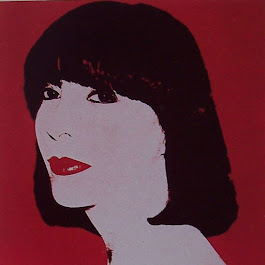
Mariuccia Mandelli's trademark bob and red lipstick in Andy Warhol's painting
Mariuccia Mandelli's trademark bob and
red lipstick in Andy Warhol's painting 
Mariuccia Mandelli, the founder of the fashion house Krizia, was born on this day in 1925 in Bergamo in northern Italy.

Although Mandelli trained to be a primary school teacher on the advice of her mother and pursued a teaching career when she was in her twenties, she had a talent for sewing and had always been interested in fashion. It took just one lucky break to get her started.

When a friend offered her the use of a flat rent-free for six months, Mandelli went to live there, bought an old sewing machine and started making clothes. She then launched her label, Krizia - a name by which she was sometimes known - by selling the clothes from her small car, a Fiat 500. She used to drive to shops in Milan with suitcases full of samples and by 1954 had established a ready-to-wear fashion house.

Mandelli also went on to establish a popular line of men’s wear, one of the first female fashion designers to do this successfully.

In 1964, Mandelli unveiled her first black-and-white collection at the Palazzo Pitti in Florence, the designs for which earned her a Critica della Moda award.

The Krizia logo became famous in the 1960s and '70s
The Krizia logo became famous
in the 1960s and '70s
Her fashion house, Krizia, grew rapidly during the 1960s and 1970s. In 1971, Mandelli launched a style of shorts cut very short, which were possibly the first version of hot pants to appear. Her knitwear became instantly recognizable, featuring animals such as elephants, lions, tigers, leopards and giraffes in the designs. During the 1990s, Krizia grew into a multi-million-dollar business and Mandelli’s hairstyle and trademark red lipstick were captured in a portrait by Andy Warhol.

Mandelli stepped down from her leadership of the company in 2014 when it was sold to a Chinese corporation, Shenzhen Marisfrolg, having run Krizia for 60 years.

After Mandelli died at her home in Milan in December 2015 at the age of 90, an obituary in the Guardian newspaper called her the Godmother of Italian fashion.

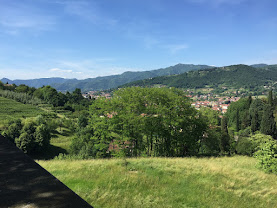
The Città Alta's elevated position offers views over beautiful rolling countryside
The Città Alta's elevated position offers
views over beautiful rolling countryside
Travel tip:

Mariucccia Mandelli was born in Bergamo’s Città Alta and although she lived in Milan after launching Krizia, she remained proud of her home town and often talked about it in interviews. Bergamo is just under 60km (37 miles) to the northeast of Milan, close to the Italian lakes and alpine skiing resorts and is regarded as Lombardy’s second most important city. Bergamo is an artistic and cultural treasure chest, but also has its own natural beauty, set among hills, mountains, lakes and rolling countryside. The Città Alta is visible in the skyline from both Bergamo airport and the city’s lower town, the Città Bassa. It is an impressive fortified city in its own right, which has retained many of its 12th century buildings and also has some stunning Renaissance and Baroque architecture.  

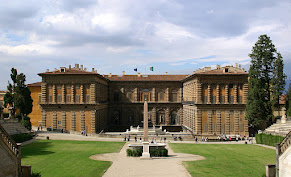
The Palazzo Pitti became the main Florence residence of the wealthy Medici family
The Palazzo Pitti became the main Florence
residence of the wealthy Medici family
Travel tip:

Palazzo Pitti, in Florence, where Mariuccia Mandelli showed her famous black and white collection in 1964, was originally built for the banker Luca Pitti in 1457 to try to outshine the palaces owned by the Medici family. The Medici eventually bought Palazzo Pitti from Luca Pitti’s bankrupt heirs and made it their main residence in Florence in 1550. Today, visitors can look round the richly decorated rooms and see artistic treasures from the Medici collections. The beautiful Boboli Gardens behind the palace are 16th century formal Italian gardens filled with statues and fountains.

Also on this day:

1788: The death in Rome of Bonnie Prince Charlie, pretender to the British throne

1857: The birth of architect Ernesto Basile

1888: The death of Saint Don Bosco

1933: The birth of Mafia boss Bernardo Provenzano

1942: The birth of actress Daniela Bianchi 


Home


August 18, 2021

Beatrice Borromeo - journalist and model

Glamorous aristocrat who specialises in gritty real-life stories

Beatrice Borromeo built a career as a hard-hitting news journalist
Beatrice Borromeo built a career as a
hard-hitting news journalist
The journalist Beatrice Borromeo, a descendant of one of Italy’s oldest aristocratic families and married to a member of the Monegasque royal family, was born on this day in 1985 in Innichen in the German-speaking province of South Tyrol in northeast Italy.

Although born into wealthy high society, Borromeo was driven by her political and humanitarian beliefs from an early age, taking part in demonstrations in Milan against the government of Silvio Berlusconi in her teenage years and deciding to pursue a career in journalism, working full time for the Italian daily newspaper Il Fatto Quotidiano.

Since marrying long-time boyfriend Pierre Casiraghi - grandson of Prince Rainier III and the actress Grace Kelly - and having two children, she has devoted much of her energy towards making documentary films, but always on hard-hitting topics such as climate refugees, the women of ‘Ndrangheta - the Calabrian mafia - and the slum children of Caivano, an impoverished area northeast of Naples.

Her looks and family connections have also helped her to have a parallel career in modelling, in her early days as a catwalk model for high-end fashion houses and more recently as the face of Italian jewellery house Buccellati and as the 2021 Dior ambassador.

Beatrice’s father is Carlo Ferdinando Borromeo, Count of Arona, through whom she is descended from the 16th century Archbishop of Milan, Charles (Carlo) Borromeo, a leading Catholic figure who led the movement to combat the spread of Protestantism and after his death in 1584 was made a saint.

Beatrice was in demand as a model for
Milan's top fashion houses
Her mother is Countess Donna Paola Marzotto, the daughter of fashion designer Marta Marzotto. Her uncle, Count Matteo Marzotto, is the former president and director of the Valentino fashion house.

A measure of the Borromeo family’s wealth is that they own most of the Borromean Islands in Lago Maggiore and many other estates in Lombardy and Piedmont.

Eligible and beautiful, Beatrice could have led the life of a socialite before settling into a suitable marriage but instead went on from high school to obtain a law degree at the Bocconi University in Milan before studying for a Masters in Journalism at Columbia University in New York, where she graduated in 2012.

By then she was already a working journalist, writing for Newsweek magazine and the American news website Daily Beast, contributing to TV shows including the Rai Due current affairs talk show Anno Zero and hosting her own weekly radio show.

Her journalistic scoops included an exclusive interview with Roberto Saviano, whose Mafia exposé Gomorrah had forced him to go into hiding, and, while working as a reporter for Il Fatto Quotidiano, and an interview with Marco dell’Utri, a co-founder of Berlusconi’s Forza Italia party, in which he admitted entering politics in the hope of obtaining immunity from arrest on various criminal charges.

She also wrote a story revealing that Prince Vittorio Emanuele of Savoy, the only son of Umberto II, the last King of Italy, had admitted in a recorded conversation that he was guilty of a murder of which he had been cleared in a Paris court.  The prince sued Borromeo’s newspaper but a court judgment ruled in favour of the newspaper.

Beatrice Borromeo with the Monaco royal Pierre Casiraghi at their wedding in 2015
Beatrice Borromeo with the Monaco royal
Pierre Casiraghi at their wedding in 2015
Her television documentary work has involved topics such as drug trafficking, underage prostitution, toxic waste dumping by the Camorra in the Naples area, and forced child marriage in the developing world.

In an interview with the magazine Glamour, Borromeo said that her interests had expanded from politics and corruption to numerous causes around the world, explaining that she was “afraid of wasting my life in doing things that help only myself.”

“I don't want to go away from this earth without having improved at least a couple of lives,” she said.

She admitted she spent much of her working life dressed in jeans and T-shirts, or a jacket and trousers if interviewing a politician face to face, yet her wedding to Casiraghi, the younger son of Caroline, Princess of Hanover, was anything but low key. 

After a civil ceremony in July, 2015, in the gardens of the Prince's Palace of Monaco, they were joined in a religious ceremony a few days later on Isola Bella, one of the Borromean Islands in Lago Maggiore.

The media coverage of the event made much of Beatrice having four bridal dresses - a pale pink, gold laced Valentino dress for the civil ceremony at the Prince’s Palace, a long-sleeved bohemian gown by Valentino at a rehearsal for the religious ceremony, an ivory-laced Armani Privé gown for the Isola Bella service itself, and an Armani Privé silk tulle gown in glistening white for the reception.

She and Casiraghi have two children - Stefano (born February 2017) and Francesco (born. May 2018).

The colossal Sancarlone statue outside Arona
The colossal Sancarlone
statue outside Arona
Travel tip:

Beatrice’s father inherited the title of Count of Arona, the town on Lago Maggiore that was the birthplace of Saint Charles Borromeo. Situated in the province of Novara on the Piedmont side of the lake, around 70km (43 miles) northwest of Milan, it is a popular destination for tourists. One of its main sights is the Sancarlone, a giant statue of Saint Charles Borromeo made from bronze. It is second in size only to the Statue of Liberty and is believed to have been looked at by the architects of the Statue of Liberty when they were producing their own design. Built on a hill overlooking the lake near the ancestral castle of the Borromeo family, it was designed by Giovan Battista Crespi and stands 23.5m (77ft) tall on a granite pedestal measuring 11.5m (38ft). A series of narrow stairs and ladders on the inside allows visitors to peer through the eyes and ears.

Isola Bella, with is elaborate palace and gardens, is an island in Lago Maggiore
Isola Bella, with is elaborate palace and
gardens, is an island in Lago Maggiore
Travel tip:

Until 1632, Isola Bella - 320m long by 400m wide - was a rocky outcrop in Lago Maggiore about 400m offshore from the town of Stresa, occupied only by a tiny fishing village. It was in that year that Carlo III of Borromeo decided it would be home to a palace dedicated to his wife, Isabella D'Adda, and commissioned the Milan architect Angelo Crivelli to build it. Carlo III did not live to see the palace finished after a devastating outbreak of the plague caused construction to be halted. It was completed instead by his sons, Gilberto III and Vitaliano VI, with the help of another Milanese architect, Carlo Fontana.  The palace, with its adjoining terraced gardens, became a place of sumptuous parties and theatrical events for the nobility of Europe.

Also on this day:

1497: The birth of lute player and composer Francesco Canova da Milano

1750: The birth of composer Antonio Salieri

1943: The birth of footballer and politician Gianni Rivera

1954: The birth of astronaut Umberto Guidoni


Home


August 13, 2021

Domenico Dolce - fashion designer

One half of hugely successful Dolce & Gabbana company

Domenico Dolce is co-founder of the Dolce & Gabbana company
Domenico Dolce is co-founder
of the Dolce & Gabbana company
The designer Domenico Dolce, whose partnership with Stefano Gabbana gave rise to one of the world’s most famous fashion houses, was born on this day in 1958 in Polizzi Generosa, a beautiful town set in the hills of northern Sicily, about 90km (56 miles) southeast of Palermo.

He and Gabbana, who he met in Milan, founded Dolce & Gabbana in 1985. The company took off in 1993 after the pop star Madonna chose them to design the costumes for a concert tour.

The company today generates about €1.3 billion in revenues and employs 5,500 people worldwide.

Dolce was born into the world of clothes. His father was a tailor and his mother worked in retail, at different times selling fabrics and lingerie.  He is said to have learned to sew at the age of six and made costumes for dolls.

After studying at art college in Palermo, Dolce moved to Milan to attend the fashion design school Istituto Marangoni. He already had dreams of working for Giorgio Armani and grew impatient to begin working in the fashion industry, dropping out of his course before completing it and taking a job in the sewing workshop of designer Giorgio Correggiari.

Domenico Dolce (right) pictured with his  partner Stefano Gabbana in 2010
Domenico Dolce (right) pictured with his 
partner Stefano Gabbana in 2010
It was at a Milan nightclub that he met Stefano Gabbana, a young man with similar ambitions. They became friends and Gabbana joined Dolce in working for Correggiari, but after three years decided to leave, first to work independently. In 1985 they began their collaboration, launching their own label, which debuted at Milano Collezioni's Nuovi Talenti show the same year, at which the pair’s designs were worn by friends because they could not afford catwalk models.

The following year, they released their first collection, displayed under the title Real Women, and in 1987 opened their first store in Milan, in Via Santa Cecilia in the city's fashion quarter. 

Dolce’s family moved to Milan to help him develop the business. It was at a factory owned by his father, Severio, at Legnano, about 20km (12 miles) northwest of Milan, that they began production of their lines. Dolce's younger brother, Alfonso, and sister, Dora, remain involved as company executives 

Madonna's Girlie Show World Tour in 1993 put Dolce & Gabbana on the map
Madonna's Girlie Show World Tour
in 1993 put Dolce & Gabbana on the map
The company expanded geographically, opening its first showroom in Manhattan, New York, in 1990, and in its product range, introducing its first perfume in 1992, but it was when Madonna picked them to design more than 1,500 costumes for her Girlie Show World Tour in 1993 that the Dolce & Gabbana name began to register as a major brand.

Soon, major stars from the entertainment industry were wanting to wear their glamorous, boldly-patterned designs, including actresses Monica Bellucci, Angelina Jolie and Isabella Rossellini and pop star and actress Kylie Minogue, whose Showgirl Homecoming tour in 2006-07 featured costumes by Dolce & Gabbana.  

Although their fashion ranges, many inspired by their love of cinema, were aimed at the high end of the market, Dolce & Gabbana realised that there was much they could do to reach popular audiences as well, and added such things as ties, belts, handbags, sunglasses, watches and footwear to their range, at more affordable prices.

By 2010, the 25th anniversary of the company’s foundation, there were 113 Dolce & Gabbana stores and 21 factory outlets.

As well as being business partners, Domenico and Stefano lived together as a couple for around 20 years, sharing a home in Milan. Although their personal relationship ended, they still work together.  

It was once reported that when the two retired, they would sell the business. More recently they announced tentative plans to pass control of the company instead to members of their extended families, several of whom already work for them and own shares.

Polizzi Generosa enjoys a spectacular location in the mountains of northeast Sicily
Polizzi Generosa enjoys a spectacular location
in the mountains of northeast Sicily
Travel tip:

Dolce’s hometown of Polizzi Generosa is built on a limestone ridge within the Madonie Natural Park in northwest Sicily. It is situated only about 25km (12 miles) inland from the coastal town of Cefalù, yet sits at more than 915m (3,000ft) above sea level.  The roots of Polizzi go back to the Byzantine area but its development came mainly under the Normans, who built the cathedral church of Saint Maria Maggiore in the 11th century. As well as its attractive churches and palaces, Polizzi Generosa offers beautiful views of the surrounding nature reserve.

The 16th century Basilica of San Magno is situated on Legnano's main square
The 16th century Basilica of San Magno is
situated on Legnano's main square
Travel tip:

Legnano - the hometown of another Italian fashion giant, Gianfranco Ferré - is famous for being the only town, apart from Rome, to which reference is made in the Italian national anthem, thanks to the historic Battle of Legnano, in which the Lombard League inflicted a heavy defeat on the forces of Emperor Frederick I Barbarossa in 1176.  Almost 700 years later, Garibaldi referred to the battle as an inspiration in the struggle for unification of Italy.  The 16th century Basilica of San Magno, where Ferré's funeral took place, is the town's most important building.

Also on this day:

1819: The birth of Republican activist Aurelio Saffi

1868: The birth of electrical engineer Camillo Olivetti

1912: The birth of microbiologist Salvador Luria


Home

July 12, 2020

Carla Fendi - fashion executive

Turned family business into global giant


Carla Fendi turned her parents' shop into a global fashion empire
Carla Fendi turned her parents' shop into
a global fashion empire
Carla Fendi, whose flair for marketing helped propel her mother and father’s small fur and leather business into a worldwide fashion giant, was born on this day in 1937 in Rome.

Under Fendi’s guidance, the business became so successful that at one point it had 215 stores worldwide and generated more than $1.2 billion in annual sales.

She also helped turn a young Paris-based German designer named Karl Lagerfeld into a household name, having taken up a friend’s recommendation to give him a try when the firm needed some fresh ideas in the 1960s.

Carla Fendi was one of five sisters who grew up in the leather workshop and fur boutique run by Edoardo and Adele Fendi in the Via del Plebiscito, near Rome’s Piazza Venezia. The family lived in rooms above the shop.

When Edoardo died in 1954, the sisters began to help the mother with the business, gradually taking on more responsibility. The business had a solid, up-market clientele for its bags and cases but Carla sensed it needed to appeal to attract younger, more fashion-conscious customers if it were to expand.

In 1964, with Carla becoming the driving force, the business opened new premises in Via Borgognona, the street that runs parallel with Via dei Condotti in the heart of Rome’s fashion district near the Spanish Steps.  The following year, needing someone to create contemporary designs, they took on Lagerfeld, who had been an apprentice to Pierre Balmain in Paris and was freelancing in Rome while he studied art history

The famous 'double F' logo, designed by Karl Lagerfeld
The famous 'double F' logo,
designed by Karl Lagerfeld
Lagerfeld largely focused on fur initially, his innovative use of mole, rabbit, and squirrel pelts in addition to the more traditional furs soon catching the eye.  Carla, meanwhile, made contacts within the film industry and it was not long before actresses Catherine Deneuve, Sophia Loren and Laura Antonelli were wearing Fendi furs.  Lagerfeld also came up with the brand’s trademark ‘double F’ logo.

Fendi began to grow exponentially in the late 1960s, after a fashion industry contact had helped Carla secure a window display in the prestigious Fifth Avenue store of Henri Bendel in New York. The exposure turned Fendi almost overnight into a byword for luxury in the United States, giving Carla a foothold in the world’s biggest market.

By the time Adele died in 1978, the Fendi range included scarves, ties, gloves and sunglasses in addition to bags and furs. In 1977, Lagerfeld unveiled his first ready-to-wear fashion lines.

The backlash against fur in the early 1990s posed a challenge for the company, of which Carla became chairman and president in 1994, but another piece of design genius secured Fendi’s future. This time it was not Lagerfeld but Carla’s niece, Silvia Venturini Fendi - daughter of Anna - who took the credit, designing a lightweight but capacious handbag known as the ‘baguette’.

Fendi's best-selling 'baguette' handbag, designed by Silvia Venturini Fendi
Fendi's best-selling 'baguette' handbag,
designed by Silvia Venturini Fendi
Inspired by the shape of French bread loaves and worn across the body, the baguette soon became a must-have accessory, with pop star Madonna and actress Julia Roberts among its fans.  Despite some special editions costing up to $35,000, more than a million bags were sold.

Carla and her sisters sold half of Fendi’s shares to Prada and LVMH in 1999, a deal that valued the company at $950 million. By 2002, the French luxury group LVMH had control, although Carla remained president until 2008.

Freed from day-to-day involvement in running the business, Carla focused more attention on the Carla Fendi Foundation, the charitable arm of the company, which paid for the restoration of Rome’s Trevi Fountain among other projects. An enthusiastic supporter of music and the arts, she also restored the Caio Melisso theatre in the Umbrian city of Spoleto, where she was a long-term patron of the Festival dei Due Mondi.

Married since 1960 to former pharmacist Candido Speroni, she lived in an apartment in a 16th-century palazzo in Rome. She died in 2017, having been widowed two years earlier. Her funeral took place at the Basilica of Santa Maria in Montesanto, in Rome’s Piazza del Popolo.

The couple had no children but Carla was aunt to 11 nephews and nieces, of whom Silvia remains on the board of Fendi as its creative director. Lagerfeld continued to work for the brand until his death in 2019.


Rome's Via Condotti, viewed from the city's landmark Spanish Steps
Rome's Via Condotti, viewed from the city's
landmark Spanish Steps
Travel tip:

The Via dei Condotti - known generally as Via Condotti - takes its name from the conduits that carried water to the Roman Baths of Agrippa. Beginning at the foot of the Spanish Steps, it links the Tiber with the Pincio hill. Today, it is the street which contains the greatest number of Rome-based Italian fashion retailers, equivalent to Milan's Via Montenapoleone, Paris's Rue du Faubourg-Saint-Honoré, Florence's Via de' Tornabuoni or London's Bond Street.  The street is also famous for the historic Antico Caffè Greco, which opened in 1760. Once the haunt of literary and musical figures such as Stendhal, Goethe, Byron, Liszt and Keats, it is the oldest bar in Rome and second oldest in Italy, after Caffè Florian in Venice.

The colossal monument to Victor Emmanuel II, the first king of Italy, dominates Piazza Venezia
The colossal monument to Victor Emmanuel II,
the first king of Italy, dominates Piazza Venezia
Travel tip
:

The Piazza Venezia, close to where Carla Fendi and her sisters grew up,  is dominated by the vast Altare della Patria, otherwise known as the Monumento Nazionale a Vittorio Emanuele II, and sometimes 'the wedding cake' or Il Vittoriano, a monument built in honour of Victor Emmanuel, the first king of a unified Italy. It features Corinthian columns, fountains, an equestrian sculpture of Victor Emmanuel and two statues of the goddess Victoria riding on quadrigas. Including the winged victories, it touches 81 metres (266 feet) tall. The base of the structure houses a small museum of Italian Unification.

Also on this day:


June 12, 2020

Edda “Edy” Campagnoli - model, TV star and businesswoman

Glamorous blonde who married top footballer


Edy Campagnoli, pictured with her husband, footballer Lorenzo Buffon
Edy Campagnoli, pictured with her
husband, footballer Lorenzo Buffon
The model, television star and later businesswoman Edda “Edy” Campagnoli was born on this day in 1934 in Milan.

Campagnoli was a famous face in Italy in the 1950s. She became a celebrity as the glamorous assistant of popular presenter Mike Bongiorno on a prime time quiz show, and then married the AC Milan and Italy goalkeeper Lorenzo Buffon.

For a while, she and Buffon - a cousin of the grandfather of another famous Italian goalkeeper, World Cup-winner Gianluigi Buffon - were one of Italy’s most high-profile couples.

Campagnoli, blonde with blue eyes and a curvaceous figure, first attracted attention as a catwalk model in the city of her birth and it would be her looks that provided a passport to stardom. In 1954, the director Luchino Visconti decided she would be the perfect Venus in his interpretation of Gaspare Spontini’s opera La vestale, giving her the rare distinction of appearing on stage at Milan's great opera house, Teatro alla Scala, alongside the superstar soprano Maria Callas. She was not required to sing.

A year later, she made her television debut in an afternoon show on the fledgling Rai network, where she was quickly spotted by the producers of Lascia o raddoppia?, a new quiz show based on the American hit The $64,000 Question.

Campagnoli, with host Mike Bongiorno (left) and  guest - the comedian Totò - in Lascia o radoppio?
Campagnoli, with host Mike Bongiorno (left) and
guest - the comedian Totò - in Lascia o radoppio?
Lascia o raddoppia? (English translation: Double or Quits?) was the vehicle that propelled Bongiorno to fame, effectively launching a career that would see his face become as recognisable to Italians as the Pope.

Campagnoli’s role was to lead the quiz show’s contestants on to the stage and introduce them to the host before standing to one side. Her presence was essentially decorative, as she was told bluntly by Bongiorno on the first night of transmission, when nervously she asked to run through what she would be doing and was told to “just be a beautiful girl”. The press dubbed her la valletta muta - the mute valet.

Her relationship with Bongiorno was often difficult. He was not a tall man and in high heels she towered above him. In an interview many years after she left the show, Campagnoli said that he ordered her to wear flat shoes and would refuse to be photographed with her if she was in heels.

Nonetheless, the huge success of the show turned Campagnoli into a celebrity, her appearances alongside Bongiorno in publicity events drawing massive crowds.  It also made her wealthy. Although the 25,000-lire fee she was paid for each edition was a fraction of the amount Bongiorno received, it still made her the highest-paid woman in Italian television.

Edy Campagnoli left television to open a boutique in Milan's famous fashion quarter
Edy Campagnoli left television to open a
boutique in Milan's famous fashion quarter
Her fame also opened the door to a number of movie parts and frequent lucrative appearances in the popular fotoromanza magazines, which featured fictional romance stories in photo strip format. The press called her “the most famous woman in Italy”.

Her real-life romance with Buffon, who made around 300 appearances for an AC Milan side that dominated Italian football in the ‘50s, was a sensation, lapped up by the popular press, not least because she had previously been involved with Giorgio Ghezzi, the goalkeeper at AC Milan’s city rivals, Inter.

They married in 1958, the wedding eagerly covered by Italy’s popular gossip magazines and which drew a crowd of 2,000 people, waiting for a glimpse of her wedding dress despite pouring rain.  For a while, they were the most photographed couple in Italy and could not venture out without being mobbed. They had a daughter, Patricia, but were divorced after 10 years, even though they remained friends.

When Lascia o raddoppia? reached the end of its run in 1959, Campagnoli appeared in a number of other TV shows but quit showbusiness in the mid-1960s to return to the world of clothes, opening a boutique in Via della Spiga, a short distance from Via Monte Napoleone in the heart of Milan’s celebrated fashion quarter.

She was reunited with Bongiorno briefly in 1971, making a guest appearance in another of his hit shows, but for the most part devoted herself to building a successful business. Designs bearing her name sold all over the world and fashion remained her focus until the early 1990s, when her health began to decline.

Campagnoli died at her home in Corso Venezia in January 1995 at the age of 60, having suffered a stroke. Her funeral took place at the church of San Babila.

Via Monte Napoleone is the most famous street in Milan's Quadrilatero della Moda
Via Monte Napoleone is the most famous street in
Milan's Quadrilatero della Moda
Travel tip:

Milan’s fashion district is known as the Quadrilatero della Moda, sometimes the Quad d’Oro. It can be found a 10-minute walk away from the Duomo in the centre of the city. The area centres on Via Monte Napoleone, a long street is lined with designer fashion boutiques, antiques shops and neoclassical mansions. Most of the major fashion houses - such as Armani, Gucci, Hermès, La Perla, Louis Vuitton, Prada, Ralph Lauren and Versace - Nearby, the Palazzo Morando museum displays period costumes.

Corso Venezia, with the Art Nouveau palace Palazzo  Castiglioni in the centre, third building from the right
Corso Venezia, with the Art Nouveau palace Palazzo
Castiglioni in the centre, third building from the right
Travel tip:

Corso Venezia is one of the Milan’s most exclusive and elegant avenues, itself forming part of the Quadrilatero della moda shopping district, stretching from the church of San Babila to Porta Venezia, one of the city’s historical gates. It is lined with Renaissance, Baroque, Rococo and Neoclassical palaces, parks and gardens, including the Giardini Pubblici Indro Montanelli, which contains both the Neoclassical Villa Reale and the city’s Natural History Museum.

Also on this day:

1675: The death of Charles Emmanuel II, Duke of Savoy

1885: The birth of mafioso Nick Gentile

1922: The birth of astrophysicist and TV personality Margherita Hack


Home