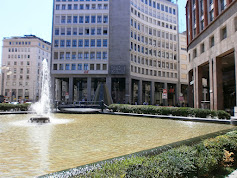
Showing posts with label Trieste. Show all posts

February 24, 2026

Candido Jacuzzi - inventor

Improvised hydrotherapy device became world's favourite spa bath

Candido Jacuzzi with the pump he made for his son's treatment
Candido Jacuzzi with the pump
he made for his son's treatment
Candido Jacuzzi, whose surname became familiar across the world because of what followed his invention of a hydrotherapy bath for his sick son, was born on this day in 1903 in Casarsa della Delizia, a town in Friuli-Venezia Giulia about 80km (50 miles) northwest of Trieste, the regional capital.

His family joined many Italians in the early 20th century in emigrating to the United States in search of economic prosperity. After a number of years, they set up a business, Jacuzzi Brothers Inc., initially working in the burgeoning aircraft sector before later manufacturing pumps for agricultural use. It was based in Berkeley, California.

Business was successful if not spectacularly so and it was not until 30 years later that Candido, who was by then the father of a young child diagnosed with rheumatoid arthritis, hit upon the idea that would turn Jacuzzi into a household name.

Jacuzzi's son, Kenneth, was only 15 months old when he was diagnosed with the painful, inflammatory condition, for which there was no cure. He was given hydrotherapy sessions to ease the symptoms and regular immersion in a bath of hot, aerated water, followed by a massage, made him feel much better. 

The problem for Candido and his wife, Ines, was that these therapy sessions involved a two-hour round-trip to a hospital several times a week. It would be much more practical, Jacuzzi thought, if he could install a similar bath at home.

But none existed for home use at the time and the only real option open to him was to build one himself.  Jacuzzi studied the hydrotherapy unit used by the hospital and realized that it was run by pumps, which gave him a head start as pumps were part of the family business. He decided to experiment by modifying an agricultural pump by adding an air intake, reversing its pump action and submerging it in a bathtub of hot water. 


To his great satisfaction, it worked. The strong jet of bubbles emerging from the pump replicated the whirlpool effect of the hospital bath and Kenneth could now have his treatments without leaving the house. 

The therapists who now visited Kenneth at home encouraged Candido to make more of the devices so that other sufferers could benefit.  He talked to his older brothers, who had been the founders of the business, and other family members, and they agreed to give it a try.

Candido Jacuzzi (left) with brothers Gelindo, Frank, Joseph and Valeriano at their factory in Berkeley
Candido Jacuzzi (left) with brothers Gelindo, Frank,
Joseph and Valeriano at their factory in Berkeley
While the merits of the whirlpool bath pump were obvious to Candido and his wife, it needed exposure for its benefits to become more widely known. Thankfully, this came thanks to a daytime TV programme, Queen for a Day, who agreed to take a number of Jacuzzi’s pumps to give away as prizes.

Sales took off, with the unexpected bonus that its appeal would spread beyond those who needed it for medical reasons to others - many celebrities among them - who simply liked the idea of luxuriating in a bath of perpetual bubbles.

To cater for this market, Candido and his nephew, Roy Jacuzzi, devised a way of incorporating their pump in a custom-made fibreglass tub as a single, self-contained unit, a luxury item that could be made large enough to hold two people or more. With its own hot-water supply, it could even be used outside.

After the first two-person Jacuzzi 'Roman' Spa Bath was sold in 1970, the brand soon became a household name. 

Given the family’s humble start, it was quite a success story.  Candido’s family in Italy were not poor. His father, Giovanni, ran a fruit and vegetable shop in Casarsa, selling produce from his farm. But money was tight. Italy as a country was suffering economic hardship at the start of the 20th century and the possibility of war in Europe was looming.

The family was made up of 13 children and keeping them all on the proceeds of the farm was a challenge. Candido’s older brothers had already been sent to Germany for months at a time to find work.

The popularity of the Jacuzzi made it the world's best-known spa bath brand
The popularity of the Jacuzzi made it
the world's best-known spa bath brand
Most of them worked as bricklayers but the oldest, Rachele, was smart enough to become a telegraph operator while attending classes to further his education. He joined the Italian army, making a point of studying aeronautics, which he had identified as a field likely to throw up opportunities.

He might have seen active service, but as a world war became more likely, Giovanni decided to protect his older sons from the possibility of being conscripted and sent them to America, at first to Washington State

Rachele used the knowledge he had acquired in the Italian military to get a job with McDonnell Douglas, the aircraft manufacturer, for whom he designed an aircraft propeller with thin, aerodynamically efficient blades made of wood that became known as the “Jacuzzi Toothpick”. 

It was so successful it was bought by both the US and Russian military. Thanks to his rights as the inventor, the two major contracts provided him with enough money to launch the family business, Jacuzzi Brothers Inc., which had its headquarters in San Pablo Avenue, Berkeley. 

Initially, their factory made products for the aviation industry, including one of the first fully enclosed aircraft cabins, which was used by the postal service to transport mail. When one of these planes crashed, however, with Giacomo Jacuzzi, one of Candido’s brothers, among those killed, the family turned their back on the aircraft business and diversified into other products, including water pumps.

Between 1912 and 1920, the whole Jacuzzi family left northern Italy for California, including Candido, then entering his teens, who would work for the company until ill health forced his retirement in 1975 at the age of 72, having been president since 1971. He died in 1986 at the age of 83.

The Church of Santa Croce e Beata Vergine del Rosario, with its distinctive twin towers
The Church of Santa Croce e Beata Vergine
del Rosario, with its distinctive twin towers
Travel tip:

The town of Casarsa della Delizia is in the province of Pordenone, a town about 15km (9 miles) to its west, surrounded by flat, fertile countryside shaped by waterways and vineyards. The La Delizia wine cooperative, established in 1931, is still a major local institution. Casarsa, with a population of around 8,500 inhabitants, is known mainly for its association with the writer and film-maker, Pier Paolo Pasolini, whose mother was from Casarsa, where he spent part of his childhood. The town became a place of memory for his admirers, these days drawn by the Centro Studi Pier Paolo Pasolini, a cultural centre dedicated to Pasolini’s life and work, hosting exhibitions, archives, and events.  Just outside the main town lies Versuta, a tiny hamlet where Pasolini lived during World War Two. II. In the town centre, the Church of Santa Croce e Beata Vergine del Rosario, the twin towers of which give the town its most recognisable architectural silhouette, has frescoes by Pomponio Amalteo, a notable 16th‑century painter of the Venetian school, the presence of whose work is an example of how Friuli’s religious buildings often hide unexpected artistic treasures.  The fertile quality of the land around Casarsa is due to the nearby Tagliamento River and a network of irrigation channels.  Casarsa is surrounded by vineyards, and seasonal festivals celebrate Friulian varieties such as Friulano, Refosco and Prosecco.   

Find a hotel in Casarsa with Hotels.com

The Palazzo del Governo is one of several grand palaces flanking Trieste's Piazza Unità d'Italia
The Palazzo del Governo is one of several grand
palaces flanking Trieste's Piazza Unità d'Italia
Travel tip:

The seaport of Trieste, capital of the Friuli-Venezia Giulia region, officially became part of the Italian Republic in 1954. It had been disputed territory for thousands of years and after it was granted to Italy in 1920, thousands of the resident Slovenians left. The final border with Yugoslavia was settled in 1975 with the Treaty of Osimo. The area today is one of the most prosperous in Italy and Trieste is a lively, cosmopolitan city and a major centre for trade and ship building.  At its heart is the Piazza Unità d'Italia, the main square, which faces the Adriatic and is thought to be Europe's largest square located next to the sea. When it was built, Trieste was the most important seaport of the Austrian-Hungarian Empire. Its impressive buildings include the city's municipal offices and other important palaces. Trieste has a coffee house culture that dates back to the Habsburg era.  Caffè Tommaseo, in Piazza Nicolò Tommaseo, near the grand open space of the Piazza Unità d’Italia, is the oldest in the city, founded in 1830. Just along the coast is the Castello di Miramare, which stands over the harbour at Grignano, located on the end of a rocky spur jutting into the Gulf of Trieste, about 8km (5 miles) from the city itself. This Habsburg castle was built between 1856 and 1860 for Austrian Archduke Ferdinand Maximilian and his wife, Charlotte of Belgium, based on a design by Carl Junker.  Legend has it that Ferdinand chose the spot to build the castle after taking refuge from a storm in the gulf in the sheltered harbour of Grignano that sits behind the spur.

Stay in Trieste with Expedia

More reading:

The world renowned coffee brand with its roots in Trieste

The father who invented ‘Lorenzo’s Oil’ for sick son

The Italian-American believed to have made the world’s first ice cream cone

Also on this day:

1530: The coronation of Holy Roman Emperor Charles V

1607: The premiere of Monteverdi’s historic opera L’Orfeo 

1896: The birth of restaurateur Cesare “Caesar” Cardini

1934: The birth of politician Bettino Craxi

1934: The birth of soprano Renato Scotto

1990: The death of popular president Sandro Pertini


Home


October 8, 2025

Luigi Rizzo - naval commander

Sicilian honoured multiple times for World War One daring

Luigi Rizzo, bedecked with his array of medals, pictured in 1935
Luigi Rizzo, bedecked with his array
of medals, pictured in 1935
Luigi Rizzo, a celebrated naval commander renowned for his daring exploits during the First World War, was born on this day in 1887 in Milazzo, a seaside town almost at the northeast tip of the island of Sicily, about 35km (22km) west of the city of Messina.

Rizzo, who was awarded the title Count of Grado and Premuda in recognition of two of his greatest successes, rose to the rank of Commander in the Royal Italian Navy, later upgraded to honorary Admiral, and won numerous decorations for bravery, including two Gold Medals and four Silver Medals for Military Valour.

Born into a family of merchant ship captains, Rizzo began his maritime career in the merchant navy. His transition to military service came in 1912 when he was appointed second lieutenant in the Naval Reserve. 

With Italy’s entry into World War One in 1915, Rizzo was assigned to the maritime defence of Grado, a fashionable Austro-Hungarian seaside resort that had been seized by the Italian army because of its strategic importance in the northern Adriatic.

It had become a base for the Italian navy’s torpedo boats and seaplanes and the courage and tactical acumen displayed by Rizzo in protecting the new base, which made use of its natural harbour, of earned him a Silver Medal of Military Valour.

Rizzo’s reputation rose still further following his transfer to the elite MAS (Motoscafo Armato Silurante) flotilla - small, fast torpedo boats used for stealth attacks. In December 1917, he led a successful raid in the Gulf of Trieste, sinking the Austro-Hungarian battleship SMS Wien. This feat earned him the Gold Medal of Military Valour and marked him as a formidable naval tactician.


His most legendary feat of daring, which brought him a second Gold Medal, occurred on June 10, 1918 off the Dalmatian island of Premuda, more than 200km (124 miles) south of Trieste, now part of Croatia. Commanding one of the MAS torpedo boats, Rizzo launched a surprise attack that sank the Austro-Hungarian dreadnought SMS Szent István, a 21,700-ton battleship. 

The Austro-Hungarian battleship Szent István,  shortly before it sank off the island of Premuda
The Austro-Hungarian battleship Szent István, 
shortly before it sank off the island of Premuda
The sinking was a huge psychological and strategic blow to the enemy’s naval power and remains one of the most celebrated victories in Italian naval history, commemorated at naval bases across Italy on June 10 each year as the Festa della Marina.

The wreck of the SMS Szent István remains on the seabed eight nautical miles off the coast of Premuda at a depth of 68m (223 ft). In an area of coast popular with diving enthusiasts, the wreck remains an attraction, although it is considered to be too deeply located for recreational divers because of the specialised equipment required.

Rizzo’s other wartime heroics included the capture of two pilots of an Austrian seaplane that had ditched due to a malfunction, and his missions in the defence of the mouth of the Piave, as a result of which he was promoted to Lieutenant. He was decorated with Silver Medals for Military Valour as a result of both.

During the course of the war, Rizzo also earned the Knight’s Cross of the Military Order of Savoy, along with international honours including France’s Croix de Guerre, Britain’s Distinguished Service Order, and the US Navy Distinguished Service Medal.

In 1919, Rizzo joined Gabriele D’Annunzio’s controversial occupation of Fiume (now Rijeka, Croatia), commanding the so-called Fleet of Carnaro and aiding in the city’s supply efforts. 

Rizzo's torpedo boat, safely returned to the lagoon of Venice after sinking the Szent István
Rizzo's torpedo boat, safely returned to the lagoon
of Venice after sinking the Szent István
He retired from active naval service in 1920 with the rank of Commander but was later promoted to Admiral as an honorary recognition of his service and legacy. 

Further recognition followed in 1935 when King Victor Emmanuel III conferred upon Rizzo the victory title Conte di Grado e di Premuda - Count of Grado and Premuda - by royal decree.

When Italy entered World War Two in 1940, Rizzo returned to service and for a while took part in anti-submarine warfare in the Strait of Sicily. 

Following the armistice of 1943 and Italy’s surrender to the Allies, Rizzo switched sides and was actively involved in the sabotage of ocean liners and steamships to stop them falling into German hands. He was subsequently arrested by the Nazis and imprisoned in Austria. 

He survived the ordeal but suffered personal tragedy in September of that year when his 22-year-old son Giorgio, who had followed him into naval service as a lieutenant in command of an MAS, was killed in a German bombing raid on Piombino.

Rizzo later recovered his son's body from a mass grave on the island of Elba and published a collection of letters and documents in his memory. 

Luigi Rizzo died in Rome in 1951 after suffering from lung cancer, despite the efforts of his friend, the surgeon Raffaele Paolucci, whom he had known since they served together as naval commanders in World War One and had gone on to have a distinguished career in surgical medicine.

In addition to Giorgio, Rizzo had two other children, Giacomo and a daughter, Maria Guglielmina, who in 2015 attended the launch near Sestri Levante in Liguria of a Bergamini class frigate built for the Italian Navy and named Luigi Rizzo in his honour.

Milazzo, in northeastern Sicily, is dominated by the huge Norman fortress that watches over it
Milazzo, in northeastern Sicily, is dominated by
the huge Norman fortress that watches over it
Travel tip:

Milazzo, where Luigi Rizzo was born, is an historic, coastal town in northeastern Sicily, nestled on a narrow peninsula jutting into the Tyrrhenian Sea. With a population of 31,500, the town has a long tradition of fishing and shipbuilding and is the departure point for ferries to the Aeolian Islands. But it also boasts a mix of sandy and pebbled beaches, with crystal-clear waters ideal for swimming, snorkeling and diving, while the Capo Milazzo, a rugged promontory at the tip of the peninsula, offers dramatic cliffs, hidden cove, and the natural reserve of Piscina di Venere - a tidal pool named after the goddess Venus.  A Greek settlement in the 8th century BC, it was later a Roman stronghold and over the centuries has passed through Byzantine, Arab, Norman, and Spanish hands. The town played a key role in several military conflicts, including the Battle of Milazzo in 1860, where Giuseppe Garibaldi’s forces clashed with the Bourbons during Italy’s unification.  At the heart of the town stands its massive Norman castle, one of the largest fortified complexes in Sicily. 

Stay in Milazzo with Hotels.com

Sunset over the Baia del Silenzio, part of the  beautiful Ligurian resort of Sestri Levante
Sunset over the Baia del Silenzio, part of the 
beautiful Ligurian resort of Sestri Levante
Travel tip:

Sestri Levante, just along the Ligurian coast from the shipyard at Riva Trigoso where the frigate Luigi Rizzo was launched in 2015, is a seaside resort between Genoa and the Cinque Terre, known for its scenic beauty. Part of the town occupies a narrow promontory that divides two stunning bays - the Baia del Silenzio (Bay of Silence), a serene, crescent-shaped beach framed by pastel-colored buildings, and the Baia delle Favole (Bay of Fairy Tales), which was named in honour of the Danish storyteller Hans Christian Andersen, who briefly lived in Sestri Levante. This larger bay hosts the town’s marina as well as promenades, restaurants, and family-friendly beaches.  The town celebrates its literary heritage with the annual Andersen Festival, a week-long celebration of storytelling, theatre and music.  Sestri Levante’s trattorias and wine bars offer relaxed dining with sea views,  featuring local specialities and wines from grapes grown on nearby hills. The resort is popular with Italian families and visitors seeking to enjoy the spectacular beauty of the Ligurian coast without the crowds of Portofino or Monterosso. What’s more, it is easily reached by train, with regular services from Genoa, La Spezia, and Milan. 

Find accommodation in Sestri Levante with Expedia

More reading:

How Italy entered World War Two

The WW1 flying ace turned WW2 commander

The Great War hero who became physician to Italy’s Chamber of Deputies

Also on this day:

1551: The birth of composer Giulio Caccini

1881: The birth of Mona Lisa thief Vincenzo Perrugia

1957: The birth of footballer Antonio Cabrini

1965: The birth of chef and TV presenter Carlo Cracco


Home


September 27, 2023

Vittorio Vidali - communist revolutionary

One-time Russian agent ultimately elected Italian deputy and senator

Vittorio Vidali became an agent of the Russian Communist Party
Vittorio Vidali became an agent of
the Russian Communist Party
The revolutionary Vittorio Vidali, who operated as a secret agent of the Russian communists in the United States, Mexico and Spain, was born on this day in 1900 in the coastal town of Muggia, near Trieste.

Known at various times by at least five different names, he was implicated in the murder of a fellow agent and in an attempt to assassinate Leon Trotsky, although in neither case could his involvement be proved. After returning to Italy at the end of World War Two, he served as a deputy and then a senator in the Italian parliament.

Vidali was politically active from an early age, joining the Socialist Youth movement in Trieste at the age of 16. At 20 he was one of the founders of the youth federation of the Italian Communist Party. In the same year - 1921 - he was arrested for his part in rioting at the San Marco shipyards where his father worked.

He became a target for Mussolini’s Blackshirts after organising, with others, an anti-fascist paramilitary group, and fled Italy in 1922, to Germany and then New York, where he met the Italian anarchists, Nicola Sacco and Bartolomeo Vanzetti.

From New York he travelled to Russia, becoming involved with the Communist Party of the Soviet Union and their international wing, known as Comintern, which had agents operating around the world in their attempt to spread the communist doctrine.

Vidali became romantically involved with Tina Modotti, a glamorous former actress
Vidali became romantically involved with
Tina Modotti, a glamorous former actress
Comintern sent Vidali to Mexico on a mission to bring discipline to the Mexican Communist Party. There he is thought to have become infatuated with Tina Modotti, a former model and silent movie actress originally from Udine in Italy, who had been living in San Francisco and moved to Mexico to work as a photographer. She too was a communist activist.

When Modotti’s lover, Julio Antonio Mella , one of the founders of the Communist Party of Cuba, was shot dead at point blank range while walking with her, some witnesses claimed that Vidali was with the couple and even that it was he who carried out the killing. 

He had plausible motives, both personal and political, given his own interest in Modotti and Mella’s association with Trotskyists, to whom the Stalinist Comintern was hostile. Yet, although they questioned and released Modotti, the Mexican authorities charged another man, José Agustín López, a criminal with no political associations, with the murder. The accepted version of events, in Cuban history in any event, is that Mella’s death was ordered by the Cuban president, Gerardo Machado.

Vidali left Mexico for Spain.  Working under the name Carlos Contreras, he teamed up with Enrique Castro Delgado to create the so-called "Fifth Regiment" responsible for the defence of Madrid against Francisco Franco’s Nationalists, and organised the production of a daily newspaper to provide information for those fighting for the Spanish Democratic Republic.  At the same time, in a more sinister side to his activities on behalf of Comintern, he is said to have arranged for a number of pro-Trotsky operatives on the republican side to be eliminated.

He returned to Mexico in 1940, not long before Trotsky was killed. He was suspected of being involved in a failed assassination attempt at Trotsky’s residence in Mexico City. He was also thought to have facilitated the infiltration into Trotsky’s inner circle of the Stalinist operative Ramón Mercader, who entered Trotsky’s study and killed him with an ice axe later in the same year.  

Vidali served for 10 years in the Italian parliament
Vidali served for 10 years in
the Italian parliament
Modotti, who was expelled from Mexico in 1930, rejoined Vidali in Spain and returned with him to Mexico under a false name. She herself died suddenly in 1942, suffering a cardiac arrest while returning home from a social engagement in a taxi. There were rumours that Vidali, despite the intimate nature of their relationship, had her killed simply because she knew too much about his activities in Spain.

By 1947, Vidali was back in his home country, returning to Trieste. After the postwar settlement saw the long-disputed city established as the Free Territory of Trieste, Vidali became one of the most powerful members of the Communist Party there, conducting a purge of Titoists within the organisation following Stalin’s split with the Yugoslav leader. 

After Trieste became part of Italy again in 1954, Vidali had ambitions to serve as a Communist in the Italian Parliament from the area. He was elected to the Chamber of Deputies in 1958 and to the Senate in 1963, sitting until 1968.  He died in Trieste at the age of 83.

The harbour at the quaint seaside town of Muggia, the only Istrian town to remain part of Italy
The harbour at the quaint seaside town of Muggia,
the only Istrian town to remain part of Italy
Travel tip:

At the time of Vidali’s birth, the coastal town of Muggia - situated 12km (7 miles) by road from Trieste - belonged to the part of the Austria-Hungary empire known as the Istrian peninsula, which includes a number of beautiful towns and cities such as Pula, Rovinj, Perec and Vrsar. It was partitioned to Italy in the Treaty of Rapallo in 1920 following the First World War. In the Second World War it became a battleground for rival ethnic groups and political groups. It was occupied by Germany but with their withdrawal in 1945  Yugoslav partisans gained the upper hand and Istria was eventually ceded to Yugoslavia. It was divided between Croatia and Slovenia following the break-up of Yugoslavia in 1991. Nowadays, Muggia remains the only former Istrian town that is part of Italy. A charmingly quaint fishing port, Muggia’s main attractions are its Duomo, dedicated to the saints John and Paul, the Basilica of Santa Maria Assunta and its 14th century castle, which stood abandoned for 200 years but has been restored by the sculptor, Villi Bossi. 

The sea-facing Piazza Unita d'Italia is the oldest and most elegant square in Trieste
The sea-facing Piazza Unita d'Italia is the oldest
and most elegant square in Trieste
Travel tip:

The seaport of Trieste, capital of the Friuli-Venezia Giulia region, officially became part of the Italian Republic in 1954. Trieste had been disputed territory for thousands of years and after it was granted to Italy in 1920, thousands of the resident Slovenians left. The final border with Yugoslavia was settled in 1975 with the Treaty of Osimo. The area today is one of the most prosperous in Italy and Trieste is a lively, cosmopolitan city and a major centre for trade and ship building.  The city has a coffee house culture that dates back to the Hapsburg era.  Caffè Tommaseo, in Piazza Nicolò Tommaseo, near the grand open space of the Piazza Unità d’Italia, is the oldest in the city, dating back to 1830.

Also on this day:

1552: The birth of writer and actor Flaminio Scala

1871: The birth of Nobel Prize winner Grazia Deledda

1966: The birth of musician Jovanotti

1979: The death of actress and writer Gracie Fields

September 27 was the chosen birthday of Cosimo de’ Medici, born in 1389


Home


August 3, 2023

Omero Antonutti - actor and voice dubber

Narrator of Oscar-winning Life is Beautiful enjoyed long and successul career

Omero Antonutti had success on screen and as a stage actor
Omero Antonutti had success on
screen and as a stage actor
The actor Omero Antonutti, who acted in around 60 films and was the Italian voice of many international stars, was born on this day in 1935 in Basiliano, a village about 13km (eight miles) west of the city of Udine in the Friuli-Venezia Giulia region of northeast Italy.

His most acclaimed performance came in Padre padrone, a 1977 film directed by Paolo and Vittorio Taviani, a Palme d’Or winner at Cannes that was considered by many critics to be the co-directing brothers’ finest work.

Antonutti worked with the Taviani brothers again on La notte di San Lorenzo (1982), which won the Grand Prix du Jury at Cannes, and Kaos (1984) in which he took the part of the playwright Luigi Pirandello in a film based on some of Pirandello’s own short stories.

He was often asked to portray significant figures in dramatisations of real-life events. For example, he took the part of Roberto Calvi, the ill-fated chairman of the Banco Ambrosiano in the Giuseppe Ferrara’s 2002 feature The Bankers of God: The Calvi Affair, and played the shady Sicilian banker Michele Sindona in Michele Placido’s 1995 film Un eroe borghese - A Bourgeois Hero. In Piazza Fontana: The Italian Conspiracy, directed by Marco Tullio Giordano in 2012, Antonutti was cast as the Italian president, Giuseppe Saragat.

At the same time, his strong, deep voice meant his skills were in big demand as a voice dubber, with Italian cinema and television audiences preferring international productions to be voiced over by Italian actors, rather than have the visual experience spoiled by subtitles.

Antonutti was the Italian voice of Christopher Lee in the Lord of the Rings series, Sleepy Hollow, The Hobbit and other films. He voiced over Michael Gambon in The King’s Speech, Christopher Plummer in The Mystery of the Templars - National Treasure and Millennium - The Girl with the Hatred, and John Hurt in V for Vendetta. Omar Sharif, Robert Duvall, Donald Sutherland and Rutger Hauer were others whose words were interpreted by Antonutti.

Antonutti's voice can be heard as the narrator in Life is Beautiful
Antonutti's voice can be heard as
the narrator in Life is Beautiful
Robert Benigni chose him to narrate Life is Beautiful in 1997, the film going on to win Oscars for Best Foreign Film, Best Leading Actor for Benigni himself and Best Soundtrack for Nicola Piovani.

As a young man, Antonutti lived in Trieste, the port city on the border of Italy and Slovenia. He found work in the shipyards but acted in his spare time, in the late 1950s appearing in the shows of the Silvio D’Amico Acting School before joining the company of the Teatro Stabile di Trieste.

His first film part came in 1966, when he appeared in Le piacevoli notte - Pleasant Nights, a trilogy of comedic tales set in the Middle Ages directed by Luciano Lucignani, acting in the illustrious company of Ugo Tognazzi, Gina Lollobrigida and Vittorio Gassman.

But it was not until the 1970s that his big screen career began in earnest. After landing a part in La donna della domenica (1975), the dramatisation of a popular murder mystery starring Marcello Mastroianni and Jacqueline Bisset and directed by Luigi Comencini, it was only two years before the Taviani brothers cast him as Efisio Ledda, the despotic father of Gavino Ledda in Padre Padrone, based on the semi-autobiographical novel of the same title by Gavino Ledda, which describes the way Efisio refused to let his son attend elementary school in the 1940s and forced him instead to work on the family sheep farm in Sardinia, which meant he grew up illiterate.

The acclaim Antonutti received for the dramatic intensity of his portrayal of Efisio set him up for a long career in the cinema, part of which he spent in Spain, where his life is commemorated at the Valencia Film Festival.

Antonutti (left) played opposite Saverio Marconi in the Taviani brothers' Padre Padrone
Antonutti (left) played opposite Saverio Marconi
in the Taviani brothers' Padre Padrone
The last important movie in which he appeared was Gianna Amelio’s Hammamet, released in 2020, a story about the last years in Tunisia of the controversial former prime minister, Bettino Craxi, who went into voluntary exile there to escape jail after being prosecuted as part of the Tangentopoli bribes scandal that rocked Italian politics in the 1990s. Antonutti, by then in his 80s, played Craxi’s father.

In his 50-plus years as a movie and television actor, Antonutti never forgot his theatrical roots. He often returned to the Teatro Stabile in Trieste, taking part whenever a milestone was celebrated in the theatre’s history and occasionally even accepting a part in a play, such was his love of acting in its purest form, on stage in front of a live audience.

Sadly, he did not live long enough to witness the release of his final film. In declining health for a number of years, he died from cancer in November 2019 at the Ospedale Civile in Udine where he was receiving treatment.

Antonutti had spent the final 10 years of his life with his wife, Graziella, whom he married in 2009. His funeral took place at the Chiesa di Sant'Antonio Nuovo in Trieste.

The Loggia del Lionello is one of the architectural features of Udine's Piazza della Libertà
The Loggia del Lionello is one of the architectural
features of Udine's Piazza della Libertà
Travel tip:

Udine, the nearest city to Antonutti’s home village of Basiliano, is an attractive and wealthy provincial city, known as the gastronomic capital of Friuli. Udine's most attractive area lies within the mediaeval centre, which has Venetian, Greek and Roman influences. The main square, Piazza della Libertà, features the town hall, the Loggia del Lionello, built in 1448–1457 in the Venetian-Gothic style, and a clock tower, the Torre dell’Orologio, which is similar to the clock tower in Piazza San Marco - St Mark's Square - in Venice. Long regarded as something of a hidden gem, Udine does not attract the tourist traffic of other, better-known Italian cities, yet with its upmarket coffee shops, artisan boutiques and warm, traditional eating places in an elegant setting, it has much to commend it.


Trieste's Canal Grande is overlooked by the  Chiesa di Sant'Antonio Nuovo
Trieste's Canal Grande is overlooked by the 
Chiesa di Sant'Antonio Nuovo
Travel tip:

The port of Trieste, tucked away in a bay at the top of the Adriatic sea, is the capital of the Friuli-Venezia Giulia region. Within only a few kilometres of the border with Slovenia to its east and south and less than 30km (19 miles) from the northern border of Croatia, Trieste had been disputed territory for thousands of years and officially became part of the Italian Republic only as recently as 1954. Previously it had been part of the Austro-Hungarian empire and then Yugoslavia, who disputed the border until the Treaty of Osimo in 1975.  The area today is one of the most prosperous in Italy and Trieste is a lively, cosmopolitan city and a major centre for trade and ship building.  The city has a coffee house culture that dates back to the Habsburg era.  Caffè Tommaseo, in Piazza Nicolò Tommaseo, near the grand open space of the Piazza Unità d’Italia, is the oldest in the city, dating back to 1830.

Also on this day:

1486: The birth of celebrated courtesan Imperia Cognati

1530: The death of Florentine military leader Francesco Ferruccio

1546: The death of architect Antonio da Sangallo the Younger

1778: The inauguration of Milan’s Teatro alla Scala


Home


June 26, 2023

Claudio Abbado – conductor

The distinguished career of a multi award-winning musician

Claudio Abbado had a long and successful career in music
Claudio Abbado had a long and
successful career in music
The internationally acclaimed orchestra conductor Claudio Abbado was born on this day in 1933 in Milan.

Abbado was musical director at Teatro alla Scala, the opera house in his native city, from 1972 to 1980 and remained affiliated to the theatre until 1986. He was the principal conductor of the Vienna Philharmonic and the London Symphony Orchestra and was appointed director of the Vienna State Opera and the Berlin Philharmonic.

Born into a musical family, Abbado studied the piano with his father, Michelangelo Abbado from being eight years old. His father was a professional violinist and a professor at the Giuseppe Verdi Conservatory in Milan. His mother, Maria Carmela Savagnone, was a pianist and his brother, Marcello, became a concert pianist, a composer, and a teacher.

The Nazis occupied Milan during his childhood and his mother spent time in prison for harbouring a Jewish child. Abbado grew up to have anti-fascist political beliefs.

Abbado studied piano, composition and conducting at the Milan Conservatory. After deciding to be a conductor, he went to study in Vienna, winning the Koussevitsky prize in 1958 and the Metropolitan Prize in 1963. He made his conducting debut in Trieste in 1958 and his conducting debut at La Scala in 1960.

After being engaged by the New York Philharmonic, he began a successful international career. He was principal guest conductor of the Chicago Symphony Orchestra, founder and director of Lucerne Festival Orchestra, founder and director of Mahler Chamber Orchestra, founding Artistic Director of Orchestra Mozart, and music director of European Youth Orchestra

Claudio Abbado made his conducting debut in Trieste in 1958 at the age of 25
Claudio Abbado made his conducting debut in
Trieste in 1958 at the age of 25

While serving as musical director of La Scala, Abbado was credited with broadening the repertoire of the theatre and lifting standards. He also introduced inexpensive performances for students and working people. Experts praised him for his attention to detail and his robust rhythmic grasp. He was particularly strong on German and Italian 20th century operatic traditions.  

Abbado had a son and daughter from his first marriage, a son from his second marriage, and a son as a result of his four-year relationship with the Russian-born British violinist Viktoria Mullova.

In 2013, Italian President Giorgio Napolitano appointed Abbado to the Italian Senate as a Senator for life.

One of the leading conductors of his generation, Abbado died in Bologna in 2014 at the age of 80. As a tribute to him, La Scala’s orchestra, conducted by Daniel Barenboim, performed the slow movement of Beethoven’s Symphony No 3 to an empty theatre, with the performance relayed to a crowd in the square in front of the opera house and live streamed via La Scala’s website.

The Teatro alla Scala in Milan was originally built almost 250 years ago
The Teatro alla Scala in Milan was originally
built almost 250 years ago
Travel tip:

Milan’s Teatro alla Scala, known to Italians simply as La Scala, has become the leading opera house in the world. It opened in 1778 after fire had destroyed the Teatro Regio Ducale, which had previously been the home of opera in Milan. A new theatre for the city was built on the site of the former Church of Santa Maria alla Scala, which is how the theatre got its name. It was designed by neoclassical architect Giuseppe Piermarini. The world’s finest singers have appeared at La Scala during the last 240 years and the theatre has hosted the premieres of operas by Rossini, Donizetti, Verdi, and Puccini. La Scala’s original 18th century structure was renovated in 1907 and, after bomb damage during World War II, it was rebuilt and reopened in 1946.

The Teatro Massimo in Palermo had been dark for 23 years when it was reopened in 1997
The Teatro Massimo in Palermo had been dark
for 23 years when it was reopened in 1997
Travel tip:

Palermo’s Teatro Massimo became a symbol of Italy’s fight back against the Mafia when Claudio Abbado conducted the Berlin Philharmonic in a concert there in 1997. The largest opera house in Italy, the Teatro Massimo had been closed for supposedly minor refurbishments in 1974, but with the Mafia controlling local government, no money was made available for the work. However, after the murder of Giovanni Falcone, the city turned against the Mafia and maestro Abbado was invited to conduct there at its grand reopening after the theatre had been dark for 23 years.

Also on this day:

1906: The birth of singer and actor Alberto Rabagliati

1944: British bombers attack San Marino

1968: The birth of footballer Paolo Maldini


Home


November 9, 2021

Piero Cappuccilli - operatic baritone

Singer highly respected for interpretation of Verdi roles

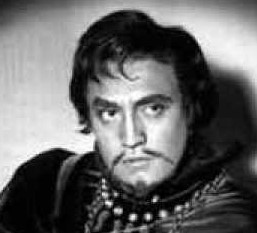
Piero Cappuccilli as Ernani in a performance of Verdi's Don Carlo
Piero Cappuccilli as Ernani in a
performance of Verdi's Don Carlo
Piero Cappuccilli, regarded during a 41-year opera career as one of the finest Italian baritones of the late 20th century, was born on this day in 1926 in Trieste, in the far northeast corner of the peninsula.

Although not exclusively, Cappuccilli’s focus was predominantly the work of Italian composers, in particular Giuseppe Verdi, in whose operas he sang 17 major roles.

He sang at many of the world’s great opera houses, travelling to South America and the United States, where he made his debut at the Metropolitan Opera in New York as Giorgio Germont in Verdi’s La traviata in 1960 and had a particular association with the Lyric Opera in Chicago, where he made his first appearance in 1969 as Sir Richard Forth in Bellini's I puritani and returned many times before his farewell performances there in 1986.

Nonetheless, he spent most of his time in Europe. He made his debut at Milan’s Teatro alla Scala in 1964 as Enrico in Donizetti’s Lucia di Lammermoor; at the Royal Opera House in Covent Garden as Germont in 1967; and at the Opéra de Paris in 1978, singing Amonasro in Verdi’s Aida. He also appeared at the Vienna State Opera and the Salzburg Festival and worked with Europe’s finest conductors, including Herbert von Karajan, Gianandrea Gavazzeni, Claudio Abbado, and Carlos Kleiber.

Cappuccilli was initially reluctant to pursue the idea of a career in opera
Cappuccilli was initially reluctant to
pursue the idea of a career in opera
His retirement, in 1992 in his mid-60s, was enforced, unfortunately, after he was seriously injured in a road accident following a performance of Verdi’s Nabucco at the Arena di Verona. Although he recovered enough to make further contributions to the world of opera as a teacher, the damage to his body left him unable to cope with the physical demands of performing on stage.

Cappuccilli first encountered opera as a 10-year-old boy, during a family holiday, when he was recruited for the children's chorus of a production of Bizet’s Carmen in Naples. He thought nothing at that stage of a career in music, focussing his ambitions on becoming an architect.

As a young adult, friends noted the quality of his voice whenever he sang and in 1949 encouraged him to audition at the opera house in Trieste, the Teatro Giuseppe Verdi. Luciano Donaggio, an opera teacher, heard him and thought he had enough potential to offer him free lessons. 

Even then, Cappuccilli was not convinced it was worth his time and gave up for a while. But Donaggio ultimately persuaded him he was good enough to contemplate a career in opera and he joined the company at the Teatro Giuseppe Verdi in 1951, taking a succession of small parts.

Many of Cappuccilli's performances have been preserved in a large discography
Many of Cappuccilli's performances have
been preserved in a large discography
His major break came in 1955 when he auditioned at La Scala in Milan, on the back of which it was suggested he enter the Viotti International Music Competition in Vercelli, Piedmont, now world-renowned but at that stage still in its relative infancy. He won first prize in his category and offers of more important roles soon followed. Cappuccilli made his debut in a major role in the Teatro Nuovo in Milan in 1957, singing Tonio in Leoncavallo’s Pagliacci.

In the years that followed, Cappuccilli not only excelled for the rich quality of his voice, outstanding breath control and immaculate phrasing but for the sensitive interpretation of the characters he portrayed. Critics spoke of him in the same breath as Tito Gobbi and Ettore Bastianini among the great Italian baritones.

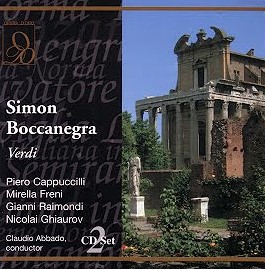
He seldom disappointed in any role but his performances in Aida and Forza del Destino at La Scala in the 1960s attracted particularly enthusiastic reviews, while London critics were wowed by his interpretation of the title role in Verdi's Simon Boccanegra when the La Scala company guested at Covent Garden in 1976.

Happily, many great performances were preserved in an extensive discography that includes performances alongside Maria Callas, Katia Ricciarelli, Placido Domingo and Mirella Freni under the baton of Von Karajan and Abbado among others.

Cappuccilli spent his final years back in Trieste, where he died in 2005, aged 78. He left a wife, Graziella, three children and two grandchildren. He is buried at the Cimitero di Sant’Anna.

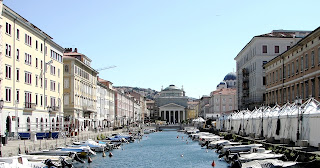
A view of the Canale Grande in Trieste, the  maritime capital of  Friuli-Venezia Giulia
A view of the Canale Grande in Trieste, the 
maritime capital of  Friuli-Venezia Giulia
Travel tip:

The seaport of Trieste, capital of the Friuli-Venezia Giulia region, officially became part of the Italian Republic in 1954. Trieste had been disputed territory for thousands of years and after it was granted to Italy in 1920, thousands of the resident Slovenians left. The final border with Yugoslavia was settled in 1975 with the Treaty of Osimo. The area today is one of the most prosperous in Italy and Trieste is a lively, cosmopolitan city and a major centre for trade and ship building.  The city has a coffee house culture that dates back to the Hapsburg era.  Caffè Tommaseo, in Piazza Nicolò Tommaseo, near the grand open space of the Piazza Unità d’Italia, is the oldest in the city, dating back to 1830.

Piazza San Babila is the home of  Milan's Teatro Nuovo today
Piazza San Babila is the home of 
Milan's Teatro Nuovo today
Travel tip:

The Teatro Nuovo theatre in Milan, located on the Piazza San Babila in the lower level of the Palazzo del Toro, was designed by architect Emilio Lancia and was the project of the impresario Remigio Paone. It was inaugurated in December 1938 with a performance of Eduardo De Filippo's comedy Ditegli sempre di sì. Piazza San Babila is characterized by the presence of a fountain built in 1997 by the architect Luigi Caccia Dominioni in conjunction with the Ente Fiera Milano.

Also on this day:

1383: The birth of military leader Niccolò III d’Este

1697: The pope orders the relocation of the city of Cervia, in Emilia-Romagna, because of toxic air from surrounding marshland 

1877: The birth of Enrico De Nicola, the first president of Italy

1921: The birth of football stickers pioneer Giuseppe Panini

1974: The birth of footballer Alessandro Del Piero


(Image of Canale Grande by Severin Herrmann from Pixabay)


Home


September 2, 2020

Andrea Illy – businessman and writer

Family dream was to make the best coffee in the world

Andrea Illy is the grandson of company founder Francesco Illy
Andrea Illy is the grandson of
company founder Francesco Illy
Andrea Illy, who is the chairman of coffee makers illycaffè, was born on this day in 1964 in Trieste, the capital city of the region of Friuli Venezia Giulia.

The grandson of the founder of illycaffè, Francesco Illy, Andrea represents the third generation of his family to lead the business. His father, Ernesto Illy, was chairman of the company between 1963 and 2004. His sister Anna and brothers Francesco and Riccardo - a former CEO now vice-president - Illy are on the board of directors.

Andrea graduated with a degree in Chemistry from the University of Trieste and went on to study at SDA Bocconi School of Management in Milan, Harvard Business School and Singularity University in Silicon Valley.

He joined the family firm in 1990 as a supervisor of the quality control department. Inspired by Japanese business methods, Andrea started the Total Quality Programme, which established standards both for the company and the coffee industry in general.

He was appointed CEO of illycaffè in 1994 and chairman of the company in 2005.

He developed the Università del Caffè to spread the culture of coffee throughout the world. He established the retail side of the business at global level with 230 stores and started a new system of capsules for making coffee.

Francesco Illy's dream was to produce  the best coffee in the world
Francesco Illy's dream was to produce
 the best coffee in the world
His book, Il sogno del caffè (Coffee: The Dream) describes the family and company’s history and the pursuit of the dream of his grandfather, Francesco, to produce the best coffee in the world.

Andrea won the Businessman of the Year Award in Italy in 2004. He is the honorary Chairman of the Association for Science and Information on Coffee and the Chairman of the International Coffee Organisation’s Coffee Market Promotion and Development Committee.

Since 2013 Andrea has been chairman of the Fondazione Altagamma, a foundation for firms that are worldwide ambassadors for Italian living, and from the same year he has been part of the Board of Governors of the Bank of Italy for Trieste.


Married with three daughters, Andrea was named Cavaliere del Lavoro, a Knight of Industry, by the President of Italy in 2018.

Piazza Unità d'Italia is the focal point of the elegant port city of Trieste
Piazza Unità d'Italia is the focal point of the
elegant port city of Trieste
Travel tip:

The beautiful seaport of Trieste, where illycaffè was founded in 1933, officially became part of the Italian Republic in 1954. It lies towards the end of a narrow strip of land situated between the Adriatic Sea and Slovenia and is just 30 kilometres north of Croatia. It has been disputed territory for thousands of years and throughout its history has been influenced by its location at the crossroads of the Latin, Slavic and Germanic cultures. The final border with Yugoslavia was settled in 1975 and this is now the present day border between Italy and Slovenia. Today, Trieste is a lively and cosmopolitan city and a major centre for trade and ship building.

Search accommodation in Trieste with Expedia

Canal Grande in Trieste has many waterside bars and restaurants that are popular with visitors
Canal Grande in Trieste has many waterside bars and
restaurants that are popular with visitors 
Travel tip:

Trieste has many coffee houses that date back to the Hapsburg era, when the Austrians were in control of the seaport. Caffè Tommaseo, the oldest in the city, dates back to 1830 and is in Piazza Nicolo Tommaseo. When Irish writer James Joyce was living in Trieste, his favourite bar was Caffè Pirona in Largo della Barriera Vecchia. You could imagine yourself to be in Venice if you linger at a table outside one of the bars or restaurants at the side of Canal Grande, an inlet in the centre of Trieste with moorings for small crafts that is reminiscent of the Grand Canal.

Trieste hotels from Hotels.com


More reading:

The man who invented the espresso machine

Luigi Lavazza - from Turin grocer to coffee giant

The creator of Italy's iconic Moka coffee pot

Also on this day:

1753: The birth of Marie Josephine of Savoy, who became the titular Queen of France

1898: The birth of chocolatier Pietro Ferrero

1938: The birth of actor Giuliano Gemma


Home


April 3, 2020

Mario Castelnuovo-Tedesco – composer

Versatile musician wrote for stringed instruments and for films


Mario Castelnuovo-Tedesco began composing music for the piano when he was a boy, growing up in Siena
Mario Castelnuovo-Tedesco began composing music for the
piano when he was a boy, growing up in Siena
One of the most admired composers of the 20th century, Mario Castelnuovo-Tedesco, was born on this day in 1895 in Florence.

He composed more than 100 pieces of music for the guitar, many of them written for the Spanish guitarist Andrés Segovia.

Because of anti-semitism in Europe, Mario emigrated to the United States in 1939 where he went to work for Metro-Goldwyn-Mayer, composing music for about 200 films.

Mario was descended from a family of bankers that had lived in Siena since the Jews were expelled from Spain in the 16th century.

He was introduced to the piano by his mother and was composing music by the time he was nine years old. His mother recognised his musical talent and encouraged him to study the piano and composition under well-regarded musicians.

Mario came to the attention of the composer and pianist Alfredo Casella, who included some of his work in his repertoire and promoted him throughout Europe as an up-and-coming young composer.

Castelnuovo-Tedesco recognised the potential of the guitar after meeting Segovia in 1932
Castelnuovo-Tedesco recognised the potential
of the guitar after meeting Segovia in 1932
In 1926, Mario’s first opera, La mandragola, was premiered. Based on a play by Niccolò Machiavelli, it was the first of his many works inspired by great literature.

Another source of inspiration for his music was his Jewish heritage. His violin concerto No 2, written in 1931 at the request of violinist Jascha Heifetz, showed his pride in his origins in the face of increasing anti-semitism in Europe.

Mario first met Segovia at the 1932 festival of the International Society of Contemporary Music in Venice, which prompted him to start writing for the guitar.

He went on to write about 100 compositions for the guitar, some dedicated to Segovia. He also composed concertos specifically for the cellist Gregor Piatigorsky.

By the 1930s, Mario was not only one of Italy’s leading contemporary composers, but also a sought-after pianist and an insightful critic.

But even before the Italian Racial Laws were introduced in 1938, Mario was banned from the radio and had performances of his works cancelled.

Listen to Castelnuovo-Tedesco's Opus 129 for guitar, played by the Tuscan guitarist Martina Barlotta


Conductor Arturo Toscanini and Heifetz both supported him in his bid to emigrate to the US and Mario left Italy with his wife and two sons on a ship from Trieste in July 1939 before the Second World War started.

Arturo Toscanini, who supported Castelnuovo- Tedesco in his bid to reach the United States
Arturo Toscanini, who supported Castelnuovo-
Tedesco in his bid to reach the United States
He made his American debut performing his second piano concerto with the New York Philharmonic.

Mario went to Los Angeles to work as a composer of film music for Metro-Goldwyn-Mayer. He was also asked by Rita Hayworth to write the music for her 1948 film The Loves of Carmen released by Columbia pictures.

He taught many other film composers, including John Williams, Henry Mancini, Jerry Goldsmith, Nelson Riddle and Andre Previn.

Mario became a US citizen in 1946 but frequently visited Italy after the war.

In 1958 he won the Concorso Campari with his opera The Merchant of Venice, which was first performed in 1961 at the Maggio Musicale Fiorentino under the baton of Gianandrea Gavazzeni.

Mario Castelnuovo-Tedesco died in 1968 at the age of 72 in Beverly Hills. He is buried at Westwood Village Memorial Park cemetery.

A collection of his manuscripts was donated to the Library of Congress in Washington by his family in 2000. The Mario Castelnuovo-Tedesco Collection is now accessible online.

A tree-lined avenue within Florence's Parco delle Cascine. which was once a hunting estate owned by the Medici
A tree-lined avenue within Florence's Parco delle Cascine.
which was once a hunting estate owned by the Medici
Travel tip:

Florence, where Mario Castelnuovo-Tedesco was born, has named a road after the composer. Fittingly it joins up with Via Arturo Toscanini, who was one of his close friends. The road is near Parco delle Cascine, a park on the north bank of the River Arno.  The origins of the park can be traced to 1563, when it was developed as a farming and hunting estate for the Medici family. It became a public park in the early 19th century.

The Piazza Unità d'Italia in the centre of Trieste, which was
Castlenuovo-Tedesco's starting point on his voyage to America
Travel tip:

Mario Castelnuovo-Tedesco left Italy in 1939 on board the SS Saturnia, which set sail from Trieste, a seaport that is the capital city of the Friuli-Venezia-Giulia region. Trieste lies in the northernmost part of the high Adriatic near the border with Slovenia and 30 kilometres north of Croatia. Over the centuries it has been ruled by the Romans, Venetians, French, Austrians, Germans and Yugoslavians. It officially became part of the Italian republic in 1954. Today, Trieste is a lively and cosmopolitan city and a major centre for trade and ship building. In 2012, Lonely Planet called Trieste ‘the world’s most underrated travel destination’. It is a fascinating place to visit because of the Venetian, Slovenian, Austrian and Hungarian influences in the architecture, culture and cuisine.

Also on this day:

1639: The birth of composer Alessandro Stradella

1881: The birth of politician Alcide De Gasperi

1899: The birth of supercentenarian Maria Redaelli

(Picture credits: Parco delle Cascine by Sailko; Piazza Unità by Diego Delso)


Home