2 November 2021

2 November

Luchino Visconti – director and writer

The aristocrat of Italian cinema

Luchino Visconti, who most aficionados of Italian cinema would place among the top five directors of all time, was born in Milan on this day in 1906.  Visconti’s movies include Ossessione, Rocco and His Brothers, The Leopard, Death in Venice and The Innocent.  One of the pioneers of neorealism – arguably the first to make a movie that could be so defined – Visconti was also known as the aristocrat of Italian cinema, figuratively but also literally.   He was born Count Don Luchino Visconti di Modrone, the seventh child of a family descendant from a branch of the House of Visconti, the family that ruled Milan from the late 13th century until the early Renaissance.  Paradoxically, although he maintained a lavish lifestyle, Visconti’s politics were of the left. During the First World War he joined the Italian Communist Party, and many of his films reflected his political leanings, featuring poor or working class people struggling for their rights.  He enraged Mussolini with his grim portrayal of Italy's poverty in Ossessione (1943), based on James M Cain’s novel The Postman Always Rings Twice.  Read more…

____________________________________________________________

Bartolomeo Colleoni - soldier

Death of an ‘honourable’ Italian military leader

Bergamo soldier Bartolomeo Colleoni,who became known for using his wealth to benefit people, died on this day in 1475.  Colleoni spent most of his life in the pay of the republic of Venice defending the city of Bergamo against invaders.  But he is remembered as one of the most decent condottieri of his era, carrying out charitable works and agricultural improvements in Bergamo and the surrounding area when he was not involved in military campaigns.  Condottieri were the leaders of troops, who worked for the powerful ruling factions, often for high payments.   Bergamo’s Bartolomeo Colleoni was unusual because he remained steadfast to one employer, the republic of Venice, for most of his career.  During a period of peace between Venice and Milan he worked briefly for Milan but the rulers never fully trusted him and eventually he was arrested and imprisoned. On his release, he returned to work for Venice and subsequently stayed faithful to them.  Towards the end of his life he lived with his family at his castle in Malpaga, to the south of Bergamo and turned his attention to designing a building to house his own tomb.   Read more…

_____________________________________________________________

Battista 'Pinin' Farina - car designer

Family's 'smallest brother' became giant of automobile history

Battista 'Pinin' Farina,arguably the greatest of Italy's long roll call of outstanding automobile designers, was born on this day in 1893 in the village of Cortanze in Piedmont.  His coachbuilding company Carrozzeria Pininfarina became synonymous with Italian sports cars and influenced the design of countless luxury and family cars thanks to the partnerships he forged with Alfa Romeo, Fiat, Lancia, Nash, Peugeot, Rolls Royce and others - most notably Ferrari, with whom his company has had a continuous relationship since 1951.  Among the many iconic marques that Pinin and his designers created are the Alfa Romeo Giulietta Spider, the Ferrari Dino 206 and the Cisitalia 202.  Battista was the 10th of 11 children raised by his parents in Cortanze, a small community in the province of Asti, situated about 30km (19 miles) east of Turin.  He was always known as 'Pinin', a word from Piemontese dialect meaning 'smallest brother'.  In 1961, he had his name legally changed to Pininfarina.  He acquired his love of cars at a young age and from 12 years old he spent every spare moment working at his brother Giovanni’s body shop, Stabilimenti Industriali Farina, learning about bodywork and design.  Read more…

___________________________________________________________

Gaspare Nadi - builder and diarist

Craftsmen kept chronicle for 50 years

Gaspare Nadi,a builder who became famous for the insight into life in 15th century Italy provided by a diary he maintained for half a century, was born on this day in 1418 in Bologna.  Nadi worked on several important buildings in Bologna, including the bell tower of the Palazzo d’Accursio and several churches. He built the library of the Basilica of San Domenico.  He attained the position of Master Mason in the local guild of bricklayers, whom he also served for many terms as guild manager and other official positions.  Yet it was the diary he began to compile in 1452 that became his legacy. Written in idiomatic Bolognese, it proved to be an extraordinary document, a source for historians seeking to understand how families and society functioned in the Italy of Nadi’s lifetime.  As well as detailing family issues,the diary explained much about the construction industry of the time, with entries about clients and remuneration, injuries suffered by workers, the times demanded to turn around projects and the workings of the guilds, even down to the taverns in which members met and the vineyards that supplied their wine.  Read more…

___________________________________________________________

San Giusto of Trieste - martyr

Patron saint of maritime city 

San Giusto of Trieste- also known as Saint Justus of Trieste - died on this day in 293 after being found guilty of being a Christian, which was illegal under Roman law at the time.  His death occurred during the reign of the Emperor Diocletian, who was notable for his persecution of Christians.  After his trial, he was given the opportunity to renounce his faith and make a sacrifice to the Roman gods.  He refused to do so and was condemned to death by drowning. The story handed down over the centuries was that weights were attached to his ankles before he was thrown from a small boat into the Gulf of Trieste, off the shore of the area known today as Sant'Andrea.  The legend has it that on the night of San Giusto’s death, his friend Sebastian, said to have been a bishop or priest,was told in a dream that the body had broken free of the weights and been washed ashore.  When he woke from his sleep, Sebastian assembled a group of fellow Christians to search for the body, which they discovered near what is now the Riva Grumula, less than a kilometre from Piazza Unità d’Italia, Trieste’s elegant sea-facing main square.   Read more…


Home


1 November 2021

1 November

NEW
- Annibale Bergonzoli - soldier

Commander who was both decorated and imprisoned by the British

The military commander Annibale Bergonzoli, who served the Italian army in both world wars and led an Italian expeditionary force supporting General Francisco Franco’s nationalists in the Spanish Civil War, was born on this day in 1884 in Cannobio, a town on the shore of Lago Maggiore. Bergonzoli had the distinction of being awarded a medal for bravery by the British during World War One only to be held by them as a prisoner of war after being captured during World War Two. As a boy, Bergonzoli always had a taste for adventure. He completed a 1.5 mile (2.4km) swim across Lago Maggiore at the age of seven. He enrolled at the Military Academy of Modena, graduating with the rank of sub-lieutenant in 1907. He joined the Royal Italian Army in 1911 and was immediately sent to take part in the Italo-Turkish War, helping to take control of the areas of the Ottoman Empire in Libya that became known as Italian Tripolitania and Cyrenaica, as well as some islands in the Aegean Sea.  He remained in Libya for some years after the conflict. Read more…

_________________________________________________________

Sistine Chapel ceiling revealed

All Saints’ Day chosen to show off Michelangelo’s work

Michelangelo’s ceiling frescoes in the Sistine Chapel were unveiled for public viewing for the first time on this day in 1512.  The date of All Saints’ Day was chosen by Pope Julius II, who had commissioned Michelangelo, because he felt it appropriate to show off the frescoes on a significant festival in the Catholic Church year.  The frescoes, the central nine panels of which depict stories from the Book of Genesis, has become one of the most famous works of art in the world, the image of  The Creation of Adam rivalled only perhaps by Leonardo da Vinci’s Mona Lisa for iconic status.  Yet Michelangelo was reluctant initially to take on the project, which was first mooted in 1506 as part of a general programme of rebuilding of St Peter’s Basilica being undertaken by Julius II, who felt that the Sistine Chapel, which had restored by his uncle, Pope Sixtus IV, ought to have a ceiling that carried more meaningful decoration than the gold stars on a blue background of his uncle’s design.  Michelangelo, only 31 or 32 at the time, regarded himself as a sculptor rather than a painter.  Read more…

___________________________________________________________

Pietro da Cortona – painter and architect

Outstanding exponent of Baroque style

Artist Pietro da Cortona was born Pietro Berrettini on this day in 1596 in Cortona in Tuscany.  Widely known by the name of his birthplace, Cortona became the leading Italian Baroque painter of his time and contributed to the emergence of Baroque architecture in Rome.  Having been born into a family of artisans and masons, Cortona went to Florence to train as a painter before moving to Rome, where he was involved in painting frescoes at the Palazzo Mattei by 1622.  His talent was recognised and he was encouraged by prominent people in Rome at the time. He was commissioned to paint a fresco in the church of Santa Bibiana that was being renovated under the direction of Gian Lorenzo Bernini in 1624.  Then, in 1633, Pope Urban VIII commissioned Cortona to paint a large fresco on the ceiling of the Grand Salon at Palazzo Barberini, his family’s palace. Cortona’s huge Allegory of Divine Providence and Barberini Power marked a watershed in Baroque painting as he created an illusion of an open, airy architectural framework against which figures were situated, creating spatial extension through the medium of paint.  Read more…

_________________________________________________________

Antonio Canova - sculptor

Genius who could bring marble to life 

Sculptor Antonio Canova was born on this day in 1757 in Possagno in the hills near Asolo in the Veneto.  He became famous for creating lifelike figures, possessing the ability to make the marble he worked with resemble nude flesh. One of his masterpieces is the group, The Three Graces, now in the Victoria and Albert museum in London.  Canova’s father and grandfather were both stone cutters and his grandfather taught him to draw at an early age.  The noble Falier family of Venice took an interest in Canova’s talent and brought him to the city to learn his trade in the workshop of Giuseppe Bernardi.  Canova also studied anatomy, history and languages and later moved to work in Rome. His first big success was his funerary monument to Clement XIV, which was inaugurated in the Basilica dei Santi Apostoli.  The sculptor travelled to France and England and when he returned to Italy was made Marquis of Ischia and given an annual pension.  He died in Venice at the age of 64 and was buried in Tempio Canova in Possagno, the town of his birth.  Canova’s heart was interred in a marble pyramid he had designed as a mausoleum for the painter, Titian, in the Frari church in Venice.  Read more…

__________________________________________________________

Giulio Romano – artist and architect

Painter from Rome left his mark on Mantua

Giulio Romano, who was the principal heir to the artist Raphael and one of the most important initiators of the Mannerist style of painting, died on this day in 1546 in Mantua.  He is most remembered for his masterpiece, the Palazzo del Te, built on the outskirts of Mantua as a pleasure palace for the Gonzaga family, which was designed, constructed and decorated entirely by him and his pupils.  The artist had been born in Rome some time in the 1490s and was given the name Giulio di Pietro di Filippo de’ Gianuzzi. He was known originally as Giulio Pippi, but later was referred to as Giulio Romano because of where he was born.  Giulio was apprenticed to Raphael when still a child and worked on the frescos in the Vatican loggias to designs by Raphael. He also collaborated with him on the decoration of the ceiling in the Villa Farnesina.  He became so important in the workshop that on Raphael’s death in 1520 he was named as one of the master’s chief heirs and he also became his principal artistic executor, completing a number of Raphael’s works, including the Transfiguration.  His own works from this time, such as the Madonna and Saints and the Stoning of St Stephen, both completed in 1523, show he had developed a highly personal style of painting.  Read more…


EN - 728x90

Home


Annibale Bergonzoli - soldier

Commander who was both decorated and imprisoned by the British

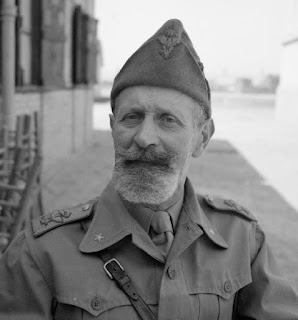
Bergonzoli's beard made him an instantly recognisable figure among Italian generals
Bergonzoli's beard made him an instantly
recognisable figure among Italian generals
The military commander Annibale Bergonzoli, who served the Italian army in both world wars and led an Italian expeditionary force supporting General Francisco Franco’s nationalists in the Spanish Civil War, was born on this day in 1884 in Cannobio, a town on the shore of Lago Maggiore.

Bergonzoli had the distinction of being awarded a medal for bravery by the British during World War One only to be held by them as a prisoner of war after being captured during World War Two.

As a boy, Bergonzoli always had a taste for adventure. He completed a 1.5 mile (2.4km) swim across Lago Maggiore at the age of seven. He enrolled at the Military Academy of Modena, graduating with the rank of sub-lieutenant in 1907.

He joined the Royal Italian Army in 1911 and was immediately sent to take part in the Italo-Turkish War, helping to take control of the areas of the Ottoman Empire in Libya that became known as Italian Tripolitania and Cyrenaica, as well as some islands in the Aegean Sea.  He remained in Libya for some years after the conflict.

In the First World War, after initially declaring neutrality, Italy sided with Britain, France and Russia against Germany and Austria-Hungary and Bergonzoli was awarded the British Military Cross for bravery for his defence of Monte Rovegno in Liguria. He had a prominent role in the Salonika Campaign in the Balkans, in which he became part of the Allied High Command as a combined force of Austria, Germany and Bulgaria was defeated.

Some of the 30,000 Italians taken prisoner  following the damaging defeat at Bardia
Some of the 30,000 Italians taken prisoner 
following the damaging defeat at Bardia
By the time the First World War ended, Bergonzoli had risen to the rank of Lieutenant Colonel and was Chief of Staff of the XXV Division. Promotion to Colonel soon followed.  Red-haired, he had also grown an extravagant and striking beard that gained him the nickname barba elettrica - ‘electric whiskers’.

When the Fascists took control of Italy in 1922 and reformed the army, Bergonzoli retained his rank and was put in control of three regiments.

Elevated to Brigadier General in 1935, he participated in the Italian invasion of Ethiopia, playing a major role in the capture of the city of Neghelli as Italy annexed the country to the Kingdom of Italy.

Commended by Benito Mussolini, the Fascist leader who was by then ruling Italy as a dictator, he was then sent to Spain as the head of an infantry division of the Corpo Truppe Volontarie, an expeditionary force sent to support Franco in the Spanish Civil War. He was awarded the Gold Medal of Military Valour by Mussolini for leading the capture of Santander on behalf of Franco’s nationalists. 

Further promoted to Major General and then Lieutenant General, Bergonzoli, he was put in charge of the XXIII Italian Army Corps as an Italian invasion of Egypt was attempted in World War Two, in which the British were now his enemies.

He fared less well this time. He was commander of the Italian garrison in Bardia, a strongly defended seaport in the east of Libya, close to the border with Egypt, that fell in January 1941 following an assault by a combined force of British and Australian troops.

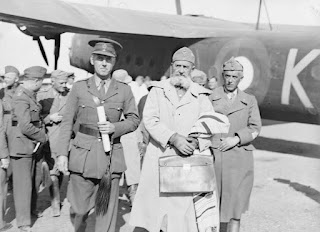
The captive Bergonzoli with other Italian officers after disembarking at Cairo in February, 1941
The captive Bergonzoli with other Italian officers
after disembarking at Cairo in February, 1941
It was a serious defeat for the Italians, who lost almost 5,500 personnel killed or wounded, with a further 30,000 taken prisoner along with a considerable quantity of armaments and vehicles. Bergonzoli managed to avoid being captured and escaped with other soldiers to Tobruk, crossing some 120km of desert on foot.

As the Allies advanced into Libya, he left Tobruk before the town was captured, retreating further to the west, but as the Italians prepared to evacuate they were engaged again at Beda Fomm on the Gulf of Sirte. This time, Bergonzoli was taken prisoner by Australian troops among 25,000 more Italian personnel. 

As a prisoner of war, Bergonzoli was taken first to Yol, a British camp in India, in the far north of the country towards the Himalayan mountain range, and then transferred to the United States, to be held first in Monticello, Arkansas and later Hereford, Texas.

After the Italian surrender and the armistice of September 1943, Bergonzoli refused any form of collaboration with the Anglo-Americans, who in turn refused to allow him to return to Italy, declaring him mad and holding him for a further two and a half years in the psychiatric ward of the Long Island military hospital, New York.

Finally released in March 1946, he was reinstated to the army of the new Italian Republic and given the rank of lieutenant general in 1947 before being permanently discharged later that year at the age of 62.

In retirement, Bergonzoli returned to live in Cannobio until his death in May, 1973. He is buried in a modest tomb at the town’s cemetery.

Cannobio is a pretty town on the western shore of Lago Maggiore, not far from the Swiss border
Cannobio is a pretty town on the western shore
of Lago Maggiore, not far from the Swiss border
Travel tip:

Cannobio, where Bergonzoli was born and died, can be found on the western shore of Lago Maggiore towards the northern end of the lake, only a few kilometres from the border between Italy and Switzerland. It is regarded as one of the prettiest towns on the western side of the lake, with a long waterfront, the centrepiece of which is the lakeside Piazza Vittorio Emanuele, which was refurbished in 2004 and completely relaid in cobblestones and granite slabs.  In history, the people of Cannobio are remembered for their bravery in repelling an Austrian attack in 1859, while fighting on the side of Giuseppe Garibaldi during the struggle for unification, and for rising up against the Nazi and Fascist regime in 1944.


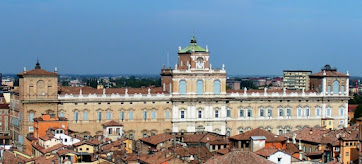
The Baroque 17th century Ducal Palace, which dominates the skyline of the city of Modena
The Baroque 17th century Ducal Palace, which
dominates the skyline of the city of Modena
Travel tip:

The military academy where Bergonzoli enrolled as a young would-be soldier is today Italy's national military academy. It is housed within Modena’s huge, Baroque Ducal Palace, the prominent feature of the city’s skyline, which was built in the 17th century by the architect Luigi Bartolomeo Avanzini on behalf of Francesco I on the site of a former castle in 1635. Modena, on the south side of the Po Valley in the Emilia-Romagna region of Italy, is known for its car industry - Ferrari, De Tomaso, Lamborghini, Pagani and Maserati have all been located there - and for producing balsamic vinegar. Operatic tenor Luciano Pavarotti and soprano Mirella Freni were both born in Modena.

Also on this day:

1512: The first public viewing of Michelangelo’s ceiling frescoes in the Sistine Chapel

1546: The death of painter and architect Giulio Romano

1596: The birth of painter and architect Pietro da Cortona

1757: The birth of sculptor Antonio Canova


Home


31 October 2021

31 October

Eduardo De Filippo - Neapolitan dramatist

Playwright captured essence of city's spirit

One of Italy’s greatest dramatists, Eduardo De Filippo, died on this day in 1984 in Rome at the age of 84.  An actor and film director as well as a playwright, De Filippo – often referred to simply as Eduardo – is most remembered as the author of a number of classic dramas set in his native Naples in the 1940s that continue to be performed today.  Arguably the most famous of these was Filomena Marturano, upon which was based the hit movie Marriage, Italian Style, which starred Sophia Loren and Marcello Mastroianni under the direction of Vittorio de Sica.  De Filippo’s other memorable works included Napoli Milionaria, Le voci di dentro and Sabato, domenica e lunedi.  All of these plays showcased De Filippo’s ability to capture the essence of life in Naples in his time, particularly in the working class neighbourhoods that he felt were the beating heart of the city.  Rich in Neapolitan dialect, they were often bittersweet comedies of family life. They were social commentaries in which typical themes were the erosion of morals in times of desperation, the struggle of the downtrodden to retain their dignity and the preservation of family values even in the most poverty-stricken households.  Read more…

____________________________________________________________

Bud Spencer – swimmer-turned-actor

Competed at two Olympics before turning to screen career

The actor known as Bud Spencer was born Carlo Pedersoli on this day in 1929 in Naples.  He was best known for the series of so-called spaghetti westerns and comedies he made with another Italian-born actor, Terence Hill.  Hill was from Venice and his real name was Mario Girotti.  They began their partnership in 1967 in a spaghetti western directed by Giuseppe Colizzi called God Forgives…I Don’t! and were asked to change their names so that they would sound more American.  Pedersoli came up with Bud Spencer because his movie idol was Spencer Tracy and his favourite American beer was Budweiser.   The two would go on to make 18 movies together, with westerns such as Ace High (1968) and They Call Me Trinity (1970) winning them box office success.  As Carlo Pedersoli, he had already achieved a measure of fame as a swimmer, the first Italian to swim the 100m freestyle in less than one minute.  He represented Italy at the Olympics in Helsinki in 1952 and Melbourne four years later, on each occasion reaching the semi-final in the 100m freestyle.  He also played professional water polo, winning an Italian championship with SS Lazio and a gold medal at the 1955 Mediterranean Games in Barcelona.  Read more…

___________________________________________________________

Galileo Ferraris - electrical engineer

Pioneer of alternating current (AC) systems

The physicist and electrical engineer Galileo Ferraris, who was one of the pioneers of the alternating current (AC) system for transmitting electricity and invented the first alternators and induction motors, was born on this day in 1847 in Piedmont.  The AC system was a vital element in the development of electricity as a readily-available source of power in that it made it possible to transport electricity economically and efficiently over long distances.  Ferraris did not benefit financially from his invention, which is still the basis of induction motors in use today. Another scientist, the Serbian-born Nikola Tesla, patented the device after moving to the United States to work for the Edison Corporation.  Tesla had been working simultaneously on creating an induction motor but there is evidence that Ferraris probably developed his first and as such is regarded by many as the unsung hero in his field.  He saw himself as a scientist rather than an entrepreneur and, although there is no suggestion that his ideas were stolen, openly invited visitors to come in and see his lab.  Unlike Tesla, he never intended to start a company to manufacture the motor and even had doubts whether it would work.  Read more…


Home