9 November 2021

Piero Cappuccilli - operatic baritone

Singer highly respected for interpretation of Verdi roles
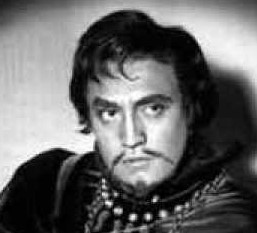
Piero Cappuccilli as Ernani in a performance of Verdi's Don Carlo
Piero Cappuccilli as Ernani in a
performance of Verdi's Don Carlo
Piero Cappuccilli, regarded during a 41-year opera career as one of the finest Italian baritones of the late 20th century, was born on this day in 1926 in Trieste, in the far northeast corner of the peninsula.

Although not exclusively, Cappuccilli’s focus was predominantly the work of Italian composers, in particular Giuseppe Verdi, in whose operas he sang 17 major roles.

He sang at many of the world’s great opera houses, travelling to South America and the United States, where he made his debut at the Metropolitan Opera in New York as Giorgio Germont in Verdi’s La traviata in 1960 and had a particular association with the Lyric Opera in Chicago, where he made his first appearance in 1969 as Sir Richard Forth in Bellini's I puritani and returned many times before his farewell performances there in 1986.

Nonetheless, he spent most of his time in Europe. He made his debut at Milan’s Teatro alla Scala in 1964 as Enrico in Donizetti’s Lucia di Lammermoor; at the Royal Opera House in Covent Garden as Germont in 1967; and at the Opéra de Paris in 1978, singing Amonasro in Verdi’s Aida. He also appeared at the Vienna State Opera and the Salzburg Festival and worked with Europe’s finest conductors, including Herbert von Karajan, Gianandrea Gavazzeni, Claudio Abbado, and Carlos Kleiber.
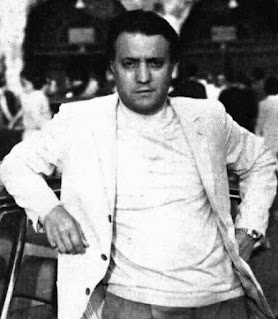
Cappuccilli was initially reluctant to pursue the idea of a career in opera
Cappuccilli was initially reluctant to
pursue the idea of a career in opera
His retirement, in 1992 in his mid-60s, was enforced, unfortunately, after he was seriously injured in a road accident following a performance of Verdi’s Nabucco at the Arena di Verona. Although he recovered enough to make further contributions to the world of opera as a teacher, the damage to his body left him unable to cope with the physical demands of performing on stage.

Cappuccilli first encountered opera as a 10-year-old boy, during a family holiday, when he was recruited for the children's chorus of a production of Bizet’s Carmen in Naples. He thought nothing at that stage of a career in music, focussing his ambitions on becoming an architect.

As a young adult, friends noted the quality of his voice whenever he sang and in 1949 encouraged him to audition at the opera house in Trieste, the Teatro Giuseppe Verdi. Luciano Donaggio, an opera teacher, heard him and thought he had enough potential to offer him free lessons. 

Even then, Cappuccilli was not convinced it was worth his time and gave up for a while. But Donaggio ultimately persuaded him he was good enough to contemplate a career in opera and he joined the company at the Teatro Giuseppe Verdi in 1951, taking a succession of small parts.
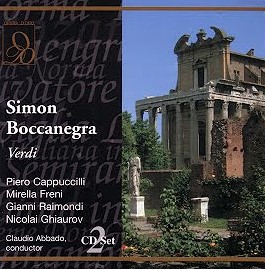
Many of Cappuccilli's performances have been preserved in a large discography
Many of Cappuccilli's performances have
been preserved in a large discography
His major break came in 1955 when he auditioned at La Scala in Milan, on the back of which it was suggested he enter the Viotti International Music Competition in Vercelli, Piedmont, now world-renowned but at that stage still in its relative infancy. He won first prize in his category and offers of more important roles soon followed. Cappuccilli made his debut in a major role in the Teatro Nuovo in Milan in 1957, singing Tonio in Leoncavallo’s Pagliacci.

In the years that followed, Cappuccilli not only excelled for the rich quality of his voice, outstanding breath control and immaculate phrasing but for the sensitive interpretation of the characters he portrayed. Critics spoke of him in the same breath as Tito Gobbi and Ettore Bastianini among the great Italian baritones.

He seldom disappointed in any role but his performances in Aida and Forza del Destino at La Scala in the 1960s attracted particularly enthusiastic reviews, while London critics were wowed by his interpretation of the title role in Verdi's Simon Boccanegra when the La Scala company guested at Covent Garden in 1976.

Happily, many great performances were preserved in an extensive discography that includes performances alongside Maria Callas, Katia Ricciarelli, Placido Domingo and Mirella Freni under the baton of Von Karajan and Abbado among others.

Cappuccilli spent his final years back in Trieste, where he died in 2005, aged 78. He left a wife, Graziella, three children and two grandchildren. He is buried at the Cimitero di Sant’Anna.

A view of the Canale Grande in Trieste, the  maritime capital of  Friuli-Venezia Giulia
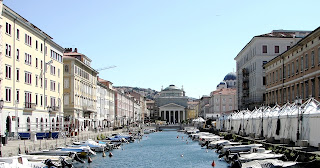
A view of the Canale Grande in Trieste, the 
maritime capital of  Friuli-Venezia Giulia
Travel tip:

The seaport of Trieste, capital of the Friuli-Venezia Giulia region, officially became part of the Italian Republic in 1954. Trieste had been disputed territory for thousands of years and after it was granted to Italy in 1920, thousands of the resident Slovenians left. The final border with Yugoslavia was settled in 1975 with the Treaty of Osimo. The area today is one of the most prosperous in Italy and Trieste is a lively, cosmopolitan city and a major centre for trade and ship building.  The city has a coffee house culture that dates back to the Hapsburg era.  Caffè Tommaseo, in Piazza Nicolò Tommaseo, near the grand open space of the Piazza Unità d’Italia, is the oldest in the city, dating back to 1830.

Piazza San Babila is the home of  Milan's Teatro Nuovo today
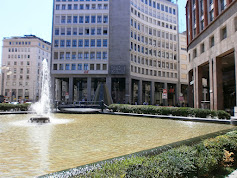
Piazza San Babila is the home of 
Milan's Teatro Nuovo today
Travel tip:

The Teatro Nuovo theatre in Milan, located on the Piazza San Babila in the lower level of the Palazzo del Toro, was designed by architect Emilio Lancia and was the project of the impresario Remigio Paone. It was inaugurated in December 1938 with a performance of Eduardo De Filippo's comedy Ditegli sempre di sì. Piazza San Babila is characterized by the presence of a fountain built in 1997 by the architect Luigi Caccia Dominioni in conjunction with the Ente Fiera Milano.

Also on this day:

1383: The birth of military leader Niccolò III d’Este

1697: The pope orders the relocation of the city of Cervia, in Emilia-Romagna, because of toxic air from surrounding marshland 

1877: The birth of Enrico De Nicola, the first president of Italy

1921: The birth of football stickers pioneer Giuseppe Panini

1974: The birth of footballer Alessandro Del Piero


(Image of Canale Grande by Severin Herrmann from Pixabay)


Home


8 November 2021

8 November

Francesco Molinari – golfer

Second win in Italian Open gave him unique status

Francesco Molinari, one of two golfing brothers who have advanced the cause of the sport in Italy more than anyone in the modern era, was born on this day in 1982 in Turin.  He and Edoardo, who is 21 months’ his senior, won the Mission Hills World Cup in China in 2009, the first time Italy had won the two-player team event.  And when he sank a 5ft (1.5m) putt to beat the Masters champion Danny Willett to win the Italian Open in Monza in September 2016, Francesco became the first Italian to win his country’s open championship twice since it became part of the European tour in 1972.  He had won it for the first time in 2006 at the Castello di Tolcinasco course just outside Milan, which gave him his first European tour victory at the age of 23 and made him the first Italian to win the tournament since Massimo Mannelli in 1980.  The success made such an impact in Italy, and in Turin in particular, that Francesco was asked to be one of the official torch carriers on behalf of the host nation at the 2006 Winter Olympics, which were staged in Turin. Francesco had yet to win a major at the time this was originally posted but went close in the 2017 PGA Championship at the Quail Hollow Club in Charlotte, North Carolina, before winning the Open Championship at Carnoustie in Scotland in 2018.  Read more…

__________________________________________________________

Virna Lisi - actress

Screen siren turned back on glamour roles to prove talent

The actress Virna Lisi, born on this day in 1936, might have become the new Marilyn Monroe if she had allowed Hollywood to shape her career in the way the movie moguls had planned.  She was certainly blessed with all the physical attributes to fulfil their commercial ambitions - no less a screen goddess than Brigitte Bardot called her 'the most beautiful woman in the world' - but decided she was too good an actress to be typecast as mere window dressing or eye candy and ultimately rejected their advances.  In time she proved to herself that she made the right decision when her portrayal of the manipulative Catherine de' Medici, the Italian who was Queen of France between 1547 and 1559, in Patrice Chéreau’s 1994 film La Reine Margot won her three awards - Best Actress at the Cannes Film Festival, a César (the French equivalent of an Oscar) and the Italian film critics' award, the Nastro d'Argento (Silver Ribbon).  Born Virna Pieralisi in the town of Jesi, in the province of Ancona  in Marche, where her father had a marble importing business, she moved with her family to Rome in the early 1950s.  Read more…

__________________________________________________________

Sandro Mazzola - footballer

Tragedy instilled determination to succeed

The footballer Sandro Mazzola, widely regarded as one of Italy’s greatest players after a glittering career with Internazionale of Milan and the Italian national team, was born on this day in 1942 in Turin.  A forward or attacking midfield player with all the attributes of the world’s best players, Mazzola won four Serie A titles and two European Cups for Inter-Milan, largely under the coaching of Helenio Herrero. His goals tally in Serie A games alone was 116 in 417 appearances. He was capped 70 times by the national team, part of the side that won the 1968 European championships and reached the World Cup final in 1970.  Mazzola always saw his success as a tribute to his father, Valentino, a brilliant player who was captain of the Torino team that was almost entirely wiped out in the Superga air disaster of 1949, when a plane carrying the team back from a friendly in Portugal crashed in thick fog into the rear wall of the Basilica of Superga, which overlooks the city of Turin.  His parents had divorced in 1946 but Valentino won custody of his son and instilled in him a love of football, as well as teaching him the basic skills.  Read more…

_________________________________________________________

Francis I of the Two Sicilies

Death of the king who failed to impress Lady Blessington 

Francis I died in Naples on this day in 1830 after having been King of the Two Sicilies for five years.  The Two Sicilies was the largest of all the Italian states before unification, originally formed as a union between the Kingdom of Sicily and the Kingdom of Naples.  It lasted until 1860 when it was annexed by the Kingdom of Sardinia, which became Italy in 1861.  The Two Sicilies originated when the Kingdom of Sicily was divided in 1283. The King at the time lost the island of Sicily but kept control of his part of southern Italy, which was also referred to as Sicily. The Two Sicilies had capitals in Palermo and Naples.  After Francis succeeded his father Ferdinand I in 1825 he took little part in government and lived with his mistresses in constant fear of assassination.  He is remembered for getting the Austrian occupation force removed from Naples, where it had been billeted at the expense of the treasury, and for founding the Royal Order of Francis I to reward civil merit.  We are fortunate to have been left with an impression of him by Lady Blessington, an English aristocrat, who lived in Naples between 1823 and 1826 and kept a fascinating diary of her time there.   In July 1823 she encountered Francis while he was still Prince of Salerno and heir presumptive to the throne.  Read more…

_______________________________________________________

Paolo Taviani - film director

Half of a successful partnership with brother Vittorio

The film director Paolo Taviani, the younger of the two Taviani brothers, whose work together won great acclaim and brought them considerable success in the 1970s and 80s in particular, was born on this day in 1931 in San Miniato, Tuscany.  With his brother Vittorio, who was two years his senior and died in April of this year, he wrote and directed more than 20 films.  Among their triumphs were Padre Padrone (1977), which won the Palme d’Or and the International Federation of Film Critics (FIPRESCI) prize at the Cannes Film Festival, La notte di San Lorenzo (The Night of the Shooting Stars) 1982, which won the Grand Prix du Jury at Cannes, and Caesar Must Die (2012), which won the Golden Bear at the Berlin International Film Festival.  The brothers famously would work in partnership, directing alternate scenes, one seldom criticising the other, if ever. The actor Marcello Mastroianni, who starred in their 1974 drama Allonsanfàn, is said to have addressed the brothers as “Paolovittorio.”  They were both born and raised in San Miniato by liberal, anti-Fascist parents who introduced them to art and culture.  Read more…


EN - 728x90

Home


7 November 2021

7 November

Luigi Riva - an Azzurri great

Italy's record goalscorer and hero of Cagliari

Luigi 'Gigi' Riva, who was born on this day in 1944, is widely regarded as one of the finest strikers in the history of Italian football.  Despite playing in an era when football in Italy was notoriously defensive, he scored more than 200 goals in a 16-year club career, 156 of them in Serie A for Cagliari, with whom he won the Scudetto (shield) as Italian League champions in 1970.  Nicknamed 'Rombo di tuono' - thunderclap - by the football writer Gianni Brera, Riva is also the all-time leading goalscorer for the Italian national team with 35 goals, his record having stood since 1974.  After his playing career, Riva spent 23 years as part of the management team for the Azzurri and was a key member of the backroom staff when Italy won the World Cup for a fourth time in 2006.  Born in Lombardy, not far from Lake Maggiore, Riva spent virtually his whole football career with Cagliari and made his home in Sardinia.  The 1969-70 title is the only championship in the club's history and Riva, who scored 21 goals in the title-winning season, is as revered on the island as Diego Maradona is in Naples.  Although he came from a loving home in the small town of Leggiuno, just a few kilometres inland from the shores of Lake Maggiore, Riva had a tough upbringing.  Read more…

__________________________________________________________

Niccolò Machiavelli - statesman and diplomat

Enforced retirement gives public servant time to write about his ruthless ideas

Statesman and diplomat Niccolò Machiavelli, whose name has become synonymous with the words ‘cunning’ and ‘duplicity’, was dismissed from office in Florence on this day in 1512 by a written decree issued by the Medici rulers.  Machiavelli was forced to withdraw from public life and retired to his home in the Chianti region of Tuscany, where he wrote his most famous work, The Prince, which was to give the world the political idea of ‘the ends justify the means’.  Had the Medici not distrusted him, Machiavelli might have continued to serve in Florence as a diplomat and military leader.  He may never have passed on to mankind the ideas he had learnt from his work during the turbulent period in Italian history when popes and other European countries were battling against Italy’s city states for power.  In The Prince he was able to write with first-hand knowledge about the methods he had seen used by Cesare Borgia and his father Pope Alexander V1 to take over large parts of central Italy.  The ideas he put forward were to make the word ‘machiavellian’ a regularly used pejorative adjective and the phrase ‘Old Nick’ to become an English term for the devil.  Read more…

___________________________________________________________

Gaspare Tagliacozzi - surgeon

Professor invented rhinoplasty procedure

Pioneering plastic surgeon Gaspare Tagliacozzi died on this day in 1599 in Bologna.  During his career, Tagliacozzi had developed what became known as ‘the Italian method’ for nasal reconstruction.  He improved on the procedure that had been carried out by the 15th century Sicilian surgeons, Gustavo Branca, and his son, Antonio.  Tagliacozzi wrote a book, De Curtorum Chirugia per Insitionem - On the Surgery of Mutilation by Grafting - which described in great detail the procedures carried out in the past to repair noses amputated during battle.  Surgeons who came after him credit him with single-handedly revolutionising the procedure and inventing what is today referred to as a rhinoplasty procedure.  Tagliacozzi was born in Bologna in 1545. He studied medicine, natural sciences and anatomy at the University of Bologna, gaining a degree in philosophy and medicine by the age of 24.  After he was appointed professor of surgery and professor of anatomy at the University he taught at the Archiginnasio, famous for its anatomical theatre, where he procured the bodies of executed prisoners to use in dissections.  Read more…

____________________________________________________________

Feast day of Ercolano – patron saint of Perugia

Bishop was martyred after trying to save city

Today sees the Umbrian city of Perugia celebrate one of the two annual feast days of one of its patron saint, Ercolano, who according to legend was martyred on this day in 549 at the hands of the Ostrogoths, who ruled much of Italy at that time and had placed the city under siege.  Herculanus, as he is also known, was the Bishop of Perugia and as such was charged with trying to bring comfort to his flock in the face of inevitable capture by the Ostrogoths, the tribe, thought to have originated in Scandinavia, which had swept into Italy at the beginning of the sixth century.  They had a large, well-equipped army – more powerful than the army Perugia possessed, although it had enough soldiers to deter an advance – and the Ostrogoth leader, Totila, was prepared to wait outside the walls of the city for as long as it would take to starve the population into surrender.  Perugia’s authorities did all they could to prolong the siege, rationing supplies and ensuring none were wasted, but days passed into months and years and there was no evidence that the amply fed army at the gates of the city was planning to move on.  Read more…


Home


6 November 2021

6 November

Giovanni Buitoni - entrepreneur

Turned family business into multinational company

Giovanni Buitoni, the entrepreneur who turned Buitoni pasta and Perugina chocolates into the international brands they are today, was born on this day in 1891 in Perugia.  The Buitoni family had been making pasta since 1827, when Giovanni’s great grandmother, Giulia, opened a small shop in the Tuscan town of Sansepolcro, in order to support the family after her husband, Giovan Battista Buitoni, had become ill.  She had her own recipe for pasta that used only high quality durum wheat.  Giulia had pawned her wedding jewellery in order to set up the shop but the business did so well that in 1856 two of the couple’s nine children, Giuseppe and Giovanni, opened a factory in Città di Castello, just over the border in northern Umbria, to manufacture pasta using a hard durum wheat they sourced in Puglia.  Giovanni’s sons, Antonio and Francesco, continued the company’s expansion, founding manufacturing plants in other towns, including Perugia.  It was in Perugia in 1907 that Francesco, noting the increasing popularity of chocolate, joined with several partners in launching the Perugina confectionary company. Giovanni junior’s destiny was probably always to have a role in the family business, although it came rather sooner than he expected.  Read more…

___________________________________________________________

Enzo Biagi - author and journalist

Much respected presenter taken off air by Berlusconi

Enzo Biagi, the distinguished print and television journalist and author of more than 80 books, died in Milan on this day in 2007, at the age of 87.  A staunch defender of the freedom of the press, Biagi himself was the victim of censorship from the highest level of the Italian government in 2002 when prime minister Silvio Berlusconi effectively sacked him from the public broadcaster RAI for what he called "criminal use" of the network.  In what became known as il Editto bulgaro - the Bulgarian Edict - because he made the pronouncement during a state visit to Sofia, Berlusconi named another journalist, Michele Santoro, and the satirical comedian, Daniele Luttazzi, as guilty of similar conduct and said it was his duty to "not to allow this to happen".  It meant that the last years of Biagi's life were marred somewhat by an absence from the screen that lasted five years.  He made an emotional comeback in April 2007, seven months before his death, when Romani Prodi had begun his second stint as PM and saw to it that he was reinstated.  Berlusconi's disapproval of Biagi was thought to have related to two interviews he conducted during the run-up to the 2001 elections.  Read more…

__________________________________________________________

Cesare Lombroso – criminologist

Professor who first encouraged study of criminal mind

Cesare Lombroso, a university professor often referred to as ‘the father of criminology’ was born on this day in 1835 in Verona.  Although many of his views are no longer held to be correct, he was the first to establish the validity of scientific study of the criminal mind, paving the way for a generation of psychiatrists and psychologists to create a greater understanding of criminal behaviour.  In broad terms, Lombroso's theory was that criminals could be distinguished from law-abiding people by multiple physical characteristics, which he contended were throwbacks to primitive, even subhuman ancestors, which brought with them throwbacks to primitive behaviour that went against the rules and expectations of modern civilized society.  Through years of postmortem examinations and comparative studies of criminals, the mentally disturbed and normal non-criminal individuals, Lombroso formed the belief that ‘born criminals’ could be identified by such features as the angle of their forehead, the size of their ears, a lack of symmetry in the face or even arms of excessive length.  Read more…

_____________________________________________________________

Vino Novello

Raise a glass to autumn in Italy

Italy’s new wine from this year’s harvest - Vino Novello - goes on sale in the shops and will be served in bars and restaurants from around today.  The light, fruity, red wine, produced throughout Italy from different grape varieties, is enjoyable to drink and a bargain buy to take home with you.  Vino Novello is often similar in taste, body and colour to the French wine, Beaujolais Nouveau, which is exported to a number of other countries after its release in the third week of November.  Like Beaujolais Nouveau, Vino Novello has a low alcohol content and is meant to be drunk while it is still young. The wine should be consumed quickly after the bottle is opened and unopened bottles should be kept for only a few months. In some parts of Italy there is a tradition that the last days to drink it are i giorni della merla (the days of the blackbird), which are traditionally the coldest days at the end of January.  A major area for production is the Veneto, with the merlot grape being the one most used by winemakers to make Vino Novello. Many wine producing areas hold feste to celebrate and will serve local specialities to eat with the new wine.  Read more…


Home