25 February 2022

25 February

Alberto Sordi - actor

Comic genius who appeared in 190 films

Alberto Sordi, remembered by lovers of Italian cinema as one of its most outstanding comedy actors, died on this day in 2003 in Rome, the city of his birth.  He was 82 and had suffered a heart attack.  Italy reacted with an outpouring of grief and the decision was taken for his body to lie in state at Rome's town hall, the Campidoglio.  Streams of his fans took the opportunity to file past his coffin and when his funeral took place at the Basilica of San Giovanni in Laterano it was estimated that the crowds outside the church and in nearby streets numbered one million people.  Only the funeral of Pope John Paul II, who died two years later, is thought to have attracted a bigger crowd.  Sordi was the Italian voice of Oliver Hardy in the early days of his career, when he worked on the dubbing of the Laurel and Hardy movies.  He made the first of his 190 films in 1937 but it was not until the 1950s that he found international fame.  He appeared in two movies directed by Federico Fellini - The White Sheik and I vitelloni.  In the latter, he played an oafish layabout, something of a simpleton but an effeminate and vulnerable character to whom audiences responded with warmth and affection due to Sordi's interpretation.  Read more…

_____________________________________

Benedetto Croce – philosopher and historian

Prolific writer opposed the Fascists and supported democracy

Benedetto Croce, one of the most important figures in Italian life and culture in the first half of the 20th century, was born on this day in 1866 in Pescasseroli in the region of Abruzzo.  Croce was an idealist philosopher, historian and erudite literary scholar whose approach to literature influenced future generations of writers and literary critics. He was nominated for the Nobel Prize in Literature 16 times.  He became a Senator in 1910 and was Minister for Education from 1920 to 1921 in the last pre-Fascist government of the so-called Giolitti era. He is also remembered for his major contribution to the rebirth of Italian democracy after World War II.  Croce was born into a wealthy family and raised in a strict Catholic environment.  However, from the age of 16 he gave up Catholicism and developed a personal philosophy of spiritual life.  In 1883, while he was still a teenager, he was on holiday with his family on the island of Ischia when an earthquake struck Casamicciola and destroyed the house they were staying in. His mother, father and sister were all killed, but although he was buried for a long time, he managed to survive.  Read more…

_______________________________________

Enrico Caruso – opera singer

Tenor's voice still regarded as greatest of all time 

Operatic tenor Enrico Caruso was born on this day in 1873 in Naples.  Believed by many opera experts to be the greatest tenor of all time, Caruso had a brilliant 25-year singing career, appearing at many of the major opera houses in Europe and America.  He made more than 200 recordings of his beautiful voice, some made as early as 1902.  Caruso was born in Via San Giovanello agli Ottocalli in Naples and baptised the next day in the nearby church of San Giovanni e Paolo.  At the age of 11 he was apprenticed to a mechanical engineer and also worked alongside his father in a factory.  At the same time he was singing in his church choir and was told his voice showed enough promise for him to consider becoming a professional singer.  Until she died in 1888, he was encouraged by his mother. To earn money, he started to work as a street singer in Naples, progressing to singing Neapolitan songs as entertainment in cafes. Having decided to become an opera singer, Caruso took singing lessons, keeping up with them even during his compulsory military service.  He made his stage debut in 1895 at the Teatro Nuovo in Naples.  Read more...

______________________________________

Carlo Goldoni – playwright

Greatest Venetian dramatist whose work still entertains audiences today

Carlo Goldoni, the author of The Servant of Two Masters, one of Italy’s most famous and best-loved plays, was born on this day in 1707 in Venice.  Goldoni became a prolific dramatist who reinvigorated the commedia dell’arte dramatic form by replacing its masked, stock figures with more realistic characters. He produced tightly constructed plots with a new spirit of spontaneity and is considered the founder of Italian realistic comedy.  The son of a physician, Goldoni read comedies from his father’s library when he was young and ran away from his school at Rimini with a company of strolling players when he was just 14.  Later, while studying at the papal college in Pavia, Goldoni read comedies by Plautus, Terence and Aristophanes and learnt French so he could read plays by Molière.  He was eventually expelled for writing a satire about the ladies of Pavia and was sent to study law.  Although he practised law in Venice and Pisa and held diplomatic appointments, his real passion was writing plays for the theatres in Venice.  In 1748 he began writing for the Teatro Sant’Angelo company and dispensed with masked characters altogether for his play, La Pamela, a serious drama based on Samuel Richardson’s novel.  Read more…

_______________________________________

Giovanni Battista Morgagni - anatomist

The father of modern pathological anatomy

Anatomist Giovanni Battista Morgagni, who is credited with turning pathology into a science, was born on this day in 1682 in Forlì in Emilia-Romagna.  Morgagni was professor of anatomy at the University of Padua for 56 years and taught thousands of medical students during his time there.  He was sent by his parents to study philosophy and medicine at the University of Bologna when he was 18 and he graduated as a doctor from both faculties.  In 1706 he published his work, Adversaria anatomica, which was to be the first volume of a series and helped him become known throughout Europe as an accurate anatomist.  He succeeded to the chair of theoretical medicine at the University of Padua in 1712 and was to teach medicine there until his death in 1771.  Morgagni was promoted to the chair of anatomy after his first three years in Padua, following in the footsteps of many illustrious scholars. He brought out five more volumes of his Adversaria anatomica during his early years in Padua.  In 1761, when he was nearly 80, he brought out the work that was to make pathological anatomy into a science – De Sedibus et causis morborum per anotomem indagatis (Of the seats and cause of diseases investigated through anatomy). Read more…


Home


24 February 2022

24 February

NEW
- Renata Scotto - soprano and opera director

Singer who stood in for Callas became an international star

Opera singer Renata Scotto, who was one of the leading sopranos in the world at the height of her career, was born on this day in 1934 in Savona in Liguria.  Admired for her musicality and acting ability, Scotto was one of the most popular singers during the bel canto revival of the 1960s, performing throughout Italy, and in the UK, America, Russia, Japan, Spain, France and Germany.  She sang opposite great tenors such as Mario del Monaco, Alfredo Kraus and Luciano Pavarotti.  Scotto made her stage debut on Christmas Eve 1952 at the age of 18 as Violetta in Giuseppe Verdi’s La traviata, singing to a sold-out house in Savona, her home town. The next day she made her official debut at the Teatro Nuovo in Milan as Violetta. Shortly afterwards, she performed in Giacomo Puccini’s Madama Butterfly in Savona.  In 1953 she appeared at Teatro alla Scala in Milan as Walter in Alfredo Catalani's La Wally alongside Renata Tebaldi and Mario del Monaco and, on the opening night, was called back for 15 curtain calls.  At the Edinburgh Festival in 1957 she stood in for Maria Callas, who had refused to appear saying she was ill, as Amina in La Scala’s production of Vincenzo Bellini’s La sonnambula. Read more…

___________________________________________________________

Sandro Pertini - popular president

Man of the people who fought Fascism

Sandro Pertini, the respected and well-liked socialist politician who served as Italy's President between 1978 and 1985, died on this day in 1990, aged 93.  Pertini, a staunch opponent of Fascism who was twice imprisoned by Mussolini and again by the Nazis, passed away at the apartment near the Trevi Fountain in Rome that he shared with his wife, Carla.  After his death was announced, a large crowd gathered in the street near his apartment, with some of his supporters in tears.  Francesco Cossiga, who had succeeded him as President, visited the apartment to offer condolences to Pertini's widow, 30 years his junior.  They had met towards the end of the Second World War, when they were both fighting with the Italian resistance movement.  Pertini's popularity stemmed both from his strong sense of morality and his unwavering good humour.  He had the charm and wit to win over most people he met and was blessed with the common touch.  He would make a point whenever it was possible of appearing in person to greet parties of schoolchildren visiting the presidential palace, sometimes joined the staff for lunch and endeared himself to the nation with his passionate support for Italy's football team at the 1982 World Cup.  Read more…

_________________________________________________________

Cesare “Caesar” Cardini – restaurateur

Italian emigrant who invented Caesar salad

The restaurateur who history credits with inventing the Caesar salad was born on this day in 1896 in Baveno, a small town on the shore of Lake Maggiore.  Cesare Cardini was one of a large family, with four brothers and two sisters.  In common with many Italians in the early part of the 20th century, his brothers Nereo, Alessandro and Gaudenzio emigrated to the United States, hoping there would be more opportunities to make a living.  Nereo is said to have opened a small hotel in Santa Cruz, California, south of San Francisco, while Alessandro and Guadenzio went to Mexico City.  Cesare left Italy for America in 1913. Records indicate he disembarked at Ellis Island, New York on May 1, having endured the transatlantic voyage as a steerage passenger, sleeping in a cargo hold equipped with dozens of bunk beds, which was the cheapest way to travel but came with few comforts.  He is thought then to have returned to Italy for a few years, working in restaurants in Milan, but ventured back to the United States in 1919.  This time he settled, first in Sacramento, then in San Diego, on the Pacific Ocean and close to the border with Mexico.  Read more…

__________________________________________________________

Bettino Craxi - prime minister

The Socialist who broke the grip of the Christian Democrats

Bettino Craxi, the politician who in 1983 became the first member of the Italian Socialist Party (PSI) to be appointed prime minister, was born on this day in 1934 in Milan.  He was not the first socialist to hold the office - Ivanoe Bonomi had been prime minister for six months in 1920 on an Italian Reformist Socialist Party ticket and succeeded Marshal Pietro Badoglio as leader of the war-torn nation’s post-Mussolini government in 1944. However, Craxi broke the hold of the Christian Democrats, who had been in power continuously since the first postwar elections in 1946.  Craxi was a moderniser who moved his party away from traditional forms of socialism in a way that was replicated elsewhere in Europe, such as in Britain under the New Labour prime minister Tony Blair. Craxi replaced the party’s hammer-and-sickle symbol with a red carnation.  His reputation was ultimately wrecked by a corruption scandal, but during his tenure as prime minister, Italy became the fifth largest industrial nation and gained entry into the G7 Group.  His fiscal policies saw him clash with the powerful trade unions over the abolition of the wage-price escalator.  Read more…

________________________________________________________

L’Orfeo – an early opera

The lasting appeal of Monteverdi’s first attempt at opera

L’Orfeo by Claudio Monteverdi, the earliest opera still being regularly staged, had its first performance on this day in 1607 in Mantua.  Two letters, both dated 23 February, 1607, refer to the opera due to be performed the next day in the Ducal Palace as part of the annual carnival in Mantua in Lombardy.  In one of them a palace official writes: ‘… it should be most unusual as all the actors are to sing their parts.’  Francesco Gonzaga, the brother of the Duke, wrote in a letter dated 1 March, 1607, that the performance had been to the ‘great satisfaction of all who heard it.’  L’Orfeo, or La favola d’Orfeo as it is sometimes called, is based on the Greek legend of Orpheus. It tells the story of the hero’s descent to Hades and his unsuccessful attempt to bring his dead bride, Eurydice, back to the living world.  While it is recognised that L’Orfeo is not the first opera, it is the earliest opera that is still regularly performed in theatres today and it established the basic form that European opera was to take for the next 300 years.  The composer, Claudio Monteverdi, was born in Cremona in Lombardy in 1567.  Read more…


Home


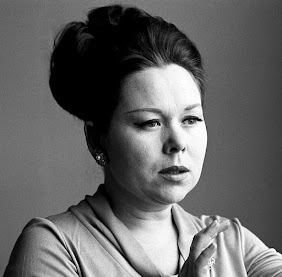
Renata Scotto - soprano and opera director

Singer who stood in for Callas became an international star

After making her debut in 1952, Scotto had established herself as a star within five years
After making her debut in 1952, Scotto had
established herself as a star within five years
Opera singer Renata Scotto, who was one of the leading sopranos in the world at the height of her career, was born on this day in 1934 in Savona in Liguria.

Admired for her musicality and acting ability, Scotto was one of the most popular singers during the bel canto revival of the 1960s, performing throughout Italy, and in the UK, America, Russia, Japan, Spain, France and Germany.

She sang opposite great tenors such as Mario del Monaco, Alfredo Kraus and Luciano Pavarotti.

Scotto made her stage debut on Christmas Eve 1952 at the age of 18 as Violetta in Giuseppe Verdi’s La traviata, singing to a sold-out house in Savona, her home town. The next day she made her official debut at the Teatro Nuovo in Milan as Violetta. Shortly afterwards, she performed in Giacomo Puccini’s Madama Butterfly in Savona.

In 1953 she appeared at Teatro alla Scala in Milan as Walter in Alfredo Catalani's La Wally alongside Renata Tebaldi and Mario del Monaco and, on the opening night, was called back for 15 curtain calls.

At the Edinburgh Festival in 1957 she stood in for Maria Callas, who had refused to appear saying she was ill, as Amina in La Scala’s production of Vincenzo Bellini’s La sonnambula. The performance was a great success and Scotto, at the age of 23, had become an international opera star.

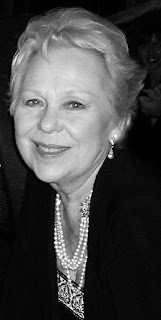
Scotto also achieved much success as a director
Scotto also achieved much
success as a director 
In 1961 she performed the role of Amina again ,appearing with the tenor Alfredo Kraus at La Fenice in Venice.

For more than 40 years, Scotto performed more than 45 different roles in operas written by Donizetti, Meyerbeer, Verdi, Puccini, Bellini, Ponchielli and many more composers.

In 1960, she married Lorenzo Anselmi, who was the first violinist at La Scala. They had two children and eventually the family made their home in America,  where Scotto had great success at the Metropolitan Opera House in New York.  Lorenzo died in 2021 at the age of 87, by which time they had moved back to Italy, returning to Savona.

Since the 1990s, Scotto has been a stage director with many credits to her name. She won an Emmy Award for her telecast of La traviata at New York City Opera in 1995. In 2009, she won an Anton Coppola Award for Excellence in the Arts.

Renata Scotto celebrates her 88th birthday today.

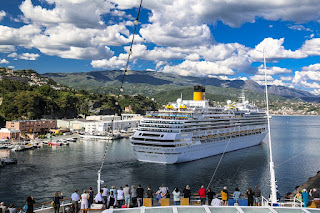
Savona, a centre for shipbuilding, used to have many iron works and foundaries
Savona, a centre for shipbuilding, used to have
many iron works and foundaries
Travel tip:

Liguria’s third largest city after Genoa and La Spezia, Savona used to be one of the biggest centres of the Italian iron industry, the iron works and foundries providing materials for shipbuilding and railways among other things. It also has a busy port but as well as industrial areas the city has a charming medieval centre containing architectural gems such as the Baroque Cattedrale di Nostra Signora Assunta - behind which is Italy’s other Sistine Chapel, like the Rome version erected by Pope Sixtus IV - and the Fortezza del Priamar, built by the Genoese in 1542 after their conquest of the city and later used a prison. The popes Sixtus IV and Julius II were born in the city and it was there in 1830 that the revolutionary Giuseppe Mazzini was imprisoned.   Food specialities include gnocchi with nettles, bardenulla (white polenta flavoured with leek and mushrooms) and tagliatelle with mushrooms.

Find accommodation in Savona with Booking.com

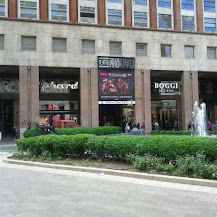
The Teatro Nuovo in Milan is part of a modern shopping complex
The Teatro Nuovo in Milan is part
of a modern shopping complex
Travel tip:

The Teatro Nuovo theatre in Milan, where Scotto made her official debut in Verdi’s La traviata in 1952, is located on the Piazza San Babila in the lower level of the Palazzo del Toro. It was designed by architect Emilio Lancia and was the project of the impresario Remigio Paone. It was inaugurated in December 1938 with a performance of Eduardo De Filippo's comedy Ditegli sempre di sì. Piazza San Babila is characterised by the presence of a fountain built in 1997 by the architect Luigi Caccia Dominioni in conjunction with the Ente Fiera Milano.

Stay in Milan with Booking.com

More reading:

Powerful voice made Mario del Monaco the perfect Otello

A star who prospered despite Madama Butterfly debut flop

The tragedy of Alfredo Catalani's early death

Also on this day:

1607: The debut of Monteverdi’s first opera, L’Orfeo

1896: The birth of restaurateur Cesare ‘Caesar’ Cardini

1934: The birth of politician Bettino Craxi

1990: The death of former president Sandro Pertini

(Picture credits: Savona by Andrea Ridács via Pixabay)


Home


23 February 2022

23 February

Gentile Bellini - Renaissance painter

Bellini family were Venice's leading 15th century artists

Gentile Bellini, a member of Venice's leading family of painters in the 15th century, died in Venice on this day in 1507.  He was believed to be in his late 70s, although the exact date of his birth was not recorded.  The son of Jacopo Bellini, who had been a pioneer in the use of oil paint in art, he was the brother of Giovanni Bellini and the brother-in-law of Andrea Mantegna.  Together, they were the founding family of the Venetian school of Renaissance art.  Although history tends to place Gentile in their shadow, he was considered in his time to be one of the greatest living painters in Venice and from 1454 he was the official portrait artist for the Doges of Venice.  He also served Venice as a cultural ambassador in Constantinople, where he was sent to work for Sultan Mehmed II as part of a peace settlement between Venice and Turkey.  Gentile learned painting in his father's studio.  Once established, he had no shortage of commissions, for portraits, views of the city, and for large paintings for public buildings, often characterised by multiple figures.  He was one of the artists hired by the Scuola Grande di San Giovanni Evangelista to paint a 10-painting cycle known as The Miracle of the Relics of the Cross.   Read more…

__________________________________________________________

John Keats – poet

Writer spent his final days in the Eternal City

English Romantic poet John Keats died on this day in Rome in 1821.  He had been a published writer for five years and had written some of his greatest work before leaving England.  Ode to a Nightingale, one of his most famous poems, was written in the spring of 1819 while he was sitting under a plum tree in an English garden.  Keats was just starting to be appreciated by the literary critics when tuberculosis took hold of him and he was advised by doctors to move to a warmer climate.  He arrived in Rome with his friend, Joseph Severn, in November 1820 after a long, gruelling journey.  Another friend had found them rooms in a house in Piazza di Spagna in the centre of Rome and they went past the Colosseum as they made their way there.  Keats slept in a room overlooking the Piazza and could hear the sound of the fountain outside, which may have inspired the words he later asked to be put on his tombstone.  To begin with he was well enough to go for walks along the Via del Corso and he enjoyed sitting on the Spanish Steps, but he was advised by his doctor against visiting the city’s main attractions.  Read more…

_________________________________________________________

Giovanni Battista de Rossi - archaeologist

Excavations unearthed massive Catacomb of St Callixtus

Giovanni Battista de Rossi, the archaeologist who revealed the whereabouts of lost Christian catacombs beneath Rome, was born on this day in 1822 in the Italian capital.  De Rossi’s most famous discovery – or rediscovery, to be accurate – of the Catacomb of St Callixtus, thought to have been created in the 2nd century by the future Pope Callixtus I, at that time a deacon of Rome, under the direction of Pope Zephyrinus, established him as the greatest archaeologist of the 19th century.  The vast underground cemetery, located beneath the Appian Way about 7km (4.3 miles) south of the centre of Rome, is estimated to have covered an area of 15 hectares on five levels, with around 20km (12.5 miles) of passageways.  It may have contained up to half a million corpses, including those of 16 popes and 50 Christian martyrs, from Pope Anicetus, who died in 166, to Damasus I, who was pontiff until 384. Nine of the popes were buried in a papal crypt.  The complex steadily fell into disuse thereafter and the most important relics were removed over the centuries and relocated to churches around Rome.  Read more…

_________________________________________________________

Corrado Cagli - painter

Jewish artist who fought in World War II as a US soldier

The painter Corrado Cagli, one of the outstanding figures in the New Roman school that emerged in the early part of the 20th century, was born in Ancona on this day in 1910.  He moved with his family to Rome in 1915 at the age of five and by the age of 17 had created his first significant work, a mural painted on a building in Via Sistina, the street that links Piazza Barberini with the Spanish Steps in the historic centre of the city.  The following year he painted another mural inside a palazzo on the Via del Vantaggio, not far from Piazza del Popolo.  In 1932, he held his first personal exhibition at Rome’s Galleria d’Arte Moderna.  At this stage, despite being both Jewish and gay, Cagli had the support of the Fascist government, who commissioned him and others to produce mosaics and murals for public buildings.  Although he would go on to experiment in Neo-Cubist style and metaphysical styles, the aim of the Scuola Romana he sought to establish with fellow artists such as Giuseppe Capogrossi and Emanuele Cavalli was to reaffirm the principles of classical and Renaissance art.  Read more...


Home