15 May 2022

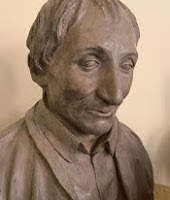
Salvatore Fisichella - operatic tenor

Singer was called the most outstanding interpreter of Bellini of his day

Salvatore Fisichella began singing as a small child
Salvatore Fisichella began
singing as a small child 
Opera singer Salvatore Fisichella, who won international acclaim for his interpretations of the leading roles in Bellini’s operas, was born on this day in 1943 in Catania in Sicily.

Recognised for the ease and vocal brilliance of his singing, Fisichella has specialised in performing in bel canto operas, especially those of Gioachino Rossini, Gaetano Donizetti and Vincenzo Bellini.

He began singing when he was a small child at family parties. He was taught music at the local seminary and from the age of ten sang solos during church services.

After leaving the seminary, Fisichella attended a secondary school that had a science-based curriculum and then studied to become a surveyor.

Once he had qualified as a surveyor, he had little time for singing, but one day he was invited to the wedding of one of his clients. Fisichella had drawn up the plans for the couple’s new home, but on the day of the wedding he found himself filling in for the tenor, who had been scheduled to perform but whose arrival was delayed. 

Fisichella's operatic  debut came in 1971
Fisichella's operatic 
debut came in 1971
The bride, who had specifically requested Ave Maria, was so upset she threatened to postpone the wedding, however Fisichella saved the day by offering to sing in his place. To everyone’s amazement, he sang the part of the tenor perfectly to great acclaim and was even praised by the tenor himself, who had arrived just in time to hear him.

His interest reawakened, Fisichella began working under Maria Gentile, a soprano from Catania who had become a singing teacher. He listened to the singing of Mario del Monaco, Giuseppe Di Stefano, Franco Corelli, Carlo Bergonzi and Gianni Raimondi and occasionally took part in small concerts. His breakthrough came when he won a prestigious singing competition in Spoleto.

In 1971, he was engaged by the Teatro dell’Opera di Roma for two performances of Rigoletto and seven performances of I puritani with Mirella Freni . A year later he  was back at the theatre again to appear with Mirella Freni in Gounoud’s Faust. In 1973 he made his debut at the Teatro Bellini in his home town of Catania in La bohème.

Fisichella subsequently performed all over the world in the top theatres and concert halls and enjoyed enthusiastic receptions and glowing reviews.

Fisichella once received a  22-minute standing ovation
Fisichella once received a 
22-minute standing ovation
In Pesaro in 1975 he became one of the few tenors to rise to the challenge of Rossini’s Messa di Gloria, a score avoided by many bel canto tenors. In 1985, Theatre magazine said he was ‘a tenor to rival Domingo and Pavarotti’. The following year he performed for the first time at the Met in New York alongside Joan Sutherland and was a resounding success.

In 1992 in Paris, he received a 22-minute standing ovation following his performance at the Concerto Belliniano at the Champs Élysées opera house. The French press declared him the most outstanding interpreter of Bellini of his day. In 1994 he was awarded the Bellini D’Oro prize by the Sicilian Tourist Authority. Fisichella continued to perform on the international stage well into this millennium and now passes on his technique and experience by giving masterclasses to up and coming young tenors.

Fisichella lives in Sant’ Agata li Battiati near Catania with his wife, Fiorella, He has a son, Filippo and daughter Lucia Martina (Lulu), who also enjoys singing.

Salvatore Fisichella celebrates his 79th birthday today.

Catania sits in the shadow of Mount Etna, the still-active volcano
Catania sits in the shadow of Mount Etna,
the still-active volcano
Travel tip:

Salvatore Fisichella’s home city of Catania is one of the ten biggest cities in Italy, and the seventh largest metropolitan area in the country, with a population including the environs of 1.12 million. Located on the east coast of Sicily facing the Ionian Sea, it has twice been destroyed by earthquakes, in 1169 and 1693. With Mount Etna looming in the background, it can be compared in some respects with Naples, which sits in the shadow of Vesuvius, in that it lives with the constant threat of a natural catastrophe and as such it has always been a city for living life to the full. In the Renaissance, it was one of Italy's most important cultural, artistic and political centres and enjoys a rich cultural legacy today, with numerous museums and churches, theatres and parks and many restaurants.  

The beautiful Basilica della Collegiata
The beautiful Basilica
della Collegiata
Travel tip:

Catania is notable for its Baroque city centre, which is a UNESCO heritage site, but also has some outstanding classical buildings, ancient remains buried over the centuries.  Greek and Roman cities built on the site of the present city disappeared under layers of lava from Etna's eruptions but parts of them have been unearthed, including an impressive Greek-Roman theatre.  Among the many fine examples of the Sicilian Baroque style, which is typical of the island, including the beautiful Basilica della Collegiata, with its six stone columns and the concave curve of its façade. A prominent architect was Vincenzo Sinatra, a pupil of Rosario Gagliardi, who had been influenced by Gian Lorenzo Bernini’s work in Rome. 

Also on this day:

1567: The baptism of composer Claudio Monteverdi

1902: The birth of band leader Pippo Barzizza

1936: The birth of actress Anna Maria Alberghetti


Home


14 May 2022

14 May

Aurelio Milani - footballer

Centre forward helped Inter win first European Cup

Aurelio Milani, who helped Inter-Milan become the second Italian football club to win the European Cup, was born on this day in 1934 in Desio, about 25km (15 miles) north of Lombardy’s regional capital.   Inter beat Real Madrid 3-1 in the final in Vienna in 1964 to emulate the achievement of city rivals AC Milan, who had become the first European champions from Italy the previous year.  Milani, a centre forward, scored the all-important second goal in the 61st minute after his fellow attacker Sandro Mazzola had given Inter the lead in the first half, receiving a pass from Mazzola before beating Real goalkeeper Vicente Train with a shot from outside the penalty area.  Madrid, whose forward line was still led by the mighty Alfredo di Stefano with Ferenc Puskas playing at inside-left, pulled a goal back but Mazzola added a third for Inter.  But this was the so-called Grande Inter side managed by the Argentinian master-tactician Helenio Herrera, who coached them to three Serie A titles in four years and retained the European Cup by defeating Eusebio’s Benfica 12 months later, when the final was played in their home stadium at San Siro in Milan.  Read more…

_____________________________________

Ludovico Manin - the last Doge of Venice

Surrender to Napoleon ended La Serenissima’s independence 

The man who would become the last of Venice’s 120 Doges, Ludovico Giovanni Manin, was born on this day in 1725. The Doge was the highest political office in Venice, its history going back to the seventh century, when the Venetian Lagoon was a province of the Byzantine (Eastern) Roman Empire and, in common with other provinces, was governed by a Dux (leader).  By the 11th century, when Venice had become an independent republic, the Doge was more of a figurehead, the head of a ruling council, and the title tended to be given to one of the oldest and most respected members of Venetian nobility.  Manin was 64 by the time he was elected but his eight years in post were significant in that they ended with the fall of La Serenissima - as the Venetian Republic was grandly known - its 1,100 years of independence ending with surrender to the French army of Napoleon Bonaparte, who subsequently handed control of the city to Austria.  The eldest of five sons of Lodovico III Alvise and Lucrezia Maria Basadonna, the great-granddaughter of cardinal Pietro Basadonna, Ludovico went straight into public life after completing his studies at the University of Bologna.  At 26 he was elected captain of Vicenza, then of Verona and finally Brescia, before being appointed procurator de ultra of Saint Mark's Basilica in 1764.  Read more…

___________________________________

Marco Zanuso - architect and designer

Innovative ideas put Italy at the forefront of contemporary style

Marco Zanuso, the architect and industrial designer whose innovative ideas helped revolutionise furniture and appliance design in Italy after the Second World War, was born in Milan on this day in 1916.  Influenced by the Rationalist movement that emerged in the 1920s, he was one of the pioneers of the Modern movement, which brought contemporary styling to mass-produced consumer products.  His use of sculptured shapes, bright colours, and modern synthetic materials helped make Italy a leader in furniture fashion.  Italy had for many years been something of a trendsetter in interior design but during the post-War years, with the fall of Fascism and the rise of Socialism, there was a sense of liberation among Italian creative talents.  With the recovery of the Italian economy there was a substantial growth in industrial production and mass-produced furniture. By the 1960s and 1970s, Italian interior design reached its pinnacle of stylishness.  Zanuso was at the forefront, producing designs that used tubular steel, acrylics, latex foam, fibreglass, foam rubber, and injection-moulded plastics.   Read more…

_______________________________________

Battle of Agnadello

The day Venice lost most of its mainland territory

Venetian forces were defeated by troops fighting on behalf of France, Spain and the Pope on this day in 1509 at Agnadello in Lombardy.   As a result, the Republic of Venice was forced to withdraw from much of its territory on the mainland of Italy. The writer Niccolò Machiavelli later wrote in his book, The Prince, that in one day the Venetians had ‘lost what it had taken them 800 years of exertion to conquer.’  Louis XII of France, the Emperor Maximilian, Ferdinand II of Aragon and Pope Julius II had formed the League of Cambrai with the aim of dismantling the mainland empire of Venice as they all had their own claims to areas held by the Venetians.  The French army left Milan on April 15 and invaded Venetian territory. Venice had organised a mercenary army near Bergamo commanded by the Orsini cousins, Bartolomeo d’Alviano and Niccolò di Pitigliano, who had been ordered to avoid direct confrontation with the advancing French but just to engage them in light skirmishes.  By May 9 Louis had crossed the Adda river at Cassano d’Adda and the Orsini cousins decided to move south towards the River Po in search of better positions.  Read more…

EN - 728x90


Home


13 May 2022

13 May

Daniele Manin - Venetian leader

Lawyer who led fight to drive out Austrians

The Venetian patriot Daniele Manin, a revolutionary who fought to free Venice from Austrian rule and thereby made a significant contribution to the unification of Italy, was born on this day in 1804 in the San Polo sestiere.  Manin had Jewish roots. His grandfather, Samuele Medina,  from Verona, had converted to Christianity in 1759 and took the name Manin because Lodovico Manin, the last Doge of Venice, had sponsored his conversion.  He studied law at the University of Padua and then took up practice in Venice. As his practice developed, he gained a reputation as a brilliant and profound jurist.  He harboured a deep hatred and resentment towards the Austrians, to whom control of the city passed after the defeat of Napoleon in 1814. The city became part of the Austrian-held Kingdom of Lombardy-Venetia.  Manin's first physical act to advance the cause of liberation was the presentation of a petition in 1847 to a body called the Venetian Congregation, an advisory assembly that had no actual powers. The petition listed the grievances of the Venetian people but Manin’s frankness was not to the liking of the Austrians, who arrested him in January 1848 on charges of treason.  Read more…

_____________________________________

The first Giro d'Italia

Tour of Italy cycle race ran from Milan to Naples and back

A field of 127 riders left Milan on this day in 1909 as Italy's famous cycle race, the Giro d'Italia, was staged for the first time.  Those who lasted the course returned to Milan 13 days later having covered a distance of 2,447.9 kilometres (1,521 miles) along a route around Italy that took them through Bologna, Chieti, Naples, Rome, Florence, Genoa and Turin.  The winner was Luigi Ganna, an Italian cyclist from Lombardy who had finished fifth in the Tour de France in 1908 and won the Milan-San Remo race earlier in 1909.  Only 49 riders finished.  Second and third places were also filled by Italian riders, with Carlo Galetti finishing ahead of Giovanni Rossignoli.  The race was run in eight stages with two to three rest days between each stage. It was a challenge to the riders' stamina. The stages were almost twice as long as those that make up the Giro today, with an average distance of more than 300 km (190 miles). The modern Giro covers a greater distance in total at 3,481.8 km (2,163.5 miles).  Thankfully, the route was primarily flat, although it did contain a few major ascents, particularly on the third leg between Chieti in Abruzzo and Naples, which took the race across the Apennines.  Read more…

_____________________________________

Giuliano Amato – politician

‘Doctor Subtle’ is still working in his 80s

Giuliano Amato, who has twice served as prime minister of Italy and today sits in Italy’s Constitutional Court, was born on this day in 1938 in Turin.  During his first period as prime minister, for 10 months between 1992 and 1993, a series of corruption scandals rocked Italy, sweeping away the careers of many leading politicians. Amato was never implicated, despite being close to Bettino Craxi, the leader of the Italian Socialist party, who was investigated by Milan judges in the probe into corruption that became known as Mani pulite, which literally means ‘clean hands’. Craxi was eventually convicted of corruption and the illicit financing of his party.  Amato has earned the nickname ‘dottor sottile’ the sobriquet of the medieval Scottish philosopher John Duns Scotus, which is a reference to his perceived political subtlety.  Born into a Sicilian family living in Turin at the time, Amato spent his early years growing up in Tuscany.  He attended the Collegio Medico Giuridico, which is today the Sant’Anna School of Advanced Studies, part of Pisa University, and obtained a degree in law. He also received a Masters degree in comparative law from Columbia Law School.  Read more…

___________________________________

Francesco Pistocchi – singer and composer

Child prodigy who wrote many operas and also taught

Francesco Pistocchi, a singer who became known to audiences as Pistocchino, died on this day in 1726 in Bologna.  Pistocchi left the world many operas, oratorios and cantatas he had composed, which are now highly regarded for their melodic elegance and colourful harmony.  Born Francesco Antonio Mamiliano Pistocchi in Palermo in 1659, Pistocchi became a child prodigy because of his beautiful soprano voice. He began performing as a singer in public at the age of three and the first music he composed, Capricci puerili, was published when he was just eight years old.  Believed to have become a castrato, Pistocchi made regular appearances as a singer in Bologna’s cappella musicale at the Basilica of San Petronio, where his father was a violinist, from 1670 onwards.  He later had a brilliant opera career as a contralto, touring in Italy and Germany and serving at the court in Parma in the 1680s.  His opera, Il leandro, was premiered at Teatro alle Zattere in Venice in 1679.  In 1696 Pistocchi became Court Kapellmeister for the Duke of Ansbach in Germany. His operas, Il Narciso and Le pazzie d’amore e dell’interesse, were presented in Ansbach in the late 1690s.  Read more…


Home


12 May 2022

12 May

Giovanni Battista Viotti – violinist and composer

Brilliant musician wrote the melody for the Marseillaise

Violinist Giovanni Battista Viotti, who was to become court musician to Marie-Antoinette and composed 29 violin concertos, was born on this day in 1755 in Fontanetto Po in the region of Piedmont.  Among Viotti’s many compositions for the violin, string quartets and the piano, his violin concerto No. 22 in A Minor became particularly well known.  He is also credited with having composed the original music of La Marseillaise, the national anthem of France, 11 years before it was officially published by another composer.  Viotti’s musical talent was spotted early and he was taken into the household of Principe Alfonso dal Pozzo della Cisterna in Turin, where he received a musical education.  This prepared him to become a pupil of the virtuoso violinist and composer Gaetano Pugnani, while still a teenager, funded by the prince.  Viotti served at the Savoy court in Turin from 1773 to 1780, before travelling with Pugnani in Germany, Poland and Russia.  He went to France alone, where he made his debut as a violinist in 1782 in Paris.  He was an instant sensation and became court musician to Marie-Antoinette at Versailles.  Read more…

___________________________________

Silvio Scaroni - fighter pilot

World War I ace was air force commander in World War II

Silvio Scaroni, a fighter pilot whose tally of aerial victories in the First World War was bettered only by Francesco Baracca among Italian flying aces, was born on this day in 1893 in Brescia.  Flying mainly the French-designed Hanriot HD.1 single-seater biplane, Scaroni had 26 confirmed successes out of 30 claimed.  Baracca, who was shot down and killed only a few months before the war ended, was credited with 34 victories.  Recalled to service, Scaroni became commander of the Italian air forces in Sicily during the Second World War, in which role he clashed with Luftwaffe chief Hermann Goering, who claimed Scaroni did not provide enough support to Germany’s attempts to destroy strategically vital British bases on Malta.  Scaroni enlisted first with the Italian Army as a corporal in the 2nd Field Artillery. With the Italian entry to the First World War looking more likely - they took a neutral position at first - he transferred to the Italian Air Service in March, 1915, flying his first missions in September of that year as a reconnaissance pilot. Piloting French-built Caudron G.3 aircraft, he carried out 114 scouting missions in 20 months.  Read more…

_____________________________________

Zeno Colò - Olympic skiing champion

Downhill ace reached speeds of almost 100mph with no helmet

Zeno Colò, the first Italian to win an Olympic alpine skiing title when he took the downhill gold at the 1952 Oslo Winter Games, died on this day in 1993, aged 72.  The winner, too, of the downhill and giant slalom World championship titles in Aspen in 1950, Colò achieved his success during a brief window in a life spent on skis.  Deprived of prime competitive years by the Second World War, part of which he spent as a prisoner of war, he began his career late, in 1947 at the age of 27, only to be banned for life in 1954 under the strict rules defining amateur status after he endorsed a brand of ski boots and a ski jacket.  Colò was born in Tuscany but in a mountainous part of the region in the village of Cutigliano, which is 678m (2,044ft) above sea level and is just 14km (9 miles) from Abetone, one of the largest ski resorts in the Apennines, with more than 50km (31 miles) of ski slopes, several of which were designed by Colò himself.   He began competitive skiing at the age of 14 and was selected for the Italian national team at 15. The outbreak of war brought his career to a stop but he maintained his skills as a member of an army alpine patrol in Cervinia, close to the Swiss border.  Read more…

_____________________________________

Cosimo II de' Medici - patron of Galileo

Grand Duke of Tuscany maintained family tradition

Born on this day in Florence in 1590, Cosimo II de' Medici, who was Grand Duke of Tuscany from 1609 until his premature death in 1621, was largely a figurehead ruler during his 12-year reign, delegating administrative powers to his ministers.  His health was never good and he died from tuberculosis aged only 30 yet made his mark by maintaining the Medici family tradition for patronage by supporting the astronomer and physicist Galileo Galilei.  Galileo, from Pisa, had been Cosimo's childhood tutor during the time that he was Professor of Mathematics at the University of Padua.  From the beginnings of the Medici dynasty, with Cosimo the Elder's rise to power in 1434, the family supported the arts and humanities, turning Florence into what became known as the cradle of the Renaissance.  Cosimo the Elder gave his patronage to artists such as Ghiberti, Brunelleschi, Donatello and Fra Angelico.  His grandson, Lorenzo the Magnificent, supported the work of such Renaissance masters as Botticelli, Leonardo da Vinci and Michelangelo.  Galileo, who also had the patronage of Cosimo's eldest son and heir, Ferdinando II de' Medici, dedicated his treatise Sidereus Nuncius, an account of his telescopic discoveries, to Cosimo.  Read more…


Home