28 May 2022

Muzio Attendolo Sforza - condottiero

Mercenary captain who founded Sforza dynasty

Muzio Attendolo Sforza became a soldier at the age of just 13
Muzio Attendolo Sforza became a
soldier at the age of just 13
Muzio Attendolo Sforza, who is recognised as the founder of the Sforza dynasty that ruled the Duchy of Milan from 1450 to 1535, was born on this day in 1369 in Cotignola, a town in Emilia-Romagna about 25km (16 miles) west of Ravenna.

A career soldier who made his fortune as a mercenary captain - a condottiero - Muzio was a key figure in many of the wars between rival states across Northern Italy in the late 14th and early 15th century, eventually losing his life on the battlefield.

He acquired the name Sforza initially as a nickname but it was eventually adopted as a family name. His illegitimate son, Francesco, one of Muzio’s 16 known children, became the first Sforza Duke of Milan through his marriage to Bianca Maria Visconti, whose father, the last Visconti Duke of Milan, died without a male heir.

Some accounts have it that the Sforza family grew from peasant origins. Muzio, in fact, though from a rural background, was born into family with noble roots, who were relatively well off.

Given the name of Giacomo or Jacopo at birth, he was called Muzio because it had been the name by which his paternal grandfather, Giacomuzzo, was commonly known.

According to legend, the 13-year-old Muzio was hoeing a field on the family estate when a company of mercenaries led by the condottiero Boldrino da Panicale passed nearby, seeking recruits. Muzio, tempted to join them in search of a more exciting life, is said to have thrown his hoe at a nearby tree, deciding that if the blade stuck in the tree then fate would have determined that it was right for him to join up. It did stick, upon which he stole one of his father’s horses and headed for a new life.

He stayed with Da Panicale for four years, initially as a page and guard, then an infantryman. His father forgave him for stealing a horse and in 1386 made him a gift of four horses, which enabled Muzio, along with his brothers, Bosio, Francesco and Bartolo, to join the company of Alberico da Barbiano, the protege of the English mercenary John Hawkwood, which fought under the flag of St George.

Sforza fought for numerous warring states in the Italy of the Middle Ages
Sforza fought for numerous warring
states in the Italy of the Middle Ages
It was in this Compagnia di San Giorgio that he became known as Sforza, after his refusal to be discouraged and ability to turn situations to his favour through his unwillingness to give up a fight. In modern Italian, the verb sforzare can mean “to strive”. 

In the manner of condottieri, he fought with and against different leaders at different times, including Gian Galeazzo Visconti of Milan and the Medici of Florence.  In the Battle of Casalecchio in 1402, leading the armies of Bologna and Florence, he came up against a Milanese army led by Da Barbiano and was defeated. In 1409, he fought for Niccolò III d'Este’s Ferrara against Ottobuono de' Terzi of Reggio-Emilia.

Later he entered the service of the Kingdom of Naples, mainly fighting against the forces of Florence and the Papal States. It was while he was in the service of Queen Giovanna that he died, in 1423.

Sent to aid the city of L’Aquila in their uprising against Braccio da Montone, he went to the aid of a page, who was in difficulties during the crossing of the Pescara river, near the coastal city of the same name, but himself encountered a strong current. He was swept away and drowned.

Muzio’s 16 children were borne by three wives and two mistresses.  Francesco was the first of eight children he fathered with his mistress, Lucia Terzani da Marsciano. 

Born in 1401, he fought alongside his father in the War of L’Aquila, participating in Braccio da Montone's eventual defeat in that campaign. Subsequently, he fought for the army of Naples and then for Pope Martin V and the Duke of Milan, Filippo Maria Visconti. After leading the Milanese forces against Venice, the duke’s daughter was betrothed to him. He became Duke of Milan himself in February 1450, three years after Filippo Maria Visconti died.

He controlled the Duchy for 16 years until his death. Five other Sforza Dukes of Milan followed, the last of whom, Francesco II, died childless in 1535, upon which the Duchy reverted to the Holy Roman Emperor, Charles V. 

The church of San Francesco in Cotignola, which was turned into the Sforza family tomb in 1400
The church of San Francesco in Cotignola, which
was turned into the Sforza family tomb in 1400
Travel tip:

The town of Cotignola in Emilia-Romagna, where Muzio Attendolo Sforza was born, is situated about 25km (16 miles) from Ravenna and 13km (8 miles) north of Faenza. It had the misfortune to find itself on the German World War II defensive line along the Senio river, established in 1944 an attempt to repel the Allied advance following the invasion of Sicily. As a result, it was largely destroyed by bombing. After the war, the town did its best to restore some of its more important landmarks, which include the tower belonging to the English mercenary soldier, John Hawkwood, and the Palazzo Sforza, the historical residence of the Sforza noble family, which was rebuilt in 1961. Some original features, such as the coat of arms of the House of Sforza and the portico columns, were preserved.  Just outside the centre of the town is the church of San Francesco, with the oratory of Santa Maria degli Angeli, which was turned into the tomb of the Sforza nobles in 1400. 

The inner courtyard of the Castello Sforzesco and the imposing Torre del Filarete
The inner courtyard of the Castello Sforzesco
and the imposing Torre del Filarete
Travel tip:

Among the main sights in Milan is the impressive Sforza castle, Castello Sforzesco, which Francesco Sforza had built on the site of the Castello di Porta Giovia, which had been the main residence in the city of the Visconti family.  Galeazzo II Visconti was responsible for the original, a square-plan castle with 200m-long sides, four towers at the corners and walls up to seven metres (23 ft) thick. Francesco Sforza hired the sculptor and architect Filarete to design and decorate the central tower, which is still known as the Torre del Filarete. Renovated and enlarged a number of times in subsequent centuries, it became one of the largest citadels in Europe and now houses several museums and art collections. After Ludovico Sforza became Duke of Milan in 1494, he commissioned Leonardo da Vinci to fresco several rooms. For more information visit www.milanocastello.it

Also on this day:

1606: The painter Caravaggio murdered Ranuccio Tomassoni in Rome, after a brawl

1692: The birth of composer Geminiano Giacomelli

1839: The birth of author and journalist Luigi Capuana

1987: The birth of cricketer Leandro Jayarajah

1999: Leonardo da Vinci’s restored wall painting of The Last Supper - commissioned by Ludovico Sforza - goes back on display in Milan


Home


27 May 2022

27 May

Lucrezia Crivelli – lady in waiting

Mystery of the beautiful woman in painting by Leonardo

Lucrezia Crivelli, mistress of Ludovico Sforza, Duke of Milan, who was for a long time believed to be the subject of a painting by Leonardo da Vinci, died on this day in 1508 in Canneto sull’Oglio in Lombardy.  Crivelli served as a lady in waiting to Ludovico Sforza’s wife, Beatrice d’Este, from 1475 until Beatrice’s death in 1497.  She also became the Duke’s mistress and gave birth to his son, Giovanni Paolo, who went on to become the first Marquess of Caravaggio and a celebrated condottiero.  Crivelli lived for many years in the Castello of Canneto near Mantua under the protection of Isabella d’Este, the elder sister of Beatrice, until her death in 1508.  Coincidentally, her former lover, Ludovico Sforza, is believed to have died on the same day in 1508 while being kept prisoner in the dungeons of the castle of Loches en Touraine in France, having been captured by the French during the Italian Wars.  It was never proved, but it was assumed for many years that Crivelli may have been the subject of Leonardo da Vinci’s painting La belle Ferronnière, which is displayed in the Louvre in Paris.  Read more…

____________________________________

Giuseppe Tornatore - writer and director

Oscar winner for Cinema Paradiso

The screenwriter and director Giuseppe Tornatore, the creator of the Oscar-winning classic movie Cinema Paradiso, was born on this day in 1956 in Bagheria, a small town a few kilometres along the coast from the Sicilian capital Palermo.  Known as Nuovo Cinema Paradiso in Italy, Tornatore’s best-known work won the award for Best Foreign Language Film at the 62nd Academy Awards following its release in 1988.  The movie, written by Tornatore, tells the story of Salvatore, a successful film director based in Rome who returns to his native Sicily after hearing of the death of the man who kindled his love of the cinema, the projectionist at the picture house in his local village, who became a father figure to him after his own father was killed on wartime national service.  Much of the film consists of flashbacks to Salvatore’s life as a child in the immediate post-war years and there is a memorable performance by Salvatore Cascio as the director’s six-year-old self, when he was known as Toto, as he develops an unlikely yet enduring friendship with Alfredo, the projectionist, played by the French actor Philippe Noiret.  Read more…

____________________________________

Bruno Vespa – television journalist

TV host opened the door to late night political debate

Bruno Vespa, the founding host of the television programme Porta a Porta, was born on this day in 1944 in L’Aquila in Abruzzo.  Vespa has fronted the late night television talk show, which literally means ‘Door to Door’ in English, since Italy's state broadcaster Rai launched the programme in 1996.  Vespa became a radio announcer with Rai when he was 18 and began hosting the news programme Telegiornale RAI a few years later.  He had begun his career in journalism by writing sports features for the L’Aquila edition of the newspaper, Il Tempo, when he was just 16 years old.  On television, he became well known for interviewing influential world figures just before they became famous, an example being his programme featuring Cardinal Karol Wojtyla, the year before he was elected as Pope John Paul II.  In June 1984, Vespa was the official commentator for the live televised broadcast of the state funeral for Enrico Berlinguer, the former leader of the Italian Communist party.  Vespa has won awards for his journalism and television programmes and has also written many books.  Read more…

Booking.com


Home


26 May 2022

26 May

Alberto Ascari - racing driver

F1 champion killed amid eerie echoes of father's death

Racing driver Alberto Ascari, who was twice Formula One champion, died on this day in 1955 in an accident at the Monza racing circuit in Lombardy, just north of Milan.  A hugely popular driver, his death shocked Italy and motor racing fans in particular.  What many found particularly chilling was a series of uncanny parallels with the death of his father, Antonio Ascari, who was also a racing driver, 30 years previously.  Alberto had gone to Monza to watch his friend, Eugenio Castellotti, test a Ferrari 750 Monza sports car, which they were to co-drive in the 1000 km Monza race.  Contracted to Lancia at the time, although he had been given dispensation to drive for Ferrari in the race, Ascari was not supposed to test drive the car, yet he could not resist trying a few laps, even though he was dressed in a jacket and tie, in part to ensure he had not lost his nerve after a serious accident a few days earlier.  When he emerged from a fast curve on the third lap, however, the car inexplicably skidded, turned on its nose and somersaulted twice. Ascari was wearing Castellotti’s white helmet but he suffered multiple injuries nonetheless.  Read more…

______________________________________

Napoleon becomes King of Italy

French Emperor places Iron Crown of Lombardy on his own head

Napoleon Bonaparte was declared King of Italy on this day in 1805 in Milan.  He crowned himself at a ceremony in the Duomo using the Iron Crown of Lombardy.  The title King of Italy signified that Napoleon was the head of the new Kingdom of Italy, which was at that time a vassal state of the French Empire. The area controlled by Napoleon had previously been known as a republic, with Napoleon as its president.  But Napoleon had become the Emperor of France the year before and had decided Italy should become a Kingdom ruled by himself, or a member of his family.  Before the ceremony, the Iron Crown had to be fetched from Monza. The crown consisted of a circlet of gold with a central iron band, which according to legend was beaten out of a nail from Christ’s true cross, found by Saint Helena in the Holy Land. The crown is believed to have been given to the city of Monza in the sixth century.  During his coronation, Napoleon is reported to have picked up the precious relic, announced that God had given it to him, and placed it on his own head.  After the coronation there were celebratory fireworks in Milan.  Read more…

____________________________________

Luca Toni - World Cup winner

Striker one of stars of 2006 triumph in Germany

The footballer Luca Toni, who played an important role in Italy’s achievement in winning the soccer World Cup in Germany in 2006, was born on this day in 1977 in the small town of Pavullo nel Frignano in Emilia-Romagna.  Toni scored twice in Italy’s 3-0 victory over Ukraine in the quarter-finals before starting as the Azzurri’s main striker in both the semi-final triumph over the hosts and the final against France, in which they eventually prevailed on penalties. Toni hit the bar with one header and saw another disallowed for offside in the final.  The goals were among 16 he scored in 47 appearances for the national team but it was his remarkable club career that makes him stand out in the history of Italian football.  A muscular 6ft 4ins in height and hardly the most mobile of forwards, he was never seen as a great player, more an old-fashioned centre forward of the kind rarely seen in today’s game.  Yet between his debut for his local club, Modena, in 1994 and his retirement in 2016 following his final season with Hellas Verona, Toni found the net 322 times in club football, which makes him the fourth most prolific goalscorer among all Italian players.  Read more…

EN - 728x90


Home


25 May 2022

25 May

Enrico Berlinguer - Communist politician

Popular leader turned left-wing party into political force

Enrico Berlinguer, who for more than a decade was Western Europe's most powerful and influential Communist politician, was born on this day in 1922 in the Sardinian city of Sassari.  As secretary-general of the Italian Communist Party from March 1972 until his death in 1984, he led the largest Communist movement outside the Eastern Bloc, coming close to winning a general election in 1976.  He achieved popularity by striving to establish the Italian Communists as a political force that was not controlled from Moscow, pledging a commitment to democracy, a parliamentary system, a mixed economy, and Italian membership of the Common Market and the North Atlantic Treaty Organization.  At its peak, Berlinguer's Westernized brand of Communism appealed to nearly a third of Italian voters.  His policies were adopted by other left-wing parties in Europe under what became known as Eurocommunism.  As support for the previously dominant Christian Democrats waned in the 1970s, he proposed a ''historic compromise'' with other parties, rejecting the traditional left-wing vision of violent revolution, and declared that the Italian Communists would be happy to enter into a coalition with Christian Democrats and others.  Read more…

______________________________________

Stefano Baldini - Olympic marathon champion

Won gold medal over historic course in Athens

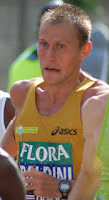
Stefano Baldini, the marathon runner who was Olympic champion in Athens in 2004 and twice won the European marathon title, was born on this day in 1971 in Castelnovo di Sotto, about 14km (nine miles) north-west of the city of Reggio Emilia.  Although Baldini’s class was not doubted, his Olympic gold was slightly tarnished by an incident seven kilometres from the finish when a spectator broke through the barriers and attacked the Brazilian runner, Vanderlei de Lima, who was leading the field.  The spectator, an Irishman called Conelius Horan who had disrupted the British Grand Prix motor race the previous year, was wrestled off de Lima by another spectator but the incident cost the Brazilian 15 to 20 seconds and much momentum. He was passed subsequently by Baldini and finished third.  Baldini finished the race, which followed the historic route from Marathon to Athens, in two hours 10 minutes and 55 seconds, although this was not the fastest time of his career.  His best was the 2:07:56 he clocked at the 1997 London Marathon, when he finished second, in what is still the fastest time by an Italian over the marathon distance.  Read more…

____________________________________

Gaetano Scirea - footballer

Multiple champion who died tragically young

The World Cup-winning footballer Gaetano Scirea, one of the most accomplished players in the history of the game, was born on this day in 1953 in the town of Cernusco sul Naviglio in Lombardy.  Scirea, who became an outstanding performer in the so-called libero role, was a key member of the Italy team that won the 1982 World Cup in Spain and enjoyed huge success also in club football.  In a career spent mostly with Juventus, he won every medal that was available to a club player in Italy, some several times over.  During his time there, the Turin club won the scudetto - the popular name for the Serie A championship - seven times and the Coppa Italia twice.  He also won the UEFA Cup, the European Cup-Winners’ Cup, the European Cup (forerunner of the Champions League), the UEFA Super Cup and the Intercontinental Cup.  Scirea retired in 1988 but continued to work for Juventus. Tragically, while visiting Poland in 1989 to make a scouting report on an upcoming opponent in a UEFA Cup match, the car in which he was travelling collided head-on with a truck in heavy rain and he was killed, along with two fellow passengers.   Read more…

___________________________________

Padre Pio – Saint

Capuchin friar is claimed to have cured cancer

Padre Pio, who has become one of the world’s most famous and popular saints, was born on this day in 1887 in Pietrelcina in Campania.  He was well-known for exhibiting stigmata, marks corresponding to the crucifixion wounds of Jesus, constantly making him the subject of controversy.  Padre Pio has said that at five years old he decided to dedicate his life to God and as a youth he reported experiencing heavenly visions and ecstasies. At the age of 15 he was admitted to the novitiate of the Capuchin Order, taking the name of Fra Pio, in honour of Pope Pius I.  He suffered from poor health for most of his life and fellow friars say he often appeared to be in a stupor during prayers. One claimed to have seen him in ecstasy, levitating above the ground.  In 1910 he was ordained a priest and moved to a friary in San Giovanni Rotondo in Foggia.  He was called up to serve in the Italian army during the First World War and assigned to the medical corps in Naples, but because of his poor health he was declared unfit for service and discharged.  In 1918 he exhibited stigmata for the first time while hearing a confession. This was to continue until his death 50 years later.  Read more…


Home