15 July 2022

15 July

Guido Crepax - cartoonist

Erotic character Valentina captured spirit of 1960s Italy

The cartoonist Guido Crepax, whose character Valentina became a heroine of the 1960s generation in Italy and beyond, was born on this day in 1933 in Milan.  Valentina first appeared in May 1965 as a secondary character in another cartoon, the photographer girlfriend of an art critic and amateur sleuth.  But the sinuous, sensual female depicted by Crepax, her hair cut in a glossy bob, soon acquired fans both male and female.  In an era when Italian society was beginning to experience a sense of sexual liberation for the first time, Valentina’s eroticism naturally attracted a legion of male fans. But her assertive individuality struck a chord with many modern Italian women, too, even if her readiness to shed her clothes caused outrage among others.  Soon, Valentina left behind her fictional boyfriend and starred in a series of her own adventures, which Crepax continued to produce for three decades. She was outspoken in her left-wing political views, while her uninhibited fantasies increasingly reflected the world of dreams and psychoanalysis that fascinated her creator.  Her style even influenced the Milan fashion world.  Read more…

____________________________________

Fire damages St Paul Outside-the-Walls

Beautiful Basilica was faithfully rebuilt and restored

A blaze nearly destroyed the ancient Papal Basilica of Saint Paul Outside-the-Walls (Basilica Papale San Paolo Fuori Le Mura) in Rome on this day in 1823.  A workman repairing the lead in the church roof accidentally started a fire that burnt down the Basilica, which dated back to the third century and was unique in Rome, having retained its primitive style.  St Paul Outside-the-Walls is one of four major Papal Basilicas in Rome, along with St John in the Lateran (San Giovanni in Laterano), St Peter’s (San Pietro in Vaticano) and St Mary Major (Santa Maria Maggiore).  After the fire, Pope Leo XII appealed for donations to help rebuild the church in exactly the same style.  The Basilica was reopened in 1840 and reconsecrated in 1855 in the presence of Pope Pius IX.  The redecoration was helped by contributions from all over the world, including pillars of alabaster from Egypt and malachite and lapis lazuli from Russia.  The Italian Government funded the work on the façade and declared the Church a national monument.  The Basilica had been founded by the Roman Emperor Constantine over the burial place of St Paul.   Read more…

___________________________________

Frances Xavier Cabrini – the first American saint

Missionary who was directed to the US by the Pope

Saint Frances Xavier Cabrini, who founded a religious institute to provide support for impoverished Italian immigrants in the United States, was born on this day in 1850 in Sant’Angelo Lodigiano, in Lombardy.  Frances did such good in her life she became the first naturalised citizen of the United States to be canonised in 1946.  She had been born into a family of cherry tree farmers, the youngest of 13 children. She was two months premature and remained in delicate health all her life.  After her parents died she applied for admission to the Daughters of the Sacred Heart but was told she was too frail for the life.  She became the headmistress of an orphanage in Codogno, about 30km (19 miles) from her hometown, where she drew in other women to live a religious life with her.  She took religious vows in 1877, adding Xavier to her name to honour Francis Xavier, the patron saint of missionary service.  Along with some of the other women who had taken religious vows, she founded the Missionary Sisters of the Sacred Heart of Jesus.  Frances went to seek Pope Leo X’s approval to establish missions in China but he suggested she went to the United States instead, to help the many Italian immigrants who were living in poverty.  Read more…

Booking.com


Home


14 July 2022

14 July

Camillus de Lellis - saint

Reformed gambler who became devoted to caring for sick

Camillo de Lellis, a gambler and streetfighter who reformed his life and eventually set up a religious order to tend the wounds of soldiers on the battlefield, died on this day in 1614 in Rome.  He was made Saint Camillus de Lellis by Pope Benedict XIV in 1746. Nowadays he is recognised as the patron saint of the sick, hospitals, nurses and physicians. Sometimes his assistance is also invoked by individuals with gambling problems.  The Order of Clerks Regular, Ministers of the Infirm (M.I), better known as the Camillians, is seen as the original Red Cross on account of an incident during the Battle of Canizza in 1601, when a tent containing all of the Camillians’ equipment and supplies was destroyed in a fire.  Among the ashes, the red cross from the back of a religious habit belonging to one of the Camillians was found to have survived. It became known as the Red Cross of Camillus.  The Order’s activities eventually extended to caring for the sick generally, particularly during outbreaks of Bubonic plague. They established a presence in hospitals in Naples and Milan and in time the Camillians ran hospitals of their own.  Read more…

____________________________________

Natalia Ginzburg - writer and politician

Sicilian raised in Turin became one of Italy’s great postwar novelists

The writer and politician Natalia Ginzburg was born on this day in 1916 in the Sicilian capital, Palermo.  The author of 11 novels and short story collections, as well as numerous essays, Ginzburg came to be regarded as one of Italy’s great postwar writers, alongside Primo Levi, Carlo Levi, Alberto Moravia, Cesare Pavese, Elsa Morante and Giorgio Bassani among others.  Her most famous works include Tutti i nostri ieri - All Our Yesterdays - published in 1952, Lessico famigliare  - Family Sayings -  published in 1963, and La famiglia Manzoni - The Manzoni Family - published in 1983.  She was notable for writing about family relationships, politics during and after the Fascist years and World War II, and philosophy.  Ginzburg, who was married to a prominent figure in the Italian resistance movement in World War Two, was an active anti-Fascist and a member of the Italian Communist Party in the 1930s.  In later life, she was elected to the Chamber of Deputies as an independent.  Although born in Palermo, Ginzburg spent her early life in Turin, where her father, Giuseppe Levi, was a professor of neuroanatomy at the University of Turin. Read more…

____________________________________

Palmiro Togliatti – politician

Communist leader gunned down near Italian parliament

The leader of the Italian Communist Party, Palmiro Togliatti, was shot three times on this day in 1948 near Palazzo Montecitorio in Rome.  Togliatti was seriously wounded and for several days it was not certain that he would survive, causing a political crisis in Italy.  Three months before the shooting, Togliatti had led the Communists in the first democratic election in Italy after the Second World War, which would elect the first Republican parliament.  He lost to the Christian Democrats after a confrontational campaign in which the United States played a big part, viewing Togliatti as a Cold War enemy.  On July 14, Togliatti was shot three times near the Parliament building. It was described as an assassination attempt, the perpetrator of which was named as Antonio Pallante, an anti-Communist student with mental health problems. While the Communist leader’s life hung in the balance a general strike was called.  He eventually recovered and was able to continue as head of the party until his death in 1964.  Togliatti was born in Genoa in 1893. He was named Palmiro because he was born on a Palm Sunday.  Read more…

_____________________________________

Collapse of St Mark’s Campanile

Dramatic fall of instantly recognisable symbol of Venice

The bell tower (Campanile) in St Mark’s Square in Venice collapsed on this day in 1902.  No one was killed but the Biblioteca Marciana nearby was partially damaged by its fall.  A crack had appeared in one of the walls of the bell tower a few days before and at approximately 9.45 am on Monday, 14 July, the entire structure collapsed into a heap of rubble.  Venetians regarded the event as a tragedy. The bell tower, just short of 100 metres tall, had stood for around 1,000 years and was seen as symbolic of the city.  Built on foundations of wood and mud, however, there was always the danger it would become unstable over time.  On the evening of the day of the collapse, the Venice authorities approved funding for the reconstruction of the Campanile in exactly the same place in the piazza, to be built to resemble how it looked after 16th century improvements to the original ninth century design.  The rubble was painstakingly removed from the square, loaded on to barges and dumped in the sea about five miles offshore from Venice Lido.  The new tower was designed with internal reinforcement to prevent a future collapse, and a lift.  Read more…

____________________________________

Cardinal Jules Mazarin - ruler of France

Jesuit-educated Italian served two French kings

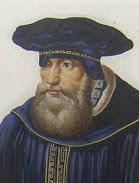
Jules Mazarin, who was to become the de facto ruler of France for nearly 20 years, was born Giulio Raimondo Mazzarino on this day in 1602 in Pescina, a small town in the province of L’Aquila in the Abruzzo region.  He served as the chief minister to the Kings of France, Louis XIII and Louis XIV, from 1642 until his death in 1661. Mazzarino’s parents were residents of Rome but would spend the summers in Pescina to escape the heat.  His father, Pietro Mazzarino, had moved to Rome from Sicily to become a chamberlain in the family of Filippo I Colonna, the Grand Constable of Naples. His mother was Filippo I Colonna’s goddaughter.  Influenced by the Colonna family, the couple sent Mazzarino to the Jesuit College in Rome when he was seven. He excelled in his studies and gave a public lecture at the age of 16, explaining Halley’s comet, which had appeared that year. He also enjoyed gambling at cards and was frequently in debt.  To get him away from bad influences in Rome, he was sent to Madrid with Girolamo Colonna to study law, but he continued to gamble and became engaged to the daughter of a notary who had lent him money.  Read more…

EN - 728x90


Home


13 July 2022

13 July

NEW - Vannozza dei Cattanei - popes’ mistress

Mother of Lucrezia and Cesare Borgia was figure of influence

Vannozza dei Cattanei, who was for many years the chief mistress of Cardinal Rodrigo de Borgia - later Pope Alexander VI - was born on this day in 1442 in Mantua.  Herself from the aristocratic Candia family, Vannozza - baptised as Giovanna de Candia - grew up to be a beautiful woman but also a successful businesswoman, acquiring a number of osterie - inns - after she moved to Rome.  In 15th century Italy, it was not unusual for cardinals and popes to have mistresses, despite Holy Orders coming with a vow of celibacy.  Before her relationship with Rodrigo de Borgia, Vannozza allegedly was mistress to Cardinal Giuliano della Rovere, the future Pope Julius II and a rival to Borgia in the 1492 papal election that he won.  Rodrigo made no attempt to hide his sexual dalliances, acquiring the nickname Papa Cattivo - the naughty pope - not only for his promiscuity but his questionable morals in other areas, with allegations that he was involved in bribery and extortion on his rise to the top, and rumours that he poisoned some of his rivals.  Unusually, compared with other popes and cardinals who flouted the rules, Borgia openly acknowledged the children that Vannozza bore him.  Read more…

____________________________________

The founding of the Carabinieri

Italy’s stylish ‘First Force’

The Carabinieri Corps was created on this day in 1814 in Italy by a resolution passed by Victor Emmanuel I of Savoy.  He established an army of mounted and foot soldiers to provide a police force, to be called Royal Carabinieri (Carabinieri Reali). The soldiers were rigorously selected ‘for their distinguished good conduct and judiciousness.’  Their task was defined as ‘to contribute to the necessary happiness of the State, which cannot be separated from protection and defence of all good subjects.’  Their functions were specified in the royal licence issued at the time, which underlined the importance of the personal skills required by the soldiers selected. It also affirmed their dual military and civil roles.  The sense of duty and high level of conduct displayed by the Carabinieri went on to win the respect of the Italian people.  They were called Carabinieri to avoid any comparisons with the former Napoleonic gendarmerie, and because they were equipped with carbines as weapons.  Their dress uniform was designed to reflect the solemn image of the sovereign state, with a two cornered hat, known as the lucerna, and dark blue dress coat.   Read more…

___________________________________

Jarno Trulli - racing driver and winemaker

Ex-Formula One star still winning prizes

The racing driver-turned-winemaker Jarno Trulli was born on this day in 1974 in Pescara on the Adriatic coast.  Trulli competed in Formula One from 1997 until 2011, competing in more than 250 Grands Prix.  He enjoyed his most successful season in 2004, when he represented the Mild Seven Renault team and finished sixth in the drivers’ championship.  He retired from racing in 2014-15 to focus on his winemaking business, which he had established while still competing and which now produces more than 1.2 million bottles every year.  Trulli’s Podere Castorani vineyard, situated near the village of Alanno, some 35km (22 miles) inland of Pescara, focuses largely on wines made from Abruzzo’s renowned Montepulciano grapes.  Although he was familiar with vineyards as a boy - his grandfather was a winemaker - Trulli’s parents were motorsports fans and named him after a Finnish Grand Prix motorcycling champion, Jarno Saarinen, who had been killed at the Monza circuit the year before Trulli was born.  Trulli began kart racing at the age of seven and by 17 was Karting World Champion.  He made his debut in Formula Three in 1993 and in 1996, driving for the Benetton-sponsored Opel team, won the German F3 Championship.  Read more…

_____________________________________

Tommaso Buscetta - Mafia ‘pentito’

Sicilian gangster’s testimony put hundreds behind bars

The Sicilian mobster Tommaso Buscetta, who was the first major Mafia figure to break the code of omertà and pass details of organised criminal activity to the authorities, was born on this day in 1928 in Palermo.  His evidence to the celebrated anti-Mafia judge Giovanni Falcone paved the way for the so-called Maxi Trial, a process lasting six years that led to the conviction and jailing of 350 mafiosi.  Buscetta’s testimony in the Pizza Connection Trial in New York State at around the same time in the mid-1980s led to the conviction of several hundred more mobsters both in Italy and the United States, including the powerful Sicilian Mafia boss Gaetano Badalamenti.  Arguably the most shocking information he passed on to the authorities concerned Italy’s three-times former prime minister, the late Giulio Andreotti, whose links with the Cosa Nostra he exposed shortly after Falcone was murdered in May 1992, killed by a massive bomb placed under the motorway linking Palermo with the city’s international airport.  Andreotti was found guilty of complicity in the Mafia assassination of a journalist and sentenced to 24 years in jail.  Read more…

______________________________________

Giulio d’Este of Ferrara

Plots and prison ruin life of handsome son of Duke

Giulio d’Este, who spent more than half of his life in prison for taking part in a failed conspiracy against his half-brother, the Duke of Ferrara, was born on this day in 1478 in Ferrara.  He was the illegitimate son of Ercole I d’Este, an earlier Duke of Ferrara, born as a result of an affair the Duke had with Isabella Arduin, a lady in waiting to his wife.  Giulio was often in conflict with his half-brothers, Alfonso and Ippolito, which led to him eventually playing his part in a plot to assassinate them.  He had grown up in the court of Ferrara and later lived in a palace on the Via degli Angeli in Ferrara.  The first major conflict between Giulio and Ippolito arose over a musician, Don Rainaldo of Sassuolo. Rainaldo was in the service of Giulio, but Ippolito, who had by then become a Cardinal, wanted him for his chapel and so in 1504 he abducted Rainaldo and held him in the Fortress of Gesso.  When Giulio discovered where he was being held, he went with a group of armed men and recovered the musician. In a sign of defiance, Giulio replaced him with the warden of the fortress.  Ippolito complained about his actions to his brother, Alfonso.  Read more…


Home


Vannozza dei Cattanei - popes’ mistress

Mother of Lucrezia and Cesare Borgia was figure of influence

Vannozza dei Cattanei hailed from an aristocratic family in Mantua
Vannozza dei Cattanei hailed from
an aristocratic family in Mantua
Vannozza dei Cattanei, who was for many years the chief mistress of Cardinal Rodrigo de Borgia - later Pope Alexander VI - was born on this day in 1442 in Mantua.

Herself from the aristocratic Candia family, Vannozza - baptised as Giovanna de Candia - grew up to be a beautiful woman but also a successful businesswoman, acquiring a number of osterie - inns - after she moved to Rome.

In 15th century Italy, it was not unusual for cardinals and popes to have mistresses, despite Holy Orders coming with a vow of celibacy.  Before her relationship with Rodrigo de Borgia, Vannozza allegedly was mistress to Cardinal Giuliano della Rovere, the future Pope Julius II and a rival to Borgia in the 1492 papal election that he won.

Rodrigo made no attempt to hide his sexual dalliances, acquiring the nickname Papa Cattivo - the naughty pope - not only for his promiscuity but his questionable morals in other areas, with allegations that he was involved in bribery and extortion on his rise to the top, and rumours that he poisoned some of his rivals.

Unusually, compared with other popes and cardinals who flouted the rules, Borgia openly acknowledged the children that Vannozza bore him during their relationship, which is thought to have lasted between 20 and 25 years, providing for them financially and having a significant influence over their lives.

The eldest, Cesare, born in 1475, became a cardinal and as leader of the Papal armies captured large amounts of territory that were added to the Pope’s empire.  Niccolò Machiavelli’s The Prince, the treatise on power that was written as a kind of reference point for new princes and royals, was influenced by Cesare’s lust for power.

Pope Alexander VI is thought to have fathered four children with Vannozza
Pope Alexander VI is thought to have
fathered four children with Vannozza
Of the others, Giovanni - also known as Juan - became the second Duke of Gandia but was murdered at the age of 21, possibly by Cesare; Gioffre married the daughter of the King of Naples, which was advantageous to Rodrigo Borgia.

Lucrezia, meanwhile, was forced to marry three times to elevate Rodrigo’s own status and acquire land and wealth. She took lovers of her own and there were rumours that Giovanni was in fact her own son, the product of an affair with her father's chamberlain.

Vannozza herself had to agree to marriages arranged by Borgia, first to Domenico d'Arignano, an officer of the church, then Giorgio di Croce, for whom Borgia had procured a position as apostolic secretary, and later Carlo Canale, the warden of a papal jail.

Her relationship with Rodrigo Borgia is thought to have changed after she turned 40 and Borgia’s passion for her had diminished by the time he was elevated to Pope in 1492. The care of all her children was entrusted to others in Borgia’s circle, although she remained part of it herself as a sort of matriarchal figure and her former lover sought her counsel as Pope.

He continued to support her financially and by the time she died in 1518, at the age of 76, she had acquired a considerable portfolio of property around the city.

Vannozza outlived Rodrigo de Borgia by 15 years yet despite the nature of their relationship she was granted a public funeral, recognised by Pope Leo X as the widow of Alexander VI. She was buried in the Church of Santa Maria del Popolo, near her son, Giovanni, after a ceremony attended by the Papal Court. 

The skyline of Mantua has changed little since it was the Renaissance seat of the Gonzaga family
The skyline of Mantua has changed little since it
was the Renaissance seat of the Gonzaga family

Travel tip:

The small, historic city of Mantua in Lombardy, which can be found approximately 150km (93 miles) southeast of Milan along the Po Valley, is flanked on three sides by artificial lakes created in the 123th century as the city’s defence system, filled with water from the Mincio river, a tributary of the Po. There was a fourth lake, which meant the city was once surrounded by water, but it dried up in the 18th century and never replenished. It was traditionally the seat of the Gonzaga family, who established a court with a heavy emphasis on music, art and culture. The city has a number of architectural treasures and elegant palaces, while the skyline of its historic old centre has changed little since Renaissance times. At its heart is Piazza Mantegna, where the 15th century Basilica of Sant’Andrea houses the tomb of the artist, Andrea Mantegna. Inside the Palazzo Ducale, the seat of the Gonzaga family between 1328 and 1707, the Camera degli Sposi is decorated with frescoes by Mantegna.

The Church of Santa Maria del Popolo is in Piazza del Popolo, adjoining Porta del Popolo
The Church of Santa Maria del Popolo is in Piazza
del Popolo, adjoining Porta del Popolo
Travel tip:

The Church of Santa Maria del Popolo is a minor basilica in Rome that stands on the north side of Piazza del Popolo, hemmed in between the Pincian Hill and Porta del Popolo, one of the gates in the Aurelian Wall, its position making it the first church encountered by many travellers arriving in the city. The original church was founded by Pope Paschal II in 1099. The existing structure was built largely between 1472 and 1477 as part of an urban renovation programme instigated by Pope Sixtus IV. A trio of great architects - Andrea Bregno, Donato Bramante and Gian Lorenzo Bernini - contributed to its design and are among those whose works can be found inside, along with Raphael, Caravaggio, Alessandro Algardi, Pinturicchio and Guillaume de Marcillat. 

Also on this day:

1478: The birth of Giulio d’Este of Ferrara 

1814: The founding of the Carabinieri police force

1928: The birth of Mafia mobster and ‘pentito’ Tommaso Buscetta 

1974: The birth of racing driver Jarno Trulli


Home