20 January 2023

20 January

NEW
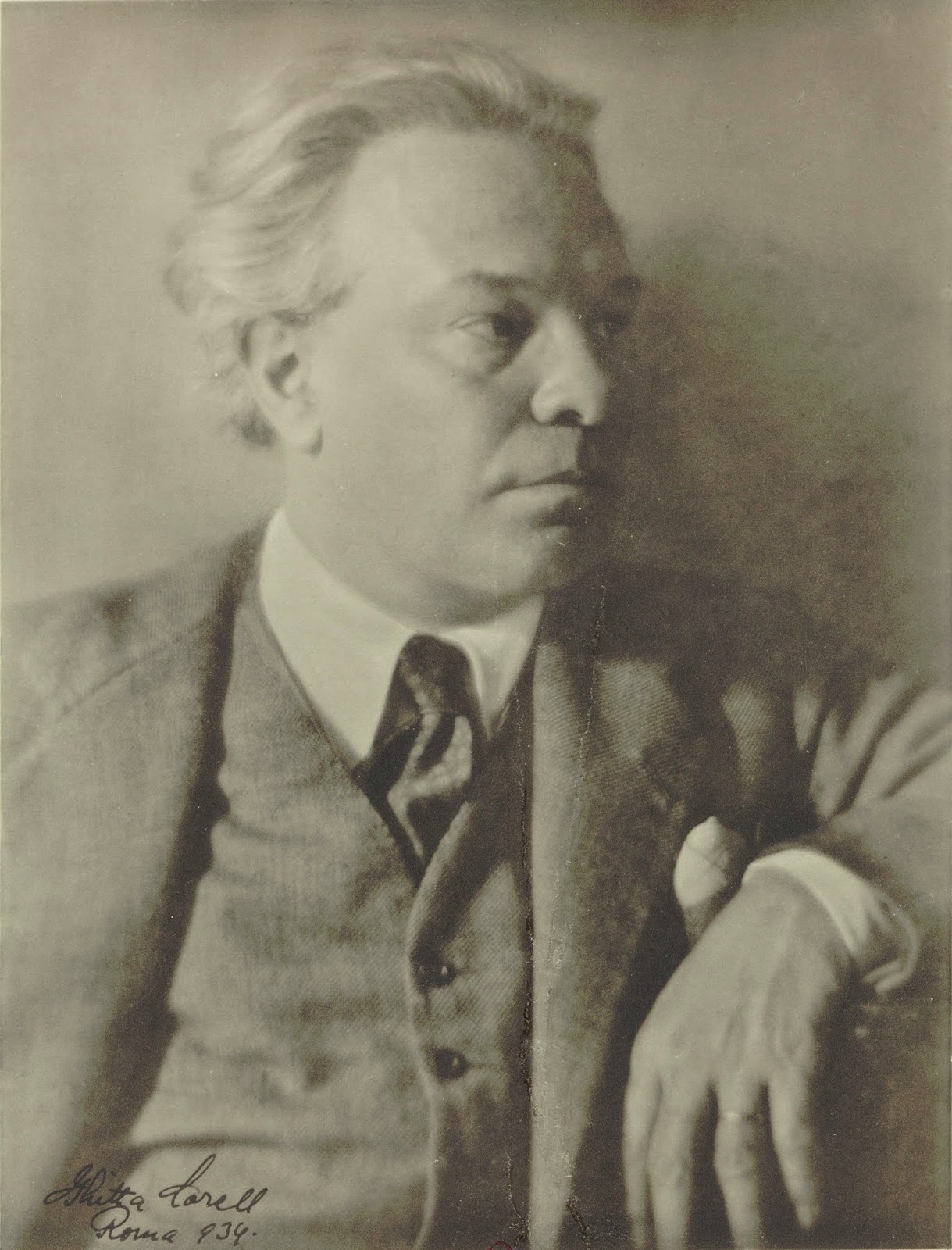
- Ennio Porrino - composer

Premature death robbed Italian music of great talent

The composer Ennio Porrino, best known for his symphonic poem, Sardegna, and his opera, I Shardana, was born on this day in 1910 in Cagliari.  Porrino was critically acclaimed, his operas earning comparisons with the great Giacomo Puccini, although to some his reputation has been tarnished by his association with Benito Mussolini’s Fascist regime. He was only 49 when he died in Rome.  His 1941 opera, Gli Orazi, has been interpreted as a ‘hymn to fascism’ by some critics, while his piece, The March of the Volunteer, was used by Mussolini’s short-lived Italian Social Republic as its anthem.  Little is known of Porrino’s early years. It is thought that his family moved to Rome when he was a small child and most accounts of his life begin with his studies at the Accademia Nazionale di Santa Cecilia, which he attended from the age of 17 and where he graduated in 1932.  He also studied with the composer Ottorino Respighi, who was keen to see his potential realised.  Respighi would be a significant influence on Porrino’s own work.  Porrino was not slow to make an impact in Roman musical circles. In 1931 he won an opera competition organised by the Giornale d'Italia newspaper.  Read more…

_____________________________________

Franca Sozzani – magazine editor

Risk taker who turned Vogue Italia into a major voice

Franca Sozzani, the journalist who was editor-in-chief of the Italian edition of Vogue magazine for 28 years, was born on this day in 1950 in Mantua.  Under her stewardship, Vogue Italia was transformed from what she saw as little more than a characterless clothing catalogue for the Milan fashion giants to one of the edgiest publications the style shelves of the newsstands had ever seen.  Sozzani used high-end fashion and the catwalk stars to make bold and sometimes outrageous statements on the world issues she cared about, creating shockwaves through the industry but often selling so many copies that editions sometimes sold out even on second or third reprints.  It meant that advertisers who backed off in horror in the early days of her tenure clamoured to buy space again, particularly when the magazine began to attract a following even outside Italy.  She gave photographers and stylists a level of creative freedom they enjoyed nowhere else, encouraging them to express themselves through their photoshoots, particularly if they could deliver a message at the same time.  She encouraged her writers, too, not to shy away from issues she thought were important, and not to regard fashion as an insular world.  Read more…

_____________________________________

Federico Fellini – film director

The cinematic legacy of Rimini’s most famous son

Federico Fellini, one of the most influential filmmakers of the 20th century, was born on this day in Rimini in 1920.  He had a career lasting almost 50 years and his films were nominated for 12 Academy Awards. He won four Oscars, each for Best Foreign Language Film, with La strada, Nights of Cabiria, 8½ and Amarcord.  Fellini initially went to Rome to study Law at university but ended up working as a journalist instead.  His assignments for a magazine gave him the opportunity to meet people involved in show business and he eventually got work as a script writer for films and radio.  Fellini worked as both a screenwriter and assistant director on Roberto Rossellini films as well as producing and directing for other filmmakers. He began work on his first solo film, The White Sheik, in 1951. It received mixed reviews but in 1953 his film, I Vitelloni, pleased both the public and the critics.  He won his first Academy Award with Nights of Cabiria, starring his wife, Giulietta Masini, in 1953.  Fellini’s film La dolce vita, starring Anita Ekberg and Marcello Mastroianni and set in Rome, broke all box office records in 1960 and won the Palme d’Or at the Cannes film festival. It is one of the most critically acclaimed films of all time.  Read more…

___________________________________

Marco Simoncelli - motorcycle world champion

Young rider whose career ended in tragedy

The motorcycle racer Marco Simoncelli, who is part of an illustrious roll call of Italian world champions headed by Giacomo Agostini and Valentino Rossi, was born on this day in 1987 in Cattolica on the Adriatic coast.  Simoncelli, who was European 125cc champion in 2002 in only his second year of senior competition, became 250cc world champion in 2008 when he won six races riding for Gilera.  He had dreams of emulating Rossi, winner of the 250cc world title in 1999, in going on to be a force in the premier MotoGP category, in which the latter has been world champion seven times, just one fewer than Agostini's record eight titles.  But after stepping up to MotoGP in 2010, Simoncelli suffered a fatal crash at the Malaysian Grand Prix in October the following year, killed at the age of just 24.  On only the second lap of the Sepang circuit, he lost control of his Honda at a corner and appeared to be heading for the gravel run-off area but suddenly veered back across the congested track.  With the bike almost on its side, Simoncelli was struck by two other competitors.  One of them, with chilling irony, was Rossi, who was entirely blameless but unable to prevent his front wheel from striking his compatriot's head.  Read more…

____________________________________

Rafael Bombelli – mathematician

First person to explain algebra in simple language

Rafael Bombelli, the mathematician regarded as the inventor of complex numbers, was baptised and was also probably born on this day in 1526 near Bologna.  He wrote a book about algebra in simple language that could be understood by everyone, giving a comprehensive account of what was known about the subject at the time. The first three volumes, published in 1572, were the first European texts to explain how to perform computations with negative numbers.  Rafael Bombelli was the eldest son of Antonio Mazzoli, a wool merchant, who had changed his name to Bombelli to disassociate himself from the reputation of his family. His grandfather had taken part in a failed attempt to seize Bologna on behalf of the Bentivoglio family but had been caught and executed. Antonio Mazzoli was able to return to Bologna only after changing his name to Bombelli.  It is thought that Rafael Bombelli did not attend university but was taught by an engineer-architect named Pier Francesco Clementi.  He followed Clementi into the profession and acquired a patron, Alessandro Rufini. His patron was given the right to reclaim marsh land in the Val di Chiana by the Pope and Bombelli worked on this project until 1555.  Read more…


Home


Ennio Porrino - composer

Premature death robbed Italian music of great talent

Ennio Porrino is seen by some as one of the greats of Italian opera
Ennio Porrino is seen by some as
one of the greats of Italian opera
The composer Ennio Porrino, best known for his symphonic poem, Sardegna, and his opera, I Shardana, was born on this day in 1910 in Cagliari.

Porrino was critically acclaimed, his operas earning comparisons with the great Giacomo Puccini, although to some his reputation has been tarnished by his association with Benito Mussolini’s Fascist regime. He was only 49 when he died in Rome.

His 1941 opera, Gli Orazi, has been interpreted as a ‘hymn to fascism’ by some critics, while his piece, The March of the Volunteer, was used by Mussolini’s short-lived Italian Social Republic as its anthem.

Little is known of Porrino’s early years. It is thought that his family moved to Rome when he was a small child and most accounts of his life begin with his studies at the Accademia Nazionale di Santa Cecilia, which he attended from the age of 17 and where he graduated in 1932.

He also studied with the composer Ottorino Respighi, who was keen to see his potential realised.  Respighi would be a significant influence on Porrino’s own work.

Porrino was not slow to make an impact in Roman musical circles. In 1931 he won an opera competition organised by the Giornale d'Italia newspaper. Two years later, his overture for orchestra, Tartarin de Tarascon, won the Accademia di Santa Cecilia’s own competition for the 25th anniversary concerts at the Teatro Augusteo, where it premiered under the baton of Bernardino Molinari. 

Porrino studied under the violinist and composer Ottorino Respighi (above)
Porrino studied under the violinist and
composer Ottorino Respighi (above)
Molinari was the conductor in January of the following year when Porrino’s  symphonic poem Sardegna was performed for the first time. A tribute to a homeland Porrino was yet to understand and appreciate, Sardegna was based largely on the nostalgic tales passed to him by his Sardinian mother. The piece was widely appreciated and performed numerous times in Italy and abroad, as well as being included in the Italian music section of the 1935 Hamburg International Festival. 

Like Respighi, who died in 1936, Porrino championed an Italian national music movement faithful to its classical roots. He openly opposed modernist composers such as Alfredo Casella.

However, some academics argue that there was a dark side to Porrino’s enthusiasm for traditional Italian music, citing an article he wrote for an antisemitic journal, La difesa della razza - The Defence of Race - in 1938.

Under the title, La musica nella tradizione della nostra razza - Music in the tradition of our race - Porrino argued that Italian music was a fundamental component of Italian culture and national pride, but that it had been corrupted by internationalism, which was generally recognised as code for Judaism. 

His opposition to Casella, it has been suggested, might have had as much to do with the latter’s opposition to Mussolini’s despised race laws as his music. Casella also happened to be married to a French woman from a Jewish family.

Porrino was also excited by Mussolini’s dream of restoring Rome to its former grandeur as the heart of his Fascist empire and his promotion of what he saw as the masculine, dynamic values of so-called romanità (Roman-ness).

Gli Orazi told the story of the feud between the Orazi and Curiazi families in 7th century Rome
Gli Orazi told the story of the feud between the
Orazi and Curiazi families in 7th century Rome
In was in this context, perhaps, that Porrino wrote Gli Orazi, which is the story of a conflict between the Roman family of Horatius (Orazio) and that of Curiatius (Curiazio), from Alba Longa, just to the south of Rome, when the two cities are at war during the seventh century.

The one-act opera concludes with a victory for the Orazi in this feud and a celebration of Rome’s defeat of Alba in the war.  Porrino collaborated with the librettist Claudio Guastalla on Gli Orazi, as he had in completing Respighi’s unfinished opera, Lucrezia, after Respighi’s death. Guastalla, though he regarded himself unequivocally as Italian, was the son of Jewish parents and his name ultimately disappeared from the credits.

Nonetheless, Gli Orazi was staged with great success at La Scala in Milan in February 1941.  

After the fall of Mussolini and the defeat of the Fascists, the immediate post-war years saw Porrino devote more time to academic work than to composing. He was appointed professor of composition at the Rome Conservatory, and became a full member of both the Accademia di Santa Cecilia and the Luigi Cherubini Academy in Florence.

In 1946 he was appointed substitute librarian in the Library of the Conservatory of San Pietro a Majella in Naples, where he also taught composition.  Later, he became director of the Pierluigi da Palestrina Conservatory of Cagliari, and conducted orchestral and choral performances in Naples and Venice.

Sardinia is dotted with the remains of nuraghe, conical stone towers as old as the Shardana
Sardinia is dotted with the remains of nuraghe,
conical stone towers as old as the Shardana
He returned to opera composition triumphantly with I Shardana, a 1959 work set among the warrior race that spent much of its time defending Sardinia from foreign invaders during the Bronze Age.

Inspired by what Porrino had learned about his homeland after returning as an adult, the opera is regarded as one of the most important in Italy post 1945 and confirmed Porrino’s reputation, according to some critics, as the greatest Italian musician since Puccini.

It came as a profound shock, then, just a few months after I Shardana’s premiere at Teatro San Carlo in Naples, when it was reported in September 1959 that Porrino had died, following a sudden illness. He had been in Venice only a few days earlier, when his work La bambola malata, described as a pantomime, had been performed at the Venice International Festival of Contemporary Music.  

He left a widow, Malgari, a painter and theatrical designer, and a daughter, Stefania, born in 1957, who became a playwright and stage director in adulthood.

An orchestral performance inside the modern Accademia Nazionale di Santa Cecilia in Rome
An orchestral performance inside the modern
Accademia Nazionale di Santa Cecilia in Rome
Travel tip:

The Accademia Nazionale di Santa Cecilia, one of the oldest musical institutions in the world, was established in 1565. It was founded in Rome by Pope Sixtus V at the Church of Santa Maria ad Martires, better known as the Pantheon. Over the centuries, many famous composers and musicians have been members, among them opera singers Beniamino Gigli and Cecilia Bartoli. Since 2005 the Academy’s headquarters have been at the Parco della Musica in Rome, which was designed by the architect Renzo Piano, in Viale Pietro de Coubertin in the Flaminio district, close to the location of the 1960 Summer Olympic Games.

A view from the sea similar to that which the writer D H Lawrence might have experienced
A view from the sea similar to that which the
writer D H Lawrence might have experienced
Travel tip:

Cagliari, where Porrino was born, is Sardinia's capital, an industrial centre and one of the largest ports in the Mediterranean. Yet it is also a city of considerable beauty and history, most poetically described by the novelist DH Lawrence when he visited in the 1920s. As he approached from the sea, Lawrence set his eyes on the confusion of domes, palaces and ornamental facades which, he noted, seemed to be piled on top of one another. He compared it to Jerusalem, describing it as 'strange and rather wonderful, not a bit like Italy.’  What he saw was Cagliari’s charming historic centre, known as Castello, inside which the city’s university, cathedral and several museums and palaces - plus many bars and restaurants - are squeezed into a network of narrow alleys.

Also on this day:

1526: The birth of mathematician Rafael Bombelli

1920: The birth of film director Federico Fellini

1950: The birth of magazine editor Franca Sozzani

1987: The birth of motorcycle racer Marco Simoncelli


Home


19 January 2023

19 January

Rosina Storchio - soprano

Star prospered despite Butterfly debut flop

The soprano Rosina Storchio, a major star of the opera world in the early 20th century, was born on this day in 1872 in Venice.  A favourite of the celebrated conductor Arturo Toscanini, with whom she had an affair that scandalised Milan, she sang opposite Enrico Caruso and other male stars of her era, including Giuseppe Anselmi, Titta Ruffo and the Russian, Fyodor Chaliapin.  She sang in five notable premieres.  Ruggero Leoncavallo cast her as the first Mimì in his version of La bohème (1897) and also as Zazà in the opera of the same name (1900), Umberto Giordano created the role of Stephana for her in Siberia (1903), while she was Pietro Mascagni’s first Lodoletta (1917).  The first night for which she was often remembered, however, was the one that turned into a personal catastrophe for Giacomo Puccini, when Madama Butterfly was unveiled at Teatro alla Scala in Milan in 1904 only to be roundly booed by the audience, forcing the opera to be pulled from La Scala’s spring programme after one night.  Critics argued that the second act was too long and that despite a star-studded cast, including the celebrated Storchio in the role of Cio-Cio San, the story’s tragic heroine, the performance suffered from being under-rehearsed.  Read more…

____________________________________

Paolo Borsellino - anti-Mafia judge

Magistrate slain by Mafia 57 days after colleague Giovanni Falcone

Paolo Borsellino, the judge who was helping to wage a successful war against the Sicilian Mafia when he was murdered in 1992, was born on this day in 1940 in Palermo.  He and his boyhood friend, Giovanni Falcone, became the most prominent members of a pool of anti-Mafia magistrates set up in the 1980s to investigate organised crime and share information. They made considerable progress in weakening the Sicilian Mafia, also known as Cosa Nostra, in particular through the so-called Maxi Trial of 1986-87, which resulted in 360 convictions and prison sentences totalling 2,665 years.  Yet both were killed within the space of two months, Falcone on May 23 by a bomb placed under the motorway between Sicilian capital Palermo and the city's airport, Borsellino on July 19 by a car bomb as he left his mother's house in the centre of the city.  The two were born and raised within a few streets of one another in the Kalsa district of Palermo, not far from the tree-lined Foro Italico Umberto I, the broad thoroughfare that runs along the city's waterfront.  It was a middle class neighbourhood that suffered severe damage in air raids as the Allies prepared to invade Sicily in 1943.  Read more…

__________________________________

Il trovatore – opera

Verdi masterpiece is regularly performed all over the world 

One of the most successful operas composed by Giuseppe Verdi, Il trovatore was first staged on this day in 1853 in Rome.  The four act opera was based on a play by Antonio Garcia Gutiérrez about a troubadour, the son of a gypsy woman, who is in love with a lady in waiting at a Spanish castle.  After its premiere, at the Teatro Apollo in Rome, the opera became a  big success and in the first three years there were 229 productions of it worldwide. In Naples alone there were 11 different productions in six theatres, including Teatro San Carlo, during the first three years. The opera was first performed in America by the Max Maretzek Opera Company in 1855. The Metropolitan Opera in New York have performed it more than 600 times since it was first staged there in 1883.  Verdi was asked to prepare a French version of the opera in 1855, Le Trouvère, and to include music for a ballet. It was first performed in French in 1857 in Paris when Emperor Napoleon III and Empress Eugènie went to see it.  Along with Rigoletto and La traviata, Il trovatore is believed by experts to represent Verdi at the height of his artistry in the middle of his career.   Read more…

______________________________________

Assunta ‘Pupetta’ Maresca – camorrista

Ex-beauty queen who avenged death of husband

Assunta Maresca, the mobster’s wife who made headlines around the world when she walked into a bar in Naples in broad daylight and shot dead the man she suspected of ordering the murder of her husband on behalf of the Neapolitan Mafia - the Camorra - was born on this day in 1935 in the coastal town of Castellammare di Stabia.  Better known as ‘Pupetta’ – the little doll – on account of her small stature and stunning good looks, Maresca took the law into her own hands after her husband – a young and ambitious camorrista and the father of her unborn child - was assassinated on the orders of a rival.  Her extraordinary act brought her an 18-year prison sentence, of which she served about a third, yet made her a figure of such public fascination that several movies and TV series were made about her life.  She went on to become the lover of another mobster and was alleged to have participated in Camorra activity herself, serving another jail term after she was found guilty of abetting the murder of a forensic scientist, which she denied.  Assunta Maresca was born into a world of crime.  Her father, Alberto, was a smuggler specialising in trafficking cigarettes.  Read more…

______________________________________

Giuseppe Bonomi - architect

Roman who became famous for English country houses

The architect Giuseppe Bonomi, who became better known by his Anglicised name Joseph Bonomi after spending much of his working life in England, was born on this day in 1739 in Rome.  Records nowadays refer to him as Joseph Bonomi the Elder, to distinguish him from his son of the same name, who became a sculptor, artist and Egyptologist of some standing and tends to be described as Joseph Bonomi the Younger.   Joseph Bonomi the Elder is known primarily for designing a number of English country houses in the last two decades of the 18th century and the early years of the 19th.  Among these are Lambton Castle in County Durham, Barrells Hall in Warwickshire, Longford Hall in Shropshire and Laverstoke House in Hampshire.  He also designed the saloon in the grand house of Lady Mary Wortley Montagu in Portman Square in London, sadly destroyed during the Blitz in the Second World War.  Bonomi’s father hailed from the Veneto and was an agent to members of the Roman aristocracy. Giuseppe was educated at the Collegio Romano, the Jesuit school in Rome that taught pupils from elementary school to university age.  Read more…

_____________________________________

Giuseppe Millico - opera singer, composer and teacher

Castrato taught Lord Nelson’s lover

The castrato opera singer and composer Giuseppe Millico, who numbered Lord Nelson’s future lover, Emma Hamilton, as among his pupils as a singing teacher in Naples, was born on this day in 1737 in Terlizzi, a town in Apulia.  As a singer, Millico is best remembered for his performances in the operas of the Bavarian composer Christoph Willibald Gluck. He also compiled a significant body of work of his own, including eight operas, eight cantatas, numerous arias and duets not part of wider works, and 82 canzonets.  Having learned his craft in Naples in the 1750s, Millico returned to the city in 1780 after many years of touring, becoming a teacher as well as a composer. He taught singing to the Bourbon princesses Maria Teresa and Luisa Maria, as well as to Emma, Lady Hamilton, the actress and model, who was living in Naples after her marriage to Sir William Hamilton, the British Ambassador.  After studying at one of the Naples conservatories, Millico made his performing debut in Rome in 1757. Soon afterwards, he went to Moscow to sing at the Russian court. He remained in Russia for seven years, earning the nickname Il Moscovita on his return.  Read more…


Home


18 January 2023

18 January

Alfredo Ildefonso Schuster – Cardinal

Blessed monk who tried to preach humility to Mussolini

Alfredo Ildefonso Schuster, who was a Benedictine monk and served as Cardinal and Archbishop of Milan during World War II, was born on this day in 1880 in Rome.  Towards the end of the war, Schuster attempted to arrange a truce between Mussolini and the partisans, but failed because Mussolini refused to accept the demands for total surrender made by the partisan delegates.  During the unsuccessful meeting between Mussolini and the partisans in the Archbishop’s Palace in Milan, Schuster is reported to have made an attempt to preach humility to the Fascist leader. More than 40 years after his death, Cardinal Schuster was beatified on 12 May 1996 by Pope John Paul II.  Schuster was the son of a Bavarian tailor who had moved to live in Rome and he served as an altar boy at a German Church near St Peter’s Basilica.  In 1898 he joined the Order of Saint Benedict and took the name Ildefonso before entering the monastic community of Saint Paul Outside the Walls.  He studied while he was a monk and graduated as a Doctor of Philosophy in 1903, later receiving a Doctorate in Theology.   Read more…

_____________________________________

Katia Ricciarelli - operatic soprano

Star whose peak years were in ‘70s and ‘80s

The opera singer Katia Ricciarelli, who at her peak was seen as soprano who combined a voice of sweet timbre with engaging stage presence, was born on this day in 1946 at Rovigo in the Veneto.  She rose to fame quickly after making her professional debut as Mimi in Giacomo Puccini’s La bohème in Mantua in 1969 and in the 1970s was in demand for the major soprano roles.  Between 1972 and 1975, Ricciarelli sang at all the major European and American opera houses, including Lyric Opera of Chicago (1972), Teatro alla Scala in Milan (1973), the Royal Opera House, Covent Garden (1974) and the Metropolitan Opera (1975).  In 1981, she began an association with the Rossini Opera Festival in Pesaro that she maintained throughout the ‘80s.  In addition to her opera performances, Ricciarelli also appeared in a number of films.  She was Desdemona in Franco Zeffirelli's film version of Giuseppe Verdi's Otello in 1986, alongside Plácido Domingo. In 2005 she won the best actress prize Nastro d'Argento, awarded by the Italian film journalists, for her role in Pupi Avati's La seconda notte di nozze (2005).  During her peak years, Desdemona was one of her signature roles. Read more…

____________________________________

Alfonso Ferrabosco the elder – musician

Court composer suspected of being a spy

Alfonso Ferrabosco, the composer who first introduced the madrigal to England, was born on this day in Bologna in 1543.  As well as composing music for Queen Elizabeth I of England, he was also suspected of working as a spy for her.  Ferrabosco had been born into a family of musicians and travelled about in Italy and France while he was young with his father and uncle.  He went to England in 1562 with his uncle and found employment with Elizabeth I, becoming the first composer to introduce the unaccompanied harmony of the madrigal to England, where it later became very popular. Elizabeth is said to have settled an annuity equivalent to £66 on him.  Ferrabosco’s madrigals suited English tastes and were considered very skilful. He also composed sacred music and instrumental music for lutes and viols.  He made periodic trips back to Italy, but these were frowned upon both by the Pope and the Inquisition. England was at war with several Roman Catholic countries at the time and as a result, Ferrabosco lost his Italian inheritance.  At one point he was serving Cardinal Farnese in Rome, but decided he wanted to return to England.  Read more…

_____________________________________

Dino Meneghin – basketball player

Italy’s biggest star won 32 trophies and Olympic medal

Dino Meneghin, universally recognised as the greatest Italian player in basketball history, was born on this day in 1950 in Alano di Piave, a village in the Veneto.  The first Italian and only the second European player to be drafted by a National Basketball Association team when he was picked by the Atlanta Hawks in 1970, Meneghin enjoyed a professional career spanning 28 years.   He did not retire until he was 44 years old and had played in a professional match against his own son, Andrea, having won 32 trophies including 12 Italian national championships and seven EuroLeague titles.  Meneghin also participated in four Olympic basketball tournaments, winning a silver medal in the 1980 Games in Moscow. His international career amounted to 271 appearances for Italy, in which he scored 2,847 points.  Brought up in Varese in Lombardy, Meneghin was always exceptionally tall, growing to a height of 6ft 9ins (2.06m), and was earmarked for an athletic career.  He and his brother Renzo would train together, Renzo as a middle-distance runner, Dino as a shot-putter and discus thrower.  Read more…

Booking.com


Home