27 February 2023

27 February

Franco Moschino - fashion designer

Made clothes with sense of humour

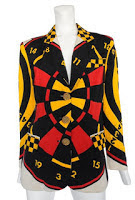
The fashion designer Franco Moschino, founder of the Moschino fashion label, was born on this day in 1950 in Abbiategrasso, a town about 24km (15 miles) southwest of Milan.  Moschino became famous for his innovative and irreverent designs, which injected humour into high fashion.  For example, he created a miniskirt in quilted denim with plastic fried eggs decorating the hemline, a jacket studded with bottle tops and a suit covered with cutlery. He designed a dress that resembled a shopping bag and a ball gown made from black plastic bin bags.  Other designs carried messages mocking his own industry, such as a jacket with the motif ‘Waist of Money’ printed round the waistband, another in cashmere with ‘Expensive Jacket’ emblazoned across the back and a shirt with the words ‘I’m Full of Shirt’.  Moschino’s first collections focussed on casual clothes and jeans, but he eventually branched out into lingerie, eveningwear, shoes, menswear and perfumes.  As a young man, Moschino was encouraged to believe that his destiny lay in taking over his father’s iron foundry but his only interest in the plant lay in the layers of dust that clung to the walls, in which he would make drawings.  Read more…

___________________________________

Italy's appeal for help with Leaning Tower

Fears of collapse prompted summit of engineers

The Italian government finally admitted that it needed help to save the Leaning Tower of Pisa from collapsing on this day in 1964.  There had been numerous attempts to arrest the movement of the tower, which had begun to tilt five years after construction began in 1173.  One side of the tower started to sink after engineers added a second floor in 1178, when the mistake of setting a foundation just three metres deep in weak, unstable soil became clear. Construction was halted.  In fact, in part because of a series of military conflicts, it did not resume for 100 years.  Additions were made to the building over the next 100 years, culminating in the completion of the bell chamber in 1372. Nothing more was done until the 19th century, when an ill-considered plan to dig a path around the base in 1838 resulted in a new increase in the tilt.  Ironically, the tower might have been deliberately destroyed in the Second World War when advancing American soldiers were ordered to blow up any tall building that might have been used by German snipers, regardless of its historical importance.  Thankfully, a German withdrawal before the Americans reached Pisa made it unnecessary.  Read more…

______________________________________

Simone Di Pasquale – dancer

Ballroom talent has been springboard for business success

Ballroom dancer and television celebrity Simone Di Pasquale was born on this day in 1978.  In 2005, he became a household name after he started to appear regularly on Italian television in Ballando con le Stelle - the equivalent of the US show Dancing with the Stars and Britain’s Strictly Come Dancing. The show, presented by Milly Carlucci, was broadcast every Saturday evening on the tv channel Rai Uno.  Pasquale has also appeared in numerous other television programmes, on stage in musical theatre and as an actor in a television drama.  Born in Rome, Di Pasquale learnt ballroom dancing at a young age and took part in competitions.  In 2000 he paired up with the dancer Natalia Titova, who also later became a celebrity because of Ballando con le Stelle. The couple were engaged from 1998 to 2005.  They took first place in the competition Rising Stars UK in 2004.  In the first season of Ballando con le Stelle, Di Pasquale partnered the Italian actress Hoara Borselli and the couple won the competition. He has taken part in each successive series since.  Di Pasquale has appeared as a guest on numerous programmes on Italian television.  Read more…

____________________________________

Mirella Freni – opera singer

Good advice from Gigli helped soprano have long career

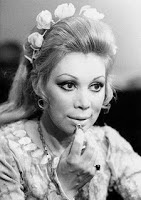
Singer Mirella Freni was born Mirella Fregni on this day in 1935 in Modena in Emilia-Romagna.  Freni’s grandmother, Valentina Bartolomasi, had been a leading soprano in Italy from 1910 until 1927, specialising in Wagner roles. By coincidence, her mother worked alongside the mother of tenor Luciano Pavarotti in a tobacco factory in Modena.  Freni was obviously musically gifted and sang an opera aria in a radio competition when she was just ten years old.  One of the judges was the tenor Beniamino Gigli, who advised her to give up singing until she was older to protect her voice.  Freni took his advice and resumed singing when she was 17, making her operatic debut at the Teatro Municipale in Modena at the age of 20 in Bizet’s Carmen.  Her international debut came at Glyndebourne in Franco Zeffirelli’s staging of Gaetano Donizetti’s L’elisir d’amore.  In the 1960 season at Glyndebourne she sang comic roles from Mozart’s Le Nozze di Figaro and Don Giovanni.  Freni made her Covent Garden debut in 1961, her La Scala debut in 1963 and her Metropolitan Opera debut in 1965.  She started singing the heavier Verdi roles in the 1970s.  Read more…


Home


26 February 2023

26 February

Napoleon escapes from Elba

Emperor leaves idyllic island to face his Waterloo

French emperor Napoleon Bonaparte escaped from the Italian island of Elba, where he had been living in exile, on this day in 1815.  Less than a year before he had arrived in Elba, an island dotted with attractive hills and scenic bays, following his unconditional abdication from the throne of France.  Several countries had formed an alliance to fight Napoleon’s army and had chosen to send him to live in exile on the small Mediterranean island about 10km (6 miles) off the Tuscan coast.  They gave Napoleon sovereignty over the island and he was allowed to keep a small personal army to guard him. He soon set about developing the iron mines and brought in modern agricultural methods to improve the quality of life of the islanders.  But he began to be worried about being banished still further from France. He had heard through his supporters that the French Government were beginning to question having to pay him an annual salary.  He had also been told that many European ministers felt Elba was too close to France for comfort.  Napoleon also missed his wife, Marie-Louise, who he believed his captors were preventing from joining him.  Read more…

______________________________________

Dante Ferretti – set designer

Three-times Oscar winner worked with Fellini and Scorsese

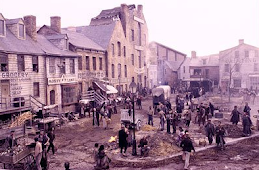
Dante Ferretti, who in more than half a century in movie production design has been nominated for 10 Academy Awards and won three, was born on this day in 1943 in the city of Macerata, in the Marche region of central Italy.  Ferretti, who works in partnership with his wife, the set decorator Francesca Lo Schiavo, won two of his Oscars for films directed by Martin Scorsese, with whom he has enjoyed a collaboration that began 25 years ago this year.  Nominated for his first film with Scorsese, The Age of Innocence (1993) and subsequently for Kundun (1998) and Gangs of New York (2003), he was successful with The Aviator (2005) and Hugo Cabret (2012).  Both Oscars, for Best Scenography, were shared with Lo Schiavo, with whom he also shared an Oscar for Tim Burton’s 2008 film Sweeney Todd: The Demon Barber of Fleet Street.  Ferretti also enjoyed long collaborations with Federico Fellini and Pier Paolo Pasolini, and worked with a string of other major directors, including Elio Petri, Ettore Scola, Franco Zeffirelli, Jean-Jacques Annaud, Terry Gilliam, Anthony Minghella, Brian de Palma, Julie Taymor and Kenneth Branagh.  Read more…

____________________________________

Angelo Mangiarotti - architect and designer

Iconic glass church among legacy to city of Milan 

Angelo Mangiarotti, regarded by his peers as one of the greats of modern Italian architecture and design, was born on this day in 1921 in Milan.  Many notable examples of his work in urban design can be found in his home city, including the Repubblica and Venezia underground stations, the iconic glass church of Nostra Signora della Misericordia in the Baranzate suburb and several unique residential properties, including the distinctive Casa a tre cilindri - composed of a trio of cylindrical blocks - in Via Gavirate in the San Siro district of the city.  He also worked extensively in furniture design with major companies such as Vistosi, Fontana Arte, Danese, Artemide, Skipper and the kitchen producer Snaidero.  Mangiarotti graduated from the Architecture School of the Politecnico di Milano in 1948. He moved to the United States in 1953 and worked in Chicago as a visiting professor for the Illinois Institute of Technology. While in Illinois, he met internationally renowned architects Frank Lloyd Wright, Walter Gropius, Ludwig Mies van der Rohe and Konrad Wachsmann, all of whom were substantial influences.  Read more…

______________________________________

Emanuele Severino - philosopher

Thinker famous for theories on eternity and being

The contemporary philosopher Emanuele Severino, who died in January 2020, was born on this day in 1929 in Brescia, in northern Italy.  Severino is regarded by many as one of Italy’s greatest thinkers of the modern era, yet came into conflict with the Catholic Church, so much that the Congregation of the Doctrine of the Faith, the body that once stood in judgment of those it deemed as heretics, banished him from the Church in 1969 on the basis that his beliefs were not compatible with Christianity.  The basis for their action was his belief in “the eternity of all being”, which essentially denies the existence of God as a creator.  Severino believed that the ancient Greek theory of all things coming from nothing and returning to nothing after being granted temporary existence was flawed, and that the Greek sense of becoming was an error. He contended that the idea that an entity can move from ‘being’ to ‘non-being’ and vice-versa was absurd.  He argued that everything is eternal, not only all people and all things, but every moment of life, every feeling, every aspect of reality, and that nothing becomes or ceases to be.  Read more…


Home


25 February 2023

25 February

NEW
- Enea Salmeggia – artist

Painter was dubbed the Raphael of Bergamo

Prolific painter Enea Salmeggia, who was active during the late Renaissance period and left a rich legacy of art in northern Italy, died on this day in 1626 in Bergamo in the region of Lombardy.  Salmeggia, also known as Il Talpino, or Salmezza, went to Rome as a young man, where he studied the works of Raphael. His style has often been likened to that of Raphael and he has even been called the Bergamo Raphael by some art lovers. A drawing formerly attributed to Raphael, now in the Ashmolean Museum in Oxford, of two figures seated with some architectural studies, has subsequently been ascribed to Enea Salmeggia.  The artist was born at Salmezza, a frazione of Nembro, a comune - municipality - in the province of Bergamo, between 1565 and 1570. It is known that he grew up in Borgo San Leonardo in Bergamo, where his father, Antonio, was a tailor.  He learnt the art of painting from other Bergamo painters and is also believed to have studied under the Bergamo artist Simone Peterzano in Milan. Caravaggio was one of Peterzano’s most famous pupils and it has been suggested that Salmeggia could have been studying with Peterzano at the same time as Caravaggio.  Read more…

_____________________________________

Carlo Goldoni – playwright

Greatest Venetian dramatist whose work still entertains audiences today

Carlo Goldoni, the author of The Servant of Two Masters, one of Italy’s most famous and best-loved plays, was born on this day in 1707 in Venice.  Goldoni became a prolific dramatist who reinvigorated the commedia dell’arte dramatic form by replacing its masked, stock figures with more realistic characters. He produced tightly constructed plots with a new spirit of spontaneity and is considered the founder of Italian realistic comedy.  The son of a physician, Goldoni read comedies from his father’s library when he was young and ran away from his school at Rimini with a company of strolling players when he was just 14.  Later, while studying at the papal college in Pavia, Goldoni read comedies by Plautus, Terence and Aristophanes and learnt French so he could read plays by Molière.  He was eventually expelled for writing a satire about the ladies of Pavia and was sent to study law.  Although he practised law in Venice and Pisa and held diplomatic appointments, his real passion was writing plays for the theatres in Venice.  In 1748 he began writing for the Teatro Sant’Angelo company and dispensed with masked characters altogether for his play, La Pamela, a serious drama based on Samuel Richardson’s novel.  Read more…

______________________________________

Alberto Sordi - actor

Comic genius who appeared in 190 films

Alberto Sordi, remembered by lovers of Italian cinema as one of its most outstanding comedy actors, died on this day in 2003 in Rome, the city of his birth.  He was 82 and had suffered a heart attack.  Italy reacted with an outpouring of grief and the decision was taken for his body to lie in state at Rome's town hall, the Campidoglio.  Streams of his fans took the opportunity to file past his coffin and when his funeral took place at the Basilica of San Giovanni in Laterano it was estimated that the crowds outside the church and in nearby streets numbered one million people.  Only the funeral of Pope John Paul II, who died two years later, is thought to have attracted a bigger crowd.  Sordi was the Italian voice of Oliver Hardy in the early days of his career, when he worked on the dubbing of the Laurel and Hardy movies.  He made the first of his 190 films in 1937 but it was not until the 1950s that he found international fame.  He appeared in two movies directed by Federico Fellini - The White Sheik and I vitelloni.  In the latter, he played an oafish layabout, something of a simpleton but an effeminate and vulnerable character to whom audiences responded with warmth and affection due to Sordi's interpretation.  Read more…

______________________________________

Benedetto Croce – philosopher and historian

Prolific writer opposed the Fascists and supported democracy

Benedetto Croce, one of the most important figures in Italian life and culture in the first half of the 20th century, was born on this day in 1866 in Pescasseroli in the region of Abruzzo.  Croce was an idealist philosopher, historian and erudite literary scholar whose approach to literature influenced future generations of writers and literary critics. He was nominated for the Nobel Prize in Literature 16 times.  He became a Senator in 1910 and was Minister for Education from 1920 to 1921 in the last pre-Fascist government of the so-called Giolitti era. He is also remembered for his major contribution to the rebirth of Italian democracy after World War II.  Croce was born into a wealthy family and raised in a strict Catholic environment.  However, from the age of 16 he gave up Catholicism and developed a personal philosophy of spiritual life.  In 1883, while he was still a teenager, he was on holiday with his family on the island of Ischia when an earthquake struck Casamicciola and destroyed the house they were staying in. His mother, father and sister were all killed, but although he was buried for a long time, he managed to survive.  Read more…

______________________________________

Enrico Caruso – opera singer

Tenor's voice still regarded as greatest of all time 

Operatic tenor Enrico Caruso was born on this day in 1873 in Naples.  Believed by many opera experts to be the greatest tenor of all time, Caruso had a brilliant 25-year singing career, appearing at many of the major opera houses in Europe and America.  He made more than 200 recordings of his beautiful voice, some made as early as 1902.  Caruso was born in Via San Giovanello agli Ottocalli in Naples and baptised the next day in the nearby church of San Giovanni e Paolo.  At the age of 11 he was apprenticed to a mechanical engineer and also worked alongside his father in a factory.  At the same time he was singing in his church choir and was told his voice showed enough promise for him to consider becoming a professional singer.  Until she died in 1888, he was encouraged by his mother. To earn money, he started to work as a street singer in Naples, progressing to singing Neapolitan songs as entertainment in cafes. Having decided to become an opera singer, Caruso took singing lessons, keeping up with them even during his compulsory military service.  He made his stage debut in 1895 at the Teatro Nuovo in Naples.  Read more...

_____________________________________

Giovanni Battista Morgagni - anatomist

The father of modern pathological anatomy

Anatomist Giovanni Battista Morgagni, who is credited with turning pathology into a science, was born on this day in 1682 in Forlì in Emilia-Romagna.  Morgagni was professor of anatomy at the University of Padua for 56 years and taught thousands of medical students during his time there.  He was sent by his parents to study philosophy and medicine at the University of Bologna when he was 18 and he graduated as a doctor from both faculties.  In 1706 he published his work, Adversaria anatomica, which was to be the first volume of a series and helped him become known throughout Europe as an accurate anatomist.  He succeeded to the chair of theoretical medicine at the University of Padua in 1712 and was to teach medicine there until his death in 1771.  Morgagni was promoted to the chair of anatomy after his first three years in Padua, following in the footsteps of many illustrious scholars. He brought out five more volumes of his Adversaria anatomica during his early years in Padua.  In 1761, when he was nearly 80, he brought out the work that was to make pathological anatomy into a science – De Sedibus et causis morborum per anotomem indagatis (Of the seats and cause of diseases investigated through anatomy). Read more…

Booking.com


Home


Enea Salmeggia – artist

Painter was dubbed the Raphael of Bergamo

Enea Salmeggia's Il Martirio di Sant’Alessandro is one of his most famous paintings
Enea Salmeggia's Il Martirio di Sant’Alessandro
is one of his most famous paintings
Prolific painter Enea Salmeggia, who was active during the late Renaissance period and left a rich legacy of art in northern Italy, died on this day in 1626 in Bergamo in the region of Lombardy.

Salmeggia, also known as Il Talpino, or Salmezza, went to Rome as a young man, where he studied the works of Raphael. His style has often been likened to that of Raphael and he has even been called the Bergamo Raphael by some art lovers. A drawing formerly attributed to Raphael, now in the Ashmolean Museum in Oxford, of two figures seated with some architectural studies, has subsequently been ascribed to Enea Salmeggia.

The artist was born at Salmezza, a frazione of Nembro, a comune - municipality - in the province of Bergamo, between 1565 and 1570. It is known that he grew up in Borgo San Leonardo in Bergamo, where his father, Antonio, was a tailor.

He learnt the art of painting from other Bergamo painters and is also believed to have studied under the Bergamo artist Simone Peterzano in Milan. Caravaggio was one of Peterzano’s most famous pupils and it has been suggested that Salmeggia could have been studying with Peterzano at the same time as Caravaggio.

Enea's Madonna col Bambino e santi
 Ambrogio e Carlo Borromeo
Salmeggia was so young when he received his first commission to paint an Adoration of the Magi for the Basilica of Santa Maria Maggiore in Bergamo that his father had to sign the acceptance document on his behalf.

The artist married Vittoria Daverio, the sister of Milanese sculptor Pietro Antonio Daverio, and they had six children. Two of their children died from the plague and one went into a monastery, but his daughters, Chiara and Elisabetta, and his son, Francesco, worked in his studio near the Church of Sant’Alessandro in Colonna in Bergamo and later became painters themselves.

One of Salmeggia’s most famous works, Il Martirio di Sant’Alessandro, an oil on canvas in the choir of the Church of Sant'Alessandro in Colonna, was completed in 1623.

Among the other churches with paintings by Salmeggia are Sant’Andrea and Santi Bartolomeo e Stefano in Bergamo, Sant’Afra in Brescia, San Francesco in Lodi, San Vittorio in Terno d’Isola and San Gregorio in Gromo.

The Accademia Carrara in Bergamo has works by Salmeggia, including his Portrait of a Gentleman. The Pinacoteca del Castello Sforzesco in Milan also has paintings by Salmeggia, including his Madonna col Bambino e santi Ambrogio e Carlo Borremeo.

Salmeggia died in 1626 and was buried in the Church of Sant’Alessandro in Colonna.

The parish church of San
Martino in the centre of Nembro
Travel tip:

Nembro, the suburb of Bergamo in which Enea Salmeggia was born, can be found about 9km (5 miles) northwest of the city of Bergamo, on the right bank of the Serio river. The surrounding countryside is popular with walkers, with many defined paths in the hills above the town, one of which leads to the Santuario della Madonna dello Zuccarello, built in 1374 by the nobleman Bernardo Vitalba. The town itself surrounds the parish church of San Martino, erected in the ninth century but rebuilt in the 18th century, which contains no fewer than 27 of Salmeggia’s paintings.  In recent history, Nembro was notable as one of the areas of Bergamo worst hit by the Covid-19 pandemic, with 188 known to have died from the disease, 94 in the first 15 days. On average, every household in Nembro mourned at least one family member.

Stay in Nembro with Booking.com

The Festa di Sant'Alessandro sees the church facade illuminated
The Festa di Sant'Alessandro sees
the church facade illuminated
Travel tip:

The Chiesa di Sant’Alessandro in Colonna in Via Sant’Alessandro in Bergamo is the church of the city’s patron saint.  Outside the church is a Roman column, said to have been erected in the exact spot where Alessandro was executed by the Romans. The column was constructed in the 17th century from Roman fragments and there are various theories about where the pieces came from. The church of Sant’Alessandro in Colonna was rebuilt in the 18th century on the site of an earlier church. Its ornate campanile was completed at the beginning of the 20th century. Over several days each August, the facade of the church is illuminated as part of the Festa di Sant’Alessandro, marking the anniversary of his execution in 303.

Accommodation choices in Bergamo from Booking.com


More reading:

The Bergamo painter who left a visual record of changing society

The Bergamo shoemaker’s son who became internationally acclaimed sculptor

Raphael - the precocious genius from Urbino

Also on this day:

1682: The birth of anatomist Giovanni Battista Morgagni

1707: The birth of Venetian playwright Carlo Goldoni

1866: The birth of philosopher and historian Benedetto Croce

1873: The birth of tenor Enrico Caruso

2003: The death of actor Alberto Sordi

(Picture credits: Nembro church by Giorces via Wikimedia Commons)

(Paintings: Il Martirio di Sant’Alessandro, Galleria dell Accademia Carrara, Bergamo; Madonna col Bambino e santi Ambrogio e Carlo Borromeo, Pinacoteca del Castello Sforzesco, Milan)


Home