21 March 2022

21 March

AC Milan pay record fee for Ruud Gullit

Signing of Dutch star sparked new era of success

A new golden era in the history of the AC Milan football club effectively began on this day in 1987 when the club agreed a world record transfer fee of £6 million - the equivalent of about £14.5 million (€16.8 million) today - to sign the attacking midfielder Ruud Gullit from the Dutch champions PSV Eindhoven.  The captain of The Netherlands national team that would be crowned European champions the following year, Gullit was regarded as one of the world’s best players at the time and his arrival in Milan caused huge excitement.  Thousands of Milan supporters turned out to greet him on the day he arrived in the city, so many that the car taking him from the airport to the club’s headquarters needed a police escort with sirens blaring in order to forge a path through the crowds.  Those fans correctly sensed that Gullit’s signing would bring a change of fortunes for the rossoneri after a dark period in their history.  Traditionally one of Italian football’s most powerful clubs, Milan had won the scudetto - the Italian championship - for the 10th time in 1979 but the following year were embroiled in the match-fixing scandal known as Totonero and as a punishment were relegated to Serie B - the second division - for the first time in their history.  Read more…

____________________________________

Alberto Marvelli - Rimini's Good Samaritan

Heroic deeds helped victims of bombing raids

Alberto Marvelli, who came to be seen as a modern day Good Samaritan after risking his life repeatedly to help the victims of devastating air raids in the Second World War, was born on this day in 1918 in Ferrara.  He died in 1946 at the age of only 28 when he was struck by a truck while riding his bicycle but in his short life identified himself to many as a true hero.  He was beatified by Pope John Paul II in 2004.  Marvelli's acts of heroism occurred mainly in Rimini, his adopted home town, which suffered heavy bombing from the Allies due to its proximity to the Gothic or Green Line, a wide belt of German defensive fortifications that ran across the whole peninsula from La Spezia to the Adriatic coast.  As well as giving aid and comfort to the wounded and dying and to those whose homes and possessions had been destroyed, Marvelli also rescued many Rimini citizens from trains destined for concentration camps.  Alberto was the second of six children born to Luigi Marvelli and Maria Mayr. Growing up, he was set a powerful example by his mother, who always kept open house for the poor and regularly gave away food intended for her own family.  Read more…

___________________________________

Benedetta Cambiagio Frassinello – Educator

Nun who promoted the rights of girls to a quality education

The Feast Day of Saint Benedetta Cambiagio Frassinello, who founded the Benedictine Sisters of Providence, is celebrated on this day, the anniversary of her death in 1858.  Benedetta carried out pioneering work by rescuing poor and abandoned girls and promoting their rights to a good education. She was made a saint by Pope John Paul II in 2002.  Benedetta was born in 1791 in Genoa but her family later moved to Pavia. As a young girl she wanted to consecrate her life to God, but obeying her parents’ wishes, she married Giovanni Battista Frassinello when she was 24.  After two years of marriage, during which they had no children, they decided to live a celibate life and stay together as brother and sister. They both later joined religious orders but Benedetta was forced to leave and return to live in Pavia again because of ill health.  When she was well again she dedicated herself to the education of the many young girls who had been abandoned or who were at risk in the area. There was so much work that the local Bishop asked her husband to leave his religious order to help her.  She was helped by young women volunteers.  Read more…

_____________________________________

Angela Merici – Saint

Nun dedicated her life to educating girls

Angela Merici, who founded the monastic Ursuline Order, was born on this day in 1474 in Desenzano del Garda, then part of the republic of Venice.  The Ursulines are the oldest order of women in the Roman Catholic Church dedicated to teaching and were the first to work outside a convent in the community.  Merici was orphaned at the age of 15 and sent to Salò to live in the home of an uncle, where she became deeply religious and joined the Third Order of Saint Francis.  She returned to Desenzano after the death of her uncle when she was 20 and found that many of the young girls in her home town received no education and had no hope of a better future.  Merici gathered together a group of girls to teach the catechism to the young children.  Then, in 1506, while praying in the fields, she had a vision that she would found a society of virgins in the town of Brescia.  It is claimed Merici became suddenly blind when she was on the island of Crete on her way to the Holy Land but continued on her journey. She is believed to have been cured of her blindness on her return, while praying at exactly the same place where she had been afflicted.  Read more…

EN - 728x90


Home


20 March 2022

20 March

Fulco di Verdura - jeweller

Exclusive brand favoured by stars and royalty

The man behind the exclusive jewellery brand Verdura was born Fulco Santostefano della Cerda, Duke of Verdura, on this day in 1898 in Palermo. Usually known as Fulco di Verdura, he founded the Verdura company in 1939, when he opened a shop on Fifth Avenue in New York and became one of the premier jewellery designers of the 20th century.  Well connected through his own heritage and through his friendship with the songwriter Cole Porter, Verdura found favour with royalty and with movie stars.  Among his clients were the Duchess of Windsor - the former socialite Wallis Simpson - and stars such as Greta Garbo, Joan Crawford, Rita Hayworth, Katharine Hepburn, Paulette Goddard, Millicent Rogers and Marlene Dietrich.  Although Verdura died in 1978, the company lives on and continues to specialise in using large, brightly coloured gemstones. The most expensive gemstone ever sold at auction, the so-called Oppenheimer Blue diamond, was set in a ring designed by Verdura. It changed hands at Christie's in Geneva for $50.6 million (£34.7 million) in May 2016.  The last to bear the now defunct Sicilian title of Duke of Verdura, Fulco grew up in aristocratic surroundings.  Read more…

____________________________________

Azeglio Vicini - 1990 World Cup coach

Semi-final heartbreak ended dream of victory on home soil

Azeglio Vicini, the coach who led Italy to the semi-finals when the nation hosted the 1990 World Cup finals, was born in the city of Cesena in Emilia-Romagna, on this day in 1934. Vicini worked for the Italian Football Federation for an unbroken 23 years in various roles, having joined their technical staff in 1968 after less than one season as a coach at club level. He was head coach of the Italy Under-23 and Italy Under-21 teams before succeeding World Cup winner Enzo Bearzot as coach of the senior Italy side in 1986.  Vicini's brief with the senior team was an onerous one.  When Italy won the right to host the 1990 World Cup finals there was an expectation among Italian football's hierarchy that a nation with such a proud history should be capable of winning the tournament on home soil. Responsibility for producing a team good enough rested squarely on Vicini's shoulders but he was well prepared, having guided his under-21 team to the later stages of the European Championships consistently and brought through the likes of Roberto Mancini, Giuseppe Giannini, Roberto Donadoni, Walter Zenga and Gianluca Vialli.  Read more…

_______________________________________

Giampiero Moretti - entrepreneur racing driver

Gentleman racer behind ubiquitous Momo accessories brand

Giampiero Moretti, a motor racing enthusiast who made his fortune almost literally by reinventing the wheel, was born on this day in 1940 in Milan.  Known as 'the last of the gentleman racers' because of his unfailing courtesy, refined manners and an unquenchable determination to succeed on the track, Moretti made a profound mark on the sport through his ergonomic rethink of the racecar steering wheel.  Steering wheels were traditionally large and made of steel or polished wood but Moretti saw that reducing the diameter of the wheel would cut the effort needed by the driver to steer the car, helping him conserve energy and creating a more comfortable driving position.  He also covered the wheel with leather to improve the driver's grip, and gave it a contoured surface.  He made the first one for a car he planned to race himself and there was soon interest among other drivers and he began to make more wheels.  His big break came when Ferrari invited him to design a leather wheel for their Formula One car.  Enzo Ferrari himself was a traditionalist who took some persuading that the tried-and-tested old steering wheel was not the best.  Read more…

Booking.com


Home


19 March 2022

19 March

Benito Jacovitti - cartoonist

Multiple comic characters loved by generations

Benito Jacovitti, who would become Italy's most famous cartoonist, was born on this day in 1923 in the Adriatic coastal town of Termoli.  Jacovitti drew for a number of satirical magazines and several newspapers but also produced much work aimed at children and young adults.  His characters became the constant companions of generations of schoolchildren for more than 30 years via the pages of Diario Vitt, the school diary produced by the publishers of the Catholic comic magazine Il Vittorioso, which had a huge readership among teenagers and young adults, and for which Jacovitti drew from 1939 until it closed in 1969.  Jacovitti gave life to such characters as "the three Ps" - Pippo, Pertica and Pallo - as well as Chicchiriccì and Jack Mandolino via their cartoon adventures in Il Vittorioso, introduced Zorry Kid, a parody of Zorro, through a later association with children's journal Il Corriere del Picoli, and the cowboy Cocco Bill, who emerged during his 10-year stint as cartoonist for the daily newspaper, Il Giorno.  Born Benito Franco Iacovitti, he was the son of a railway worker.  Read more…

_____________________________________

Francesco Gasparini – musician and writer

Opera composer who gave Vivaldi a job

Francesco Gasparini, one of the great Baroque composers, whose works were performed all over Europe, was born on this day in 1661 in Camaiore near Lucca in Tuscany.  Gasparini also worked as a music teacher and was musical director of the Ospedale della PietĂ  in Venice for about 15 years, where he made the inspired decision to employ a 25-year-old Antonio Vivaldi as a violin master.  By the age of 17, Gasparini was a member of the Philharmonic Academy of Bologna. He moved to Rome, where he studied under the musicians Arcangelo Corelli and Bernardo Pasquini. His first important opera, Roderico, was produced there in 1694.  After arriving in Venice in 1702, he became one of the leading composers in the city. He wrote the first opera to use the story of Hamlet - Ambleto - in 1705, although he did not base the work on Shakespeare’s play.  Gasparini was appointed musical director of the Ospedale della PietĂ , an orphanage in Venice where young girls received a musical education. The most talented pupils stayed on to become members of the Ospedale’s orchestra and choir.  Read more…

____________________________________

Filippo Mazzei – physician and businessman

Liberal thinker was praised by John F Kennedy

Globe-trotting doctor Filippo Mazzei, who was a close friend of the American president, Thomas Jefferson, died on this day in 1816 in Pisa in Tuscany.  During the American Revolutionary War, Mazzei had acted as an agent for Jefferson, purchasing arms for Virginia.  President John F Kennedy paid tribute to Mazzei’s contribution to the Declaration of Independence in his book, A Nation of Immigrants.  Mazzei was born in 1730 in Poggio a Caiano in Tuscany. He studied medicine in Florence and then practiced in both Italy and Turkey. He moved to London in 1755 and set himself up in business as an importer, while also working as an Italian teacher.  In London he met both Benjamin Franklin and Thomas Jefferson, who would become two of the Founding Fathers, and came up with the idea of importing Tuscan products, such as wine and olive trees, to the New World.  In 1773 Mazzei boarded a ship from Livorno to Virginia, taking with him plants, seeds, silkworms and farmers from Lucca.  He visited Jefferson at his estate in Virginia and was given a large piece of land to start an experimental plantation.  Mazzei and Jefferson started what was to become the first commercial vineyard in Virginia.  Read more…

_____________________________________

Giuseppe Mercalli - seismologist

Scientist who invented Mercalli Scale died in fire

The seismologist and volcanologist Giuseppe Mercalli, who at the time of his death was director of the Vesuvius Observatory, died in a fire at his home in Naples on this day in 1914.  The initial suspicion was that Mercalli, who devised a scale for determining the strength of earthquakes according to the intensity of shaking, had knocked over a paraffin lamp accidentally after falling asleep while working late.  However, an examination of his remains suggested he may have been strangled after disturbing an intruder, who then soaked his clothes in petrol before setting light to them. A sum of money worth the equivalent of $1,400 (€1,250) today was missing, although no one was ever apprehended for the crime.  Born in Milan, Mercalli was ordained a Roman Catholic priest and became a professor of Natural Sciences at the seminary of Milan, although he left under something of a cloud because of his support for Antonio Rosmini, a controversial priest and philosopher who campaigned for social justice and was fiercely critical of various aspects of how the Roman Catholic church operated.  Read more…

_____________________________________

Mario Monti – prime minister

‘Super Mario’ stepped in during debt crisis

Economist Mario Monti, who was prime minister of Italy from 2011 to 2013, was born on this day in 1943 in Varese in Lombardy.  Monti was invited by Italian president Giorgio Napolitano to form a new government after the resignation of Silvio Berlusconi in November 2011 in the middle of the European debt crisis.  Monti, who was the 54th prime minister of Italy, led a government of technocrats, who introduced austerity measures in Italy.  Monti was born in Varese and, after attending a private school, went to Bocconi University in Milan, where he obtained a degree in Economics.  He was a European commissioner from 1994 to 1999, where he obtained the nickname ‘Super Mario’ from his colleagues and the Press.  In 1999 the prime minister at the time, Massimo D’Alema, appointed him to the new Prodi Commission, giving him responsibility for Competition.  He was made a lifetime senator by Giorgio Napolitano in November 2011 and a few days later he was invited to form a new government following Berlusconi’s resignation.  He appointed a technocratic cabinet composed entirely of unelected professionals.  Read more…


Home


18 March 2022

18 March

The Five Days of Milan

Citizens rebel to drive out ruling Austrians

The Five Days of Milan, one of the most significant episodes of the Risorgimento, began on this day in 1848 as the citizens of Milan rebelled against Austrian rule.  More than 400 Milanese citizens were killed and a further 600 wounded but after five days of street battles the Austrian commander, Marshal Josef Radetzky, withdrew his 13,000 troops from the city.  The 'Cinque Giornate' uprising sparked the First Italian War of Independence between the Kingdom of Sardinia and the Austrian Empire.  Much of northern Italy was under Austrian rule in the early part of the 19th century and they maintained a harsh regime. Elsewhere, governments were introducing social reform, especially in Rome but also in Sicily, Salerno and Naples after riots against the Bourbon King Ferdinand II.  Ferdinand, ruler of the Kingdom of the Two Sicilies, and Charles Albert (Carlo Alberto) of Savoy, in the Kingdom of Sardinia, adopted a new constitution, limiting the power of the monarchy, and Pope Pius IX in the Papal States followed suit a little later.  The response of the Austrians was to seek a still tighter grip on their territories in Lombardy-Venetia.  Read more…

_____________________________________

Alessandro Alessandroni – composer

Versatile musician became famous for his haunting whistle

Alessandro Alessandroni, the composer of more than 40 film scores who could play many different musical instruments, was born on this day in 1925 in Soriano nel Cimino near Viterbo.  As a child he was a friend of Ennio Morricone and the two of them went on to collaborate on many soundtracks for Spaghetti Western films.  Alessandroni also founded the 16-member vocal group I Cantori Moderni (The Modern Choristers) in 1961. His first wife, the singer Giulia De Mutiis, was a member of the group, who performed wordless vocals on many Italian film soundtracks, as was Edda Dell’Orso, whose exceptional voice also featured in Morricone’s scores.  Most notably they sang Mah Na Mah Na for the film Sweden Heaven and Hell, a song which was later popularised by The Muppet Show.  Alessandroni learnt to play the guitar, mandolin, mandoloncello, sitar, accordion and piano. His family barbershop in Soriano nel Cimino became a favourite gathering place for local musical talent. He says of this time: ‘We had a guitar, mandolin and a mandola. We didn’t do much business but we made a lot of music.’  Read more…

______________________________________

Mount Vesuvius – the 1944 eruption

The last time the volcano was seen to blow its top

Mount Vesuvius, the huge volcano looming over the bay of Naples, last erupted on this day in 1944.  Vesuvius is the only volcano on mainland Europe to have erupted during the last 100 years and is regarded as a constant worry because of its history of explosive eruptions and the large number of people living close by.  It is most famous for its eruption in AD 79, which buried the Roman cities of Pompeii and Herculaneum and is believed to have killed thousands of people.  An eyewitness account of the eruption, in which tons of stones, ash and fumes were ejected from the cone, has been left behind for posterity by Pliny the Younger in his letters to the historian, Tacitus.  There were at least three larger eruptions of Vesuvius before AD 79 and there have been many since. In 1631 a major eruption buried villages under lava flows and killed about 300 people and the volcano then continued to erupt every few years.  The eruption, which started on 18 March 1944 and went on for several days, destroyed three villages nearby and about 80 planes belonging to the US Army Air Forces, which were based at an airfield close to Pompeii.   Read more…

____________________________________

Bobby Solo - pop singer

Sixties star found fame after Sanremo disqualification

Bobby Solo, who was twice winner of Italy's prestigious Sanremo Festival yet had his biggest hit with a song that was disqualified, was born Roberto Satti on this day in 1945 in Rome.  The singer and songwriter won the contest in 1965 and again in 1969 but it was the controversy over his 1964 entry that thrust him into the spotlight and sent him to the top of the Italian singles charts with the first record to sell more than one million copies in Italy. To emphasise that the competition was to select the best song, rather than the best artist, each entry was sung by two artists, one a native Italian, the other an international guest star. In 1964, Solo was paired with the American singer Frankie Laine to showcase Una lacrima sul viso (A Tear on Your Face).  Laine performed the song in English but Solo was stricken with a throat problem. Rather than withdraw, he sang the song with the help of a backing track, only to be told afterwards that this was against the rules. The song was disqualified but attracted such attention that it became a huge hit, topping the Italian singles chart for eight weeks. Sales in Italy and other countries eventually topped two million.  Read more…


Home


17 March 2022

17 March

NEW
- Angelo Beolco - playwright

Actor and dramatist with a genius for comedy

One of the most powerful Italian dramatists of the 16th century, Angelo Beolco, who was nicknamed Ruzzante (or sometimes Ruzante) after his favourite character, died on this day in 1542 in Padua in the Veneto region.  Beolco was famous for his rustic comedies, which were written mostly in the Paduan dialect of the Venetian language.  Many of his plays featured a peasant called Ruzzante and they painted a vivid picture of life in the Paduan countryside during the 16th century.  Beolco was born in Padua in 1496 and was the illegitimate son of a doctor. His mother was possibly a maid in the household where he was brought up by his father. He received a good education and after his father’s death became manager of the family estate. In 1529, he also became manager of a farm owned by a nobleman, Alvise Cornaro, who had retired to live in the Paduan countryside. Cornaro later became Beolco’s friend and protector.  Beolco met and associated with Paduan intellectuals of the time, such as the poet Pietro Bembo and the scholar and dramatist Sperone Speroni, which led to him developing an interest in the theatre.  Read more…

____________________________________

Giovanni Trapattoni - football coach

His seven Serie A titles is unequalled achievement

Giovanni Trapattoni, the former Juventus and Internazionale coach who is one of only six coaches to have won the principal league titles of four different European countries, was born on this day in 1939 in Cusano Milanino, a suburb on the northern perimeter of Milan.  The most successful club coach in the history of Serie A, he won seven titles, six with Juventus and one with Inter.  His nearest challenger in terms of most Italian domestic championships is Massimiliano Allegri, who won six - five with Juventus, one with AC Milan.  In addition, Trapattoni has also won the German Bundesliga with Bayern Munich, the Portuguese Primeira Liga with Benfica and the Austrian Bundesliga with Red Bull Salzburg, with whom he secured his 10th league title all told in 2007. Former Chelsea and Manchester United boss Jose Mourinho is among the other three managers to have won titles in four countries.  He has been successful in Portugal, England, Italy and Spain. Trapattoni's compatriot Carlo Ancelotti is the only manager to win titles in all of the so-called top five European leagues, in Italy (AC Milan), England (Chelsea), France (PSG), Germany (Bayern Munich), and Spain (Real Madrid).  Read more…

______________________________________

Gabriele Ferzetti - actor

Starred in classic Italian films as well as Bond movie

The actor Gabriele Ferzetti, best known to international audiences for his role in the 1969 Bond movie On Her Majesty’s Secret Service but in Italy for the Michelangelo Antonioni classic L’Avventura (1960), was born on this day in 1925 in Rome.  Ferzetti, who cut a naturally elegant and debonair appearance, was the go-to actor for handsome, romantic leads in the early part of his career and although he was ultimately eclipsed to some extent by Marcello Mastroianni, he seemed equally content with prominent supporting roles. Rarely idle, he made more than 160 films and appeared in countless TV dramas and was still working at 85 years old.  His intense performance as Antonioni’s wealthy yet unfulfilled playboy opposite Lea Massari and Monica Vitti in L’Avventura was the role that identified him most as an actor of considerable talent. Ferzetti had played a similar character in another Antonioni classic Le amiche (1955).  Outside Italian cinema, he was memorable as the unscrupulous Morton, the railroad magnate who hobbled around on crutches in Sergio Leone’s Once Upon a Time in the West (1968).  Read more…

____________________________________

Innocenzo Manzetti - inventor

Made prototype telephone 33 years ahead of Bell

The inventor Innocenzo Manzetti, credited by some scientific historians as having been the creator of a forerunner of the telephone many years ahead of his compatriot Antonio Meucci and the Scottish-American Alexander Graham Bell, was born on this day in 1826 in Aosta, in northwest Italy.  Manzetti's extraordinary catalogue of inventions included a steam-powered car, a hydraulic water pump, a pendulum watch that would keep going for a whole year and a robot that could play the flute.  But he was a man whose creative talents were not allied to business sense.  Like Meucci, a Florentine emigrant to New York who demonstrated a telephone-like device in 1860 - 16 years before Bell was granted the patent - Manzetti did not patent his device and therefore missed out on the fortune that came the way of Bell.  Research has found that Manzetti may have had the idea for a "vocal telegraph" as early as 1843, as a result of his success with his flute-playing automaton, which he constructed as a life-size model of a man sitting on a chair, inside which were concealed a system of levers, rods and compressed air tubes that enabled his lips and fingers to move on the flute.  Read more…

______________________________________

Kingdom of Italy proclaimed

First king of Italy calls himself Victor Emmanuel II

The newly-unified Kingdom of Italy was officially proclaimed on this day in 1861 in Turin.  The first Italian parliament to meet in the city confirmed Victor Emmanuel as the first King of the new country.  It was the monarch's own choice to call himself Victor Emmanuel II, rather than Victor Emmanuel I. This immediately provoked criticism from some factions, who took it as implying that Italy had always been ruled by the House of Savoy.  Victor Emmanuel I, with whom Victor Emmanuel II had ancestral links, had been King of Sardinia - ruled by the Dukes of Savoy - from 1802 until his death in 1824.  Victor Emmanuel II had become King of Sardinia in 1849 after his father, Charles Albert, abdicated. His father had succeeded a distant cousin, Charles Felix, to become King of Sardinia in 1831.  The Kingdom of Sardinia is considered to be the legal predecessor to the Kingdom of Italy.  As King of Sardinia, Victor Emmanuel II had appointed Count Camillo Benso of Cavour as Prime Minister of Sardinia-Piedmont, who had then masterminded a clever campaign to put him on the throne of a united Italy.  Victor Emmanuel II had become the symbol of the Risorgimento, the Italian unification movement in the 19th century.   Read more…


Home


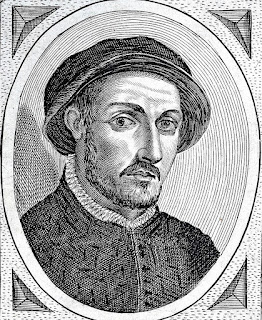
Angelo Beolco - playwright

Actor and dramatist with a genius for comedy

Angelo Beolco's plays were written in Paduan dialect spiced with vulgarities
Angelo Beolco's plays were written in
Paduan dialect spiced with vulgarities
One of the most powerful Italian dramatists of the 16th century, Angelo Beolco, who was nicknamed Ruzzante (or sometimes Ruzante) after his favourite character, died on this day in 1542 in Padua in the Veneto region.

Beolco was famous for his rustic comedies, which were written mostly in the Paduan dialect of the Venetian language.

Many of his plays featured a peasant called Ruzzante and they painted a vivid picture of life in the Paduan countryside during the 16th century.

Beolco was born in Padua in 1496 and was the illegitimate son of a doctor. His mother was possibly a maid in the household where he was brought up by his father. He received a good education and after his father’s death became manager of the family estate. In 1529, he also became manager of a farm owned by a nobleman, Alvise Cornaro, who had retired to live in the Paduan countryside. Cornaro later became Beolco’s friend and protector.

Beolco met and associated with Paduan intellectuals of the time, such as the poet Pietro Bembo and the scholar and dramatist Sperone Speroni, which led to him developing an interest in the theatre.

His first attempts at acting and writing plays may have been delivering impromptu sketches at wedding parties.

It is established that in 1520 he was already known as Ruzzante and that he played a role in a play put on at a palace in Venice. It was after this that he put together his own theatrical troupe. His first plays were staged in Ferrara between 1529 and 1532 and then later in Padua at the residence of his friend, Cornaro.

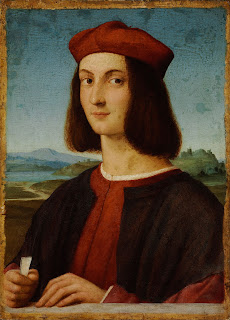
Beolco was a friend of the poet Pietro Bembo (above)
Beolco was a friend of the poet
Pietro Bembo (above)
In Beolco’s first printed play, La pastoral, which was categorised as a rural comedy, Arcadian shepherds tell of their frustrated love affairs, while, in contrast, the peasants Ruzzante and Zilio deliver rustic verses in dialect, spiced with vulgarities and obscenities, beginning with Ruzzante’s first line in the play.

Much of the play’s comical effect comes from the contrast between the two languages, which provides the opportunity for misunderstandings and plays on words.

One of the characters is a physician, who earns the gratitude of Ruzzante for prescribing a fatal medicine to his stingy father. This unites the young peasant with his long-awaited inheritance.

In his later plays and monologues, Beolco shifts more to the Venetian language, while maintaining his social satire.

In the Oratione, a welcome speech for Bishop Marco Cornaro, who was later to become the 59th Doge of Venice, he suggests measures the new prelate should consider for improving the life of the peasants, including castrating the priests, or forcing them to marry, in order to give peace of mind to the local men and their wives.

Beolco’s plays were sometimes considered unfit for educated audiences because of the lascivious themes and vulgar language and this occasionally led to performances being cancelled.

In one of his best-known pieces, Il parlamento de Ruzante, the character tells of his return from the Venetian war front only to find that he has lost his wife, land and honour. The speech begins with Ruzzante’s favourite expletive.

Linguistic studies have concluded that Ruzante’s speech was not an accurate record of Paduan dialect of the day, but to some extent, a theatrical dialect created by Beolco.

Playwright Dario Fo put Beolco on the same level as the French playwright, Molière, claiming that he is the true father of the Venetian comic theatre (commedia dell’arte) and said that he was the most significant influence on his own work.

Beolco wrote at least 11 plays and monologues, but died in Padua when he was in his late forties, while preparing to stage a play by his friend, Speroni, for the Accademia degli Infiammati. Despite his theatrical success, Beolco was very poor for most of his life. Speroni once remarked that, while Beolco had an unsurpassed understanding of comedy, he was unable to perceive his own tragedy.

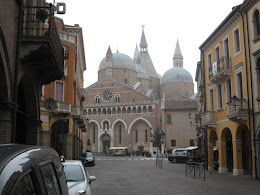
The Basilica di Sant'Antonio is one of Padua's most impressive sights
The Basilica di Sant'Antonio is one
of Padua's most impressive sights
Travel tip:

Padua, where Angelo Beolco was born and died, is in Italy’s Veneto region, situated 52km (32 miles) to the west of Venice. Padua is close to the stunning Euganean hills and many of the Venetian villas designed by architect Andrea Palladio. It is home to the second oldest university in Italy, the magnificent Basilica di Sant’Antonio, and one of the world’s greatest art treasures, the frescoes by Giotto in the Cappella Scrovegni, which tell the life stories of the Virgin Mary and Christ.

Padua hotels by Booking.com

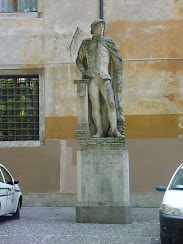
The Ruzzante statue next to Padua's Teatro Verdi
The Ruzzante statue next to
Padua's Teatro Verdi
Travel tip:

There is a statue of Angelo Beolco (Ruzzante) next to the Teatro Verdi in Padua. The beautiful 18th century theatre, named after the composer Giuseppe Verdi, is in Via del Livello in the centre of the city, close to Piazza dei Signori. Teatro Verdi now presents operas, musicals, plays, ballets and concerts organised by the Teatro Stabile del Veneto.

Also on this day:

1826: The birth of inventor Innocenzo Manzetti

1861: The proclamation of the Kingdom of Italy

1925: The birth of actor Gabriele Ferzetti

1939: The birth of football coach Giovanni Trapattoni


Home


16 March 2022

16 March

Emilio Lunghi - athlete

Italy's first Olympic medallist 

Emilio Lunghi, a middle-distance runner who was the first to win an Olympic medal in the colours of Italy, was born on this day in 1886 in Genoa.  Competing in the 800 metres at the 1908 Olympic Games in London, Lunghi took the silver medal behind the American Mel Sheppard. In a fast-paced final, Lunghi's time was 1 minute 54.2 seconds, which was 1.8 seconds faster than the previous Olympic record but still 1.4 seconds behind Sheppard.  It was the same Olympics at which Lunghi's compatriot Dorando Pietri was controversially disqualified after coming home first in the marathon, when race officials took pity on him after he collapsed from exhaustion after entering the stadium and helped him across the line.  A versatile athlete who raced successfully at distances from 400m up to 3,000m, Lunghi was national champion nine times in six events and is considered the first great star of Italian track and field.  An all-round sportsman, Lunghi was a talented gymnast, swimmer and boxer, but after winning a 3,000m-race in his home city he was encouraged to develop his potential as a runner by joining Sport Pedestre Genova, at the time the most important athletics club in Liguria.  Read more…

____________________________________

Bernardo Bertolucci - film director

Caused outrage with Last Tango in Paris

The controversial filmmaker Bernardo Bertolucci was born on this day in 1940 in Parma.  Bertolucci won an Oscar for best director as The Last Emperor picked up an impressive nine Academy Awards in 1988 but tends to be remembered more for the furore that surrounded his 1972 movie Last Tango in ParisLast Tango in Paris, starring Marlon Brando and Maria Schneider, caused outrage for its portrayal of sexual violence and emotional turmoil and was banned in Italy.  Although the storm died down over time, it blew up again in 2007 when Schneider, who was only 19 when the film was shot, claimed she felt violated after one particularly graphic scene because she had not been told everything that would happen.  Schneider died from cancer in 2011.  The controversy has overshadowed what has otherwise been an outstanding career, Bertolucci's movies placing him in the company of Federico Fellini, Michelangelo Antonioni, Luchino Visconti and Franco Zeffirelli among the greatest Italian directors of all time.  As a young man, Bertolucci wanted to become a poet, inspired by his father, Attilio, who was a poet as well as an art historian.  Read more…

____________________________________

Aldo Moro - Italy's tragic former prime minister

Politician kidnapped and murdered by Red Brigades

Italy and the wider world were deeply shocked on this day in 1978 when the former Italian prime minister, Aldo Moro, was kidnapped on the streets of Rome in a violent ambush that claimed the lives of his five bodyguards.  The attack took place on Via Mario Fani, a few minutes from Signor Moro's home in the Monte Mario area, at shortly after 9am during the morning rush hour.  Moro, a 61-year-old Christian Democrat politician who had formed a total of five Italian governments, between 1963 and 1968 and again from 1974-76, was being driven to the Palazzo Montecitorio in central Rome for a session of the Chamber of Deputies.  As the traffic forced Moro's car to pause outside a cafĂ©, one of four small Fiat saloon cars used by the kidnappers reversed into a space in front of Moro's larger Fiat, in which the front seats were occupied by two carabinieri officers with Moro sitting behind them.  Another of the kidnappers' Fiats pulled in behind the Alfa Romeo immediately following Moro's, which contained three more bodyguards.  At that moment, four gunmen emerged from bushes close to the roadside and began firing automatic weapons.  Read more…

____________________________________

Enrico Tamberlik – tenor

Imposing king of the high C sharp

Opera singer Enrico Tamberlik, who is remembered for the quality of his remarkable high notes, was born on this day in 1820 in Rome.  At the height of his career, Tamberlik, whose name is also sometimes spelt Tamberlick, sang regularly at the Royal Opera House in London and in St Petersburg, Paris and America.  The singer is believed to have been of Romanian descent but was born in Italy and did all his vocal training in Naples, Bologna and Milan.  At the age of 17 Tamberlik made his debut in a concert and then made his first appearance on the operatic stage as Gennaro in Lucrezia Borgia by Gaetano Donizetti at the Teatro Apollo in Rome.  In 1841 he appeared under the name Enrico Danieli at the Teatro Fondo in Naples as Tybalt in I Capuleti e I Montecchi by Vincenzo Bellini. A year later he made his debut at Teatro San Carlo in Naples under the name Enrico Tamberlik, which he used from then onwards.  Tamberlik made his London debut as Masaniello in Louis Auber’s La Muette de Portici at Covent Garden in 1850.  In St Petersburg in 1862 in the premiere performance of Giuseppe Verdi’s La forza del destino, he appeared as Don Alvaro, a role that had been written specially for him.  Read more…


Home


15 March 2022

15 March

Salvator Rosa – artist

Exciting Baroque painter inspired others

Salvator Rosa, a fiery and flamboyant character who was a poet and actor as well as an artist, died on this day in 1673 in Rome.  One of the least conventional artists of 17th century Italy, he was adopted as a hero by painters of the Romantic movement in the 18th and 19th centuries.  He mainly painted landscapes, but also depicted scenes of witchcraft, revealing his interest in the less conventional ideas of his age. These scenes were also sometimes the background for his etchings and the satires he wrote.  Rosa was born in Arenella on the outskirts of Naples. His father, a land surveyor, wanted him to become a lawyer or priest and entered him in the convent of the Somaschi Fathers.  Rosa was interested in art and secretly learnt about painting with his uncle and his brother-in-law, Francesco Fracanzano, who was a pupil of Jose de Ribera. Rosa later became an apprentice to Aniello Falcone, working with him on his battle scenes.  His own paintings featured landscapes overgrown with vegetation and beach scenes with caves, peopled with shepherds, seamen, soldiers and bandits.  Read more…

_______________________________________

Cesare Beccaria - jurist and criminologist

Enlightened philosopher seen as father of criminal justice

The jurist and philosopher Cesare Beccaria, who is regarded as one of the greatest thinkers of the so-called Age of Enlightenment in the 18th century, and whose writings had a profound influence on justice systems all over the world, was born on this day in 1738 in Milan.  As the author of a treatise On Crimes and Punishments (1764), which was a ground-breaking work in the field of criminal law and the approach to punishing offenders, Beccaria is considered by many academics to be the father of criminal justice.  The treatise, which Beccaria compiled when he was only 26 years old, condemned the death penalty on the grounds that the state does not possess the right to take lives and declared torture to be a barbaric practice with no place in a civilised, measured society.  It outlined five principles for an effective system of criminal justice: that punishment should have had a preventive deterrent function as opposed to being retributive; that punishment should be proportionate to the crime committed; that the probability of punishment should be seen as a more effective deterrent than its severity.  Read more…

_____________________________________

Gianluca Festa - footballer

Sardinian became a favourite in England

The footballer and coach Gianluca Festa, who played 177 matches in Italy’s Serie A but is best remembered as the first Italian defender to sign for a club in England’s Premier League, was born on this day in 1969 in Cagliari.  Festa joined Middlesbrough in January 1997 after manager Bryan Robson agreed to pay Inter-Milan £2.7million for the centre-back, who joined his Italian compatriot Fabrizio Ravanelli at the northeast England club.  Ravanelli had arrived in England the previous summer as one of a number of Italian stars to move from Serie A, a sign that the Premier League was beginning to challenge Serie A for the right to be called Europe’s top league.  Chelsea had signed Gianluca Vialli from Juventus and Roberto Di Matteo from Lazio, to be joined by Parma’s Gianfranco Zola later in the autumn, and Sheffield Wednesday had bought Festa’s former Inter teammate Benito Carbone.  Four of those five were forwards - Di Matteo operated in midfield - and Middlesbrough, who had been promoted in 1995 but were finding their second season difficult, broke new ground by tapping into Italy’s reputation for producing top-quality defenders.  Read more…

_____________________________________

The murder of Julius Caesar

He came, saw, conquered... and was assassinated

Statesman and soldier Gaius Julius Caesar was murdered on this day in 44 BC in Rome.  His death made the Ides of March, the day on the Roman calendar devised by Caesar that corresponds to 15 March, a turning point in Roman history, one of the events that marked the transition from the Roman Republic to the Roman Empire.  Caesar had made his mark as a soldier in Asia Minor and Spain and established himself as a politician, making useful allies.  But his invasion of Gaul took several years and was the most costly and destructive campaign ever undertaken by a Roman commander. Afterwards, Caesar crossed the Rubicon - a river that formed a northern border of Italy - with a legion of troops, entered Rome illegally, and established himself as a dictator dressed in royal robes.  On the Ides of March, Caesar was stabbed to death by a group of rebellious senators led by Marcus Junius Brutus.  His adopted heir, Octavian, later known as Augustus, rose to power afterwards and the Roman Empire began.  Far from sealing his reputation as a vainglorious tyrant, his assassins, Brutus, Cassius and the others, succeeded only in clinching Caesar’s historical immortality.  Read more…

_____________________________________

Giuseppe Mezzofanti - hyperpolyglot

Roman Catholic Cardinal could speak 38 languages

The death occurred in Rome on this day in 1849 of Cardinal Giuseppe Caspar Mezzofanti, a prodigiously talented academic renowned for his command of multiple foreign languages.  Defined as a hyperpolyglot - someone who is fluent in six languages or more - Mezzofanti is said to have full command of at least 38.  The majority were European, Mediterranean or Middle Eastern languages - mainstream and regional - but he was also said to be fluent in Chinese languages, Russian, plus Hindi and Gujarati.  His fame was such that he became something of an international celebrity, although he never actually left Italy, living the early part of his life in his home city of Bologna, before moving to Rome.  Visiting dignitaries from all over the world would ask to be introduced to him, ready to be awestruck as he slipped effortlessly into their native tongue.  There is an abundance of stories illustrating his extraordinary gift.  As a boy, working in the workshop in Bologna of his father, Francis, a carpenter, he is said to have overheard from a neighbouring building a priest giving lessons in Latin and Greek and later recalled every word, despite never having seen a Latin or Greek book.  Read more…

Booking.com


Home


14 March 2022

14 March

NEWGiuseppe Maria Crespi - painter

Artist from Baroque period who excelled in genre painting

The painter Giuseppe Maria Crespi, one of the first Italian exponents of genre painting, which depicts ordinary people in scenes from everyday life, was born on this day in 1665 in Bologna.  Crespi also painted portraits and caricatures as well as religious paintings, especially at the beginning and end of his career. Even in his religious work, the scenes would include ordinary people, such as his acclaimed series, the The Seven Sacraments, originally commissioned by Cardinal Pietro Ottoboni in Rome, which now hangs in the Gemäldegalerie Alte Meister - the Old Masters’ Gallery - in Dresden.  Growing up in Bologna, he learned the basics of drawing and painting from Angelo Michele Toni, to whom he was apprenticed at the age of 12. His taste in clothes - he favoured the tight garments characteristic of Spanish fashion - earned him the nickname Lo Spagnuolo - the Spaniard.  After leaving Toni, he spent much time studying and copying the work around the city of the Carracci brothers - Annibale, Agostino and Ludovico - whose fresco decorations adorned the cloister of San Michele in Bosco and the Palazzo Magnani and Palazzo Fava. Their work proved to be a lasting influence.  Read more…

____________________________________

Victor Emmanuel II

The first king to rule over a united Italy

King Victor Emmanuel II was born Vittorio Emanuele Maria Alberto Eugenio Ferdinando Tommaso on this day in 1820 in Turin.  He was proclaimed the first king of a united Italy in 1861 by the country’s new parliament and in 1870, after the French withdrew, he entered the city of Rome and set up the new Italian capital there. The Italian people called him Padre della Patria - Father of the Fatherland.  Born Prince Victor Emmanuel of Savoy, he was the eldest son of Charles Albert, Prince of Carignano, and Maria Theresa of Austria. His father succeeded a distant cousin as King of Sardinia- Piedmont in 1831.  In 1842 Victor Emmanuel married his cousin Adelaide of Austria and was styled as the Duke of Savoy before becoming King of Sardinia-Piedmont after his father abdicated the throne following a humiliating military defeat by the Austrians at the Battle of Novara.  In 1852 Victor Emmanuel appointed Camillo Benso, Count of Cavour as Prime Minister of Piedmont-Sardinia, who turned out to be a shrewd politician and masterminded his campaign to rule over a united Italy.   Read more…

____________________________________

Giangiacomo Feltrinelli – publisher

Accidental death of an aristocratic activist

Giangiacomo Feltrinelli, a leading European publisher and one of Italy’s richest men, died on this day in 1972 after being blown up while trying to ignite a terrorist bomb on an electricity pylon at Segrate near Milan.  It was a bizarre end to the life and career of a man who had helped revolutionise Italian book publishing. He became famous for his decision to translate and publish Boris Pasternak’s novel Doctor Zhivago after the manuscript was smuggled out of the Soviet Union, where it had been banned on the grounds of being anti-Soviet.  This was an event that shook the Soviet empire and led to Pasternak winning the Nobel Prize for Literature.  Feltrinelli also started the first chain of book shops in Italy, which still bear his name.   He was born in 1926 into a wealthy, monarchist family. At the instigation of his mother, Feltrinelli was created Marquess of Gargnano when he was 12 by Benito Mussolini.  During the Second World War, the family left their home, Villa Feltrinelli, north of Salò on Lake Garda to make way for Mussolini to live there. But in the later stages of the war, Feltrinelli enrolled in the Italian Communist Party and fought against the Germans and the remnants of Mussolini’s regime.  From 1949 onwards, Feltrinelli collected documents for the Giangiacomo Feltrinelli Library in Milan.  Read more…

___________________________________

Giovanni Schiaparelli - astronomer

Discoveries sparked belief there was life on Mars

The astronomer Giovanni Schiaparelli, whose observations in the late 19th century gave rise to decades of popular speculation about possible life on Mars, was born on this day in 1835 in Savigliano, about 60km (37 miles) south of Turin.  Schiaparelli worked for more than 40 years at the Brera Observatory in Milan, most of that time as its director.  It was in 1877 that he made the observations that were to cause so much excitement, a year notable for a particularly favourable 'opposition' of Mars, when Mars, Earth and the Sun all line up so that Mars and the Sun are on directly opposite sides of Earth, making the surface of Mars easier to see.  Oppositions occur every two years or so but because the orbit of Mars is more elliptical than Earth's there are points at which it is much closer to the Sun than at others.  An opposition that coincides with one of these points is much rarer, probably taking place only once in a lifetime, if that.  Schiaparelli was deeply fascinated with Mars and knew that this opposition gave him the opportunity of his lifetime to make a detailed survey of the red planet and made every effort to ensure his vision and his senses were as sharp as they could be when he put his eye to the telescope.  Read more…


Home