5 July 2025

5 July

Paolo Rossi's World Cup hat-trick

Spain 1982: Italy defeat Brazil in classic match

Italians were celebrating on this day in 1982 years ago as striker Paolo Rossi turned from villain to hero with a magnificent hat-trick to knock hot favourites Brazil out of the World Cup finals in Spain.  The Juventus forward had served a two-year suspension for his role in an alleged match-fixing scandal was controversially selected for the World Cup by Italy coach Enzo Bearzot.  He had returned to action late in the 1981-82 season after his ban was lifted less than six weeks before the finals were due to begin. Critics argued that with so little preparation time he could not possibly be match fit.  Boasting stars such as Zico, Falcão, Éder and Sócrates, the 1982 Brazil side was reckoned to be at least the equal of the team of Pelé, Rivellino, Tostão and Jairzinho that won the 1970 World Cup in such flamboyant, thrilling style.  Some say the 1982 vintage was even better. Read more…

_____________________________________

Giovanni Sforza – Lord of Pesaro and Gradara

Military leader was briefly married to Lucrezia Borgia

Giovanni Sforza d’Aragona was born on this day in 1466 in Pesaro in the region of Le Marche.  The illegitimate son of Costanzo I Sforza, Giovanni became part of the powerful Sforza family and inherited his father’s titles when he was just 17, as Costanzo I died leaving no legitimate children.  Giovanni Sforza is mainly remembered for being the first husband of Lucrezia Borgia, but he was also a condottiero who ruled over Pesaro and Gradara from 1483 until his death. After his first wife, Maddalena Gonzaga, had died, a marriage was arranged, with the help of Giovanni’s cousin, between Giovanni, who was by then in his twenties and Lucrezia, the 12-year-old illegitimate daughter of the Borgia pope, Alexander VI, giving the Borgia family an important link with the powerful Sforza family.  Read more…

_______________________________________

Diego Maradona joins Napoli

Argentina star hailed as a ‘messiah’ by Neapolitans

SSC Napoli, a club who had never won Italy’s Serie A since their formation in 1926 and lived in the shadow of the powerful clubs in the north of the country, stunned the football world on this day in 1984 by completing the world record signing of Argentina star Diego Maradona.  Maradona, who would captain his country as they won the World Cup in Mexico two years later, agreed to move to Napoli from Spanish giants Barcelona, who he had joined from Argentina club Boca Juniors in 1982.  Although the Catalan team had been keen to offload him after two years in which Maradona had never been far from controversy, his arrival in arguably the poorest major city in Italy, whose team had finished 10th and 12th in the previous two Serie A seasons, was still a sensation.  Maradona’s unveiling at the Stadio San Paolo on 5 July, 1984 attracted a crowd of 75,000 to the stadium. Read more… 


Italian aviators set distance flying record

Rome-Brazil flight makes history

Italian aviation enthusiasts were celebrating on this day in 1928 when two pilots of the Regia Aeronautica - the Italian Air Force - landed their aircraft in Brazil having set a world record for the longest straight-line non-stop flight.  The duo - Carlo Del Prete and Arturo Ferrarin - had taken off from a military airfield at Montecelio near Rome 49 hours and 19 minutes earlier, crossing northwest Africa and the South Atlantic in their Savoia-Marchetti S64 monoplane on a single tank of fuel.  They were credited with a distance of 7,188km (4,466 miles), that being the great-circle distance (the formula used to calculate the distance between points on the surface of a sphere) between Montecelio and the flight’s intended destination - after several changes of plan - at Natal on the northeastern tip of Brazil.  Read more… 

_______________________________________

Alberto Gilardino - World Cup winner

Prolific goalscorer now on coaching ladder

The footballer Alberto Gilardino, who was an important member of Italy’s 2006 World Cup-winning squad and is one of the all-time top 10 goalscorers in Serie A, was born on this day in 1982 in the province of Biella in Piedmont.  A striker, Gilardino, who enjoyed his peak years as a player with Parma, AC Milan and Fiorentina, totalled 188 goals in Serie A matches, putting him ninth on the all-time list.  He had scored 100 Serie A goals by the age of 26, one of the youngest to achieve that milestone.  As an Italy international, he played under coaches Marcello Lippi, Roberto Donadoni and Cesare Prandelli, scoring 19 goals in 57 appearances, having made his mark previously in the country’s Under-21 team, for whom he was all-time top scorer with 19 goals in 30 games and was captain of the side that won the 2004 European Under-21 championships.  Read more… 

______________________________________

Gianfranco Zola – footballer

Brilliant forward voted Chelsea’s all-time greatest player

Gianfranco Zola, a sublimely talented footballer whose peak years were spent with Napoli, Parma and Chelsea, was born on this day in 1966 in the Sardinian town of Oliena.  Capped 35 times by the Italian national team, Zola scored more than 200 goals in his club career, the majority of them playing at the highest level, including 90 in Italy’s top flight – Serie A – and 58 in the English Premier League.  He specialised in the spectacular, most of his goals resulting from his brilliant execution of free kicks or his dazzling ball control.  Zola went on to be a manager after his playing career ended, although he has so far been unable to come anywhere near matching his achievements as a player.  He was probably at his absolute peak during the seven years he spent playing in England with Chelsea, whose fans named him as the club’s greatest player of all time in a 2003 poll. Read more…

_______________________________________

Roberto Locatelli - motorcycle racer

World champion who survived horror crash

The former world 125cc motorcycling champion Roberto Locatelli was born on this day in 1974 in the Lombardy city of Bergamo.  Locatelli won the 125cc title in 2000, riding an Aprilia for the Vasco Rossi Racing team, winning the Grands Prix of Malaysia, Italy, the Czech Republic, Spain and Japan to finish top of the standings, ahead of the Japanese rider Yoichi Ui.  He finished third in the standings in 2004, his next best performance, but because of the rule excluding riders over the age of 28 from competing in the 125cc class was obliged to focus on the 250cc category.  He enjoyed some success racing with the Toth team, obtaining two podium finishes in the 2006 season, including second place in Valencia, to finish fifth overall. The achievement won him a contract to ride for Gilera in 2007.  However, while practising for the Spanish Grand Prix in Jerez in March 2007 Locatelli suffered an horrific crash. Read more… 

_____________________________________

Book of the Day: The Match: The Story of Italy v Brazil 1982, by Piero Trellini

The Match is a multi-award-winning book first published in Italy in 2019.  It tells the tale of an extraordinary sports event – a match described by Time magazine in 2010 as the most beautiful game in football history: Italy v Brazil at Spain 82.  Piero Trellini delves into the stories and lives of the many great players and characters who shone on that day and lit up that unforgettable match – from Paolo Rossi to Sócrates, from Enzo Bearzot to Zico – as well as some forgotten figures who all played their part.  The Match takes us on a fascinating journey through the 1982 World Cup, and includes fresh insight and fascinating anecdotes. Italy did not arrive in Spain as favourites, with widespread doubts about their chances, not least in the Italian press. This is one of the reasons why their triumph that summer is still celebrated in Italy above any others by the azzurri. 

Piero Trellini is an award-winning Italian writer whose journalistic work has appeared in La Repubblica and many other leading Italian newspapers. The Match won the 2020 Bancarella Sport Prize, the Mastercard Letteratura Prize, the Massarosa Jury Award, was named Book of the Year by TuttoSport and the book with the best narrative by Corriere della Sera. 

Buy from Amazon


Home


4 July 2025

4 July

Giuseppe ‘Nuccio’ Bertone – car designer

The man behind the classic Alfa Romeo Giulietta Sprint

Automobile designer Giuseppe Bertone, who built car bodies for Alfa Romeo, Fiat, Lamborghini, Ferrari and many other important names in the car industry, was born on this day in 1914 in Turin.  Nicknamed ‘Nuccio’ Bertone, he was regarded as the godfather of Italian car design. His career in the automobile industry spanned six decades.  His father Giovanni was a skilled metalworker who made body parts for cars in a workshop he founded two years before Giuseppe was born.  Giovanni had been born in 1884 into a poor farming family near the town of Mondovi, in southern Piedmont. He had moved to Turin in 1907 and became gripped by the automobile fever that swept the city.  It was under the direction of his son that the company – Carrozzeria Bertone – was transformed after the Second World War into an industrial enterprise. Read more…

______________________________________

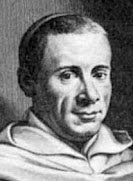
Luigi Guido Grandi – monk, philosopher and mathematician

Man of religion who advanced mathematical knowledge

Luigi Guido Grandi, who published mathematical studies on the cone and the curve, died on this day in 1742 in Pisa.  He had been court mathematician to the Grand Duke of Tuscany, Cosimo III de’ Medici, and because he was also an engineer, he was appointed superintendent of water for the Duchy.  Grandi was born in 1671 in Cremona and joined the Camaldolese monks at Ferrara when he was 16 and a few years later he was sent to the monastery of St Gregory the Great in Rome to complete his studies in philosophy and theology in preparation for taking holy orders.  Having become a professor in both subjects at a monastery in Florence, he became interested in mathematics, which he studied privately.  Grandi soon developed such a reputation in the field of mathematics that he was appointed court mathematician by Cosimo III.  Read more…

EN - 728x90


Giambettino Cignaroli - painter

Artist celebrated in home city of Verona

The painter and writer Giambettino Cignaroli was born on this day in 1706 in Verona, where he spent much of his career and became the city’s leading painter in the Rococo era.  Primarily a painter of religious scenes, he became known also for spiritual images and celebratory historical painting.  His most famous works include Death of Cato and Death of Socrates, two canvases of Greco-Roman episodes which he painted for the Austrian governor of Lombardy, Count Karl von Firmian; his Virgin and Child With Saints Jerome and Alexander, for the Chiesa di San Giovanni XXIII in Bergamo; and the Death of Rachel for the Scuola Grande della Carità.  He was thought to have painted a portrait of the composer Wolfgang Amadeus Mozart at the age of 13, although some experts attribute this work to Cignaroli’s nephew, Saverio Dalla Rosa.  Read more…

______________________________________

Gina Lollobrigida – actress

Movie star who became photojournalist

Film star Gina Lollobrigida was born Luigina Lollobrigida on this day in 1927 in Subiaco in Lazio.  At the height of her popularity as an actress in the 1950s and early 1960s she was regarded as a sex symbol all over the world. In later life she worked as a photojournalist and has supported Italian and American good causes. In 2013 she sold her jewellery collection and donated the money she raised, in the region of five million dollars, to fund stem cell therapy research.  One of four daughters of a furniture manufacturer and his wife, as a young girl, Lollobrigida did some modelling, entered beauty contests and had minor roles in Italian films. She studied painting and sculpture at school and claimed in later life that she became an actress "by mistake". When she was 20 she entered the Miss Italia competition and came third. Read more… 

____________________________________

Book of the Day: How to Design Cars Like a Pro, by Tony Lewin and Ryan Borroff

This comprehensive updated edition of How to Design Cars Like a Pro provides an in-depth look at modern automotive design. Interviews with leading automobile designers from Ford, BMW, GM Jaguar, Nissan and others, analyses of past and present trends, studies of individual models and concepts, and much more combine to reveal the fascinating mix of art and science that goes into creating automobiles. This book is a must-have for professional designers, as well as for automotive enthusiasts.

Tony Lewin is a lifelong automotive commentator and industry analyst and has spent most of his career testing cars, analysing them, and reporting on the ups and downs of the global enterprises that build them. Ryan Borroff has been writing about the future of automotive design and technology for more than 30 years.

Buy from Amazon


3 July 2025

3 July

Ulisse Stacchini - architect

Designer behind two famous Milan landmarks

Ulisse Stacchini, the architect who designed two of Milan's most famous 20th century landmarks, was born on this day in 1871 in Florence.  A champion of Liberty-style Art Nouveau designs, Stacchini's defining work was the gargantuan Stazione di Milano Centrale - the city's main railway terminal.  He also designed the stadium that evolved into the city's iconic Stadio Giuseppe Meazza, joint home of Milan's two major football clubs, Internazionale and AC Milan.  Stacchini studied in Rome and moved to Milan soon after graduating, setting up a partnership with the engineer Giulio de Capitani, building houses, offices and shops for private clients.  Among his early projects was the Savini Caffè in the Galleria Vittorio Emanuele II.  His style can be seen in a number of town houses commissioned by wealthy patrons. Read more…

___________________________________

Flavio Insinna - actor and presenter

Star of TV dramas turned game show host

The actor and presenter Flavio Insinna, who is the host of Italy’s popular television game show L’eridità and was formerly the face of Affari tuoi - the Italian version of Deal or No Deal - was born on this day in 1965 in Rome. In a broad-ranging career, Insinna has run up an impressive list of credits in cinema, theatre and television as well as publishing an autobiography and a novel. He is also known for his philanthropy after donating his 49-foot boat Roxana to humanitarian organisation Médecins Sans Frontières to help rescue Syrian refugees.  In a substantial catalogue of television drama and comedy appearances, notable was Insinna’s portrayal of the Carabinieri captain Flavio Anceschi in the popular Rai Uno series Don Matteo, with Terence Hill and Nino Frassica.  Ironically, Insinna’s ambition had been to become a Carabinieri officer.  Read more…


Alessandro Blasetti - film director

Reputation tarnished by links with Mussolini

Alessandro Blasetti, the film director sometimes referred to as ‘the father of Italian cinema’ for the part he played in reviving the film industry in Italy in the late 1920s and 30s, was born on this day in 1900 in Rome.  In his directing style, Blasetti was seen as ahead of his time, even in his early days.  His films were often shot on location, used many non-professional actors and had the characteristics of the neorealism that would make Italian cinema famous in the post-War years.  Yet he will forever be seen by some critics as an apologist for Fascism, a charge which stems mainly from his support for at least part of the ideology of Benito Mussolini, which led to a number of his films being interpreted as Fascist propaganda, although the evidence in some cases was rather thin.  Read more… 

_____________________________________

Walter Veltroni - politician

Popular former communist twice elected Mayor of Rome

The politician Walter Veltroni, who was the first leader of Italy’s centre-left Democratic Party (Partito Democratico) and was twice elected Mayor of Rome, was born on this day in 1955 in Rome.  A popular figure, Veltroni helped the PD reach a level of influence in Italian politics that enabled them to provide the leaders of three consecutive governments in Enrico Letta, Matteo Renzi and Paolo Gentiloni before the centre-left were routed at the 2018 general election.  Veltroni had such charisma and broad appeal that he was often tipped as a future prime minister, but his star began to wane after he lost the April 2008 general election in a head-to-head with Silvio Berlusconi’s centre-right People of Freedom party.  He had stepped down as Mayor of Rome in order to focus on winning the election so defeat was a crushing blow.  Read more…

_____________________________________

Book of the Day: Modern Architectures in History: Italy, by Diane Yvonne Ghirardo

Throughout the 20th century, architects in Italy have attempted to define the role of architecture under diverse political systems, from the monarchy of the first 70 years since Italian unification, to the 21 years of Fascist control, to the post-Second World War parliamentary republic. At the same time, Italy holds some of the most prized architecture and art in the world, from antiquity to the Baroque, packed into its dense historic city centres, which planners and politicians have negotiated as they struggled to cope with massive migration from the countryside to the city. Diane Ghirardo addresses these and other issues by considering modern architectural production in Italy from the late 19th century to the present day within a clear presentation of the larger historical, social and political contexts.  From the post-unification efforts to identify a distinctly Italian architectural language to the transformation of the urban environment in Italian cities undergoing industrialization in the late 19th and early 20th centuries, Modern Architectures in History: Italy offers a new way of understanding the history of modern Italy.

Diane Ghirardo is Professor of Architecture at the University of Southern California and also teaches at the Politecnico di Torino. She has published widely on Italian architecture.

Buy from Amazon


Home


2 July 2025

2 July

Pierre Cardin - fashion designer

Star of Parisian haute couture was born in Italy

Pierre Cardin, who has been described as the last survivor of the heyday of Parisian haute couture in the 50s and 60s, was born on this day in 1922 in the province of Treviso, north of Venice.  There are differing versions of the story of Cardin’s Italian origins.  One says that his parents were French but had a holiday home in Italy and that he was born in the village of Sant’ Andrea di Barbarana, on the Piave river, where his parents had a house.  Another says that his father was Italian, a labourer, that he was born in another small town in the province, San Biagio di Callalta and that he was the last of 11 children. This version suggests his father was in his 60s when Pierre – christened Pietro – was born.  What is agreed is that the family left Italy for France in 1924, possibly because of his father’s unease at the rise of Mussolini and his opposition to Fascism.  Read more… 

________________________________________

Carlo Pisacane – socialist and revolutionary

Patriot who put deeds before ideas

Carlo Pisacane, Duke of San Giovanni, was killed on this day in 1857 at Sanza in Campania, while trying to provoke an uprising in the Kingdom of Naples.  Pisacane is remembered for coming up with the concept ‘propaganda of the deed’, an idea that influenced Mussolini and many rebels and terrorists subsequently.  He argued that violence was necessary, not only to draw attention or generate publicity for a cause, but to inform, educate and rally the masses to join in.  Pisacane was born into an impoverished but noble family in Naples in 1818.  He joined the Neapolitan army at the age of 20, but became interested in the political ideas of Giuseppe Mazzini and went to England and France before going to serve in the French army in Algeria.  After the revolution of 1848 he came back to Italy, where he played a part in the brief life of the Roman Republic. Read more… 


Palio di Siena

First of two annual races contested on 2 July

The first of the two annual contests for the historic Palio di Siena takes place in Piazza del Campo on 2 July.  The passionately competitive horse race, first run in 1656, is staged on this date and 16 August each year. The first race is in honour of Siena's Madonna of Provenzano, the second forms part of the celebrations marking the Feast of the Assumption.  A colourful pageant, the Corteo Storico, precedes the race, which sees the square filled with spectators from many parts of the world.  The Palio features 10 horses, each representing one of Siena's 17 contrade, or wards, ridden bareback by riders wearing the colours of the contrada they represent.   They race for three circuits of a dirt track laid around the perimeter of the Piazza del Campo.  It is an event with no holds barred.  Riders are allowed to use the whip to encourage their own mounts but also to hamper their rivals and falls are frequent.  Read more…

______________________________________

Book of the Day: Pierre Cardin: Making Fashion Modern, by Jean-Pascal Hesse and Pierre Pelegry

Pierre Cardin’s designs were worn by an international elite of beautiful women, from Jackie Kennedy to Lauren Bacall and Jeanne Moreau. A close friend of André Courrèges and Paco Rabanne, Cardin revolutionized modern fashion in the mid-1960s, creating iconic designs that continue to resonate today. His many talents and mastery of materials - from fabrics to plastics - extended from haute couture to ready-to-wear, menswear, jewellery, furniture design, perfumes, and accessories, while his business acumen led him to create an empire that stretched from China to the United States. In Pierre Cardin: Making Fashion Modern, long-time Cardin collaborator Jean- Pascal Hesse shares his intimate knowledge of the designer’s early career in Paris, and analyses the creative influences and partnerships that inspired Cardin to design some of the most emblematic haute couture creations of the 1950s and 1960s.

Historian and author Jean-Pascal Hesse has worked closely with Pierre Cardin for many years, including as director of communications for the Pierre Cardin Group. He also works for the mayor of the Sixteenth Arrondissement on important cultural events in Paris.

Buy from Amazon


1 July 2025

1 July

Alberto Magnelli - abstract painter

Self-taught artist whose work became known as Concrete Art

The abstract painter Alberto Magnelli, who became a leading figure in the Concrete Art movement, was born on this day in 1888 in Florence.  Concrete Art is described as abstract art that is entirely free of any basis in observed reality and that has no symbolic meaning. It had strong geometric elements and clear lines and its exponents insisted the form should eschew impressionism and that a painting should have no other meaning than itself.  The movement took its name from the definition of concrete as an adjective rather than a noun, meaning ‘existing in a material or physical form’.  It became Magnelli’s focus after he moved to Paris in 1931. Until then, he had experimented in various genres.  He was born into a comfortable background in Florence, his father coming from a wealthy family of textile merchants.  Read more… 

___________________________________

Gino Meneghetti - career burglar

Pisa-born criminal became legend in Brazil

Gino Amleto Meneghetti, a small-time thief in Italy who became a romanticised figure for his criminal exploits after emigrating to Brazil, was born on this day in 1878 in Pisa.  His early days were spent in a fishing village outside Pisa, but his father could find only low-paid work and moved the family to a different neighbourhood so he could take a job in a ceramics factory.  It was there that Gino fell in with a gang of boys who regularly engaged in petty crime, stealing fruit or chickens or other objects of minimal worth.  The young Meneghetti was arrested for the first time at 11 years of age.  After teenage years spent largely thieving, he made an attempt to change his life, going back to the classroom to learn to be a mechanic and a locksmith.  He found work and saved money, but then decided to move to Marseilles in France to live with an uncle, who owned a restaurant.  Read more… 

_____________________________________

Clara Gonzaga – noblewoman

Countess from Mantua founded European dynasties

Clara (Chiara) Gonzaga, the eldest daughter of Federico I Gonzaga and Margaret of Bavaria, was born on this day in 1464 in Mantua.  One of her six children became Charles III, Duke of Bourbon and led the imperial army sent by Emperor Charles V against Pope Clement VII in what was to become the Sack of Rome in 1527.  Clara was also to feature as one of the characters in The Heptameron, a collection of 72 short stories written in French by the sister of King Francis I of France, Marguerite of Angouleme, who had been inspired by Giovanni Boccaccio’s The Decameron.  Clara had five siblings, including Francesco II Gonzaga, who married Isabella d’Este.  She was married at the age of 17 to Gilbert of Bourbon Montpensier. Four years later he succeeded his father as Count of Montpensier and Dauphin of Auvergne.  Read more… 


Achille Varzi - racing driver

Death on track led to mandatory wearing of crash helmets

Italian motor racing fans were in mourning on this day in 1948 when it was announced that Achille Varzi, whose rivalry with fellow driver Tazio Nuvolari made frequent headlines during the 1930s, had been killed in an accident while practising for the Swiss Grand Prix.  Although the sun was shining, an earlier downpour had left parts of the Bremgarten circuit outside Berne very wet and Varzi’s Alfa Romeo 158 was travelling at 110mph (170kph) when he arrived at a corner that was both wet and oily.  The car spun several times and appeared to be coming to a stop but then flipped over. The helmetless Varzi was crushed beneath the car and died from his injuries at the age of 43.  His death was especially shocking because he was regarded as one of the more cautious drivers. Since beginning his career on two wheels in his teens he had suffered only one major accident. Read more…

____________________________________

Claudio Saracini – musician

Baroque songs have survived till modern times

Composer Claudio Saracini was born on this day in 1586 in or close to Siena in Tuscany.  He is one of the most highly regarded composers of his time and is known also to have played the lute and been a singer.  He became famous for composing monody, which is secular music for a single voice, and 133 of the songs he wrote in this style have survived till today.  Some of Saracini’s compositions are still recorded, often in collections along with works by other composers of the same era, such as Monteverdi, who is said to have admired him.  Saracini travelled widely and seems to have established useful connections abroad as he dedicated a lot of his music to foreign aristocrats. He also appeared to have absorbed some of the musical styles of the lands he visited in his own compositions.  A unique feature of his work is the influence of folk music. Read more… 

_____________________________________

Book of the Day: Atlas of World Art, by John Onians

The Atlas of World Art maps the cumulative traces of humankind's artistic activity and demonstrates the importance of physical and political geography for the history of the world's art. This stunning volume is the first to treat the art of the whole world from prehistory to present day and to show the importance of natural and social factors in shaping artistic activity.  The Atlas is divided into seven parts, each devoted to a specific time period: Art of the Hunter Gatherer (50,000-5,000 BCE); Art, Agriculture and Urbanization (5,000-500 BCE); Art, War and Empire (500 BCE-600 CE); Art, Religion and Empire (600-1500); Art, Exploitation and Display (1500-1800); Art, Industry and Science (1800-1900); Art, Competition and Identity (1900-2000). Each section opens with a helpful timeline for that period bringing together important dates from across various cultures. 

John Onians is Professor of Visual Arts, School of World Art Studies and Museology, University of East Anglia, Norwich.

Buy from Amazon


Home


30 June 2025

30 June

NEW - Urbano Rattazzi – prime minister

Unpopular politician had anticlerical views

Urbano Pio Francesco Rattazzi, the third prime minister of the newly unified Kingdom of Italy, who is remembered for his clashes with the Italian people’s hero, Giuseppe Garibaldi, was born on this day in 1808 in Alessandria in the region of Piedmont.  Rattazzi became prime minister in 1862, succeeding Bettino Ricasoli, and he held the office for nine months until his behaviour towards Garibaldi led to him being driven from office.  He served as prime minister again in 1867 from April to October, but was forced by King Victor Emmanuel II to resign again because of the Italian people’s reaction to his treatment of Garibaldi.  Rattazzi was married to the French novelist, Laetitia Marie Wyse Bonaparte, who was the great niece of the Emperor Napoleon I, and they had one daughter, Romana, who was born in 1871. Read more…

______________________________________

Allegra Versace – heiress

‘Favourite niece’ who inherited Gianni fortune

The heiress Allegra Versace, owner of half the Versace fashion empire, was born on this day in 1986 in Milan.  The daughter of Donatella Versace, the company’s chief designer and vice-president, she was the favourite niece of Gianni Versace, who founded the fashion house in 1978.  When Gianni was shot dead outside his mansion in Miami in July 1997, Allegra was just 11 years old but could look forward to becoming immensely rich after it was announced that her uncle had willed his share of the business, amounting to 50 per cent, to her when she reached her 18th birthday.  By the most recent valuation of the Versace group, this means Allegra has a personal fortune worth $800 million. The remainder of the empire is owned by her mother, who has 20 per cent, and Gianni’s older brother, Santo Versace, who has 30 per cent.  Yet the promise of wealth and privilege did not bring her happiness. Read more...

_______________________________________

Mario Carotenuto - actor

Roman from theatrical family made more than 100 films

The actor Mario Carotenuto, who became one of the most familiar faces in the commedia all’italiana genre of Italian film, was born on this day in 1916 in Rome.  Carotenuto, who was active in the movie industry for more than 30 years having started in the theatre and on radio, played alongside some of the greats of Italian cinema, including Totò, Alberto Sordi, Vittorio De Sica, Sophia Loren and Monica Vitti.  More often than not, he was cast in supporting roles rather than as the star, yet became respected as one of Italy’s finest character actors in comedy, winning a Nastro d'argento award for Best Supporting Actor for his portrayal of The Professor in Luigi Comencini’s 1973 comedy-drama Lo scopone scientifico - The Scientific Card Player - which starred Sordi, Silvana Mangano and the American Bette Davis.  Carotenuto was born into an acting family. Read more... 

EN - 728x90


Gianrico Carofiglio - novelist

Ex anti-Mafia judge now bestselling author

The novelist Gianrico Carofiglio, whose books have sold more than five million copies, was born on this day in 1961 in Bari.  Carofiglio is best known for a series of thrillers featuring the character of lawyer Guido Guerrieri but he has also written a number of novels featuring other characters, still mainly in the crime thriller genre.  One of them, his 2004 novel Il passato è una terra straniera (The Past is a Foreign Country), was made into an acclaimed film, directed by Daniele Vicari and starring Elio Germano, who appeared in the multi award-winning TV series Romanzo Criminale, and Michele Riondino, who played Andrea Camilleri’s most famous detective in the TV series The Young Montalbano.  Carofiglio drew inspiration and much technical knowledge from his career as a magistrate. Read more…

________________________________________

First Martyrs' Day

Nero blamed Christians for his own crimes

Christians martyred in Rome during the reign of Nero in AD 64 are remembered every year on this day in Italy.  The Catholic Church celebrates the lives of the many men and women put to death by Nero, who are now known as i Primi Martiri, first martyrs of the Church of Rome, with a feast day every year on 30 June.  In the summer of AD 64, Rome was devastated by fire. The unpopular emperor Nero, who wanted to enlarge his palace, was suspected of setting fire to the city himself but he accused the early Christians then living in Rome and had them executed.  Some were fed to wild animals, some crucified, while others were burnt to death to illuminate the sky and provide evening entertainment.  The feast of the First Martyrs came into the Church calendar in 1969 as a general celebration day for the early Roman martyrs.  Read more…

______________________________________

Book of the Day: Garibaldi: Hero of Italian Unification, by Christopher Hibbert

Giuseppe Garibaldi was praised for his military genius, his courage, and his charisma. Known as the "Hero of Two Worlds," Garibaldi's military prowess extended to the Americas, where he played a major role in the Brazilian struggle for independence. During his fight for Italian unification Garibaldi personally led an army of local untrained rebels to victory in Palermo, Naples, and Sicily. His forces suffered from lack of equipment, food, and money, and yet Garibaldi commanded their fierce loyalty. In Garibaldi: Hero of Italian Unification, Christopher Hibbert reveals how this iconic figure earned the adulation of not only his fellow Italians, but people across the globe. As well as presenting a vivid account of Garibaldi's successes and misfortunes, the book paints a picture of his personality which, though never unsympathetic, is notable for its realism and candour.

Christopher Hibbert, a Fellow of the Royal Society of Literature and one of the most widely read historians of his time, wrote many highly acclaimed books, including biographies of Disraeli, Edward VII and George VI, The Rise and Fall of the House of Medici, and Cavaliers and Roundheads. 

Buy from Amazon


Home


Urbano Rattazzi – prime minister

Unpopular politician had anticlerical views

Urbano Rattazzi twice served as prime minister of the new Italy
Urbano Rattazzi twice served
as prime minister of the new Italy
Urbano Pio Francesco Rattazzi, the third prime minister of the newly unified Kingdom of Italy, who is remembered for his clashes with the Italian people’s hero, Giuseppe Garibaldi, was born on this day in 1808 in Alessandria in the region of Piedmont.

Rattazzi became prime minister in 1862, succeeding Bettino Ricasoli, and he held the office for nine months until his behaviour towards Garibaldi led to him being driven from office. 

He served as prime minister again in 1867 from April to October, but was forced by King Victor Emmanuel II to resign again because of the Italian people’s reaction to his treatment of Garibaldi.

Rattazzi was married to the French novelist, Laetitia Marie Wyse Bonaparte, who was the great niece of the Emperor Napoleon I, and they had one daughter, Romana, who was born in 1871. He also had a nephew, Urbano Rattazzi Iuniore, who was appointed Minister of the Royal House during the reign of Umberto I.

As a young man, Urbano Rattazzi studied law in Turin and ran a successful legal practice in Turin and in Casale, in Piedmont.

From 1848, he represented Alessandria in the Sardinian Chamber of Deputies in Turin. He had allied himself to the Liberals, and using his debating powers, he contributed to the defeat of Cesare Balbo, who was then prime minister of Sardinia.


Under Sardinian Prime Minister Vincenzo Gioberti, Rattazzi became Minister of the Interior and his first act was to send a ministerial circular to all the bishops of the Kingdom, threatening them with arrest if they did not stop preaching against the new institutions. 

Garibaldi, whose popularity with the  people was not shared by Rattazzi
Garibaldi, whose popularity with the 
people was not shared by Rattazzi
After the fall of Gioberti, Rattazzi was asked to form a new cabinet, but he lasted in office for only a few weeks because the army of the Kingdom of Sardinia was beaten by the Austrians at the Battle of Novara in 1849 and he had to resign.

With the Moderate Liberals, Rattazzi formed a coalition with the centre right, who were backed by Count Camillo Cavour, which brought about the fall of the cabinet led by Massimo d’Azeglio in 1852.

Rattazzi benefited from his alliance with Cavour and became Minister of Justice and Minister of the Interior. He suppressed monastic orders and restricted the influence of religious associations, demonstrating his anticlerical views. He had to resign in 1858 because of public opinion, but he later served in the cabinet of Alfonso Ferrero La Marmora before retiring in 1860.

After Italian unification in 1861, Rattazzi became president of the lower chamber in the first parliament of the newly unified kingdom. He then succeeded Ricasoli as prime minister, retaining for himself the portfolios of foreign affairs and the interior. He delivered the funeral eulogy for Cavour, after he died in 1861.

Rattazzi's government experience lasted a few months during which emerged the ‘Roman question’ - the conflict between the Papacy and the Italian government over the status of Rome and the Papal States following unification. 

In the summer of 1862, Garibaldi tried to promote an expedition of volunteers to occupy Rome and put an end to the power of the Pope. Rattazzi, who was initially in favour of Garibaldi's action, changed his mind and called in the army. 

In the resulting Battle of Aspromonte, the army dispersed the volunteers and arrested Garibaldi, who had been wounded during the clashes. Rattazzi was condemned by public opinion, which was on the side of Garibaldi and he was forced to resign. He was succeeded by Luigi Carlo Farini. 

Rattazzi held the office of prime minister again for a few months in 1867. But then Garibaldi penetrated the Papal States with a contingent of volunteers and was later defeated by the Pope’s troops and a French expeditionary force. This led to the collapse of Rattazzi's majority, and Rattazzi was forced by King Victor Emmanuel II to resign. He was succeeded by Luigi Federico Menabrea. 

Urbano Rattazzi died of liver cancer at his villa at Frosinone in Lazio in 1873. He was 64 years old. After ceremonies in Rome and Alessandria, Rattazzi's embalmed body was buried in the monumental cemetery in his home town.

The commemorative plaque that marks Urbano Rattazzi's place of birth in Alessandria
The commemorative plaque that marks Urbano
Rattazzi's place of birth in Alessandria
Travel tip:

Alessandria, where Rattazzi was born and is buried, is an historic city in Piedmont, situated about 90km (56 miles) to the southeast of Turin. There is a plaque above the entrance door to Rattazzi’s birthplace in the street now called Via Urbano Rattazzi, at number 43. After Napoleon won the Battle of Marengo in 1800, Alessandria became part of French territory and was made the capital of the area by the French. It became part of the Kingdom of Sardinia again in 1814 and later part of the Kingdom of Italy. One of its most important buildings is the Cittadella di Alessandria, a star fort and citadel built in the 18th century. Today it is one of the best preserved fortifications of that era and one of the few fortifications in Europe still in their original environment, with no buildings blocking the views of the ramparts, or a road that surrounds the ditches.  Alessandria suffered extensive Allied bombing in World War Two but many areas have been rebuilt. The city is now a major Italian railway hub. 

The facade of the Cathedral of Santa Maria Assunta in Frosinone
The facade of the Cathedral of
Santa Maria Assunta in Frosinone
Travel tip:

Frosinone, where Urbano Rattazzi died, is about 75 kilometres (47 miles) southeast of Rome in Lazio. It is the main city of the Valle Latina that extends from south of Rome to Cassino, the site of the Abbey of Monte Cassino and the famous battle in World War II. The city of Frosinone remained part of the Papal States and did not become part of the new Kingdom of Italy until as late as September 1870, three days before Italian troops were finally able to enter Rome at Porta Pia and install Victor Emanuel II in the Quirinale Palace. The Cathedral of Santa Maria Assunta, located at the highest point of the hill on which the historic centre of the city stands, is the most important church in Frosinone. With a marble facade, it has a 63m (207ft) bell tower which has been adopted as an emblem of the city.


Also on this day:

First Martyrs’ Day

1916: The birth of actor Mario Carotenuto

1932: The laying of the first stone of the Fascist city of Latina

1961: The birth of novelist Gianrico Carofiglio

1986: The birth of Allegra Versace, niece of Gianni


Home

 .


29 June 2025

29 June

Oriana Fallaci - journalist

Writer known for exhaustively probing interviews

Oriana Fallaci, who was at different times in her career one of Italy’s most respected journalists and also one of the most controversial, was born in Florence on June 29, 1929.  As a foreign correspondent, often reporting from the world’s most hazardous regions in times of war and revolution, Fallaci interviewed most of the key figures on both sides of conflicts.  Many of these were assembled in her book Interview with History, in which she published accounts of lengthy conversations, often lasting six or seven hours, with such personalities as Indira Gandhi, Golda Meir, Yasser Arafat, Zulfikar Ali Bhutto, Willy Brandt, Shah of Iran Mohammad Reza Pahlavi, Henry Kissinger and the presidents of both South and North Vietnam during the Vietnam War.  Others she interviewed included Deng Xiaoping, Lech Wałęsa, Muammar Gaddafi and the Ayatollah Khomeini.  Read more… 

______________________________________

Masaniello - insurgent

Fisherman who led Naples revolt 

The 17th century insurgent known as Masaniello was born on June 29, 1620 in Naples.  A humble fishmonger’s son, Masaniello was the unlikely leader of a revolt against the Spanish rulers of his home city in 1647, which was successful in that it led to the formation of a Neapolitan Republic, even though Spain regained control within less than a year.  The uprising, which followed years of oppression and discontent among the 300,000 inhabitants of Naples, was sparked by the imposition of taxes on fruit and other basic provisions. Masaniello - real name Tommaso Aniello - was a charismatic character, well known among the traders of Piazza Mercato, the expansive square that had been a centre of commerce in the city since the 14th century.  Born in a house in Vico Rotto al Mercato, situated close to the city’s main port, he followed his father into fish trading. Read more…

_______________________________________

Elizabeth Barrett Browning dies in Florence

Romantic poet produced some of her best work after fleeing to Italy

English poet Elizabeth Barrett Browning died on June 29, 1861 in Florence.  She had spent 15 years living in Italy with her husband, the poet Robert Browning, after being disinherited by her father who disapproved of their marriage.  The Brownings’ home in Florence, Casa Guidi, is now a memorial to the two poets.  Their only child, Robert Weidemann Barrett Browning, who became known as Pen, was born there in 1849.  Barrett Browning was one of the most prominent English poets of the Victorian era and was popular in both Britain and the United States during her lifetime.  From about the age of 15 she had suffered health problems and therefore lived a quiet life in her father’s house, concentrating on her writing.  A volume of her poems, published in 1844, inspired another writer, Robert Browning, to send her a letter praising her work.  Read more…


Giorgio Napolitano – 11th President of Italy

Neapolitan was concerned about the development of southern Italy

Giorgio Napolitano, who served as the 11th President of the Republic of Italy, was born on June 29, 1925 in Naples. He was the longest serving president in the history of the republic and the only Italian president to have been re-elected.  He graduated in law from Naples University in 1947, having joined a group of young anti-fascists while he was an undergraduate.  At the age of 20, Napolitano joined the Italian Communist Party. He was a militant and then became one of the leaders, staying with the party until 1991 when it was dissolved. He then joined the Democratic Party of the Left.  Napolitano was elected to the Chamber of Deputies for the first time in 1953 and continued to be re-elected by the Naples constituency until 1996.  His parliamentary activity focused on the issue of southern Italy’s development and on national economic policy.  Read more…

_______________________________________

Federico Peliti - catering entrepreneur and photographer

Italian became important figure in British Colonial India

Federico Peliti, whose skills as a chef and pastry-maker led him to spend a large part of his life in India under British colonial rule, was born on June 29, 1844 in Carignano, a town in Piedmont about 20km (12 miles) south of Turin.  He was also an accomplished photographer and collections of his work made an important contribution to the documentary history of the early years of British rule in India.  The restaurant Peliti opened in Shimla, the so-called summer capital of the British Empire in India, became a favourite with colonial high society and was mentioned in the writings of Rudyard Kipling and others.  Peliti’s family hailed from Valganna, near Varese in Lombardy. They had mainly been surveyors and Peliti initially studied sculpture in Turin before being diverted by the Third Italian War of Independence, in which he participated as a cavalryman. Read more…

_______________________________________

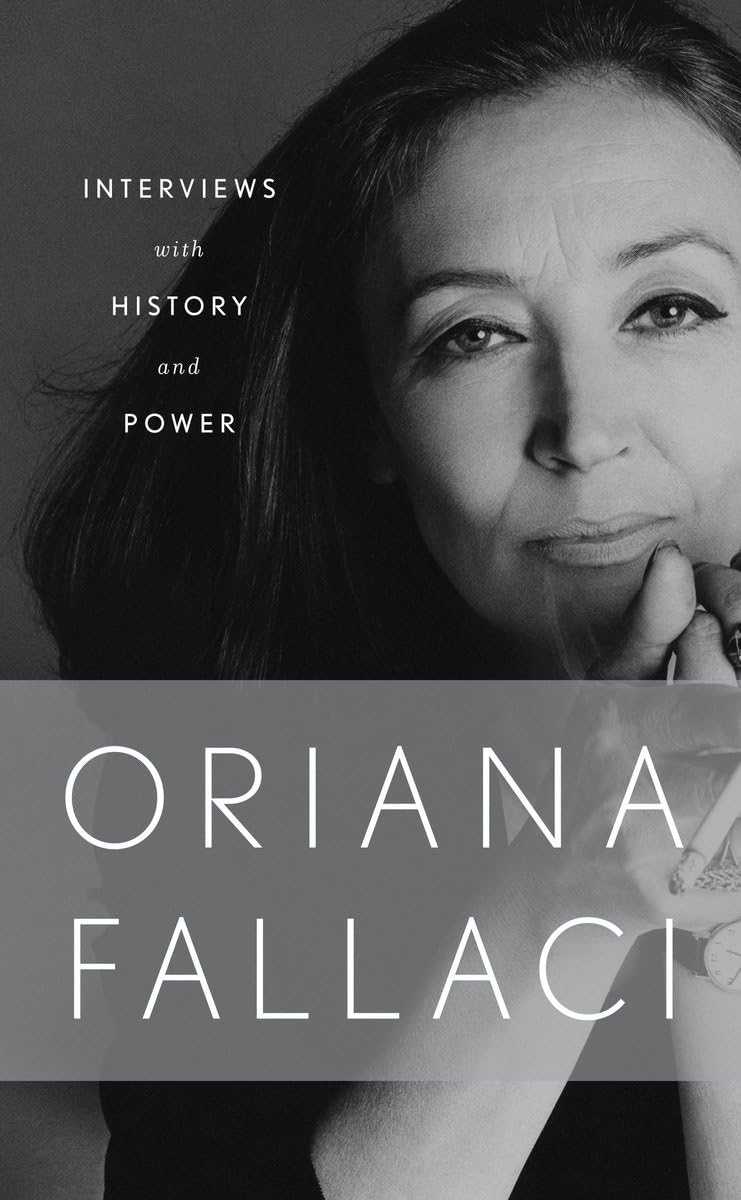
Book of the Day: Interviews With History and Power, by Oriana Fallaci

Interviews with History and Power is a posthumous compilation of this award-winning and best-selling writer and journalist's seminal, historic interviews. Oriana Fallaci was granted access to countless world leaders and politicians throughout her remarkable career. Considering herself a writer rather than a journalist, she was never shy about sharing her opinions of her interview subjects. Her most memorable interviews - some translated into English for the first time - appear in this collection, including those with Ariel Sharon, Yassir Arafat, the former Shah of Iran, Lech Walesa, the Dalai Lama, Robert Kennedy, and many others. Also featured is the famous 1972 interview in which she succeeded in getting Henry Kissinger to call Vietnam a "useless war" and to describe himself as "a cowboy." To this day he calls the Fallaci interview "the most disastrous conversation I ever had with the press."

Oriana Fallaci was an Italian journalist and author. A member of the Italian resistance movement during World War II, she had a long and successful journalistic career. She became famous worldwide for her coverage of war and revolution, and her "long, aggressive and revealing interviews" with many world leaders during the 1960s, 1970s, and 1980s.

Buy from Amazon


Home