17 November 2021

17 November

Premiere of Verdi’s first opera

Oberto, Conte di San Bonifacio performed at La Scala

Giuseppe Verdi’s first opera to be performed made its debut at Teatro alla Scala in Milan on this day in 1839.  Oberto, Conte di San Bonifacio, which Verdi had written over a period of four years, is an opera in two acts. It is thought to have been based on an existing libretto by Antonio Piazza, reworked as a new libretto by Temistocle Solera, an Italian novelist.  Piazza’s libretto had been given to Verdi by Pietro Massini, director of the Società Filarmonica, a choral group to whom he had been introduced by Vincenzo Lavigna, the maestro concertatore at La Scala, of whom Verdi was a private pupil.  It was given the title of Rocester and Verdi was keen to see it produced in Parma, at the opera theatre nearest to his home town of Busseto, where he held the post of maestro di musica of the municipal orchestra.  However, Parma said they had no interest in staging new works and instead an approach was made to Milan. Whether Rocester actually became the basis for Oberto is subject to some disagreement among academics.  Verdi is said to have been invited to meet the La Scala impresario, Bartolomeo Merelli, who had been given good reports of Oberto’s musical quality and offered to put it on during the 1839 season. Read more…

__________________________________________________________

Andreotti jail sentence stuns Italy


Ex-prime minister found guilty of conspiracy to murder

Giulio Andreotti, who was Italy’s prime minister on seven occasions and an almost permanent presence in Italian governments from 1947 until 1992, was handed a 24-year prison sentence on this day in 2002 when a court in Perugia found him guilty of ordering the killing of a journalist.  The verdict was greeted with shock and consternation across Italy given that Andreotti, by then 83 years old, had been acquitted of the charge in the same courtroom three years earlier.  The appeal by prosecutors against that acquittal had not been expected to succeed and, in contrast to the original trial, the hearing attracted only modest media interest, with only a handful of reporters present when Andreotti’s fate was announced, at the end of a six-month process.  This time the court ruled that Andreotti had, in fact, conspired with associates in the Mafia to murder journalist Carmine ‘Mino’ Pecorelli, the editor of Osservatore Politico, a weekly political magazine in Rome, who was shot dead on a street in the capital in 1979. The charge had been based on the evidence of Tommaso Buscetta, the Mafia pentito - or supergrass - who had been the key figure in the so-called Maxi Trial a decade earlier in Palermo. Read more…

___________________________________________________________

Calisto Tanzi - disgraced businessman

Man at the centre of the Parmalat scandal 

Calisto Tanzi, the business tycoon jailed for 18 years following the biggest corporate disaster in Italian history, was born on this day in 1938 in Collecchio, a town in Emilia-Romagna, about 13km (8 miles) from the city of Parma.  Tanzi was founder and chief executive of Parmalat, the enormous global food conglomerate that collapsed in 2003 with a staggering €14 billion worth of debt.  Subsequent criminal investigations found that Tanzi, who built the Parmalat empire from the grocery store his father had run in Collecchio, had been misappropriating funds and engaging in fraudulent practices for as much as a decade in order to maintain an appearance of success and prosperity when in fact the business was failing catastrophically.  Of all those hurt by the collapse, the biggest victims were more than 135,000 small investors who had bought bonds in the company, some of them trusting Parmalat with their entire life savings.  Between 2008 and 2010, Tanzi was found guilty by four different courts of fraud, of the fraudulent bankruptcy of Parmalat, the fraudulent bankruptcy of Parmatour, a travel industry subsidiary, and of false accounting at Parma, the football club he owned.  Read more…

__________________________________________________________

Giovanni Pico della Mirandola – philosopher

Writer of the 'Manifesto of the Renaissance' met an early death

Renaissance nobleman and philosopher, Giovanni Pico della Mirandola died on this day in 1494 in Florence, sparking a murder mystery still not solved more than 500 years later and that led to the exhumation of his body in 2007.  Pico became famous for writing the Oration on the Dignity of Man, which was later dubbed the 'Manifesto of the Renaissance'.  At its heart, the Oration proposed that man is the only species of being to which God assigned no specific place in the chain of being and that man could ascend the chain through the exercise of his intellectual capacity, and for that reason it stresses the importance of the human quest for knowledge.  Renowned for his memory as well as his intellect, he could recite Dante’s Divine Comedy line-by-line backwards and by the time he was 20 he has mastered six languages.  But he made enemies and it his thought that his death at the age of just 31 was the result of poisoning because of concerns that he had become too close to hellfire preacher Girolamo Savonarola, an enemy of Florence's ruling Medici family.  It was Savonarola himself who delivered the funeral oration when Pico was buried at the Convent of San Marco in Florence where he was the Prior.  Read more…

_________________________________________________________

Bronzino – master of Mannerism

Florentine became Medici court painter

The Mannerist painter Agnolo di Cosimo – better known as Il Bronzino or simply Bronzino – was born on this day in 1503, just outside Florence.  Bronzino is now recognised as the outstanding artist of what has become known as the second wave of Mannerism in the mid-16th century.  His style bears strong influences of Jacopo Pontormo, who was an important figure in the first wave and of  whom Bronzino was a pupil as a young man in Florence.  The Mannerist movement began in around 1520, probably in Florence but possibly in Rome. In the evolution of art it followed the High Renaissance period.  Typical of Mannerist painters is their use of elongated forms and a style influenced by the attention to detail allied to restrained realism that was characteristic of the Renaissance masters Raphael, Michelangelo and Leonardo da Vinci.  Bronzino became best known for his portraits, which were detailed and stylishly sophisticated, in which the subjects were superbly realistic but also tended to wear stoical, rather haughty expressions.  He also paid particular attention to fabric and clothing, his works often notable for his recreation of textures. Read more…

___________________________________________________________

Umberto I assassination bid

First attempt to kill the king is foiled

An unsuccessful attempt was made on the life of King Umberto I of Italy on this day in 1878 in Naples.  Umberto was making a tour of the kingdom accompanied by his wife, Queen Margherita, and the Prime Minister, Benedetto Cairoli.  While saluting the crowds in Naples from his carriage, Umberto was attacked by a young man, Giovanni Passannante, who was employed as a cook at the time, but was later described as an anarchist. Passannante jumped on the carriage and attempted to stab the King. Umberto warded off the blow with his sabre but the Prime Minister, who came to his aid, was wounded in the thigh.  This was the first of three attempts on the life of Umberto I, who despite being nicknamed il Buono (the good), lost popularity with his subjects as his reign progressed.  He had won the respect of people because of the way he conducted himself during his military career and as a result of his marriage to Margherita of Savoy and the subsequent birth of their son, who was to become King Victor Emmanuel III.  But Umberto became increasingly unpopular because of his imperialist policies and his harsh ways of dealing with civil unrest.  Read more…

EN - 728x90


Home


16 November 2021

16 November

Tazio Nuvolari – racing driver

Man from Mantua seen as greatest of all time

Tazio Nuvolari, the driver many regard as the greatest in the history not only of Italian motor racing but perhaps of motorsport in general, was born on this day in 1892 in Castel d’Ario, a small town in Lombardy, about 15km (9 miles) east of the historic city of Mantua.  Known for his extraordinary daring as well as for his skill behind the wheel, Nuvolari was the dominant driver of the inter-war years, winning no fewer than 72 major races including 24 Grands Prix.  He was nicknamed Il Mantovano Volante - the Flying Mantuan.  From the start of his career in the 1920s, Nuvolari won more than 150 races all told and would have clocked up more had the Second World War not put motor racing in hibernation.  As it happens, Nuvolari’s last big victory came on September 3, 1939, the day the conflict began, in the Belgrade Grand Prix.  When he died in 1953 from a stroke, aged only 60, his funeral in his adopted home city of Mantua attracted at least 25,000 people.  His coffin was placed on a car chassis pushed by legendary drivers Alberto Ascari, Luigi Villoresi and Juan Manuel Fangio, at the head of a mile-long procession.  Read more…

_________________________________________________________

Sofonisba Anguissola – Renaissance artist

Portrait painter paved the way for other women artists

Painter Sofonisba Anguissola died on this day in 1625 in Palermo at the age of 93.  As a young woman Anguissola had been introduced to Michelangelo in Rome, who had immediately recognised her talent.  She served an apprenticeship with established painters, which set a precedent for women to be accepted as students of art in the 16th century. Her success later in life paved the way for other women to pursue serious careers as artists. Many of her paintings can still be seen in prestigious galleries all over the world.  Anguissola was born in Cremona in Lombardy in 1532 to noble parents who believed they had a connection to the ancient Carthaginians and named their first daughter after the tragic Carthaginian figure, Sophonisba.  All their children were encouraged to cultivate their talents and five of the daughters became painters, but Sofonisba was the most accomplished and became the most famous.  Sofonisba was 14 when she was sent with her younger sister, Elena, to study with Bernardino Campi, a respected portrait and religious painter. When he moved to another city, she continued her education with Bernardino Gatti.  Read more…

__________________________________________________________

Maurizio Margaglio - ice dancer

Multiple champion remembered for famous fall

The ice dancer Maurizio Margaglio, who enjoyed a prolifically successful partnership with Barbara Fusar-Poli from the mid-1990s to the early part of the new century, was born on this day in 1974 in Milan.  Margaglio and Fusar-Poli were national champions of Italy nine times and in 2001 they became the first Italian pair to become World champions, winning in Vancouver ahead of the defending champions Marina Anissina and Gwendal Peizerat of France.  They were European champions the same year, during a remarkable season in which they won every event they entered.  Yet they never won an Olympic title in three attempts, and as well as their successes they are remembered as much for the calamity that befell them at their home Olympics in Turin in 2006. In their first appearance in international competition for four years, Margaglio and Fusar-Poli were in the gold medal position, leading by a full half-point over the Russian favourites and two-time World champions, Tatiana Navka and Roman Kostomorav, after the opening compulsory dance section of the competition.  Yet just seconds away from potentially consolidating their lead in the original dance section, disaster struck.  Read more…

__________________________________________________________

San Giuseppe Moscati - doctor

Brilliant young doctor recognised for his kindness

Doctor and scientist Giuseppe Moscati was beatified by Pope Paul VI on this day in 1975.  Giuseppe was renowned for his kindness and generosity to his patients and even before his death people talked of ‘miracle’ cures being achieved by him.  He was canonised by Pope John Paul II in 1987 and his feast day is 16 November.  Moscati was born into a big family in Benevento in 1880. His father, a lawyer and magistrate, was active in the church and Giuseppe inherited his piety.  The family later moved to Naples and Giuseppe enrolled in the medical school of the University of Naples in 1897.  On graduating he went to work in a hospital but continued with his brilliant scientific research and attended Mass frequently.  When Vesuvius erupted in 1906 he helped evacuate all the elderly and paralysed patients before the roof collapsed on the hospital under the weight of the ash.  He worked tirelessly to research ways to eradicate cholera in Naples and personally cared for many of the soldiers wounded in the First World War.  He was compassionate to the poor and often gave them money as well as free medical treatment and a prescription.  Read more…

EN - 728x90


Home


15 November 2021

15 November

NEW
- Enzo Staiola - actor

Child star of neorealist classic Bicycle Thieves

Enzo Staiola, who found international fame as an eight-year-old boy as one of the stars of the Oscar-winning neorealist drama Bicycle Thieves, was born on this day in 1939 in Rome.  Staiola’s character in Vittorio De Sica’s 1948 film was Bruno Ricci, the eldest child in a working class Roman family desperately trying to survive in the hard economic climate that followed the end of the Second World War.  The central character in the film is Bruno’s father, Antonio, who lands a job posting advertising bills around the city but is required to have a bicycle to transport himself, his ladder and bucket to wherever his services are required.  Antonio buys a bicycle after pawning some of the family’s few possessions of value only to have it stolen on his first day at work. The remainder of the film follows Antonio and Bruno as they try to find the bicycle.  The essence of the neorealist genre was that directors achieved authenticity by eschewing the use of professional actors in favour of ordinary people who lived in the city or neighbourhood where the action was set.  De Sica chose Lamberto Maggiorani, a steel factory worker, to play the part of Antonio.  Read more...

____________________________________________________________

Roberto Cavalli – fashion designer

Florentine who conceived the sand-blasted look for jeans

The designer Roberto Cavalli was born on this day in 1940 in Florence.  Cavalli has become well-known in high-end Italian fashion for his exotic prints and for creating the sand-blasted look for jeans. From an artistic family, Cavalli has a grandfather, Giuseppe Rossi, who was a talented painter whose work is on show in the Uffizi Gallery in Florence.  As a student, Cavalli attended an art institute where he learnt about printing textiles and in the early 1970s he invented and patented a printing process for leather and began creating patchworks of different materials.  When he took samples of his work to Paris he received commissions from such fashion houses as Hermes and Pierre Cardin. At the age of 32, Cavalli presented the first collection in his name in Paris and then showed it in Florence and Milan.  He opened his first boutique in Saint Tropez in 1972 and added further boutiques in Italy and other parts of France.  In 1994 he showed the first sand-blasted jeans in his autumn/winter collection and then worked with Lycra to invent stretch jeans in 1995.  In 2001 he opened his first café store in Florence and this was followed by the opening in Milan of the Just Cavalli café and another boutique on the fashionable Via della Spiga.  Read more…

____________________________________________________________

Annunzio Mantovani - conductor

Orchestra leader brought light relief during World War Two

Conductor and composer Annunzio Paolo Mantovani - best known simply as Mantovani - was born on this day in Venice in 1905.  The music produced by his orchestras, which became known as ‘the Mantovani sound', brought pleasure to millions and his recordings were best sellers in Britain and the US before the Beatles came on the scene.  Mantovani’s father, Benedetto Paolo Mantovani, who was known as ‘Bismarck’, was a violinist and leader of the orchestra of Teatro alla Scala opera house in Milan, at the time Arturo Toscanini was conductor.  The Mantovani family moved to England in 1912 after Bismarck was appointed conductor of the orchestra at Covent Garden.  Young Annunzio Mantovani studied the violin and piano in London before joining a touring orchestra. He quickly became a violin soloist and then a conductor.  He went on to form his own orchestra, which toured the country, made radio broadcasts and recorded albums for Columbia and Decca.  His music was popular with the troops, who danced to it with their sweethearts when they came home on leave during the Second World War. Read more…

____________________________________________________________

Francesco Rosi - film director

Documentary style put him among greats of Italian cinema

The film director Francesco Rosi, one of Italy's most influential movie-makers over four decades, was born on this day in 1922 in Naples.  Rosi, who made his directing debut in 1958 and filmed his last movie in 1997, built on the fashion for neo-realism that dominated Italian cinema in the immediate post-war years and his films were often highly politicised.  Many of his works were almost pieces of investigative journalism, driven by his revulsion at the corruption and inequality he witnessed in the area in which he grew up, and the dubious relationships between local government and figures from the crime world.  His film Hands Over the City, for example, starring Rod Steiger as an unscrupulous land developer, sought to show how the landscape of Naples was shaped by greed and political interests.  The film's disclaimer stated that “All characters and events narrated in this film are fictitious, but the social reality that created them is authentic.”  The Mattei Affair, which starred Gian Maria Volonté - himself a political activist - tells the story of Enrico Mattei, a former Italian resistance fighter who rose to be head of ENI, the state-owned oil company, and died in a plane crash in Sicily.  Read more…

_____________________________________________________________

The murder of Pellegrino Rossi

Political assassination opened way to creation of Roman Republic

One of the key events during the revolutionary upheaval of 1848 in Italy took place on this day in that year when the politician Count Pellegrino Rossi was murdered at the Palazzo della Cancelleria, the seat of the government of the Papal States in Rome.  The event precipitated turmoil in Rome and led eventually to the formation of the short-lived Roman Republic.  Rossi was the Minister of the Interior in the government of Pope Pius IX and as such was responsible for a programme of unpopular reforms, underpinned by his conservative liberal stance, which gave only the well-off the right to vote and did nothing to address the economic and social disruption created by industrialisation.  Street violence, stirred up by secret societies such as Giuseppe Mazzini’s Young Italy movement, had been going on for weeks in Rome and Rossi had been declared an enemy of the people in meetings as far away as Turin and Florence.  There was also anger in Rome at Pius IX’s decision to withdraw the support of the Papal Army from the First Italian War of Independence, being fought between the Kingdom of Sardinia (Piedmont) and the Austrian Empire.  Read more…


Home


Enzo Staiola - actor

Child star of neorealist classic Bicycle Thieves

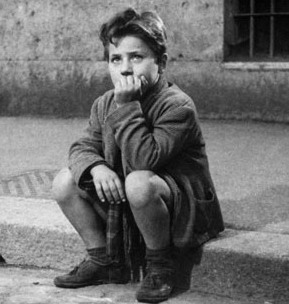
Director Vittorio De Sica was struck by Enzo Staiola's naturally expressive eyes
Director Vittorio De Sica was struck by
Enzo Staiola's naturally expressive eyes
Enzo Staiola, who found international fame as an eight-year-old boy as one of the stars of the Oscar-winning neorealist drama Bicycle Thieves, was born on this day in 1939 in Rome.

Staiola’s character in Vittorio De Sica’s 1948 film was Bruno Ricci, the eldest child in a working class Roman family desperately trying to survive in the hard economic climate that followed the end of the Second World War.

The central character in the film is Bruno’s father, Antonio, who lands a job posting advertising bills around the city but is required to have a bicycle to transport himself, his ladder and bucket to wherever his services are required.

Antonio buys a bicycle after pawning some of the family’s few possessions of value only to have it stolen on his first day at work. The remainder of the film follows Antonio and Bruno as they try to find the bicycle.

The essence of the neorealist genre was that directors achieved authenticity by eschewing the use of professional actors in favour of ordinary people who lived in the city or neighbourhood where the action was set. 

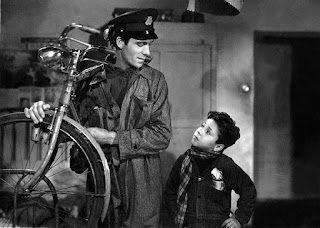
De Sica chose Lamberto Maggiorani, a steel factory worker, to play the part of Antonio, turning down the chance to employ established Hollywood star Cary Grant.

Staiola with his Bicycle Thieves co-star Lamberto Maggiorani, a factory worker who played his father
Staiola with his Bicycle Thieves co-star Lamberto
Maggiorani, a factory worker who played his father
He picked Staiola as his Bruno almost by chance, after filming had already started. He recalled speaking to Maggiorani about what he wanted in the next scene when a crowd gathered round in the street where they were shooting. He noticed there was a young boy with particularly expressive eyes. It was Enzo. 

Unable to break off filming, De Sica dispatched an assistant to find out where the boy lived. In interviews years later, Staiola remembered being followed by a car as he walked home from school and, fearing he was about to be kidnapped, running as fast as he could until he reached the building, in Via Capo d’Africa, not far from the Colosseum, where his family lived.

The following day, De Sica decided to stage impromptu auditions in front of the building in the hope that Enzo would be curious enough to want to know what was going on.  Enzo did not disappoint and as he emerged from the building De Sica walked across to him, telling his crew ‘He’s the one.’

Staiola and another young hopeful took part in screen tests in front of De Sica, taking turns to act out the same scenes, but the director’s mind was made up. Staiola remembered being offered the part but being envious when the unsuccessful candidate was given a new bicycle as consolation for missing out.

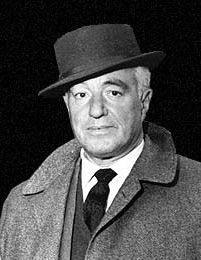
Vittorio De Sica was a master of the neorealism genre
Vittorio De Sica was a master
of the neorealism genre
Although Bicycle Thieves was given a decidedly lukewarm reception when it was released in Italy, where critics and audiences craved escapism rather than reminders of life’s daily struggles, in time it came to be regarded as a masterpiece was was cited by numerous film-makers as one of their biggest influences.

Released in the United States as The Bicycle Thief, the movie was named best foreign language film at the 22nd Academy Awards in 1950, winning a BAFTA - awarded by the British Academy of Film and Television Arts - as overall best film in the same year. 

Despite the success of Bicycle Thieves, Staiola’s acting career did not sustain him into adulthood. He appeared in another 12 films as a child, including, in 1954, a small part in The Barefoot Contessa, which starred Humphrey Bogart and Ava Gardner, but soon afterwards the parts began to dry up.

Thereafter, although he accepted cameo roles in two films as an adult, he lived a relatively anonymous life, working for many years in the offices of Rome’s catasto - land registry.

Now 81, he still lives in the Garbatella neighbourhood of Rome, where his family had its roots.

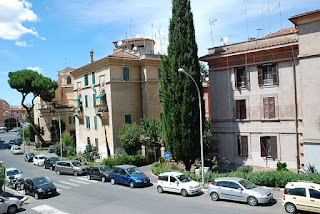
Garbatella is regarded as a charming district with a village feel within the city
Garbatella is regarded as a charming district
with a village feel within the city
Travel tip:

Many of the houses in the Garbatella district of Rome - which adjoins the Testaccio and San Saba neighbourhoods to the south of the city - were created originally with the intention of housing workers on a proposed canal linking central Rome with the port of Ostia. In the event, the project never happened and the area was instead populated by families displaced when Mussolini flattened parts of the city to build the Via della Conciliazione, which leads to St Peter’s Square, and the Via dei Fori Imperiali, linking Piazza Venezia with the Colosseum. Nowadays, it is regarded as a charming neighbourhood characterised by streets lined with climbing bougainvillea and small squares with a village feel.

Stay in Rome with Booking.com


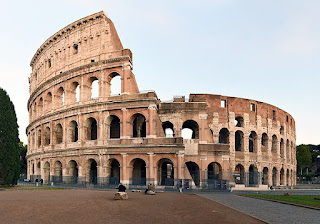
Rome's Colosseum is very close to Via Capo d'Africa, where Staiola lived as a boy
Rome's Colosseum is very close to Via Capo
d'Africa, where Staiola lived as a boy
Travel tip:

Via Capo d’Africa, where Staiola lived when he was given the part in Bicycle Thieves, is literally opposite the Colosseum, one of Rome’s most famous monuments. Built of travertine, tuff, and brick-faced concrete, the Colosseum was the largest of all the Roman amphitheatres. Construction began under Vespasian in 72AD and was completed by his son, Titus, in 80 with further modifications were made during the reign of Titus’s younger brother, Domitian (81–96), the three emperors who made up the Flavian dynasty. It is estimated the amphitheatre could hold up to 80,000 spectators.  It is thought that, having been known first as the Flavian Amphitheatre, it became known colloquially as the Colosseum because of its proximity to a colossal statue of Nero.

Rome accommodation from Booking.com

Also on this day:

1848: The murder of government minister Pellegrino Rossi

1905: The birth of conductor Annunzio Mantovani

1922: The birth of film director Francesco Rosi

1940: The birth of fashion designer Roberto Cavalli


Home