20 March 2023

20 March

Azeglio Vicini - 1990 World Cup coach

Semi-final heartbreak ended dream of victory on home soil

Azeglio Vicini, the coach who led Italy to the semi-finals when the nation hosted the 1990 World Cup finals, was born in the city of Cesena in Emilia-Romagna, on this day in 1934. Vicini worked for the Italian Football Federation for an unbroken 23 years in various roles, having joined their technical staff in 1968 after less than one season as a coach at club level. He was head coach of the Italy Under-23 and Italy Under-21 teams before succeeding World Cup winner Enzo Bearzot as coach of the senior Italy side in 1986.  Vicini's brief with the senior team was an onerous one.  When Italy won the right to host the 1990 World Cup finals there was an expectation among Italian football's hierarchy that a nation with such a proud history should be capable of winning the tournament on home soil. Responsibility for producing a team good enough rested squarely on Vicini's shoulders but he was well prepared, having guided his under-21 team to the later stages of the European Championships consistently and brought through the likes of Roberto Mancini, Giuseppe Giannini, Roberto Donadoni, Walter Zenga and Gianluca Vialli.  Read more…

____________________________________

Fulco di Verdura - jeweller

Exclusive brand favoured by stars and royalty

The man behind the exclusive jewellery brand Verdura was born Fulco Santostefano della Cerda, Duke of Verdura, on this day in 1898 in Palermo. Usually known as Fulco di Verdura, he founded the Verdura company in 1939, when he opened a shop on Fifth Avenue in New York and became one of the premier jewellery designers of the 20th century.  Well connected through his own heritage and through his friendship with the songwriter Cole Porter, Verdura found favour with royalty and with movie stars.  Among his clients were the Duchess of Windsor - the former socialite Wallis Simpson - and stars such as Greta Garbo, Joan Crawford, Rita Hayworth, Katharine Hepburn, Paulette Goddard, Millicent Rogers and Marlene Dietrich.  Although Verdura died in 1978, the company lives on and continues to specialise in using large, brightly coloured gemstones. The most expensive gemstone ever sold at auction, the so-called Oppenheimer Blue diamond, was set in a ring designed by Verdura. It changed hands at Christie's in Geneva for $50.6 million (£34.7 million) in May 2016.  The last to bear the now defunct Sicilian title of Duke of Verdura, Fulco grew up in aristocratic surroundings.  Read more…

____________________________________

Giampiero Moretti - entrepreneur racing driver

Gentleman racer behind ubiquitous Momo accessories brand

Giampiero Moretti, a motor racing enthusiast who made his fortune almost literally by reinventing the wheel, was born on this day in 1940 in Milan.  Known as 'the last of the gentleman racers' because of his unfailing courtesy, refined manners and an unquenchable determination to succeed on the track, Moretti made a profound mark on the sport through his ergonomic rethink of the racecar steering wheel.  Steering wheels were traditionally large and made of steel or polished wood but Moretti saw that reducing the diameter of the wheel would cut the effort needed by the driver to steer the car, helping him conserve energy and creating a more comfortable driving position.  He also covered the wheel with leather to improve the driver's grip, and gave it a contoured surface.  He made the first one for a car he planned to race himself and there was soon interest among other drivers and he began to make more wheels.  His big break came when Ferrari invited him to design a leather wheel for their Formula One car.  Enzo Ferrari himself was a traditionalist who took some persuading that the tried-and-tested old steering wheel was not the best.  Read more…


Home


19 March 2023

19 March

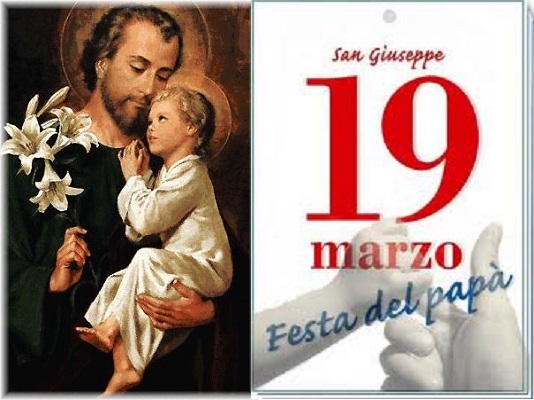
NEW - Festa del Papà - Father’s Day

Italian celebration this year coincides with Mothering Sunday in UK

While today marks Mothering Sunday - or Mother’s Day - in the United Kingdom and elsewhere, the Italian tradition is that celebrations on this day in the religious calendar are for Father’s Day.   La Festa del Papà in Italy owes its history to La Festa di San Giuseppe - St Joseph’s Day - the annual celebration that has been held since the Middle Ages to recognise the role of Joseph, the husband of Mary, as the legal if not the biological father of Jesus Christ.  In Catholic tradition, Saint Joseph is the embodiment of the ideal father, a strong, pious character perfectly suited to fulfil his role as protector of and provider for his family.  For many years, the Festa di San Giuseppe - which always falls on March 19, regardless of whether it is a weekday or a weekend - remained a largely religious celebration. But, thanks to the growth of commercialism around family celebration days, it has taken a lead from Father’s Days around the world, and in particular the United States, and expanded into something bigger.  So nowadays, in common with Father’s Days around the world, La Festa del Papà is an occasion for children to show their appreciation and affection for their own fathers by making cards and giving treats and gifts.  Read more…

_______________________________________

Giuseppe Mercalli - seismologist

Scientist who invented Mercalli Scale died in fire

The seismologist and volcanologist Giuseppe Mercalli, who at the time of his death was director of the Vesuvius Observatory, died in a fire at his home in Naples on this day in 1914.  The initial suspicion was that Mercalli, who devised a scale for determining the strength of earthquakes according to the intensity of shaking, had knocked over a paraffin lamp accidentally after falling asleep while working late.  However, an examination of his remains suggested he may have been strangled after disturbing an intruder, who then soaked his clothes in petrol before setting light to them. A sum of money worth the equivalent of $1,400 (€1,250) today was missing, although no one was ever apprehended for the crime.  Born in Milan, Mercalli was ordained a Roman Catholic priest and became a professor of Natural Sciences at the seminary of Milan, although he left under something of a cloud because of his support for Antonio Rosmini, a controversial priest and philosopher who campaigned for social justice and was fiercely critical of various aspects of how the Roman Catholic church operated.  Read more…

______________________________________

Benito Jacovitti - cartoonist

Multiple comic characters loved by generations

Benito Jacovitti, who would become Italy's most famous cartoonist, was born on this day in 1923 in the Adriatic coastal town of Termoli.  Jacovitti drew for a number of satirical magazines and several newspapers but also produced much work aimed at children and young adults.  His characters became the constant companions of generations of schoolchildren for more than 30 years via the pages of Diario Vitt, the school diary produced by the publishers of the Catholic comic magazine Il Vittorioso, which had a huge readership among teenagers and young adults, and for which Jacovitti drew from 1939 until it closed in 1969.  Jacovitti gave life to such characters as "the three Ps" - Pippo, Pertica and Pallo - as well as Chicchiriccì and Jack Mandolino via their cartoon adventures in Il Vittorioso, introduced Zorry Kid, a parody of Zorro, through a later association with children's journal Il Corriere del Picoli, and the cowboy Cocco Bill, who emerged during his 10-year stint as cartoonist for the daily newspaper, Il Giorno.  Born Benito Franco Iacovitti, he was the son of a railway worker.  Read more…

______________________________________

Francesco Gasparini – musician and writer

Opera composer who gave Vivaldi a job

Francesco Gasparini, one of the great Baroque composers, whose works were performed all over Europe, was born on this day in 1661 in Camaiore near Lucca in Tuscany.  Gasparini also worked as a music teacher and was musical director of the Ospedale della Pietà in Venice for about 15 years, where he made the inspired decision to employ a 25-year-old Antonio Vivaldi as a violin master.  By the age of 17, Gasparini was a member of the Philharmonic Academy of Bologna. He moved to Rome, where he studied under the musicians Arcangelo Corelli and Bernardo Pasquini. His first important opera, Roderico, was produced there in 1694.  After arriving in Venice in 1702, he became one of the leading composers in the city. He wrote the first opera to use the story of Hamlet - Ambleto - in 1705, although he did not base the work on Shakespeare’s play.  Gasparini was appointed musical director of the Ospedale della Pietà, an orphanage in Venice where young girls received a musical education. The most talented pupils stayed on to become members of the Ospedale’s orchestra and choir.  Read more…

______________________________________

Filippo Mazzei – physician and businessman

Liberal thinker was praised by John F Kennedy

Globe-trotting doctor Filippo Mazzei, who was a close friend of the American president, Thomas Jefferson, died on this day in 1816 in Pisa in Tuscany.  During the American Revolutionary War, Mazzei had acted as an agent for Jefferson, purchasing arms for Virginia.  President John F Kennedy paid tribute to Mazzei’s contribution to the Declaration of Independence in his book, A Nation of Immigrants.  Mazzei was born in 1730 in Poggio a Caiano in Tuscany. He studied medicine in Florence and then practised in both Italy and Turkey. He moved to London in 1755 and set himself up in business as an importer, while also working as an Italian teacher.  In London he met both Benjamin Franklin and Thomas Jefferson, who would become two of the Founding Fathers, and came up with the idea of importing Tuscan products, such as wine and olive trees, to the New World.  In 1773 Mazzei boarded a ship from Livorno to Virginia, taking with him plants, seeds, silkworms and farmers from Lucca.  He visited Jefferson at his estate in Virginia and was given a large piece of land to start an experimental plantation.  Mazzei and Jefferson started what was to become the first commercial vineyard in Virginia.  Read more…

_____________________________________

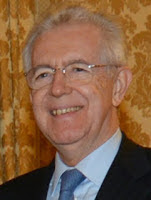
Mario Monti – prime minister

‘Super Mario’ stepped in during debt crisis

Economist Mario Monti, who was prime minister of Italy from 2011 to 2013, was born on this day in 1943 in Varese in Lombardy.  Monti was invited by Italian president Giorgio Napolitano to form a new government after the resignation of Silvio Berlusconi in November 2011 in the middle of the European debt crisis.  Monti, who was the 54th prime minister of Italy, led a government of technocrats, who introduced austerity measures in Italy.  Monti was born in Varese and, after attending a private school, went to Bocconi University in Milan, where he obtained a degree in Economics.  He was a European commissioner from 1994 to 1999, where he obtained the nickname ‘Super Mario’ from his colleagues and the Press.  In 1999 the prime minister at the time, Massimo D’Alema, appointed him to the new Prodi Commission, giving him responsibility for Competition.  He was made a lifetime senator by Giorgio Napolitano in November 2011 and a few days later he was invited to form a new government following Berlusconi’s resignation.  He appointed a technocratic cabinet composed entirely of unelected professionals.  Read more…

EN - 728x90


Home


Festa del Papà - Father’s Day

Italian celebration this year coincides with Mothering Sunday in UK

While today marks Mothering Sunday - or Mother’s Day - in the United Kingdom and elsewhere, the Italian tradition is that celebrations on this day in the religious calendar are for Father’s Day.

La Festa del Papà in Italy owes its history to La Festa di San Giuseppe - St Joseph’s Day - the annual celebration that has been held since the Middle Ages to recognise the role of Joseph, the husband of Mary, as the legal if not the biological father of Jesus Christ.

In Catholic tradition, Saint Joseph is the embodiment of the ideal father, a strong, pious character perfectly suited to fulfil his role as protector of and provider for his family. 

For many years, the Festa di San Giuseppe - which always falls on March 19, regardless of whether it is a weekday or a weekend - remained a largely religious celebration. But, thanks to the growth of commercialism around family celebration days, it has taken a lead from Father’s Days around the world, and in particular the United States, and expanded into something bigger.

So nowadays, in common with Father’s Days around the world, La Festa del Papà is an occasion for children to show their appreciation and affection for their own fathers by making cards and giving treats and gifts.

Schools will often devote time in the week leading to March 19 by setting aside craft lesson time to making cards and gifts, with students encouraged to fill the card with their own verses.

And naturally, being Italy, gifts often take the form of food, with a number of different cakes and pastries becoming traditional on Father’s Day.

An example of Zeppole di San Giuseppe, one of Italy's traditional Father's Day treats
An example of Zeppole di San Giuseppe, one of
Italy's traditional Father's Day treats
This is thought to originate in a story in the Gospel of St Matthew in which Joseph and Mary were visited by an angel and warned to flee to Egypt so that their baby son would be kept out of the clutches of King Herod.

When they arrived, Joseph is said to have helped support the family by making and selling sweet pancakes.

The classic Italian Father’s Day pastries are Bignè di San Giuseppe, fried cream puffs filled with custard and dusted in icing sugar. Although Bignè di San Giuseppe are available throughout Italy all year round, they are made in particular quantities around Father’s Day.

In the south of Italy, the equivalent is the Zeppole di San Giuseppe, a similar concoction to Bignè, made with puff pastry, custard and icing sugar, topped with a glazed cherry.

A recipe for these zeppole appeared in Cucina teorico-pratica, a 19th century cookery guide compiled by Ippolito Cavalcanti, a food-loving aristocrat who went under the title Duke of Buonvicino, first published in 1837 and still being reprinted today. The book is considered something of a bible of Neapolitan cuisine.

In Sicily, meanwhile, the Sfincia di San Giuseppe is filled with sweet ricotta, candied fruit and chopped pistachio nuts, while shops in the north of Italy might have Ravioli di San Giuseppe - ravioli made with shortcrust pastry and filled with jam.

The Festa di San Giuseppe in Sicily is also celebrated in some households with the preparation of a soup called maccu di San Giuseppe, made with crushed fava beans, also known as broad beans.

Another part of the gift-giving element of the Festa del Papà is thought to come from Saint Joseph’s role as the patron saint of carpenters. Originally, wooden toys and trinkets were exchanged between all relatives on Festa di San Giuseppe, the practice evolving into one in which children gave wooden gifts to their father. 

An overhead view of Zaha Hadid's extraordinarily  futuristic Stazione Napoli-Afragola
An overhead view of Zaha Hadid's extraordinarily 
futuristic Stazione Napoli-Afragola 
Travel tip:

Ippolito Cavalcanti, the aristocratic gourmet who described Zeppole di San Giuseppe in his cookery guide Cucina teorico-pratica, was born in Afragola, a city today of almost 65,000 people but subsumed into the sprawl of greater Naples. Situated around 10km (6 miles) northeast from Piazza del Plebiscito, Afragola’s history is thought to date back to around 300BC when it was settled by a tribe called the Samnites, although remains dated as of Bronze Age vintage, thought to have been buried in an eruption of Vesuvius, were found in 2005.  Today’s Afragola, sadly, is an area of social problems, high unemployment and high crime rate, yet it is home to one of Italy’s most futuristic railway stations, the extraordinary Napoli-Afragola station designed by British-Iraqi architect Zaha Hadid and opened in 2017 for a new high speed line from northern to southern Italy.

Iginio Massari's Pasticceria Veneto is consistently recognised as one of Italy's best pastry shops
Iginio Massari's Pasticceria Veneto is consistently
recognised as one of Italy's best pastry shops
Travel tip:

The best pastry shop in all Italy - and there is plenty of competition - is generally reckoned to be the multiple award-winning Pasticceria Veneto in Via Salvo D'Acquisto in the northern city of Brescia. Opened in 1971 by the Brescia-born pastry chef Iginio Massari, Pasticceria Veneto has dominated the pasticcerie section of the annual Gambero Rosso awards since 2011, receiving the coveted Tre Torte mark from the food magazine every year.  The store, often described as a pastry laboratory rather than simply a bakery thanks to 80-year-old Massari’s constant innovation, has been stocking a number of treats in anticipation of Father’s Day. The chef’s own creation for the occasion is a caramelized millefeuille.


Also on this day:

1661: The birth of musician Francesco Gasparini

1816: The death of physician and businessman Filippo Mazzei

1914: The death of seismologist Guiseppe Mercalli

1923: The birth of cartoonist Benito Jacovitti

1943: The birth of technocrat PM Mario Monti


Home


18 March 2023

18 March

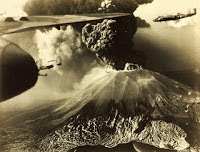
Mount Vesuvius – the 1944 eruption

The last time the volcano was seen to blow its top

Mount Vesuvius, the huge volcano looming over the bay of Naples, last erupted on this day in 1944.  Vesuvius is the only volcano on mainland Europe to have erupted during the last 100 years and is regarded as a constant worry because of its history of explosive eruptions and the large number of people living close by.  It is most famous for its eruption in AD 79, which buried the Roman cities of Pompeii and Herculaneum and is believed to have killed thousands of people.  An eyewitness account of the eruption, in which tons of stones, ash and fumes were ejected from the cone, has been left behind for posterity by Pliny the Younger in his letters to the historian, Tacitus.  There were at least three larger eruptions of Vesuvius before AD 79 and there have been many since. In 1631 a major eruption buried villages under lava flows and killed about 300 people and the volcano then continued to erupt every few years.  The eruption, which started on 18 March 1944 and went on for several days, destroyed three villages nearby and about 80 planes belonging to the US Army Air Forces, which were based at an airfield close to Pompeii.   Read more…

_____________________________________

Bobby Solo - pop singer

Sixties star found fame after Sanremo disqualification

Bobby Solo, who was twice winner of Italy's prestigious Sanremo Festival yet had his biggest hit with a song that was disqualified, was born Roberto Satti on this day in 1945 in Rome.  The singer and songwriter won the contest in 1965 and again in 1969 but it was the controversy over his 1964 entry that thrust him into the spotlight and sent him to the top of the Italian singles charts with the first record to sell more than one million copies in Italy. To emphasise that the competition was to select the best song, rather than the best artist, each entry was sung by two artists, one a native Italian, the other an international guest star. In 1964, Solo was paired with the American singer Frankie Laine to showcase Una lacrima sul viso (A Tear on Your Face).  Laine performed the song in English but Solo was stricken with a throat problem. Rather than withdraw, he sang the song with the help of a backing track, only to be told afterwards that this was against the rules. The song was disqualified but attracted such attention that it became a huge hit, topping the Italian singles chart for eight weeks. Sales in Italy and other countries eventually topped two million.  Read more…

________________________________________

The Five Days of Milan

Citizens rebel to drive out ruling Austrians

The Five Days of Milan, one of the most significant episodes of the Risorgimento, began on this day in 1848 as the citizens of Milan rebelled against Austrian rule.  More than 400 Milanese citizens were killed and a further 600 wounded but after five days of street battles the Austrian commander, Marshal Josef Radetzky, withdrew his 13,000 troops from the city.  The 'Cinque Giornate' uprising sparked the First Italian War of Independence between the Kingdom of Sardinia and the Austrian Empire.  Much of northern Italy was under Austrian rule in the early part of the 19th century and they maintained a harsh regime. Elsewhere, governments were introducing social reform, especially in Rome but also in Sicily, Salerno and Naples after riots against the Bourbon King Ferdinand II.  Ferdinand, ruler of the Kingdom of the Two Sicilies, and Charles Albert (Carlo Alberto) of Savoy, in the Kingdom of Sardinia, adopted a new constitution, limiting the power of the monarchy, and Pope Pius IX in the Papal States followed suit a little later.  The response of the Austrians was to seek a still tighter grip on their territories in Lombardy-Venetia.  Read more…

_____________________________________

Alessandro Alessandroni – composer

Versatile musician became famous for his haunting whistle

Alessandro Alessandroni, the composer of more than 40 film scores who could play many different musical instruments, was born on this day in 1925 in Soriano nel Cimino near Viterbo.  As a child he was a friend of Ennio Morricone and the two of them went on to collaborate on many soundtracks for Spaghetti Western films.  Alessandroni also founded the 16-member vocal group I Cantori Moderni (The Modern Choristers) in 1961. His first wife, the singer Giulia De Mutiis, was a member of the group, who performed wordless vocals on many Italian film soundtracks, as was Edda Dell’Orso, whose exceptional voice also featured in Morricone’s scores.  Most notably they sang Mah Na Mah Na for the film Sweden Heaven and Hell, a song which was later popularised by The Muppet Show.  Alessandroni learnt to play the guitar, mandolin, mandoloncello, sitar, accordion and piano. His family barbershop in Soriano nel Cimino became a favourite gathering place for local musical talent. He says of this time: ‘We had a guitar, mandolin and a mandola. We didn’t do much business but we made a lot of music.’  Read more…


Home