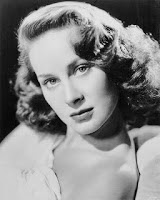
24 April 2023

24 April

Luigi Lavazza - coffee maker

From a grocery store in Turin to Italy's market leader

Luigi Lavazza, the Turin grocer who founded the Lavazza Coffee Company, was born on this day in 1859 in the small town of Murisengo in Piedmont.  He had lived as a peasant farmer in Murisengo but times were hard and after a couple of poor harvests he decided to abandon the countryside and head for the city, moving to Turin and finding work as a shop assistant.  The Lavazza brand began when Luigi had saved enough money to buy his own shop in Via San Tommaso, in the centre of Turin, in 1895.  He sold groceries and provisions and where other stores simply sold coffee beans, he had a workshop in the rear of the store where he experimented by grinding the beans and mixing them into different blends according to the tastes of his customers.  He travelled to Brazil to improve his knowledge of coffee and his blends became an important part of the business, after which he moved into wholesale as well as retail as a coffee merchant.  When the first automatic roasting machines went into production in the 1920s, he was one of the first in Italy to buy one.  The economic climate in Italy improved after the First World War.  Read more…

_______________________________________

Giuseppe Panza - art collector

Businessman amassed more than 2,500 pieces

The art collector Giuseppe Panza di Biumo, whose fascination with postwar art, particularly American, led him to build up one of the world’s most important collections, died on this day in 2010 in Milan.  A businessman who succeeded his father in making money from wine and property, Panza acquired more than 2,500 pieces in his lifetime, many of which he sold or donated to museums and art galleries.  Some he parted with for millions of dollars, although he always insisted that his motivation was never financial gain but the love of art.  Approximately 10 per cent of his collection remains in the 18th-century Villa Menafoglio Litta, his family home at Varese, north of Milan, where he created 50,000 square feet (4,600 sq m) of exhibition space.  He had an astute eye for talent, often identifying unknown artists who would go on to become collectible long before their works commanded premium prices.  For example, he anticipated the popularity of Minimalism in the 1960s, snapping up works by Donald Judd and Dan Flavin well before their careers had really taken off.  Born in 1923 in Milan, Panza had a comfortable background. His father, Ernesto, was a wine distributor.  Read more…

____________________________________

Giuseppe Marc’Antonio Baretti – author

Dramatic life of the ‘scourge’ of writers

Literary critic, poet, writer, translator and linguist Giuseppe Baretti was born on this day in 1719 in Turin, the capital city of Piedmont.  His life was often marred by controversies and he eventually had to leave Italy for England, where the drama in his life continued and he was tried at the Old Bailey for murder in 1769.  Baretti’s father had intended him to enter the legal profession but when he was 16 he fled from Turin to Guastalla in Emilia-Romagna where he worked in the import and export business.  His main interest was studying literature and criticism but, after he became an expert in the field himself, his writing was so controversial that he eventually had to move abroad.  Many students of Italian Literature are familiar with the name of Giuseppe Baretti as the writer, editor and proprietor of the fearlessly sarcastic periodical La frusta letteraria, which means Literary Scourge, in which he castigated bad authors.  For a few years Baretti wandered from country to country supporting himself by writing.  He was the author of two influential dictionaries, a Dictionary and Grammar of the Italian Language and a Dictionary of the Spanish Language.  Read more…

_______________________________________

Alessandro Costacurta - long-serving footballer
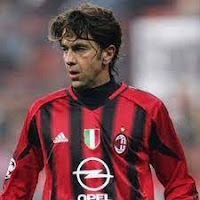
AC Milan defender played in Serie A until 41 years old

Former Italy and AC Milan defender Alessandro Costacurta was born on this day in 1966 in the town of Orago, near Varese.  Costacurta retired in May 2007, 25 days after his 41st birthday, having played more than 660 matches for AC Milan over the course of 21 seasons.  He is the oldest outfield player to appear in a Serie A match.  Milan lost his final game 3-2 at home to Udinese but Costacurta marked the occasion with a goal, from the penalty spot.  It was only his third goal in 458 Serie A appearances for the rossoneri, but made him Serie A's oldest goalscorer.  He could look back on a career laden with honours, including seven Serie A titles and five European Cups, two in its traditional knock-out format and three more after the inception of the Champions League.  He also won 59 caps for Italy and was a member of the team that finished runners-up in the 1994 World Cup in the United States, although he had to sit out the final because of suspension.  Costacurta made his Milan debut in the Coppa Italia in 1986 before being sent away to gain experience with Monza in Serie C.  His first Serie A appearance came for Milan in October 1987.  Read more…

EN - 728x90


Home


23 April 2023

23 April

Popular star of five decades

The singer and actress known as Milva died on this day in 2021 in Milan at the age of 81.  Born Maria Ilva Biolcati in Goro, a fishing village on the Po delta, her popularity was such that she sold more than 80 million records. Her output was extraordinary, running to 126 singles and a staggering 173 albums in a career spanning more than half a century. No Italian artist has recorded so many albums.   For a time she bestrode the pop world, earning the nickname La Pantera di Goro  - The Panther of Goro - as recognition by the Italian media of her status as one of the three best-loved female performers of her generation, alongside Mina - dubbed the Tiger of Cremona - and Iva Zanicchi, who found herself labelled the Eagle of Ligonchio.  Yet Milva was equally at home with the musical theatre of Bertolt Brecht and the operatic works of Luciano Berio and earned plaudits early in career when she sang Édith Piaf's repertoire at the prestigious Olympia theatre in Paris.  She was said to have an uncanny ability to sing almost any kind of music in any language after listening to it just once.  Her versatility enabled her to adapt to new trends in music and prolong her career.  Read more…

________________________________________

Gaspara Stampa – poet

Beautiful sonnets were inspired by unrequited love

Gaspara Stampa, the greatest female poet of the Italian Renaissance, died on this day in 1554 in Venice at the age of 31.  She is regarded by many as the greatest Italian female poet of any age, despite having had such a brief life.  Gaspara was born in Padua and lived in the city until she was eight years old. Her father, Bartolomeo, had been a jewel and gold merchant, but after he died, Gaspara’s mother, Cecilia, took her three children to live in Venice. They were accommodated in the house of Geronimo Morosini, who was descended from a noble Venetian family, in the parish of Santi Gervasio and Protasio, now known as San Trovaso.  Along with her sister, Cassandra, and brother, Baldassare, Gaspara was educated in literature, music, history and painting. She excelled at singing and playing the lute and her home became a cultural hub as it was visited by many Venetian writers, painters and musicians, among them Francesco Sansovino, a poet and writer who was the son of the great Florentine architect, Jacopo Sansovino.  Gaspara dedicated most of her poems to Count Collatino di Collalto of Treviso, with whom she had an affair.  Read more…

____________________________________

Stefano Bontade - Mafia supremo

Well-connected Cosa Nostra boss had links to ex-premier Andreotti

Stefano Bontade, one of the most powerful and well connected figures in the Sicilian Mafia in the 1960s and 1970s, was born on this day in 1939 in Palermo, where he was murdered exactly 42 years later in a birthday execution that sparked a two-year war between the island’s rival clans.  Known as Il Falco – the Falcon – he was said to have close links with a number of important politicians in Sicily and with the former Italian prime minister Giulio Andreotti.  He was strongly suspected of being a key figure in the 1962 murder of Enrico Mattei, the president of Italy’s state-owned oil and gas conglomerate ENI, and in the bogus kidnapping of Michele Sindona, the disgraced banker who used the Vatican Bank to launder the proceeds of Cosa Nostra heroin trafficking.  Born into a Mafia family, Bontade controlled the Villagrazia area in the south-west of Palermo and became head of the Santa Maria di GesĂ¹ crime family at the age of 25 when his father, Francesco Paolo Bontade, a major Cosa Nostra boss known as Don Paolino, stepped down in failing health.  He was banished to the mainland, specifically Qualiano in Campania, following his arrest in 1972.  Read more…

_____________________________________

Ruggero Leoncavallo – opera composer

Writer and musician created one of the most popular operas of all time

Ruggero Leoncavallo, the composer of the opera, Pagliacci, was born on this day in 1857 in Naples.  Pagliacci - which means 'clowns' - is one of the most popular operas ever written and is still regularly performed all over the world.  Leoncavallo also wrote the song, Mattinata, often performed by Enrico Caruso and still recorded by today’s tenors.  Leoncavallo was the son of a judge and moved with his father from Naples to live in the town of Montalto Uffugo in Calabria when he was a child.  He later returned to Naples to be educated and then studied literature at the University of Bologna under the poet Giosuè Carducci.  Leoncavallo initially worked as a piano teacher in Egypt but then moved to Paris where he found work as an accompanist for artists singing in cafes.  He then moved to Milan where he taught the piano and started to compose operas.  After the success of Pietro Mascagni’s Cavalleria rusticana, Leoncavallo produced his own verismo work, Pagliacci. Verismo was a post-romantic operatic tradition, often featuring true stories about the lives of poor people.  Leoncavallo claimed he had derived the plot for Pagliacci from a real-life murder trial.  Read more…

______________________________________

Gianandrea Noseda - conductor

Milanese musician has achieved worldwide acclaim

Gianandrea Noseda, who is recognised as one of the leading orchestra conductors of his generation, was born on this day in 1964 in Milan.  He holds the title of Cavaliere Ufficiale al Merito della Repubblica Italiana for his contribution to the artistic life of Italy.  Noseda studied piano and composition in Milan and began studying conducting at the age of 27.  He made his debut as a conductor in 1994 with the Orchestra Sinfonica di Milano Giuseppe Verdi. He won the Cadaques International Conducting Competition for young conductors in Spain the same year.  In 1997 he became principal guest conductor at the Mariinsky Theatre in St Petersburg and during his time there became fluent in Russian.  In 2002 he became principal conductor of the BBC Philharmonic and in this role led live performances in Manchester of Beethoven’s nine symphonies. In 2006 his title was changed to chief conductor.  The London Symphony Orchestra announced the appointment of Noseda as its new principal guest conductor in 2016.  Noseda has been Music Director of the Teatro Regio Torino since 2007, taking their orchestra to the Edinburgh Festival in 2017.  Read more… 


Home


Milva - singer and actress

Popular star of five decades

Milva pictured at the start of her career in 1961, when she made her debut at Sanremo
Milva pictured at the start of her career in
1961, when she made her debut at Sanremo
The singer and actress known as Milva died on this day in 2021 in Milan at the age of 81.

Born Maria Ilva Biolcati in Goro, a fishing village on the Po delta, her popularity was such that she sold more than 80 million records. Her output was extraordinary, running to 126 singles and a staggering 173 albums in a career spanning more than half a century. No Italian artist has recorded so many albums.

For a time she bestrode the pop world, earning the nickname La Pantera di Goro  - The Panther of Goro - as recognition by the Italian media of her status as one of the three best-loved female performers of her generation, alongside Mina - dubbed the Tiger of Cremona - and Iva Zanicchi, who found herself labelled the Eagle of Ligonchio. 

Yet Milva was equally at home with musical theatre and opera and earned plaudits early in career when she sang Édith Piaf's repertoire at the prestigious Olympia theatre in Paris.  She was said to have an uncanny ability to sing almost any kind of music in any language after listening to it just once.

Her versatility enabled her to adapt to new trends in music and prolong her career. She had turned 70 by the time she announced her retirement from performing in 2010, although there was still time for one more album and a single, sung in German, in 2012.

The daughter of a dressmaker and a fisherman, as a child Milva had to work to support her family during tough times economically for Italy in the years after World War Two.

Milva in the 1980s, when she began a collaboration with Greek composer, Vangelis
Milva in the 1980s, when she began a
collaboration with Greek composer, Vangelis
In her late teens she moved to Bologna, enrolled for singing and acting lessons and won a singing contest in which she was judged the best out of more than 7,500 entrants.

After recording her first single in 1960 with an Édith Piaf's song Milord, she made her live debut at the Sanremo Music Festival in 1961, finishing third. Over her career, Milva would enter Sanremo 15 times, a record for the number of appearances that she holds jointly with Peppino Di Capri, Toto Cutugno, Al Bano and Anna Oxa, although she never won, finishing second twice and third three times.

She demonstrated her versatility the following year with her performance of the Piaf repertoire in Paris, amazing both the audience and critics in the way she could sing in French with the emotion that Piaf brought to her work.

Nicknamed La Rossa because of her voluminous red hair, Milva’s ‘60s output included popular songs but also an eclectic mix of other material, including collections of Italian songs of the 1920s and ‘30s, revolutionary anthems and tango classics. She also appeared in a number of films and starred in Giorgio Strehler's stage production of Brecht's The Threepenny Opera.

In the ‘70s, when she was similarly prolific, she released albums in German and Japanese as well as Italian, and toured Italy, the USA, Greece, France, Germany, Canada, Russia and Japan. The ‘80s saw her begin a long-running collaboration with Vangelis, the Greek composer of electronic and progressive music, and devote much energy to fund-raising, either through albums or stage performances.

Milva during a performance in 2009, captivating audiences at the age of 70
Milva during a performance in 2009,
captivating audiences at the age of 70
One of her most memorable hits was the song Alexander Platz, written by the Italian songwriter Franco Battiato in 1982, which explored love in divided Berlin during the Cold War years, its name inspired by the Berlin square, Alexanderplatz, a popular meeting place.

Perhaps uniquely, for her contribution to the culture of the three respective countries, she was awarded the highest honours from three governments: the Order of Merit of both the Italian and German republics, and the Knighthood of the French Légion d'Honneur.

She began to slow down only at the end of the 2000s, when she concluded that she was unable to reach the high standards she had always set for himself.

Married once, from 1961 to 1969, to the film and TV director Maurizio Corgnati, she was said also to have had romantic relationships with the actor Mario Piave, the lyricist Massimo Gallerani, and another actor Luigi Pistilli. 

She had a daughter, Martina, with whom she was living at the time of her death, which came after a period of illness attributed to a degenerative neurological disease.  After a private funeral, Milva’s body was laid to rest at the cemetery at Blevio, a small lakeside town on Lago di Como where she had a house.

Milva's home village of Goro sits on the edge of the beautiful Po Delta regional park
Milva's home village of Goro sits on the edge of
the beautiful Po Delta regional park
Travel tip:

Goro, where Maria Ilva Biocati was born, is a fishing village on the edge of the protected Po Delta regional park, situated on the Emilia-Romagna side of the border with Veneto.  The Sacca di Goro, a large lagoon enclosed between the Po di Goro and the Po di Volano rivers, is an ideal habitat for mullet, sea bream, sea bass and for breeding of mussels, oysters and veracious clams, including the rare Golden Oyster of Goro, which is considered a delicacy, The Sagra della Vongola, Goro’s clam festival, takes place during the month of July each year, allowing visitors to enjoy the flavours and traditions of the area.

A story in La Repubblica newspaper about Casa  Milva's role in the Insula Felix Foundation
A story in La Repubblica newspaper about Casa 
Milva's role in the Insula Felix Foundation
Travel tip:

Milva’s home in Milan for 40 years was an apartment in an art nouveau palace in Via Serbelloni, an elegant area of the city between Porta Venezia and the Fashion Quarter. Recently, Milva’s daughter, art critic Martina Corgnati, has established the apartment, at No 9 Via Serbelloni, as the headquarters of the Insula Felix Foundation, which was set up by her late mother in 1984 as a non-profit institution as a place of research, the celebration of culture and for the support of young scholars, also promoting innovative forms of support for people with mental illness or neurological-psychiatric problems. 

Also on this day:

1554: The death of poet Gaspara Stampa

1857: The birth of opera composer Ruggero Leoncavallo

1939: The birth of Mafia boss Stefano Bontade

1964: The birth of leading conductor Gianandrea Noseda


Home


22 April 2023

22 April

Alida Valli - actress

Scandal dogged star admired by Mussolini

The actress Alida Valli, who was once described by Benito Mussolini as the most beautiful woman in the world after Greta Garbo, died on this day in 2006 at the age of 84.  One of the biggest stars in Italian cinema in the late 1930s and 40s, when she starred in numerous romantic dramas and comedies, she was best known outside Italy for playing Anna Schmidt, the actress girlfriend of Harry Lime in Carol Reed’s Oscar-winning 1949 classic The Third Man.  She was cast in the role by the producer David O Selznick, who shared the Fascist leader’s appreciation for her looks, and who billed her simply as Valli, hoping it would create for her a Garboesque enigmatic allure.  Later, however, she complained that having one name made her “feel silly”.  Valli was born in Pola, Istria, then part of Italy (now Pula, Croatia), in 1921. She was christened Baroness Alida Maria Laura Altenburger von Marckenstein-Frauenberg, on account of a noble line to her paternal grandfather, Baron Luigi Altenburger, an Austrian-Italian from Trento and a descendant of the Counts d’Arco.  Her father was a journalist and professor. The family moved to Como when she was young.  Read more…

_______________________________________

Vittorio Jano - motor racing engineer

Genius behind the success of Alfa Romeo, Lancia and Ferrari

Born on this day in 1891, Vittorio Jano was among the greatest engine designers in motor racing history.  Jano's engines powered cars for Fiat, Alfa Romeo, Lancia and Ferrari during a career that spanned four decades, winning numerous Grand Prix races.  The legendary Argentinian Juan Manuel Fangio won the fourth of his five Formula One world championships in Jano's Lancia-Ferrari D50, in 1956.  Almost 30 years earlier, Jano's Alfa Romeo P2 won the very first Grand Prix world championship in 1925, while its successor, the P3, scored a staggering 46 race wins between 1932 and 1935.  He worked for Ferrari from the mid-50s onwards, where his greatest legacy was the V-8 Dino engine, which was the staple of Ferrari cars on the track and the road between 1966 and 2004.  Jano's parents were from Hungary, but settled in Italy, where his father worked as a mechanical engineer in Turin.  He was born in the small town of San Giorgio Canavese in Piedmont, about 35 kilometres north of Turin, and was originally called Viktor JĂ¡nos.  Following his father into engineering, he joined Fiat at the age of just 20.  Read more…

________________________________________

Fiorenza Cossotto - operatic mezzo-soprano

Career overshadowed by story of ‘row’ with Maria Callas

Fiorenza Cossotto, a singer considered one of the greatest mezzo-sopranos of the 20th century, was born on this day in 1935 in Crescentino in Piedmont.  Cossotto was hailed for her interpretations of the major mezzo and contralto roles from mid-19th-century Italian operas, particularly those of Giuseppe Verdi such as Aida, Il trovatore and Don Carlos, but also Gaetano Donizetti, Amilcare Ponchielli, Vincenzo Bellini and the other important composers of the day.  Yet she is often remembered for a supposed spat with Maria Callas that led the Greek-American soprano to walk off the stage during her final performance at the OpĂ©ra in Paris of her signature role in Bellini’s Norma in 1965.  The incident in question took place immediately after Callas, as Norma, and Cossotto, as Adalgisa, had joined in their duet ‘Mira, o Norma’.  Callas, by that stage a little below her prime, was notoriously temperamental and within moments onlookers were imagining a row, theorising that Cossotto had tried to sabotage Callas’s performance by holding her own high notes longer and singing over Callas.  Read more…


Home