5 June 2022

5 June

Salvatore Ferragamo - shoe designer

From humble beginnings to giant of the fashion industry

Salvatore Ferragamo, the craftsman once dubbed 'Shoemaker to the Stars' after his success in creating made-to-measure footwear for movie stars and celebrities, was born on this day in 1898 in Bonito, a small hill town in Campania, in the province of Avellino.  Although in time he would become a prominent figure in the fashion world of Florence, Ferragamo learned how to make shoes in Naples, around 100 kilometres from his home village.  He was apprenticed to a Neapolitan shoemaker at the age of just 11 years and opened his first shop, trading from his parents' house, at 13.  When he was 16 he made the bold decision to move to the United States, joining one of his brothers in Boston, where they both worked in a factory manufacturing cowboy boots.  Salvatore was impressed at how modern production methods enabled the factory to turn out large numbers of boots but was concerned about compromises to quality.  This led him to move to California and to set up shop selling his own hand-made shoes in Santa Barbara, where he made his first contacts in the burgeoning American film industry.  Read more…

_____________________________________

Ludovico III Gonzaga – Marquis of Mantua

Condottiero fought to improve the town of his birth

Ludovico Gonzaga, who ruled his native city for 34 years, was born on this day in 1412 in Mantua.  He grew up to fight as a condottiero - a military leader for hire - and in 1433 he married Barbara of Brandenburg, the niece of the Holy Roman Emperor, Sigismund.  After Ludovico entered the service of the Visconti family in Milan, he and his wife were exiled from Mantua by his father, Gianfrancesco I.  But father and son were later reconciled and Ludovico became Marquis of Mantua in 1444, inheriting territory that had been reduced in size and was impoverished after years of war.  He continued to serve as a condottiero, switching his allegiance between Milan, Florence, Venice and Naples, to gain territory and secure peace for Mantua.  The high point of his reign came when Pope Pius II held a Council in Mantua between 1459 and 1460 to plan a crusade against the Ottoman Turks. Although the Pope was unimpressed with Mantua and criticised the food and wine afterwards, the event earned prestige for Ludovico, whose son, Francesco, was made a Cardinal.  During Ludovico’s reign, he paved the streets of Mantua, built a clock tower and reorganised the city centre.  Read more…

__________________________________

Carmine Crocco - soldier and brigand

Bandit seen by peasants as Italy’s ‘Robin Hood’

Carmine Crocco, whose life of brigandry was driven by a hatred of what he saw as the bourgeois oppressors of the poor, was born on this day in 1830 in the town of Rionero in Vulture, in Basilicata.  Crocco fought in the service of Giuseppe Garibaldi in the Expedition of the Thousand but was no supporter of Italian Unification and spent much of his life thereafter fighting on the side of the ousted Bourbons and of the peasant people of the south, many of whom were as poor after unification as they had been before, if not poorer.  He assembled his own private ‘army’, including many other fearsome brigands, which at one point numbered more than 2,000 men.  For this reason, he is regarded as something of a folk hero in southern Italy, where there is a popular belief that he robbed the rich to give to the poor in the manner of the legendary English outlaw, Robin Hood.  Nonetheless, when he was arrested for the final time he was tried and convicted of 67 murders and seven attempted murders among many crimes, having led a life of violence.  His initial death sentence was commuted to life imprisonment with hard labour. Read more…

____________________________________

Braccio da Montone - condottiero

Soldier of fortune briefly ruled Perugia

Military leader Braccio da Montone, who is considered one of the greatest of the Italian condottieri who fought in the 14th and 15th centuries, died on this day in 1424.  He had a lifelong rivalry with another condottiero, Muzio Attendolo Sforza, and during the first quarter of the 15th century all the major Italian cities either hired Braccio or Sforza to carry out their military action.  The rapid movements of Braccio’s troops became legendary and he founded a military school, which became known as ‘the Braccesca’. This had a major impact on Italian warfare. Braccio’s men employed tactics such as speed, shock and the rapid rotation of small units on the battlefield.  Braccio was born Andrea Fortebraccio into a wealthy family in Perugia in 1368. He began his military career as a page, but after his family were exiled from Perugia and they lost the castle of Montone, he entered the company of the condottiero Alberico da Barbiano, which was where he first encountered Muzio Attendolo Sforza.  He fought for the Malatesta and Montefeltro families in Romagna and was injured during the siege of the castle of Fossombrone in 1391.  Read more…


Home


4 June 2022

4 June

Deborah Compagnoni - Olympic skiing champion

Alpine ace won gold medals in 1992, 1994 and 1998

The three-times Olympic skiing champion Deborah Compagnoni was born on this day in 1970 in Bormio, northern Lombardy.  Regarded as the greatest Italian female skier of all-time, she won gold medals at the 1992, 1994 and 1998 Winter Olympics.  Despite suffering two serious cruciate ligament injuries, she also won multiple events at the Alpine Skiing World Cup between 1992 and 1998.  Born in Bormio but raised in Santa Caterina di Valfurva, in Valtellina, Compagnoni’s talent became obvious at a young age but she began suffering injuries also at an early age.  At just 16 years old she won the bronze medal in the downhill at the World junior championships in 1987, and the following year won the junior title in giant slalom and achieved her first podium in the World Cup.  However, shortly afterwards she broke her right knee at Val d'Isére downhill, the first of a number of major injuries, but for which she could have attained even greater success.  Compagnoni won her first race in the World Cup in 1992, in the super-G. She also won the gold medal at the Winter Olympics of the same year, again in the super-G, at Albertville in France.  Read more…

____________________________________

Cecilia Bartoli – opera singer

Soprano put the spotlight back on ‘forgotten’ composers and singers

Mezzo-soprano Cecilia Bartoli was born on this day in 1966 in Rome. Bartoli is renowned for her interpretations of the music of Mozart and Rossini and for her performances of music by some of the lesser-known Baroque and 19th century composers.  Her parents were both professional singers and gave her music lessons themselves and her first public performance was at the age of eight when she appeared as the shepherd boy in Tosca.  Bartoli studied at the Conservatorio di Santa Cecilia in Rome and made her professional opera debut in 1987 at the Arena di Verona.  The following year she earned rave reviews for her portrayal of Rosina in Rossini’s The Barber of Seville in Germany and Switzerland.  Bartoli made her debut at La Scala in 1996, followed by the Metropolitan Opera in 1997 and the Royal Opera House in 2001.  She has performed and recorded Baroque music by composers such as Gluck, Vivaldi, Haydn and Salieri.  She has sold more than ten million copies of her albums, received numerous gold and platinum certificates and been given many awards and honours.  Read more…

____________________________________

Flavio Biondo – historian and archaeologist

Writer reconstructed ancient Roman topography

Flavio Biondo, the first historian to write about the concept of the Middle Ages, died on this day in 1463 in Rome.  Biondo, who is also sometimes referred to as Flavius Biondus, his Latin name, wrote Historiarum, which ran to 32 volumes. It was a comprehensive treatment of both Europe and Christendom from the sack of Rome by the Goths in AD 410 to the rise of Italian cities in the 15th century.  His work provided a definite chronological scheme, from ancient Rome up to his own time, which started the idea of the 1000 year period we now refer to as the Middle Ages. It is known that the writer Niccolò Machiavelli often consulted this work.  Biondo was born in 1392 in Forlì in Romagna, which is now part of the region of Emilia-Romagna. He was educated well and during a brief stay in Milan he discovered, and was able to transcribe, the only existing manuscript of Cicero’s dialogue, Brutus.  Biondo trained as a notary before moving to Rome, where he was appointed as an apostolic secretary.  After embarking on diplomatic missions throughout Italy, he wrote De Roma instaurata (Rome Restored), a three volume work that reconstructed ancient Roman topography.  Read more…

_____________________________________

Claudia de’ Medici – Archduchess of Tyrol

Medici daughter who was born to rule

Claudia de’ Medici, who ruled the Tyrol region of Austria while her son was still a minor, was born on this day in 1604 in the Palazzo Pitti in Florence.  Claudia was the daughter of Ferdinando I de’ Medici, Grand Duke of Tuscany, and his wife Christina of Lorraine.  She was destined for a marital alliance with someone equally aristocratic and became engaged at just four years old to Federico Ubaldo della Rovere, Duke of Urbino.  She was educated in a convent where, in addition to piety, she learned to play the harp and paint pictures.  At the age of 16, she married Federico, Duke of Urbino and was initially disappointed when she found out he had his mistress installed in the ducal palace.  But two years later she had a daughter with him, Vittoria della Rovere. Her husband died a year later in 1623 leaving her a widow at the age of 19.  Claudia remarried in 1626 to Leopold V, Archduke of Austria, and became the Archduchess consort of Austria. She had five children by Leopold before his death six years later in 1632.  She assumed the regency of Tyrol in the name of her son, Ferdinand Charles, and held it until 1646 when Ferdinand became 18.  Read more…


Home


3 June 2022

3 June

Roberto Rossellini - film director

Roman movie pioneer whose 'neorealism' had lasting influence

Film director Roberto Rossellini died on this day in 1977 in Rome, the city that provided the backdrop to his greatest work and earned him the reputation as the 'father of neorealism'.  Rossellini had been associated with the Fascist regime during the early part of the Second World War, in part due to his friendship with Vittorio Mussolini, the film producer son of the dictator, Benito Mussolini.  His three wartime movies, The White Ship, A Pilot Returns and The Man with a Cross, all had elements of pro-Fascist propaganda.  But after Mussolini was dismissed and his government collapsed in 1943, Rossellini began work on the anti-Fascist film Rome, Open City, which he described as a history of Rome under Nazi occupation.  It starred the popular actor Aldo Fabrizi in the role of a priest ultimately executed by the Nazis and the actress Anna Magnani as the heroine, Pina, but also featured footage of real Roman citizens originally intended to be used in two short documentary films.  Rossellini also used non-professional actors for many scenes, feeling that they could portray the hardships and poverty of Rome under occupation more authentically.  Read more…

____________________________________

Pietro Paolini – artist

Follower of Caravaggio passed on his techniques to the next generation

Pietro Paolini, a painter in the Baroque period in Italy, was born on this day in 1603 in Lucca in Tuscany.  Sometimes referred to as Il Lucchese, Paolini was a follower of the controversial Italian artist Caravaggio.  He also founded an academy in his native city and taught the next generation of painters in Lucca.  Paolini’s father, Tommaso, sent him to Rome when he was 16 to train in the workshop of Angelo Caroselli, who was a follower of Caravaggio.  Paolini had the opportunity to study various schools and techniques, which is reflected in the flexible style of his work. He was exposed to the second generation of painters in the Caravaggio tradition such as Bartolomeo Manfredi, Cecco del Caravaggio and Bartolomeo Cavarozzi.  The principal themes of Paolini’s work were the subjects popularised by Caravaggio around the turn of the 17th century involving lower class people such as hawkers, prostitutes and musicians. Some of his paintings have allegorical meanings, such as The Allegory of the Five Senses, which depicts a darkened inn with people engaged in playing music and drinking, each representing one of the five senses.  Read more…

_____________________________________

Domenico Antonio Vaccaro - painter, sculptor and architect

Creative genius whose legacy is still visible around Naples

The painter, sculptor and architect Domenico Antonio Vaccaro, who created some notable sculptures and designed some of the finest churches and palaces around Naples in the early 18th century, was born in the great southern Italian city on June 3, 1678.  Vaccaro was also an accomplished painter, but it is his architectural legacy for which he is most remembered.  Among the famous churches attributed to Vaccaro are the Chiesa di San Michele Arcangelo, which overlooks Piazza Dante, and the Chiesa di Santa Maria della Concezione a Montecalvario, which can be found in the Spanish Quarter, while he completed the Chiesa di Santa Maria della Stella in the district of the same name.  His notable palaces included the Palazzo Spinelli di Tarsia, just off Via Toledo, and the beautiful late Baroque palace, the Palazzo dell’Immacolatella, built on the water’s edge in the 1740s and now dwarfed by the enormous ocean-going ships that dock either side of it. Vaccaro was also responsible for finishing the carved obelisk topped by a bronze statue in Piazza di San Domenico Maggiore.  He sculpted a statue of San Gennaro, the patron saint of Naples, in the city’s cathedral.  Read more…

_____________________________________

The Blessed Vincent Romano

Priest who devoted himself to helping the poor

The Blessed Vincent Romano, a priest from Torre del Greco on the Bay of Naples who became known for his tireless devotion to helping the poor, was born on this day in 1751.  Admired for his simple way of life and his efforts in particular to look after the wellbeing of orphaned children, he was nicknamed “the worker priest” by the local community. His commitment to helping poor people extended across the whole Neapolitan region.  He would demonstrate his willingness to roll up his sleeves in a different way in 1794 after his church – now the Basilica of Santa Croce – was all but destroyed by the eruption of Vesuvius.  Not only did Romano devote many hours to organising the rebuilding he actually cleared a good deal of rubble with his own hands.  He was born Vincenzo Domenico Romano to poor parents in Naples. He developed a strong faith as a child and began to study for the priesthood in Naples at the age of 14.  He was ordained as a priest in 1775 and assigned to Torre del Greco, where he led a simple and austere life.  The eruption of Vesuvius in June 1794 destroyed most of Torre del Greco as a lava flow swept down to the sea.  Read more…


Home


2 June 2022

2 June

Roberto Visentini - cyclist

One half of the Giro d’Italia’s most controversial duel

Roberto Visentini, the Italian road racing cyclist who won the 1986 Giro d’Italia but the following year was a central figure in the most controversial race since the historic tour of Italy began, was born on this day in 1957 in Gardone Riviera.  The son of a wealthy undertaker from Brescia, Visentini had been an Italian and a world champion at junior level in 1975 and won the Italian national time-trial championship in 1977 as an amateur, before turning professional in 1978. Despite his success, he was not universally respected by his peers, some of whom felt his penchant for fast cars and a playboy lifestyle were not in keeping with what was traditionally a working-class sport.  The Giro was always his focus. Riding for the Inoxpran team, he was runner-up in the 1983 edition behind his fellow countryman Giuseppe Saronni and looked set to win the event two years later, holding the race leader’s pink jersey for nine consecutive stages to the half-way point, only to become unwell, dropping back to finish 49th overall behind the Frenchman Bernard Hinault.  In 1986, now with the Carrera team, Visentini finally claimed the prize as his own.  Read more…

_____________________________________

The death of Giuseppe Garibaldi

Unification hero spent last days on his island off Sardinia

The Italian revolutionary and patriot Giuseppe Garibaldi died on this day in 1882 on the Sardinian island of Caprera.  The 74-year-old former military general and left-wing politician, whose Expedition of the Thousand was a major factor in completing the unification of Italy, had spent much of the last 27 years of his life on the island.  Increasingly confined to bed because of crippling arthritis, he was living on his farm with his third wife, Francesca Armosino, when he passed away.  Knowing he was fading, in the days before his death Garibaldi had asked for his bed to be moved close to a window, from which he could gaze at the emerald and sapphire sea.  He has asked for a simple funeral and cremation, and had even nominated the place on the island where he wished his body to be burned, in an open coffin, with his face to the sun.  He had hoped his ashes would be handed over to ordinary Italians, to be mixed with the earth in a place where a garden might grow as a symbol of the new Italy.  But his wishes were ignored. His body at first remained in his four-poster bed, guarded by a soldier and a sailor, while a succession of people filed past to pay their respects.  Read more…

_____________________________________

Festa della Repubblica

Parades and parties celebrate the birth of the republic

Italy is today celebrating the anniversary of becoming a republic on this day in 1946. Each year the country has a national holiday to commemorate the result of the referendum which sent the male descendants of the House of Savoy into exile.  Following the Second World War and the fall of Fascism, the Italian people were called to the polls to vote on how they wanted to be governed. The result signalled the end for the monarchy.  In normal times, a grand military parade takes place in Rome, attended by the President of the Republic and the Prime Minister.  Many cities throughout Italy hold their own celebrations as the day is an official bank holiday.  In April 1944, the reigning King, Victor Emmanuel III, had relinquished many of his powers to his heir, Crown Prince Umberto.  He finally abdicated in 1946 and Umberto II ascended the throne. It had been thought that Umberto II and his Queen would be more acceptable to the people. But Umberto II has gone down in history as Il Re di Maggio, the King of May, as he reigned for only 40 days before being sent into exile.  Umberto II accepted the results of the referendum magnanimously and his family remained in exile until 2002.  Read more… 


Home


1 June 2022

1 June

Iolanda of Savoy - banished princess

Sister of Italy’s last monarch lived quiet life in seaside villa

Princess Iolanda of Savoy, the eldest daughter of Italy’s wartime king Vittorio Emanuele III, was born on this day in 1901 in Rome.  Along with the other members of the Italian royal family, she left the country in 1946 after a referendum over whether to turn Italy into a republic gained the support of 54 per cent of those who voted.  The new constitution specifically banned the male heirs of the House of Savoy from setting foot on Italian soil.  Her brother, Umberto II, who had been made king when his father abdicated in May 1946, shortly before the vote, had the crown for just 27 days. He left for Portugal, never to return to his homeland.  The decision to send male members of the family into exile was essentially the new republic’s punishment for Vittorio Emanuele having allowed the Fascist leader Benito Mussolini to run the country as a dictator.  Vittorio Emanuele, who was king for 46 years, was tainted in particular by his approval of Mussolini's anti-semitic race laws by which all Jewish students were expelled from schools and Jews were banned from public office and forbidden to marry outside their race.  Read more…

_____________________________________

Alice Barbi - singer

Mezzo-soprano who became close friend of Brahms

Alice Barbi, who enjoyed a short but successful career as a singer after showing a talent for the violin from an early age, was born on this day in 1858 in Modena.  An accomplished mezzo-soprano famed for her sweet, velvety tone, Barbi performed in London, St Petersburg, Berlin and Vienna as well as in her native Italy. She is also known for her friendship with the celebrated German composer Johannes Brahms.  The two met shortly after Barbi had performed in Vienna for the first time in 1888. Brahms was said to be captivated by both her voice and her beauty and they soon began to meet regularly for dinner. Their relationship, which lasted until his death in 1897, was never more than platonic, although the composer - 25 years’ her senior - is said to have confessed to friends that she was the only woman he had met in his later years he would have liked to marry.  Barbi’s love of music was passed on by her father, Enrico, who was a violin teacher and tutored Alice so well that she was able to make her public debut on the instrument at the age of seven.  The family moved to Egypt but when Alice returned to Italy she enrolled at the Conservatorio Giovanni Battista Martini in Bologna. Read more…

_____________________________________

Arrigo Benedetti - journalist and author

Founder and editor of three major news magazines

Arrigo Benedetti, one of the most influential figures in postwar Italian news journalism, was born on this day in 1910 in Lucca.  Benedetti was the founding editor of three of Italy’s most important news magazines, one of which, L’Espresso, still ranks as one of the two most prominent Italian weeklies, alongside Panorama.  Of the other two, L’Europeo, which was launched in 1945, ceased publication in 1995, although the title was briefly revived in the 2000s, while Oggi continues to be published some 82 years after its inception, making it one of Italy’s oldest still-active magazines.  Arrested by the Fascist regime during World War Two, Benedetti escaped after the prison in which he was being held was bombed during an Allied air strike.  Born Giulio Benedetti, the son of a sales representative, he studied literature and philosophy at the University of Pisa and had some literary works published in the early 1930s.   But he had ambitions to pursue a career in journalism rather than academia and in 1937 moved to Rome to join his boyhood friend, Mario Pannunzio, in working for a new weekly news magazine, Omnibus, edited by Leo Longanesi.  Read more…

_____________________________________

Francesco Scipione – playwright

Erudite marquis revitalised Italian drama

Dramatist Francesco Scipione, marchese di Maffei, was born on this day in 1675 in Verona.  His most famous work was his verse tragedy, Merope, which attempted to introduce Greek and French classical simplicity into Italian drama. This prepared the way for the dramatic tragedies of Vittorio Alfieri and the librettos of Pietro Metastasio later in the 18th century.  After studying at Jesuit colleges in Parma and Rome, Scipione went to fight on the side of Bavaria in the War of the Spanish Succession. He saw action in 1704 at the Battle of Schellenberg, near Donauworth, when his brother, Alessandro, was second in command at the battle.  In 1710, Scipione was one of the founders of an influential literary journal, Giornale dei letterati, a vehicle for his ideas about reforming Italian drama. He founded a later periodical, Osservazioni letterarie, to promote the same cause.  Scipione spent time studying the manuscripts in the Royal Library at Turin and arranged the collection of objects of art which Charles Emmanuel, Duke of Savoy had brought from Rome. He also travelled extensively in France, England, the Netherlands and Germany. Read more…

____________________________________

Francis V – Duke of Modena

Jacobite claimant was forced to flee his own duchy

The last reigning Duke of Modena, Francis V, was born on this day in 1819 in Modena.  He was the son of Francis IV of Modena and Princess Maria Beatrice of Savoy.  After the death of his mother in 1840, Francis was considered by Jacobites to be the next legitimate heir to the thrones of England, Scotland and Ireland.  He succeeded as Duke of Modena in 1846 on the death of his father and also held the titles of Archduke of Austria and royal Prince of Hungary and Bohemia.  During the 1848 revolutions in Italy, Francis was forced to flee from Modena after an uprising, but he was restored to his duchy backed by Austrian troops the following year.  He had to flee again in 1859 after the duchy was invaded by the armies of France and Piedmont. In March 1860, the new King of Italy, Victor Emmanuel II, ordered Modena to be incorporated into his new kingdom.  Francis went to live in Vienna and died there in 1875. After his death, his niece, Maria Theresa of Austria Este, became the new Jacobite claimant.  The Duchy of Modena and Reggio was an Italian state from 1452 to 1859. Modena has now become famous as the birthplace of opera singers Luciano Pavarotti and Mirella Freni.  Read more…

Booking.com


Home


31 May 2022

31 May

NEW - Paolo Sorrentino - film director

Seventh Italian director to win Best Foreign Film at Oscars

The film director Paolo Sorrentino, whose 2013 movie La grande bellezza won the Academy Award for Best Foreign Film, was born on this day in 1970 in Naples.  The award put him in the company of Federico Fellini and Vittorio De Sica in landing the Oscar for Best Foreign Film, a prize that has been won by only seven Italian directors in the history of the Academy Awards.  Fellini scooped the honour four times and De Sica twice. The other successful Italian directors are Elio Petri, Giuseppe Tornatore, Gabriele Salvatores and Roberto Benigni.  La grande bellezza - released for English-speaking audiences as The Great Beauty - was the first Italian winner since Benigni’s Life is Beautiful was named as Best Foreign Film in 1998.  Sorrentino’s 2021 semi-autobiographical movie The Hand of God - È stata la mano di Dio in Italian - was nominated for an Oscar but missed out to the Japanese drama Drive My Car.  Lauded for combining an expansive visual style with a sensitivity for psychological subtleties in his films, Sorrentino was born in the Arenella district of Naples, a relatively prosperous neighbourhood atop the Vomero hill.  Read more…

____________________________________

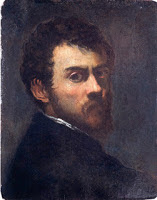
Tintoretto – painter

Dyer’s son whose work still adorns Venice

Renaissance artist Tintoretto died on this day in 1594 in Venice.  Known for his boundless energy, the painter was also sometimes referred to as Il Furioso.  His paintings are populated by muscular figures, make bold use of perspective and feature the colours typical of the Venetian school.  Tintoretto was an expert at depicting crowd scenes and mythological subjects and during his successful career received important commissions to produce paintings for the Scuola Grande di San Marco and the Scuolo Grande di San Rocco.  Tintoretto was born Jacopo Comin, the son of a dyer (tintore), which earned him the nickname Tintoretto, meaning 'little dyer'.  He was also sometimes known as Jacopo Robusti as his father had defended the gates of Padua against imperial troops in a way that was described as ‘robust’ at the time.  As a child, Tintoretto daubed on his father’s walls so the dyer took him to the studio of Titian to see if he could be trained as an artist.  Things did not work out and Tintoretto was quickly sent home.  Read more…

___________________________________

Andrew Grima - royal jeweller

Rome-born craftsman favoured by the Queen of England

The jewellery designer Andrew Grima, whose clients included the British Royal Family, was born on this day in 1921 in Rome.  Grima, whose flamboyant use of dramatically large, rough-cut stones and brilliant innovative designs revolutionised modern British jewellery, achieved an enviable status among his contemporaries.  After the Duke of Edinburgh had given the Queen a brooch of carved rubies and diamonds designed by Grima as a gift, he was awarded a Royal Warrant and rapidly became the jeweller of choice for London’s high society, as well as celebrities and film stars from around the world.  He won 13 De Beers Diamonds International Awards, which is more than any other jeweller, and examples of his work are kept by the Victoria and Albert Museum and the Worshipful Company of Goldsmiths.  When a private collection of Grima pieces was sold at auction by Bonhams in London in September 2017, some 93 lots realised a total of more than £7.6 million (€8.6m), with one pear-shaped blue diamond alone making £2.685m (€3.034m).  Grima’s father, John Grima, was the Maltese owner of a large international lace-making business.  Read more…

_____________________________________

Angelo Moriondo - espresso machine pioneer

Bar and hotel owner invented way to make coffee faster

Angelo Moriondo, the man credited with inventing the world’s first espresso coffee machine, died on this day in 1914 in Marentino, a town in Piedmont, about 20km (12 miles) east of Turin.  Moriondo, who was 62 when he passed away, was the owner of the Grand-Hotel Ligure in Turin’s Piazza Carlo Felice and the American Bar in the former Galleria Nazionale on Via Roma.  He came up with the idea of a coffee machine essentially in the hope of gaining an edge over his competition at a time when coffee was a hugely popular beverage across Europe and in Italy in particular, but which still depended on brewing methods that required the customer to wait five minutes or more to be able to raise a cup to his mouth.  Moriondo figured that if he could find a way to make multiple cups of coffee simultaneously he would be able to serve more customers more quickly. He hoped that word would then get round in Turin’s commercial district that his bars were the ones to go if the pressures of business did not allow time for leisurely breaks.  He never contemplated industrial-scale production of his invention, his ambitions never extending beyond the needs of his own businesses.  Read more…

EN - 728x90


Home


Paolo Sorrentino - film director

Seventh Italian director to win Best Foreign Film at Oscars

Paolo Sorrentino won an Oscar for La grande bellezza in 2014
Paolo Sorrentino won an Oscar for
La grande bellezza in 2014
The film director Paolo Sorrentino, whose 2013 movie La grande bellezza won the Academy Award for Best Foreign Film, was born on this day in 1970 in Naples.

The award put him in the company of Federico Fellini and Vittorio De Sica in landing the Oscar for Best Foreign Film, a prize that has been won by only seven Italian directors in the history of the Academy Awards.

Fellini scooped the honour four times and De Sica twice. The other successful Italian directors are Elio Petri, Giuseppe Tornatore, Gabriele Salvatores and Roberto Benigni.

La grande bellezza - released for English-speaking audiences as The Great Beauty - was the first Italian winner since Benigni’s Life is Beautiful was named as Best Foreign Film in 1998.

Sorrentino’s 2021 semi-autobiographical movie The Hand of God - È stata la mano di Dio in Italian - was nominated for an Oscar but missed out to the Japanese drama Drive My Car.

Lauded for combining an expansive visual style with a sensitivity for psychological subtleties in his films, Sorrentino was born in the Arenella district of Naples, a relatively prosperous neighbourhood atop the Vomero hill. 

His adolescence was overshadowed by a personal tragedy when he was 16, when both his parents died after a carbon monoxide leak at the ski lodge they owned in central Italy

Actor Toni Servillo in his role as
Jep Gambardella in La grande bellezza 
Their son may well have died with them but on the fateful April day in 1987 Sorrentino was still in Naples, having stayed behind to watch his idol, Diego Maradona, play for SSC Napoli at the Stadio San Paolo, where he was a season ticket holder.

Understandably, Sorrentino took a long time to come to terms with being orphaned. Eventually, he obtained a place studying economics and business at university in Naples, after which he chose a career in the film industry, making his debut as a screenwriter on Antonio Capuano’s 1998 comedy, The Dust of Naples.

His first full-length feature L'uomo in più - One Man Up - brought him immediate recognition as an emerging talent. The film was selected at the 2001 Venice Film Festival, gaining three nominations for the David di Donatello from the Academy of Italian Cinema and winning the Nastro d'Argento, awarded by Italian cinema journalists, Best First Time Director.

More awards followed for Le conseguenze dell'amore (2004), L'amico di famiglia (2006) and Il Divo (2008), his dramatised biopic of the controversial veteran politician, Giulio Andreotti. 

Sorrentino’s talents also extend to writing: his 2010 novel Hanno tutti ragione - Everybody’s Right - was shortlisted for the Premio Strega, Italy’s most prestigious literary prize.

It was La grande bellezza  that saw him join such illustrious names as Fellini and De Sica in the roll call of great Italian directors.

Sorrentino (second right) and the cast of La grande bellezza with president Giorgio Napolitano (right)
Sorrentino (second right) and the cast of La grande
bellezza with president Giorgio Napolitano (right) 
Set in Rome, La grande bellezza has been compared to Fellini’s masterpiece La dolce vita in that its central character is a journalist, Jep Gambardella, who has spent his life immersed in the superficiality of Roman society nightlife, a debonair figure whose one novel brought him a literary acclaim that was enough to sustain his fame for decades.

On his 65th birthday, he learns that the woman who was his first sweetheart has died, having confessed to her husband that Gambardella had been the only man she truly loved.  The shock causes him to take stock of his life, becoming melancholy about what he might have been had he done more than merely charm his way through an easy life of nightclubs, parties, and cafés. Ultimately, he finds a new appreciation for the timeless beauty of Rome and rediscovers himself.

In addition to the Oscar, La grande bellezza won 18 other awards around the world, including a BAFTA and a Golden Globe.

Although it missed out on the Oscar, The Hand of God, which takes its title from the famous description Maradona made of the contentious goal he scored with his fist against England in the 1986 World Cup, won the Grand Jury Prize at the Venice Film Festival.

The film contains many parallels with Sorrentino’s own life in that its central character is an adolescent whose life is rocked by personal tragedy, against the background of Naples in the 1980s, when the arrival of Maradona to play for SSC Napoli not only transformed the fortunes of the club but the city itself.

A mist-shrouded Vesuvius seen from the top of Vomero hill
A mist-shrouded Vesuvius seen
from the top of Vomero hill
Travel tip:

The Arenella district of Naples, where Sorrentino was born, borders Vomero, a largely residential area of central Naples with a number of buildings of historic significance. The most dominant, on top of Vomero Hill, is the large medieval fortress, Castel Sant'Elmo.  In front of the fortress is the Certosa San Martino, the former Carthusian monastery, now a museum.  The adjoining street, Largo San Martino, offers extraordinary views over the city towards Vesuvius.  Vomero's other tourist attraction is the Villa Floridiana, once the home of Ferdinand I, the Bourbon King of the Two Sicilies.  Surrounded by extensive gardens, the building now houses the Duke of Martina National Museum of Ceramics. 

Inside the Stadio Diego Armando Maradona in  Naples, which can house 60,000 spectators
Inside the Stadio Diego Armando Maradona in 
Naples, which can house 60,000 spectators
Travel tip:

The Stadio San Paolo - now renamed the Stadio Diego Armando Maradona - is Italy’s third largest football ground with a capacity of just over 60,000. Built in the Fuorigrotta neighbourhood on the north side of the city, it was completed in 1959, more than 10 years after work began and has since been renovated twice. The home of SSC Napoli, it was Maradona’s home stadium between 1984 and 1991, during which time the club won the Italian championship twice, having never before won the title in its history. The stadium hosted the 1990 World Cup semi-final, in which Maradona’s Argentina ended Italy’s hopes of reaching the final. 

Also on this day:

1594: The death of painter Tintoretto

1914: The death of Angelo Moriondo, inventor of the espresso coffee machine

1921: The birth of Andrew Grima, jeweller to the British Royal Family


Home