16 January 2022

16 January

NEW
- Mario Tobino – poet, novelist and psychiatrist

Doctor was torn between literature and his patients

The author and poet who was also a practising psychiatrist, Mario Tobino, was born on this day in 1910 in Viareggio in Tuscany.  Tobino was a prolific writer whose works dealt with social and psychological themes. His novel, Il clandestino, inspired by his experiences fighting as a partisan to liberate Italy in 1944, won him the Premio Strega, the most prestigious Italian literary award.  After completing his degree in medicine in 1936, Tobino embarked on a career working in a mental hospital, treating people with mental disabilities.  He went to work as a doctor in Libya in 1940 but had to flee when war broke out in the country. His experiences were recorded in his book, Il deserto della Libia, which was published in 1952.  In 1953, his novel, Libere donne di Magliano, established him as an important Italian writer. In 1972, another novel, Per le antiche scale won the Premio Campiello, an annual Italian literary award. Both novels were inspired by his experiences as a director of a psychiatric hospital at Maggiano, a suburb of Lucca.  His novel Il manicomio di Pechino, published in 1990, also drew on his medical experiences. Read more…

__________________________________________________________

Arturo Toscanini - conductor

Talented musician had unexpected career change

World famous orchestra conductor Arturo Toscanini died on this day in 1957.  He served as musical director of La Scala in Milan, the Metropolitan Opera in New York and the New York Philharmonic Orchestra.  Toscanini was a well-known musician in the late 19th and early 20th centuries, respected for his amazing musical ear and his photographic memory.  Towards the end of his career he became a household name as director of the NBC Symphony Orchestra because of the radio and television broadcasts and recordings he made.  Toscanini was born in Parma in 1867 and won a scholarship to his local music conservatory where he studied the cello.  He joined the orchestra of an opera company and while they were presenting Aida on tour in Rio de Janeiro the singers went on strike.  They were protesting against their conductor and demanded a substitute. They suggested Toscanini, who they were aware knew the whole opera from memory.  Although he had no previous conducting experience, he was eventually persuaded to take up the baton late in the evening. He led a performance of the long Verdi opera, entirely relying on his memory.  Read more…

_________________________________________________________

Count Vittorio Alfieri – playwright and poet

Romantic nobleman inspired the oppressed with his writing

Dramatist and poet Count Vittorio Alfieri was born on this day in 1749 in Asti in Piedmont.  He earned himself the title of ‘the precursor of the Risorgimento’ because the predominant theme of his poetry was the overthrow of tyranny and with his dramas he tried to encourage a national spirit in Italy. He has also been called ‘the founder of Italian tragedy.’  Alfieri was educated at the Military Academy of Turin but disliked military life and obtained leave to travel throughout Europe.  In France he was profoundly influenced by studying the writing of Voltaire, Rousseau and Montesquieu and in England he embarked on a doomed affair with an unsuitable woman.  When he returned to Italy in 1772 he settled in Turin and resigned his military commission.  Soon afterwards, he wrote a tragedy, Cleopatra, which was performed to great acclaim in 1775.  He decided to devote himself to literature and began a methodical study of the classics and of Italian poetry.  Since he expressed himself mainly in French, which was the language of the ruling classes in Turin, he went to Tuscany to familiarise himself with pure Italian.  Read more…

____________________________________________________________

Renzo Mongiardino - interior and set designer

Favourite of wealthy clients known as the ‘architect of illusion’

Lorenzo ‘Renzo’ Mongiardino, who became Italy’s leading classic interior designer and a creator of magnificent theatre and film sets, died in Milan on this day in 1998.  He was 81 years old and had never fully recovered from an operation the previous November to install a pacemaker.  Mongiardino, who was nominated for two Academy Awards for Best Art Direction during his career, worked on interior design for an international clientele that included the industrialist and art collector Baron Hans Heinrich Thyssen-Bornemisza, the business tycoons Aristotle Onassis and Gianni Agnelli, the former Russian prince Stanisław Albrecht Radziwiłł and his socialite wife Lee Radziwill, the fashion designer Gianni Versace, the Lebanese banker Edmond Safra, the Rothschild family and the Hearst family.  Nonetheless, he habitually rejected his reputation as the eminence grise of interior design. ''I'm a creator of ambiance, a scenic designer, an architect but not a decorator,'' he once said.  The only son of Giuseppe Mongiardino, a theatre impresario who introduced colour television to Italy, Mongiardino grew up in an 18th-century palazzo in Genoa.  Read more…

_________________________________________________________

Niccolò Piccinni – opera composer

Writer drawn into 18th century Paris rivalry

The composer Niccolò Piccinni, one of the most popular writers of opera in 18th century Europe, was born on this day in 1728 in Bari.  Piccinni, who lived mainly in Naples while he was in Italy, had the misfortune to be placed under house arrest for four years in his 60s, when he was accused of being a republican revolutionary.  He is primarily remembered, though, for having been invited to Paris at the height of his popularity to be drawn unwittingly into a battle between supporters of traditional opera, with its emphasis on catchy melodies and show-stopping arias, and those of the German composer Christoph Willibald Gluck, who favoured solemnly serious storytelling more akin to Greek tragedy.  Piccinni’s father was a musician but tried to discourage his son from following the same career. However, the Bishop of Bari, recognising Niccolò’s talent, arranged for him to attend the Conservatorio di Sant’Onofrio in Capuana in Naples.  He was a prolific writer. His first opera, a comedy entitled Le donne dispettose (The mischievous women) was staged at the Teatro dei Fiorentini in Naples in 1755.  Read more…

_________________________________________________________

Carlo Maria Viganò - controversial archbishop

Former papal ambassador who shocked Catholic Church

Carlo Maria Viganò, the controversial former Apostolic Nuncio to the United States who was twice at the centre of serious corruption allegations against the Vatican, was born on this day in 1941 in Varese, northern Italy.  Viganò, who had occupied one of the most powerful positions in the Vatican before Pope Benedict XVI set him to be his ambassador in Washington in 2011, was a key figure in the so-called Vatileaks scandal in 2012 when the Italian journalist Gianluigi Nuzzi published leaked documents that included letters from Viganò to Pope Benedict and to the Vatican secretary of state Cardinal Tarcisio Bertone complaining of corruption in the awarding of contracts.  The subsequent scandal resulted in the conviction of Benedict’s former butler, Paolo Gabriele, who was found guilty of theft by a Vatican court and handed an 18-month prison sentence.  Viganò’s 2011 allegations pale, however, alongside the extraordinary 11-page document he published seven years later, in which he claimed that high-ranking church officials were implicated in a cover-up surrounding sexual abuse allegations against former Cardinal Theodore McCarrick.  Read more…
EN - 728x90


Home


Mario Tobino – poet, novelist and psychiatrist

Doctor was torn between literature and his patients

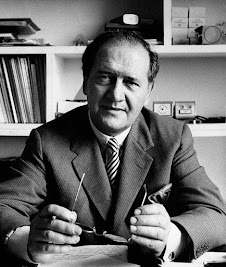
Tobino combined his work in mental health with a literary career
Tobino combined his work in mental
health with a literary career
The author and poet who was also a practising psychiatrist, Mario Tobino, was born on this day in 1910 in Viareggio in Tuscany.

Tobino was a prolific writer whose works dealt with social and psychological themes. His novel, Il clandestino, inspired by his experiences fighting as a partisan to liberate Italy in 1944, won him the Premio Strega, the most prestigious Italian literary award.

After completing his degree in medicine in 1936, Tobino embarked on a career working in a mental hospital, treating people with mental disabilities.

He went to work as a doctor in Libya in 1940 but had to flee when war broke out in the country. His experiences were recorded in his book, Il deserto della Libia, which was published in 1952.

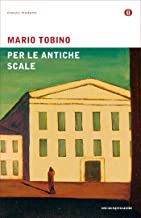
In 1953, his novel, Libere donne di Magliano, established him as an important Italian writer. In 1972, another novel, Per le antiche scale won the Premio Campiello, an annual Italian literary award. Both novels were inspired by his experiences as a director of a psychiatric hospital at Maggiano, a suburb of Lucca.

His novel Il manicomio di Pechino, published in 1990, also drew on his medical experiences, his relationships with his patients and his personal dilemma as an individual divided by his allegiance to his profession and his passion for literature.

Per le antiche scale won
the Premio Campiello
Tobino’s strong attachment to his native region of Tuscany is another recurrent motif in his work. He published Gli ultimi giorni di Magliano followed by La ladra in 1984 and Tre amici in 1988. He received the Premio Pirandello on 10 December 1991 in Agrigento and died the next day, aged 81.

He began working in 1942 as a doctor at the mental hospital of Lucca on the outskirts of  the city at Maggiano, where he was to remain for the next 40 years. The hospital, known as Spedale per I Pazzi, was founded by the republic of Lucca in the second half of the 18th century and is thought to be the oldest mental hospital in Italy. It was also in 1942 that Tobino met Paola Olivetti, who was to be his life-long companion.

The Mario Tobino Foundation, based at the site of the former hospital in Via Fregionaia, which was closed in 1999, was created in 2006 to preserve and develop the important cultural heritage of his work as a writer and psychiatrist. The Foundation also aims to promote the regional and national debate about the future of psychiatric help.

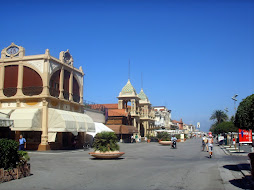
Viareggio's sea front is famed for its Liberty-style architecture
Viareggio's sea front is famed for its
Liberty-style architecture
Travel tip:

Viareggio, where Mario Tobino was born, is a popular seaside resort in Tuscany with excellent sandy beaches and some beautiful examples of Liberty-style architecture. The remains of the English poet Shelley, who drowned at sea, were washed up on a beach near the resort in 1822. They were identified because of the volume of poetry by John Keats found in his pocket and he was cremated on the beach under the supervision of his friend, the poet Lord Byron. There is a monument to Shelley in Piazza Paolina in Viareggio.

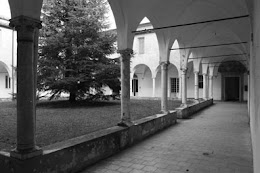
The hospital complex retained some  features of the monastery
The hospital complex retained some 
features of the monastery
Travel tip:

The Spedale per I Pazzi, where Mario Tobino worked, was formed in 1773 at Maggiano after the Republic of Lucca had put forward a request to Pope Clement to suppress the Monastery of the Lateran Canons of Santa Maria of Fregionaia. The monastery was then adapted for the care of mental patients and was officially opened on 20 April 1773. The day after, the first 11 patients were transferred from Carcere Cittadino della Torre, the city’s Tower prison.


Also on this day:

1728: The birth of composer Niccolò Piccinni

1749: The birth of dramatist and poet Count Vittorio Alfieri

1941: The birth of controversial archbishop Carlo Maria Viganò

1957: The death of conductor Arturo Toscanini

1998: The death of interior and set designer Renzo Mongiardino


Home


15 January 2022

15 January

Paolo Vaccari - rugby player

Italy’s second all-time highest try scorer

The rugby player Paolo Vaccari, who scored 22 tries for the Italian national team in a 64-cap career, was born on this day in 1971 in Calvisano, a town in Lombardy about 30km (19 miles) southeast of Brescia.  A versatile back equally adept at wing, centre or full-back, Vaccari was regarded as a strong defender and an intelligent and technically-sound back who frequently created scoring opportunities for players around him.  Although he was good enough to be selected for the renowned Barbarians invitational XV against Leicester Tigers in 1998, he played all his domestic rugby in Italy, enjoying great success.  He won the double of Italian Championship and Cup with Milan Rugby in 1994-95 and was a title-winner for the second time with his home club Calvisano 10 years later, during a run in which Calvisano reached the Championship final six years in a row, from 2001-06.  Vaccari had won his second Italian Cup medal with Calvisano in 2003-04.  In international rugby, his proudest moment was undoubtedly scoring Italy’s fourth try in their historic 40-32 victory over reigning Five Nations champions France in the final of the FIRA Cup in Grenoble in 1997.  Read more…

_________________________________________________________

Paolo Sarpi – writer and statesman

Patriotic Venetian who the Pope wanted dead

Historian, scientist, writer and statesman Paolo Sarpi died on this day in 1623 in Venice.  He had survived an assassination attack 16 years before and was living in seclusion, still preparing state papers on behalf of Venice, writing, and carrying out scientific studies.  The day before his death he had dictated three replies to questions about state affairs of the Venetian Republic.  He had been born Pietro Sarpi in 1552 in Venice. His father died while he was still a child and he was educated by his uncle, who was a school teacher, and then by a monk in the Augustinian Servite order.  He entered the Servite order himself at the age of 13, assuming the name of Fra Paolo. After going into a monastery in Mantua, he was invited to be court theologian to Duke Guglielmo Gonzaga.  He then went to Milan, where he was an adviser to Charles Borromeo, the archbishop of Milan, before being transferred back to Venice to be professor of philosophy at the Servite convent.  At the age of 27, Sarpi was sent to Rome, where he interacted with three successive popes. He then returned to Venice, where he spent 17 years studying.  Read more…

__________________________________________________________

Gigi Radice - football coach

Former Milan player steered Torino to only title in 73 years

Luigi 'Gigi' Radice, the only coach to have won the Italian football championship with Torino in the 73 years that have elapsed since the Superga plane crash wiped out the greatest of all Torino teams, was born on this day in 1935 in Cesano Maderno, near Monza, some 24km (15 miles) north of Milan.  An attacking full-back with AC Milan, where he won the Scudetto three times and was a member of the team that won the 1962-63 European Cup, Radice made five appearances for Italy, including two at the 1962 World Cup finals in Chile.  He switched to coaching in 1965 after a serious knee injury ended his playing career prematurely and achieved immediate success with his local club, Monza, whom he guided to promotion as champions in Serie C.  After leading Cesena to promotion to Serie A for the first time in the Emilia-Romagna club's history in 1972-73 Radice had spells with Fiorentina and Cagliari before Torino owner Orfeo Pianelli hired him in 1975.    Torino had finished third in 1971-72 and in the top six in each of the following three seasons but were not close to breaking the dominance of city rivals Juventus.  Read more…

____________________________________________________________

Giambattista De Curtis – songwriter and artist

Talented Neapolitan became captivated with the beauty of Sorrento

Writer, painter and sculptor Giambattista De Curtis died on this day in 1926 in Naples.  A talented poet and playwright, he also wrote the lyrics for many popular songs.  He is perhaps best known for the song Torna a Surriento, although the English words that have now become famous differ from the original verses for the song that he wrote in Neapolitan dialect.  De Curtis is believed to have written the words for Torna a Surriento while on the terrace of the Imperial Hotel Tramontano in 1902, gazing out at the sea whose beauty he was praising.  De Curtis lived for weeks at a time in the hotel and painted frescoes and canvases to decorate the walls for the owner, Guglielmo Tramontano, who was also Mayor of Sorrento at the time.  One theory is that De Curtis was asked to write the song to mark the stay at the hotel of Italian Prime Minister Guiseppe Zanardelli.  But another school of thought is that he had already written the words to accompany the beautiful music written by his brother, Ernesto, a few years earlier and that he revived it for the occasion.  Torna a Surriento has often been performed and recorded with its original words, sung by such great performers as Giuseppe Di Stefano and Luciano Pavarotti.  Read more…


Home


14 January 2022

14 January

Giulio Andreotti - political survivor

Christian Democrat spent 45 years in government

Giulio Andreotti, who was Italy's most powerful politician for a period lasting almost half a century,  was born on this day in 1919 in Rome.  He was a member of almost every Italian government from 1947 until 1992, leading seven of them.  He would have certainly gone on to be president were it not for the scandals in which he became embroiled in the 1990s, when his Christian Democrat party collapsed as a result of the mani pulite - clean hands - bribery investigations.  Andreotti himself was accused of an historic association with the Mafia and of commissioning the murder of a journalist, although he was acquitted of the latter charge on appeal.  The youngest of three children, Andreotti was brought up in difficult circumstances by his mother after his father, who had taught at a junior school in Segni, about 60km (37 miles) south-east of the capital in Lazio, had died when he was only two years old.  In contrast with the unassuming, mild-mannered persona for which he became known as an adult, the young Andreotti had a fiery temper.  On one occasion, in church, he attacked another altar boy, stubbing out a lit taper in his eye after feeling he had been ridiculed.  Read more…

_________________________________________________________

Nina Ricci – designer

Creative flair of Italian-born founder of famous fashion house

The prestigious fashion designer Nina Ricci was born Maria Nielli in Turin on this day in 1883.  Her designs enabled her to build a reputation for graceful, feminine clothes. Ricci was a near-contemporary of Gabrielle "Coco" Chanel but in many ways they were polar opposites in that Ricci was neither a public personality nor a headline‐making designer.  Maria moved with her family to live in Florence at the age of five and then went to live with them in France when she was 12.  Her interest in fashion had begun in childhood, when she would dress her dolls. At the age of 13, having acquired the nickname Nina, she began working as a dressmaker’s apprentice.  She continued working in fashion, eventually joining the house of Raffin as a designer.  In 1904 she married an Italian jeweller named Luigi Ricci and they later had a son, Robert.  The house of Nina Ricci was founded in Paris in 1932. Nina became famous for her romantic, feminine, creations, which she created with the help of "live" models rather than mannequins. Her son, Robert, later joined her in the venture, helping her manage the business side. She was one of the first Paris designers to produce versions of her creations to sell through her boutique at prices that made them more accessible to ordinary women.  Read more…

________________________________________________________

Alberico Gentili – international lawyer

Academic gave the world its first system of jurisprudence

Alberico Gentili, who is regarded as one of the founders of the science of international law, was born on this day in 1552 in San Ginesio in the province of Macerata in Marche.  He was the first European academic to separate secular law from Roman Catholic theology and canon law and the earliest to write about public international law.  He became Regius Professor of Civil Law at the University of Oxford in England and taught there for 21 years.  Gentili graduated as a doctor of civil law in 1572 from the University of Perugia but was exiled from Italy in 1579 and eventually went to live in England because he became a Protestant.  He taught at Oxford from 1581 until his death in 1608 and became well-known for his lectures on Roman law and his writing on legal topics.  In 1588 Gentili published De jure belli commentatio prima - First Commentary on the Law of War. This was revised in 1598 to become Three Books on the Law of War, which contained a comprehensive discussion on the laws of war and treaties.  Gentili believed international law should comprise the actual practices of civilised nations, tempered by moral, but not specifically religious, considerations.  Read more…

_________________________________________________________

Franchino Gaffurio – composer

Musician whose name has lived on for centuries in Milan

Renaissance composer Franchino Gaffurio was born on this day in 1451 in Lodi, a city in Lombardy some 40km (25 miles) southeast of Milan.  He was to become a friend of Leonardo da Vinci later in life and may have been the person depicted in Leonardo’s famous painting, Portrait of a Musician.  The oil on wood painting, which Da Vinci is thought to have completed in around 1490, is housed in the Biblioteca Ambrosiana in Milan. Gaffurio was born into an aristocratic family, who sent him to a Benedictine monastery, where he acquired musical training.  He later became a priest and lived in Mantua and Verona before settling in Milan, where he became maestro di cappella (choirmaster) at the Duomo in 1484. He was to retain the post for the rest of his life.  Gaffurio was one of Italy’s most famous musicians in the late 15th and early 16th centuries and as such met composers from all over Europe while working in Milan and wrote books of instruction for young composers.  One of his most famous comments was that the tactus, the tempo of a semibreve, is equal to the pulse of a man who is breathing quietly, at about 72 beats per minute.  Read more…

________________________________________________________

Luca Longhi - artist

‘Quiet’ painter trained his children to be follow in his footsteps

Luca Longhi, a portrait painter also known for his beautiful religious paintings who was working during the late Renaissance and Mannerist periods, was born on this day in 1507 in Ravenna in Emilia-Romagna.  He was the father of the painters Francesco Longhi and Barbara Longhi, who were both trained by him and worked in his workshop.  Little is known about Luca Longhi’s own artistic training, but it is thought he probably attended the Ravenna workshops of local artists Francesco Zaganelli and his brother, Bernardino Zaganelli.  The painter and art historian Giorgio Vasari visited Ravenna in 1548 and wrote about "Master Luca de Longhi" in his book, The Lives of the Artists. He says: “Luca de Longhi is a man of good nature, quiet and (a) scholar (who) has done in his homeland Ravenna, and outside, many beautiful oil pictures and portraits. He has done and still works with patience and study.”  Longhi painted the portraits of many famous and important people of his time, including Giovanni Guidiccione, Bishop of Fossombrone, Giulio della Rovere, Cardinal of Urbino, Alessandro Sforza, Cardinal legate of Romagna and Cristoforo Boncompagni, Archbishop of Ravenna.  Read more…


Home