4 August 2022

4 August

Giovanni Spadolini - politician

The first non-Christian Democrat to lead Italian Republic

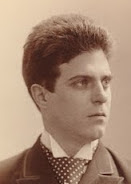
Giovanni Spadolini, who was the Italian Republic’s first prime minister not to be drawn from the Christian Democrats and was one of Italy's most respected politicians, died on this day in 1994.  In a country where leading politicians and businessmen rarely survive a whole career without becoming embroiled in one corruption scandal or another, he went to the grave with his reputation for honesty intact.  Although he was an expert on Italian unification and became a professor of contemporary history at the University of Florence when he was only 25, a background that gave him a deep knowledge of Italian politics, he first built a career as a journalist.  He became a political columnist for several magazines and newspapers, including Il Borghese, Il Mondo and Il Messaggero, and was appointed editor of the Bologna daily II Resto del Carlino in 1955, at the age of 30.  In 1968, having doubled Il Resto’s circulation, he left Bologna to become the editor at Corriere della Sera, in Milan, where he remained until 1972.  It was while editing the Corriere that he became known for his anti-extremist stance, condemning violent student activists on the left and terrorists on the right in equal measure.  Read more…

_____________________________________

Lorenzo di Pierfrancesco de’ Medici - banker

Art enthusiast who was Botticelli’s major patron

The Florentine banker and politician Lorenzo di Pierfrancesco de’ Medici, who was a significant figure in Renaissance art as the main sponsor and patron of the painter Sandro Botticelli, was born on this day in 1463.  The great-grandson of Giovanni di Bicci de’ Medici, the founder of the Medici bank, Lorenzo di Pierfrancesco belonged to the junior, sometimes known as ‘Popolani’ branch of the House of Medici.  In 1476, when he and his brother, Giovanni, were still boys, their father, Pierfrancesco de’ Medici the Elder, died. They became wards, effectively, of their cousin, Lorenzo il Magnifico - Lorenzo the Magnificent - a member of the senior branch of the family and the effective ruler of Florence.  Relations between the two branches had been tense for some years and were not helped when Lorenzo di Pierfrancesco discovered, on becoming an adult, that Lorenzo had plundered a considerable sum from he and his brother’s joint inheritance in order to stave off a threatened bankruptcy of the family’s financial empire.  Although Lorenzo had provided the boys with the best education money could buy - the notable Florentine Renaissance humanists Marsilio Ficino, Angelo Poliziano and Giorgio Antonio Vespucci (uncle of Amerigo) were among their tutors - and given them a number of properties in compensation, the incident created a lingering bitterness.  Read more…

_____________________________________

Pope Urban VII

Pope for just 12 days but introduced world's first smoking ban

Pope Urban VII was born Giovanni Battista Castagna on this day in 1521 in Rome.  Although his 12-day papacy in 1590 was the shortest in history, he is remembered as being the first person in the world to declare a ban on smoking.  He was against the use of tobacco generally, threatening to excommunicate anyone who ‘took tobacco in the porchway of, or inside a church, whether it be by chewing it, smoking it with a pipe, or sniffing it in powdered form through the nose’.  The ban is thought to have been upheld for the most part until 1724, when Pope Benedict XIII, himself a smoker, repealed it.  Castagna was the son of a nobleman of Genovese origin and studied in universities all over Italy. He obtained a doctorate in civil law and canon law from the University of Bologna.  He served as a constitutional lawyer to Pope Julius III and was then ordained a priest.  He took part in the Council of Trent and then served as an apostolic nuncio in Spain for four years.  Castagna was also Governor of Bologna, apostolic nuncio to Venice and then Papal Legate to Flanders and Cologne.  He is remembered for his charity to the poor.  Read more…

EN - 728x90


Home


3 August 2022

3 August

Antonio da Sangallo the Younger - architect

Talented Florentine was commissioned by the Popes

Antonio da Sangallo the Younger, who left his mark on Rome during the Renaissance, died on this day in 1546 in Terni in Umbria.  Sangallo was the chief architect on St Peter’s Basilica from 1520 onwards and built many other beautiful churches and palaces in the city and throughout the Papal States.  He was born Antonio Cordiani in Florence in 1484. His grandfather had been a woodworker and his uncles, Giuliano and Antonio da Sangallo, were architects.  The young man followed his uncles to Rome to pursue a career in architecture and ended up taking the name Sangallo himself.  He became an assistant to Donato Bramante and started by preparing sketches for his master.  Recognising his talent, Bramante gave Sangallo projects to complete with no more than an outline of the design and motifs.  Sangallo’s first major commission was for the Church of Santa Maria di Loreto in 1507.  He came to the attention of Cardinal Alessandro Farnese, who later became Pope Paul III, and was commissioned to design the Farnese Palace in Piazza Farnese and a palace and church in the Cardinal’s home town of Gradoli.  Read more…

_____________________________________

Imperia Cognati - courtesan

Prostitute who became a celebrity

Imperia Cognati, who acquired celebrity status in Rome in the early 16th century as a courtesan to a number of rich and powerful figures, was born on this day in 1486.  Courtesans were originally the female companions of courtiers of the papal court, whose duties required them to be educated and familiar with etiquette, so that they could participate in the formalities of court life and take part in polite conversation.  In time, however, in some cases their companionship became of a more intimate nature and they became the mistresses of their courtiers, who in the papal court were clerics not permitted to marry.  It was common, too, for courtesans to be the companions of several clients simultaneously.  They were in effect a new class of prostitute, refined and educated enough to hold their own in polite society.  Imperia Cognati acquired her elevated status mainly through being the chosen companion of Agostino Chigi, a Sienese banker closely associated with Pope Alexander VI and others and a patron of the Renaissance.  At one time he was thought to be the richest banker in the world.  He lavished Imperia – as she was usually known – to the extent that she could afford to keep both a palace in Rome and a country villa.  Read more…

___________________________________

Francesco Ferruccio - military leader

Florentine soldier celebrated in Italy’s national anthem 

Francesco Ferruccio, the military leader whose heroic attempt to defend Florence against the powerful army of the Holy Roman Empire is recalled in Italy’s national anthem, died on the battlefield on this day in 1530.  A Florentine by birth, Ferruccio had been charged with leading the army of the Republic of Florence as the city came under attack during the War of the League of Cognac, when the Pope Clement VII connived with the emperor Charles V to overthrow the republic and restore power in Florence to his own family, the Medici.  Despite being outnumbered, Ferruccio’s soldiers engaged the Imperial forces at Gavinana, just outside Florence, killed their leader and drove them back, only for the enemy to be reinforced by the arrival of 2,000 German mercenaries under the leadership of the condottiero, Fabrizio Maramaldo.  His army almost annihilated, Ferruccio was taken prisoner and, despite being wounded, was stabbed in the throat by Maramaldo and bled to death, an act considered against the code of chivalrous conduct that honourable soldiers were expected to observe.  More than 300 years later, Goffredo Mameli, the poet and patriot, recalled Ferruccio in the lyrics of a song, Il Canto degli Italiani, that would later be adopted as the national anthem of the united Italy.  Read more...

_____________________________________

La Scala - opera and ballet theatre

First night at the world’s most famous opera house

Milan’s Teatro alla Scala was officially inaugurated on this day in 1778.  Known to Italians simply as La Scala, the theatre has become the leading opera house in the world and many famous artists have appeared there. A fire had destroyed the Teatro Regio Ducale, which had previously been the home of opera in Milan. A group of 90 wealthy patrons, the owners of private boxes in the theatre, wrote to Archduke Ferdinand of Austria-Este asking that a new theatre be built.  The new theatre was built on the site of the former Church of Santa Maria alla Scala, which is how the theatre got its name. The church was deconsecrated and demolished to make way for the theatre.  With the cost of the project met by the 90 patrons, who paid in advance for boxes, the new theatre was designed by neoclassical architect Giuseppe Piermarini and at the official opening on 3 August 1778, Antonio Salieri’s opera L’Europa riconosciuta was premiered.  As with most theatres at the time, the main floor had no seats, with audience members standing to watch the performances. This had the effect of making the theatre a meeting place, but also a venue for business dealings. Read more…


Home


2 August 2022

2 August

NEWCarlo Savina - film composer and musical director

Worked on major scores including The Godfather and Fellini’s Amarcord

Musical director Carlo Savina, who arranged soundtracks written by such luminaries of the film music industry as Ennio Morricone and Nino Rota, was born on this day in 1919 in Turin.  Savina was also a prolific film composer in his own right and is credited with writing or arranging the scores of at least 200 movies in a career spanning more than 35 years. He won a David di Donatello award for Best Music for the 1985 crime drama The Pizza Connection, directed by Damiano Damiani and starring Michele Placido, a version of which was released in the United States as The Sicilian Connection.  Yet Savina is more frequently remembered for his work with Rota on the multi-award winning soundtrack of the first film in Francis Ford Coppola’s The Godfather trilogy in 1972 and with Federico Fellini the following year on Amarcord, the maestro’s semi-autobiographical film about growing up in a village in the Fascist Italy of the 1930s.  He worked with Fellini and Rota on many projects, including La Dolce Vita (1960), which remains their most famous collaboration.  Read more…

___________________________________

Pietro Mascagni – composer

One opera was enough to build reputation of musician

Pietro Mascagni, the creator of the opera Cavalleria rusticana, died on this day in 1945 in Rome, at the age of 81.  Cavalleria rusticana was an outstanding success when it was first performed in Rome in 1890 and was said to have single-handedly brought the Verismo movement, in which the characters were ordinary people rather than gods, mythological figures or kings and queens, into Italian opera.  The beautiful intermezzo from the opera was used in the soundtrack of the 1980 film Raging Bull and a production of the opera was used as the setting for the climax of the 1990 film The Godfather Part III, with Michael Corleone’s son Anthony playing Turridu, the opera’s male protagonist. The film ends with the intermezzo playing.  In 2001 Andrea Bocelli recorded a song entitled Mascagni on his Cieli di Toscana album and had an excerpt from Cavalleria rusticana incorporated into the music.  The opera has been so successful that it has led to Mascagni sometimes being dismissed as a one-opera composer, but, in fact, the composer wrote 15 operas, as well as orchestral and piano music and songs.  Read more…

____________________________________

Bologna railway station bombed

Biggest terrorist atrocity in Italy's history killed 85

Italy suffered the most devastating terrorist outrage in its history on this day in 1980 with the bombing of Bologna's main railway station.   A massive 23kg (51lbs) of explosive packed into a suitcase left in a crowded waiting room was detonated at 10.25am, creating a blast that destroyed much of the main building of the station and badly damaged a train on one of the platforms.  Many people, locals and tourists, Italians and foreign nationals, were caught up in the explosion. Some were killed instantly, others died as a result of the roof of the waiting room collapsing on to the victims. There were 85 deaths and more than 200 other people were wounded.  The bomb was clearly placed to cause mass casualties. It was the first Saturday in the traditional August holiday period, one of the busiest days of the year for rail travel, and the explosive-laden suitcase was left in a room with air conditioning, then still relatively rare in Italy. On a hot day, the room was naturally full of people.  The attack was the deadliest of several during a bleak period of 10-12 years in Italian history that became known as the Years of Lead, when the ideological struggle between the left and right in Italian politics was at its height.  Read more…

______________________________________

Francis Marion Crawford – author

Novelist found inspiration while living in Sorrento

The American writer Francis Marion Crawford was born on this day in 1854 in Bagni di Lucca in Tuscany.  A prolific novelist, Crawford became known for the vividness of his characterisations and the realism of his settings, many of which were places he had visited in Italy.  He chose to settle in later life in the coastal resort of Sorrento in Campania where he even had a street named after him, Corso Marion Crawford.  Crawford was the only son of the American sculptor, Thomas Crawford. He spent his childhood going backwards and forwards between Italy and America and studied at various American and European Universities.  He spent some time in India where he found the inspiration for his first successful novel, Mr Isaacs, which was published in 1882.  In 1883 he returned to Italy to settle there permanently. He lived at the Hotel Cocumella in the village of Sant’Agnello just outside Sorrento to begin with. He then bought a nearby farmhouse, from which he developed the Villa Crawford, an impressive clifftop residence easily identifiable from the sea by the tall buttresses Crawford added as a safeguard against erosion.  Read more…


Home


Carlo Savina - film composer and musical director

Worked on major scores including The Godfather and Fellini’s Amarcord

Carlo Savina conducting in during his  time working in TV and radio in the 1950s
Carlo Savina conducting in during his 
time working in TV and radio in the 1950s
Musical director Carlo Savina, who arranged soundtracks written by such luminaries of the film music industry as Ennio Morricone and Nino Rota, was born on this day in 1919 in Turin.

Savina was also a prolific film composer in his own right and is credited with writing or arranging the scores of at least 200 movies in a career spanning more than 35 years.

He won a David di Donatello award for Best Music for the 1985 crime drama The Pizza Connection, directed by Damiano Damiani and starring Michele Placido, a version of which was released in the United States as The Sicilian Connection.

Yet Savina is more frequently remembered for his work with Rota on the multi-award winning soundtrack of the first film in Francis Ford Coppola’s The Godfather trilogy in 1972 and with Federico Fellini the following year on Amarcord, the maestro’s semi-autobiographical film about growing up in a village in the Fascist Italy of the 1930s.  He worked with Fellini and Rota on many projects, including La Dolce Vita (1960), which remains their most famous collaboration.

Although the music in a film would always be attributed to the headline composer in the credits, the work done by the likes of Savina in matching their music to the scenes and in producing an edited version of the soundtrack for commercial release was invaluable.

Savina came from a musical family. His father was the first clarinet for the orchestra of the public radio broadcaster EIAR, based in their home city.

Savina, who played a wide range of instruments, is shown accompanying a vocal group on guitar
Savina, who played a wide range of instruments,
is shown accompanying a vocal group on guitar
As a child, Savina learned to play the violin and as a student attended the Giuseppe Verdi Conservatory in Turin, where he studied piano, violin, composition, and conducting. He obtained further qualifications from the National Education Ministry in the 1940s.

Savina explored many avenues in music, for a while conducting small orchestras or playing soloists at dance halls in Turin. 

His early classical compositions included sonatas for clarinet and violin and a quartet for wind instruments. Savina also wrote a small number of operas, one of which was performed at the Teatro dei Rozzi in Siena.

Immediately after the Second World War, he wrote music and songs for the popular market.  In the 1950s, he began to acquire national fame through his work with the national broadcaster Rai, who entrusted him with the direction of a large string orchestra. He had a prominent role in the musical direction on the experimental programmes made for Rai’s early television output in 1953.

Savina was in his 30s before the film industry began to be his focus.  His relationship with some of the world’s most famous film music composers  began at the outset, when he composed the music to Carlo Borghesio’s 1950 comedy Il monello della strada (The Street Brat) in partnership with Rota.

Savina worked with Nino Rota on The Godfather and other titles
Savina worked with Nino Rota
on The Godfather and other titles
He worked with the great commedia all’italiana director Mario Monicelli on Totò cerca pace (Totò seeks peace) in 1954 and thereafter until the late 1960s was writing as many as a dozen soundtracks per year. His individual output, from spaghetti westerns, of which he scored more than 30, to horror films, began to lessen in the 1970s, but by then he was in demand to work with other composers.

As well as Morricone and Rota, he collaborated with Armando Trovajoli, Mario Nascimbene, Stanley Myers, Stephen Sondheim, Philippe Sarde, and Miklós Rózsa among the great big-screen music composers of his time.  

It was his relationship with Rota and Fellini that would prove the most enduring and successful, spanning almost 30 years until Rota’s death in 1979. Their last collaboration was on Fellini’s Orchestra Rehearsal, a 1978 film in which members of an orchestra go on strike against their conductor.

Savina, who wrote under various pseudonyms in his career, including Herbert Buckman, Charles Hanger and James Munshin, died in Rome in 2002 at the age of 82.

After his death, the Centro Sperimentale di Cinematografia, Rome’s historic film school, established the Premio Carlo Savina as an annual prize for composers of film music. Winners include Morricone, Davide Cavuti and Franco Piersanti, who among other things wrote the music for the TV series based on Andrea Camilleri’s Inspector Montalbano novels.

Elegant streets and a vibrant café culture are a feature of Turin
Elegant streets and a vibrant café
culture are a feature of Turin
Travel tip:

Turin, the capital city of the region of Piedmont, where Carlo Savina was born and grew up, has some fine architecture that illustrates its rich history as the home of the Savoy Kings of Italy. Piazza Castello, with the royal palace, royal library and Palazzo Madama, which used to house the Italian senate, is at the heart of ‘royal’ Turin.  An elegant, stylish and sophisticated city, Turin has much to commend it, from its many historic cafés to 12 miles of arcaded streets and some of the finest restaurants in Piedmont. In the 19th century, the city’s cafés were popular with writers, artists, philosophers, musicians and politicians among others, who would meet to discuss the affairs of the day.  The city’s duomo, the Cattedrale di San Giovanni Battista, as it is also known, was built between 1491 and 1498 in Piazza San Giovanni in Turin, on the site of an old Roman theatre.

The Centro Sperimentale di Cinematogrofia in Rome was established in the 1930s
The Centro Sperimentale di Cinematogrofia
in Rome was established in the 1930s
Travel tip:

The Centro Sperimentale di Cinematografia has its headquarters in Via Tuscolana in Rome, was established at the time when the city became the hub of the Italian film industry because of the nearby Cinecittà, a large studio complex to the south of the city, built during the Fascist era under the personal direction of Benito Mussolini and his son, Vittorio. The studios were bombed by the Allies in the Second World War but were rebuilt and used again in the 1950s for large productions, such as Ben-Hur, the 1959 epic starring Charlton Heston, the acclaimed soundtrack of which saw Carlo Savina work with the Hungarian-American composer Miklós Rózsa. These days a range of productions, from television drama to music videos, are filmed there and Cinecittà has its own dedicated Metro stop.

Also on this day:

1854: The birth of author Francis Marion Crawford

1945: The death of composer Pietro Mascagni

1980: The bombing of Bologna railway station


Home