11 July 2025

11 July

NEW
- The founding of Fiat

The investors and aristocrats who created giant of car industry

A group of nine Italian investors and aristocrats met at the Palazzo Cacherano di Bricherasio in Turin on July 11, 1899 to found the automobile company Fabbrica Italiana Automobili Torino - Fiat, as it would become known.  The group were brought together by Emanuele Cacherano di Bricherasio, a wealthy nobleman and entrepreneur, and his fellow entrepreneur Cesare Goria Gatti, who were founder members of the Automobile Club of Italy.  In addition to Bricherasio and Gatti, the nine consisted of two other nobleman, Count Roberto Biscaretti di Ruffia and the Marquis Alfonso Ferrero de Gubernatis Ventimiglia, the banker and silk industrialist Michele Ceriana Mayneri, the lawyer Carlo Racca, the landowner Lodovico Scarfiotti, the stockbroker Luigi Damevino and the wax industrialist Michele Lanza. Read more…

_______________________________________
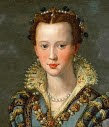
Eleonora di Garzia di Toledo - noblewoman

The shocking fate of Medici wife

The beautiful wife of Don Pietro de' Medici, Eleonora di Garzia di Toledo, was strangled to death with a dog lead on July 11, 1576 in a villa near Barberino di Mugello in Tuscany.  The murder was carried out by her husband, Pietro, but he was never brought to justice. His brother, Francesco, the Grand Duke of Tuscany, gave out as the official line that his sister-in-law had died as a result of an accident.  Eleonora, who was more often referred to as Leonora, was born in Florence in 1553, the daughter of Garcia Alvarez di Toledo and Vittoria d’Ascanio Colonna. Her father and mother were living in Florence at the time because Garcia was in charge of the castles of Valdichiana.  When her mother died a few months later, Leonora, was left in the care of her aunt, Eleonora, Duchess of Florence, and her husband, the Grand Duke Cosimo I de' Medici. Read more… 

__________________________________________

Giuseppe Arcimboldo – painter

Portraits were considered unique in the history of art

The artist Giuseppe Arcimboldo, who created imaginative portrait heads made up entirely of objects such as fruit, vegetables, flowers and fish, died on this day in 1593 in Milan.  Unique at the time, Arcimboldo’s work was greatly admired in the 20th century by artists such as Salvador Dali and his fellow Surrealist painters.  Giuseppe’s father, Biagio Arcimboldo, was also an artist and Giuseppe followed in his footsteps designing stained glass and frescoes for churches.  Arcimboldo (sometimes also known as Arcimboldi) at first painted entirely in the style of the time. His beautiful fresco of the Tree of Jesse can still be seen in the Duomo of Monza.  But in 1562 he abruptly changed his style after moving to Prague. He began to create human heads, which could be considered as portraits, made up of pieces of fruit and vegetable and other objects. Read more… 

EN - 728x90


Antoninus Pius - Roman Emperor

Hadrian’s adopted son presided over 23 years of peace

Antoninus Pius, the fourth of the so-called Five Good Emperors who ruled the Roman Empire between 96 and 180 AD, assumed power on this day in 138 following the death of Hadrian at his villa outside Naples the previous day.  As well as being notable for peace and stability, his reign was one of well-run administration, support for education and public works projects including expanded free access to drinking water in all parts of the empire. He was seen as a wise and benevolent ruler who made the well-being of his subjects a priority, an example being the attention he gave to ensuring freed slaves were given the full rights of citizenship.  Antoninus instigated legal reforms, built temples and theatres, was an active promoter of the arts and sciences, and rewarded the teachers of rhetoric and philosophy in particular with honours and financial incentives.  Read more…

________________________________________

Giorgio Armani – designer

Former army medic forged brilliant career in fashion

Giorgio Armani, who is considered by many to be Italy's greatest fashion designer, was born on this day in 1934 in Piacenza in Emilia-Romagna.  Known for his menswear and the clean, tailored lines of his collections for women, Armani has become a multi-billionaire.  His original career plan was to become a doctor and he enrolled in the Department of Medicine at the University of Milan but after three years left to join the army. Due to his medical background he was assigned to the military hospital in Verona.  After he left the army, Armani decided to have a complete career change and got a job as a window dresser for La Rinascente, a Milan department store.  He progressed to become a sales assistant in the menswear department and then moved on to work for Nino Cerruti as a menswear designer.  Read more… 

_________________________________________

Book of the Day: Agnelli and the Network of Italian Power, by Alan Friedman  

Agnelli and the Network of Italian Power is a controversial study of the life of Gianni Agnelli in which American writer Alan Friedman makes a series of startling allegations about Europe's most glamorous businessman and uncrowned king of Italy. It is the story of a remarkable Italian dynasty, of intrigue and alleged improprieties at the pinnacles of international finance and politics; of dealings with prime ministers, with the White House, and the Pentagon and Moscow; and of the unholy alliances Agnelli has made with dictators such as Colonel Gadaffi of Libya. Above all, it is the story of a relentless drive to expand and crush the opposition. Agnelli's empire has been accused of skirting the edges of the law but some examples have never been documented. No Italian has dared to call into question Italy's "de facto" royal family, and Friedman suggests that many foreign journalists have been charmed and "sweetened" by Agnelli's people into silence.

Alan Friedman is a journalist, bestselling author and documentary producer who has been an award-winning foreign correspondent and commentator with the Financial Times of London, the International Herald Tribune/New York Times and the Wall Street Journal. He is presently an opinion columnist for Italy’s La Stampa newspaper.

Buy from Amazon


Home


The founding of Fiat

The investors and aristocrats who created giant of car industry

Lorenzo Delleani's painting of the founding of Fiat shows 
Bricherasio in the cream jacket, with Agnelli third from the right.
A group of nine Italian investors and aristocrats met at the Palazzo Cacherano di Bricherasio in Turin on this day in 1899 to found the automobile company Fabbrica Italiana Automobili Torino - Fiat, as it would become known.

The group were brought together by Emanuele Cacherano di Bricherasio, a wealthy nobleman and entrepreneur, and his fellow entrepreneur Cesare Goria Gatti, who were founder members of the Automobile Club of Italy. The two had already enjoyed some success in the fledgling world of car manufacture as part of the Ceirano GB & C partnership the previous year and saw the potential of producing vehicles on a much bigger scale.

In addition to Bricherasio and Gatti, the nine consisted of two other nobleman, Count Roberto Biscaretti di Ruffia and the Marquis Alfonso Ferrero de Gubernatis Ventimiglia, the banker and silk industrialist Michele Ceriana Mayneri, the lawyer Carlo Racca, the landowner Lodovico Scarfiotti, the stockbroker Luigi Damevino and the wax industrialist Michele Lanza.

Giovanni Agnelli, who became known as the founder of Fiat and whose descendants ensured kept the family at the heart of the business for 115 years, was not part of the original group but after Lanza dropped out was approached by Scarfiotti, his fellow landowner, to come on board.


After a number of meetings at the Caffè Burello on Corso Vittorio Emanuele in Turin, the group secured the financial support of the Banco di Sconto e Sete of Turin and met in Palazzo Bricherasio to sign the deeds drawn up by Dr Ernesto Torretta, patrimonial notary of the Royal House of Savoy.

The first Fiat off the production line at the Corso Dante factory was the two-seater 3½ HP
The first Fiat off the production line at the Corso
Dante factory was the two-seater 3½ HP
The members paid a capital of 800,000 lire in return for 4,000 shares and entrusted the presidency to Ludovico Scarfiotti. 

The new company’s first outlay was to pay 30,000 lire for the Ceirano business, including all its expertise and workforce. Ceirano had already produced a small car known as the Welleyes - so called because English names had commercial appeal at the time - designed by the engineer Aristide Faccioli and handcrafted by Giovanni Battista Ceirano.

The first car built by Fiat  - the 3½ HP, a modest two-seater with a top speed of just 22mph (35kph) - was a copy of the Welleyes. Eight were built in total in 1899. The first factory was located on Corso Dante, in the southeast of the city, a short distance from the sweep of the Po river that gives the city a natural border. It opened in 1900, producing 24 cars, and remained the company’s production headquarters until the famous Lingotto plant went online in 1923.

Although Giovanni Agnelli quickly became the central figure of Fiat’s expansion and development, he was considered a junior member of the business at first, serving as secretary to the board.

But it soon became clear through his ideas that he had the strategic mindset required to build a profitable enterprise and his status was quickly elevated. By 1902, he was made managing director.

Fiat’s early years were not straightforward. There were various recapitalisations and changes in the composition of the share capital, but Agnelli steered the business through this period and by 1920, having become effectively the owner, he had risen to chairman.

By that time, Fiat had become the dominant player in Italy’s car industry with global expansion under way. Having become profitable by 1903, when it produced 135 cars, by 1906, that number had jumped to 1,149. It produced its first truck in 1903 and its first aircraft engine in 1908.  By 1910, as Italy’s largest car manufacturer, it entered the US market with a plant in New York. 

A rare picture of a young Gianni Agnelli (left) in conversation with his grandfather, Giovanni
A rare picture of a young Gianni Agnelli (left) in
conversation with his grandfather, Giovanni
Giovanni Agnelli remained involved with the company until his death in 1945 at the age of 79, although for many years the man at the helm had been Vittorio Valletta, his trusted lieutenant, who had assumed control when Giovanni’s future was compromised by his close ties with the Fascist regime. 

Control would probably have passed to Giovanni’s only son, Edoardo, but he was killed in a plane crash in 1935. In the event, Valletta became president with Giovanni’s death and remained in that role until 1966, when at the age of 83 he finally handed over to Gianni Agnelli, the founder’s grandson.

The Agnelli family's direct operational control of Fiat ended in 2004, a year after the death of Gianni. The last Agnelli to lead Fiat as CEO was Umberto Agnelli, who passed away in May 2004, although the family remains involved, through John Elkann, Gianni Agnelli’s grandson.

Elkann took on a key leadership role and stayed in a prominent management position after the 2014 merger with Chrysler created Fiat Chrysler Automobiles and Fiat as an independent family business ceased to be.

Fiat Chrysler evolved in 2021 into Stellantis, of which Elkann is chairman. Elkann is also CEO of Exor, the Agnelli family’s investment company, which owns major stakes in Stellantis as well as Ferrari, Juventus FC, and The Economist.

The company name still sits proudly above the original factory in Corso Dante, which opened in 1900
The company name still sits proudly above the
original factory in Corso Dante, which opened in 1900
Travel tip:

The original Fiat factory on Corso Dante in Turin still exists today and is open to the public as a museum, the Centro Storico Fiat, which has a large number of exhibits, including cars and aeroplanes, outlining the company’s history up to about 1970. The Fiat exhibits are part of the Museo Nazionale dell’Automobile. Tickets cost €10 for adults, with opening times from 10am until 6pm. The factory opened in 1900 and was active for 22 years before the massive Lingotto plant came into use, and became associated with the Fiat Brevetti car.  The museum can be found at the junction of Corso Dante and Via Gabriele Chiabrera about 5km (3 miles) from the centre of Turin, near the southern end of the Parco del Valentino and a few streets from where the Ponte Isabella crosses the Po river.

The Palazzo Cacherano di Bicherasio, which dates back to 1636, now houses a bank
The Palazzo Cacherano di Bicherasio, which
dates back to 1636, now houses a bank
Travel tip:

The Palazzo Cacherano di Bricherasio, located on Via Lagrange in central Turin, between Via Giovanni Giolitti and Via Cavour, was built in 1636 as a noble residence in the Contrada dei Conciai. It became the home of the now-extinct Cacherano di Bricherasio family in 1855, known for their military honours and cultural patronage. Count Emanuele Cacherano di Bricherasio, a key figure in Italy’s early automotive industry, hosted the founding meeting of Fiat in his study, making the palace a cradle of industrial history. His sister Sofia, a painter and patron, transformed the residence into a vibrant cultural salon, welcoming artists such as Lorenzo Delleani and Arturo Toscanini. After World War Two, the palace housed a school and then an exhibition venue for the Palazzo Bricherasio Foundation, following its restoration in 1994. Since 2010, it has housed Banca Patrimoni Sella & C, preserving its architectural elegance and historical significance while remaining partially open to the public for guided visits.

Also in this day:

138: Antoninus Pius becomes Roman Emperor following the death of Hadrian

1576: The murder of noblewoman Eleonora di Garzia di Toledo, wife of Don Pietro de’ Medici

1593: The death of painter Giuseppe Arcimboldo

1934: The birth of fashion designer Giorgio Armani


Home


.


10 July 2025

10 July

The death of Hadrian

Legacy of emperor famous for wall across Britain

The Roman emperor Hadrian, famous for ordering the construction of a wall to keep barbarians from entering Roman Britain, died on this day in 138 AD.  Aged about 62, he is thought to have been suffering from heart failure and passed away at his villa at Baiae – now Baia – on the northern shore of the Bay of Naples.  Hadrian was regarded as the third of the five so-called "Good Emperors", a term coined by the political philosopher Niccolò Machiavelli, who noted that while most emperors to succeed to the throne by birth were “bad” in his view, there was a run of five - Nerva, Trajan, Hadrian, Antoninus Pius and Marcus Aurelius – who all succeeded by adoption, who enjoyed the reputation as benevolent dictators. They governed by earning the good will of their subjects.  It is accepted that Hadrian came from a family with its roots in Hispania.  Read more… 

_____________________________________

Calogero Vizzini - Mafia chieftain

‘Man of Honour’ installed as Mayor by Allies

The Sicilian Mafia boss Calogero Vizzini, known as Don Calò, died on this day in 1954 in Villalba, a small town in the centre of the island about 100km (62 miles) southeast of the capital, Palermo.  He was 76 and had been in declining health. He was in an ambulance that was taking him home from a clinic in Palermo and was just entering the town when he passed away.  His funeral was attended by thousands of peasants dressed in black and a number of politicians as well as priests played active roles in the service. One of his pallbearers was Don Francesco Paolo Bontade, a powerful mafioso from Palermo.  Although he had a criminal past, Don Calò acquired the reputation as an old-fashioned ‘man of honour’, whose position became that of community leader, a man to whom people looked to settle disputes and to maintain order and peace through his power.  Read more… 


Caterina Cornaro – Queen of Cyprus

Monarch lived out her last years in 'sweet idleness'

The last ruler of the Kingdom of Cyprus, Caterina Cornaro, died on this day in 1510 in Venice.  She had been living out her life in a castle in Asolo, a pretty town in the Veneto, after the Venetian Government persuaded her to abdicate as Queen of Cyprus.  Her court at the castle became a centre of literary and artistic excellence as she spent her days in what has been described as ‘sweet idleness,’ a translation of the verb asolare, invented by the poet Pietro Bembo to describe her daily life in the town.  Caterina was born in 1406 into the noble Cornaro family, which had produced four Doges, and she grew up in the family palace on the Grand Canal. The family had a long trading and business association with Cyprus.  Caterina was married by proxy to King James II of Cyprus in 1468, securing commercial rights and privileges for Venice in Cyprus.  Read more… 

______________________________________

Ludovico Chigi – Grand Master of the Sovereign Military Order of Malta

Roman with many titles had powerful ancestors

Ludovico Chigi Albani della Rovere was born on this day in 1866 in Ariccia, a town in the Alban Hills to the southeast of Rome.  Chigi was the son of Imperial Prince Mario Chigi della Rovere-Albani and his wife, Princess Antoinette zu Sayn-Wittgenstein-Sayn. His father’s family, the Chigi, was one of the most prominent noble Roman families and they were descended from wealthy Sienese banker, Agostino Chigi.  Another of their ancestors was Pope Alexander VII, who in the 17th century had conferred upon his nephew, Agostino Chigi, the hereditary princedoms of Farnese and Campagnano and the dukedoms of Ariccia and Formello. Chigi was a wealthy banker from Siena, who had gone to live in Rome, taking his money with him, and he had lent considerable sums of money to his uncle, the Pope.  Read more…

______________________________________

Book of the Day: Hadrian and the Triumph of Rome, by Anthony Everitt 

Born in 76, Hadrian lived through and ruled during a tempestuous era, a time when the Colosseum was opened to the public and Pompeii was buried under a mountain of lava and ash. In Hadrian and the Triumph of Rome, acclaimed author Anthony Everitt vividly recounts Hadrian's thrilling life, in which the emperor brings a century of disorder and costly warfare to a peaceful conclusion while demonstrating how a monarchy can be compatible with good governance. What distinguished Hadrian's rule, according to Everitt, were two insights that inevitably ensured the empire's long and prosperous future: He ended Rome's territorial expansion, which had become strategically and economically untenable, by fortifying her boundaries (the many famed Walls of Hadrian), and anointing Athens the empire's cultural centre, thereby making Greek learning and art vastly more prominent in Roman life.  

Anthony Everitt, visiting professor in the visual and performing arts at Nottingham Trent University, has written extensively on European culture, and is the author of Cicero and Augustus. He has served as secretary general of the Arts Council of Great Britain. 

Buy from Amazon


Home


9 July 2025

9 July

Paolo Di Canio - footballer

Sublime talent overshadowed by fiery temperament

The brilliant but controversial footballer Paolo Di Canio was born on July 9, 1968 in the Quarticciolo neighbourhood of Rome.  Di Canio, an attacking player with a reputation for scoring spectacular goals, played for several of Italy’s top clubs but also forged a career in Britain, joining Glasgow Celtic in Scotland and representing Sheffield Wednesday, West Ham United and Charlton Athletic during a seven-year stay in England.  After finishing his playing career back in Italy, he returned to England to become manager of Swindon Town and then Sunderland.  Di Canio scored almost 150 goals in his career but his fiery temper landed him in trouble on the field while his political views attracted negative headlines off it.  Despite growing up in a working-class area of Rome which was a stronghold of AS Roma fans, Di Canio supported their city rivals SS Lazio. Read more…

______________________________________

Adriano Panatta – tennis player

French Open champion was most at home on the clay

The only tennis player ever to defeat Bjorn Borg at Roland Garros in Paris, Adriano Panatta was born on July 9, 1950 in Rome.  A successful singles player, Panatta reached the peak of his career in 1976 when he won the French Open, gaining his only Grand Slam title, defeating the American player, Harold Solomon, in the final 6-1, 6-4, 4-6, 7-6.  Panatta learnt to play tennis as a youngster on the clay courts of the Tennis Club Parioli in Rome, where his father was the caretaker.  He won top-level titles at Bournemouth in 1973, Florence in 1974 and at Kitzbuhel in Austria and Stockholm in 1975.  In the same year that he won the French Open, Panatta won the Italian Open in Rome, beating Guillermo Vilas in the final 2-6, 7-6, 6-2, 7-6. In the first round of the competition he had saved 11 match points in his match against the Australian Kim Warwick.  Read more…

_____________________________________

Ottorino Respighi – violinist and composer

Talented Bolognese brought a Russian flavour to Italian music

The musician Ottorino Respighi was born on July 9, 1879 in an apartment inside Palazzo Fantuzzi in the centre of Bologna.  As a composer, Respighi is remembered for bringing Russian orchestral colour and some of Richard Strauss’s harmonic techniques into Italian music.  He is perhaps best known for his three orchestral tone poems Fountains of Rome, Pines of Rome and Roman Festivals, but he also wrote several operas.  Respighi was born into a musical family and learnt to play the piano and violin at an early age.  He studied the violin and viola with Federico Sarti at the Liceo Musicale in Bologna and then went to St Petersburg to be the principal violinist in the orchestra of the Imperial Theatre. While he was there he studied with Nicolai Rimsky-Korsakov and acquired an interest in orchestral composition.  Read more…

EN - 728x90


Gianluca Vialli - footballer and coach

Striker who shone with Sampdoria and Juventus and managed Chelsea

The footballer Gianluca Vialli, who enjoyed success as a player in Italy and England and led Chelsea to five trophies as manager of the London club, was born on July 9, 1964 in Cremona in Lombardy.  After beginning his professional career with his local team, Cremonese, Vialli spent eight seasons with Sampdoria of Genoa, helping a team that had seldom previously finished higher than mid-table in Serie A enjoy their most successful era, winning the Coppa Italia three times, the European Cup-Winners’ Cup and a first Serie A title in 1990-91.  He then spent four years with Juventus, winning another Scudetto in 1994-95 and becoming a Champions League winner the following season.  He signed for Chelsea in 1996 as one of the first in a wave of top Italian players arriving in the Premier League in the second half of that decade. Read more…

______________________________________

Manlio Brosio - NATO secretary-general

Anti-Fascist politician became skilled diplomat

Manlio Brosio, the only Italian to be made a permanent secretary-general of the North Atlantic Treaty Organisation (NATO), was born on July 9, 1897 in Turin.  Brosio, whose diplomatic career had seen him hold the office of Italian ambassador to the Soviet Union, Britain, the United States and France, was appointed to lead NATO in 1964 and remained in post until 1971, the second longest-serving secretary-general.  Known for his congenial personality, he insisted that others behaved courteously and with respect for etiquette, while conducting himself with self-restraint.  This enabled him to maintain a good relationship with all NATO ambassadors and helped him manage a number of difficult situations.  Some critics felt he was too cautious but his low-key approach is now credited with keeping NATO together during the crisis that developed in 1966. Read more…

_____________________________________

Book of the Day: Paolo Di Canio: The Autobiography, by Paolo Di Canio and Gabriele Marcotti

The autobiography of the outrageously talented Italian striker, a footballer who has won the hearts of supporters wherever he has played – this despite his infamous tantrums and volatile behaviour on the pitch. Paolo Di Canio is a player who doesn’t recognise the footballer’s code of conduct: he says what he thinks and heaven help the person who has crossed him. Born into a working-class family in Rome, he displays the archetypal Latin temperament, which has seen him get into more trouble with referees than can be good for his health. In his autobiography, Di Canio relives his colourful career with a host of clubs, from the likes of Milan, Napoli and Juventus in Italy to Celtic, Sheffield Wednesday and West Ham.  In Paolo Di Canio: The Autobiography, he describes vividly his Latin roots, the young Italians’ pastime of chasing the girls, and the ups and downs of his early football career.

Paolo Di Canio is an Italian former professional footballer and manager. During his playing career he made in excess of 500 league appearances and scored more than 100 goals. He primarily played as a deep-lying forward, but he could also play as an attacking midfielder. Gabriele Marcotti is an Italian sports journalist, sports author, and radio-television presenter. Born in Italy and now based in London, he was raised in the United States, Poland, Germany and Japan.

Buy from Amazon


Home


8 July 2025

8 July

Ernest Hemingway – American novelist

War wounds sustained in Italy inspire the great American novel

An 18-year-old American Red Cross driver named Ernest Hemingway was severely wounded by shrapnel from an Austrian mortar shell on July 8, 1918 at Fossalta di Piave in the Veneto.  Hemingway was taken to a field hospital in Treviso, from where he was transferred by train to a hospital in Milan. While in the hospital and recovering after two operations, he fell in love with his nurse, 26-year-old Agnes von Kurowsky.  His experiences of being wounded in Italy and falling in love later inspired him to write the novel, A Farewell to Arms.  On leaving school Hemingway had worked briefly as a reporter for The Kansas City Star before leaving for the Italian front in World War One to enlist as an ambulance driver.  While stationed at Fossalta di Piave he was bringing chocolates and cigarettes to the men on the front line when he was seriously injured by mortar fire. Read more… 

____________________________________

Artemisia Gentileschi – painter

Brilliant artist who survived torture by thumbscrews 

Artemisia Gentileschi, who followed in the footsteps of the Baroque painter Caravaggio by painting biblical scenes with dramatic realism, was born on July 8, 1593 in Rome.  As a young woman she was raped by an artist friend of her father who had been entrusted with teaching her, and when he was brought to trial by her father she was forced to give evidence under torture.  This event shaped her life and she poured out her horrific experiences into brutal paintings, such as her two versions of Judith Slaying Holofernes.  Gentileschi was notable for pictures of strong and suffering women from myths, allegories, and the Bible. Some of her best known themes are Susanna and the Elders, Judith Slaying Holofernes - the most famous version of which, completed in 1620, is in the Uffizi in Florence - and Judith and Her Maidservant.    Read more…


Death of the poet Shelley

Dramatic storm took the life of young literary talent

English poet Percy Bysshe Shelley died on July 8, 1822 while travelling from Livorno in Tuscany to Lerici in Liguria in his sailing boat, the Don Juan.  Just a month before his 30th birthday, the brilliant poet of the Romantic era drowned during a sudden, dramatic storm in the Gulf of La Spezia that caused his boat to sink.  His body was later washed ashore and, in keeping with the quarantine regulations at the time, was cremated on the beach near Viareggio on the Tuscan coast.  Shelley had been living with his wife, the writer Mary Shelley, at a rented villa in Lerici and was returning to his home from Livorno, where he had been arranging the start-up of a new literary magazine to be called The Liberal.  He had set sail with two other people on board the Don Juan at about noon on Monday 8 July.  Read more… 

_____________________________________

Gian Giorgio Trissino – dramatist and poet

Innovative playwright spotted the potential of Palladio

Literary theorist, philologist, dramatist and poet Gian Giorgio Trissino was born on July 8, 1478 in Vicenza.  As well as his contribution to Italian culture, Trissino is remembered for educating and helping Andrea di Pietro della Gondola, a young mason he discovered working on his villa in Cricoli, just outside Vicenza.  He took the young man on two visits to Rome that profoundly influenced his development into a great architect and he gave him the name Palladio, after the Greek goddess of wisdom, Pallas Athene.  Trissino had been born into a wealthy family and was able to travel widely, studying Greek in Milan and philosophy in Ferrara. He was part of Niccolò Machiavelli’s literary circle in Florence before he settled in Rome, where he associated with the humanist and poet, Pietro Bembo. He became a close friend of the dramatist, Giovanni Rucella, and served Popes Leo X and Clement VII.  Read more… 

_____________________________________

Book of the Day: A Farewell to Arms, by Ernest Hemingway

In 1918 Ernest Hemingway went to war, to the 'war to end all wars'. He volunteered for ambulance service in Italy, was wounded and twice decorated. Out of his experiences came his early masterpiece, A Farewell to Arms.  In an unforgettable depiction of war, Hemingway recreates the fear, the comradeship, the courage of his young American volunteers and the men and women he encounters along the way with conviction and brutal honesty. A love story of immense drama and uncompromising passion, A Farewell to Arms offers a unique and unflinching view of the world and people, by the winner of the 1954 Nobel Prize for Literature.

Ernest Hemingway was born in 1899. He quit journalism in 1922 to concentrate on his fiction and moved to Paris.  After some modest early success, it was the satirical novel, The Torrents of Spring, that established his name more widely. His international reputation was secured by his next three books: Fiesta, Men Without Women and A Farewell to Arms. He was awarded the Nobel Prize in Literature in 1954, following the publication of The Old Man and the Sea.

Buy from Amazon


Home


7 July 2025

7 July

Vittorio De Sica - film director

Oscar-winning maestro behind 1948 classic Bicycle Thieves

Vittorio De Sica, the director whose 1948 film Bicycle Thieves is regarded still as one of the greatest movies of all time, was born on July 7, 1901 in Sora in Lazio.  Bicycle Thieves, a story set in the poverty of post-War Rome, was a masterpiece of Italian neorealism, the genre of which the major figures, in addition to De Sica, were Luchino Visconti, Roberto Rossellini and Giuseppe de Santis and, to a smaller degree, Federico Fellini.  The movie was one of four that landed Academy Awards for De Sica. Another neorealist movie, Shoeshine (1948), won an honorary Oscar, while Bicycle Thieves won a special award as an outstanding foreign language film before the Best Foreign Language Film category was introduced.  De Sica would later win Oscars in that section for Yesterday, Today and Tomorrow (1963) and The Garden of the Finzi-Continis (1970).  Read more…

______________________________________

Giacomo Barozzi da Vignola - architect

Legacy of beautiful Renaissance buildings throughout Italy

One of the great architects of the 16th century, Giacomo Barozzi da Vignola, died on July 7, 1573 in Rome.  Often referred to simply as Vignola, the architect left the world with a wealth of beautiful buildings and two acknowledged masterpieces, the Villa Farnese at Caprarola and the Church of the GesĂą in Rome.  Along with Andrea Palladio and Sebastiano Serlio, Vignola was responsible for spreading the style of the Italian Renaissance throughout Europe.  He was born at Vignola near Modena in Emilia-Romagna in 1507. He began his career as an architect in Bologna and then went to Rome to draw Roman temples. He was invited to Fontainebleau  to work for King Francois I, where it is believed he first met the Bolognese architect, Serlio.  Back in Italy he designed the Palazzo Bocchi in Bologna and then moved to Rome to work for Pope Julius III. Read more… 

_____________________________________

Gian Carlo Menotti - composer and librettist

Founded Spoleto festival after achieving fame in the United States

Gian Carlo Menotti, who wrote more than two dozen operas and founded the annual Festival dei Due Mondi in Spoleto, was born on July 7, 1911 in the village of Cadegliano-Viconago, on the Swiss-Italian border.  A prodigiously talented child who began to write music at the age of seven, Menotti was sent to study at the Curtis Institute of Music in Philadelphia as a teenager and settled in the United States.  For many years he was the partner - professionally and in life - of the brilliant American composer, Samuel Barber.  Menotti wrote the libretto for Barber’s 1957 work Vanessa, which is regarded as one of the 20th century’s finest operas.  Two of Menotti’s own operas, The Consul (1950) and The Saint of Bleecker Street (1955), won Pulitzer Prizes.  He created the Festival dei Due Mondi in 1957 out of a desire to make his mark in the country of his birth. Read more…

_____________________________________

Michele Amari – politician, historian, and writer

Scholarly revolutionary became a leading translator of mediaeval Arabic

Patriotic Sicilian revolutionary Michele Amari was born on July 7, 1806 in Palermo.  Amari published a history in 1842 of the War of the Sicilian Vespers, was a minister in the Sicilian revolutionary government in 1848, and was part of Garibaldi’s revolutionary cabinet in Sicily in 1860.  He embraced the cause of Italian unification and helped prepare Sicilians for the annexation of Sicily by the Kingdom of Sardinia. During his later years, he served as a Senator of the new Kingdom of Italy.  A grandson of the third Count Amari of Sant’Adriano, he grew up in an aristocratic household. The title had been acquired in 1772 by one of his ancestors, who had held the hereditary office of the administrator of the royal tobacco monopoly.  Michele Amari lived with his grandfather in the centre of Palermo after his father, Ferdinando, had financial problems caused by his gambling. Read more…

____________________________________

1990 World Cup - Italy’s consolation prize

Azzurri beat England for third place

Italy beat England 2-1 in Bari to claim third place in the World Cup finals, of which they were the host nation, on July 7, 1990.  It was a small consolation for the team, managed by Azeglio Vicini, who had played some of the best football of all the competing nations to reach the semi-finals, only to be held to a 1-1 draw by Argentina in Naples and then lose the match on a penalty shoot-out.  Their heartbreak mirrored that suffered by England, who had also suffered a defeat on penalties in their semi-final against West Germany in Turin.  Many neutrals believed that Italy and England would have been more worthy finalists, particularly in retrospect after West Germany had beaten Argentina by a penalty five minutes from the end of 90 minutes in a match of cynical fouls and attritional football that is seen as the poorest World Cup final in the competition’s history.  Read more…

______________________________________

Book of the Day: Italian Neorealism: A Cultural History, by Charles L Leavitt IV

Neorealism emerged as a cultural exchange and a field of discourse that served to shift the confines of creativity and revise the terms of artistic expression not only in Italy but worldwide. If neorealism was thus a global phenomenon, it is because of its revolutionary portrayal of a transformative moment in the local, regional, and national histories of Italy. At once guiding and guided by that transformative moment, neorealist texts took up, reflected, and performed the contentious conditions of their creation, not just at the level of narrative content but also in their form, language, and structure. Italian Neorealism: A Cultural History demonstrates how they did so through a series of representative case studies. Recounting the history of a generation of artists, this study offers fundamental insights into one of the most innovative and influential cultural moments of the 20th century.

Charles L Leavitt IV is Director of Graduate Studies of Italian and William Payden Associate Professor of Italian and Film at the University of Notre Dame in Indiana.

Buy from Amazon


Home


6 July 2025

6 July

NEW
- Battle of Fornovo

League of Italian states band together to send the French army home

The first major open battle of the Italian Wars took place on July 6, 1495 in Fornovo di Taro in the province of Parma in the region of Emilia-Romagna.  A French army took to the battlefield against combined troops from Venice, Milan, and Mantua. Soldiers were killed and wounded on both the French and the Italian sides, but the smaller French army claimed victory afterwards. However, it was also later celebrated as a victory against the French by Venice and Mantua.  After the battle, the French army were able to leave Italy safely, but they had to give up all the territory and valuables they had taken while they had been occupying the Italian peninsula.  It was just the start of a series of conflicts that were to take place in different parts of the peninsula between 1494 and 1559 between France, Spain, and the Holy Roman Empire, with various Italian states joining in on both sides.  Read more…

________________________________________

Cesare Mori - Mafia buster

'Iron Prefect' who 'eliminated' the Cosa Nostra

Cesare Mori, the prefect of police credited with crushing the Sicilian Mafia during the interwar years, died on July 6, 1942 at the age of 70.  At the time of his death he was living in retirement in Udine, in some respects a forgotten figure in a country in the grip of the Second World War.  Yet during his police career his reputation as a hard-line law enforcer was such that the Fascist dictator Benito Mussolini personally appointed him as prefect of Palermo, charged with breaking the Mafia’s hold over Sicily and re-establishing the authority of the State by any means necessary.  Mori was born in Pavia in Lombardy, by then part of the new Kingdom of Italy, in 1871.  His upbringing was difficult.  His first years were spent living in an orphanage, although his parents were not dead and looked after him after he had turned seven.  Read more… 


Goffredo Mameli - writer

Young poet wrote the stirring words of Italian national anthem

Patriot and poet Goffredo Mameli died on July 6, 1849 in Rome.  A follower of political revolutionary Giuseppe Mazzini and a supporter of the Risorgimento movement, Mameli is the author of the words of the Italian national anthem, Fratelli d’Italia.  Mameli was the son of a Sardinian admiral and was born in Genoa in 1827 where his father was commanding the fleet of the Kingdom of Sardinia.  As he grew up he became interested in the theories of Giuseppe Mazzini and he joined a political movement that supported the idea of a united Italy.  Mameli was a 20-year-old student when he wrote the words that are still sung today by Italians as their national anthem.  They were sung to music for the first time in November 1847 to celebrate the visit of King Charles Albert of Sardinia to Genoa.  The anthem is known in Italian as L’inno di Mameli - Mameli’s hymn.  Read more…

______________________________________

Pietro Valpreda - the ‘bomber’ who never was

Jailed suspect acquitted after 16 years

Pietro Valpreda, who was arrested following the Piazza Fontana bombing in Milan in December 1969 and was held for 16 years awaiting trial as a terrorist before being acquitted, died on July 6, 2002.  The Piazza Fontana bombing killed 17 people and injured 88 others after a device was detonated inside the Banca Nazionale dell'Agricoltura in Piazza Fontana, which is just a few streets away from the Duomo in the centre of Milan.  Valpreda was an anarchist sympathiser but insisted he was at home on the afternoon of the incident, being cared for by an aunt, who swore under police questioning that her nephew, who was a dancer with a vaudeville company, was suffering from flu.  He was charged, however, on the evidence of a taxi driver, Cornelio Rolandi, who said he dropped a man fitting Valpreda’s description in the vicinity of the bank before the bomb went off.  Read more.. 

______________________________________

Book of the Day: The Italian Wars 1494-1559: War, State and Society in Early Modern Europe, by Christine Shaw and Michael Mallett

The Italian Wars 1494–1559, part of a series by publishers Routledge entitled Modern Wars in Perspective, outlines the major impact that these wars had, not just on the history of Italy, but on the history of Europe as a whole. It provides the first detailed account of the entire course of the wars, covering all the campaigns and placing the military conflicts in their political, diplomatic, social and economic contexts.  Throughout the book, new developments in military tactics, the composition of armies, the balance between infantry and cavalry, and the use of firearms are described and analysed. How Italians of all sectors of society reacted to the wars and the inevitable political and social change that they brought about is also examined, offering a view of the wars from a variety of perspectives. This second edition contains a range of maps and a new chapter on propaganda and images of war. 

Christine Shaw is Associate Member of the Faculty of History at the University of Oxford. She has published extensively on the political and military society of Renaissance Italy.  The late Michael Mallett was Emeritus Professor of History at the University of Warwick and a distinguished historian of 15th and 16th century Italy.


Home


Battle of Fornovo

League of Italian states band together to send the French army home

A 19th century painting of Charles VIII of France (left) at the Battle of Fornovo
A 19th century painting of Charles VIII
of France (left) at the Battle of Fornovo
The first major open battle of the Italian Wars took place on this day in 1495 in Fornovo di Taro in the province of Parma in the region of Emilia-Romagna.

A French army took to the battlefield against combined troops from Venice, Milan, and Mantua. Soldiers were killed and wounded on both the French and the Italian sides, but the smaller French army claimed victory afterwards. However, it was also later celebrated as a victory against the French by Venice and Mantua.

After the battle, the French army were able to leave Italy safely, but they had to give up all the territory and valuables they had taken while they had been occupying the Italian peninsula.

It was just the start of a series of conflicts that were to take place in different parts of the peninsula between 1494 and 1559 between France, Spain, and the Holy Roman Empire, with various Italian states joining in on both sides. There was also some involvement from England, Switzerland, and the Ottoman Empire during the 150 years that the Italian Wars lasted.

The young King of France, Charles VIII, wanted to be a hero for the Christians in Europe and put a stop to the power of the Ottoman Turks. He decided that he would need to control the south of Italy in order to be able to do this and so he set out to claim the Kingdom of Naples.

He made agreements with his neighbouring countries by giving money to Henry VII of England and land to Ferdinand II of Spain and the Holy Roman Emperor, Maximilian.

Helped by Swiss mercenaries, Charles VIII moved through Italy easily and entered Naples in February 1495.


However, worried by the speed of his advance, some Italian states formed a Holy League with Pope Alexander VI, the Holy Roman Emperor, and the Kings of England and Spain.

After receiving news about the League being formed against him, Charles VIII left some of his troops behind to guard Naples, and marched north again with the rest of his army. 

A depiction of Charles VIII leading his army into Florence in 1494
A depiction of Charles VIII leading his
army into Florence in 1494

Meanwhile the Venetians and their allies set up camp near Fornovo di Taro in June and waited for the French army to arrive.

Knowing that his enemies were now growing in number and that he was running out of supplies, Charles decided on July 6 he would have to fight. 

The League was stationed on the right side of the Taro river with the French troops on the left bank.

The French started the battle near Parma on this day more than 500 years ago by firing their cannons to frighten their enemies and then sent their heavy cavalry to charge forward. After the French had managed to break through the Italian lines, Charles marched his troops into Lombardy and from there he was able to return to France safely.

Both sides said they had won the Battle of Fornovo after the event, and Francesco Gonzaga, the Marquess of Mantua, even commissioned a painting, Madonna della Vittoria, to commemorate the victory.

But the French had come up against a much larger army and had still been able to continue their march home.

King Ferdinand II returned to Naples with a Spanish fleet and quickly won back the city and Pope Alexander VI congratulated the Venetians on gaining ‘immortal fame’ by freeing Italy.

The main loser at the end of this battle was the Italian peninsula, because other countries in Europe now realised it was a rich land, divided into lots of small states that were easy to conquer. For the next 150 years, the peninsula was to become a battleground for the main European powers.

The Church of Santa Maria Assunta is the most important religious building in Fornovo
The Church of Santa Maria Assunta is the most
important religious building in Fornovo
Travel tip:

Fornovo di Taro is a town in the province of Parma, in the Italian region Emilia-Romagna, located about 100km (62 miles) west of Bologna and about 25km (16 miles) southwest of Parma.  It is situated where the Po Valley meets the Lunigiana Valley. Fornovo was an important stop in the Middle Ages on the pilgrims' road to Monte Bardone, along the Via Francigena. The town acquired a significant place in Italian military history for a second time in April, 1945 when it was liberated from Nazi occupation by soldiers from the Brazilian Expeditionary Force fighting with the Allies.  Under the command of General JoĂŁo Baptista Mascarenhas de Morais, the Brazilians marched into Fornovo at the conclusion of the four-day Battle of Collecchio. In the centre of the village one of the most important parish churches of the area, the church of Santa Maria Assunta, houses narrative friezes and sculptural pieces from the Antelami school.

Parma is the home of Parmigiano Reggiano, one of Italy's most famous cheeses
Parma is the home of Parmigiano Reggiano, one
of Italy's most famous cheeses
Travel tip:

Parma is an historic city in the Emilia-Romagna region, famous for its Prosciutto di Parma ham and Parmigiano Reggiano cheese, the true ‘parmesan’. In 1545 the city was given as a duchy to the illegitimate son of Pope Paul III, whose descendants ruled Parma till 1731. The composer, Verdi, was born near Parma at Busseto and the city has a prestigious opera house, the Teatro Regio, and a conservatory named in honour of Arrigo Boito, who wrote the libretti for many of Verdi’s operas.  An elegant city with an air of prosperity common to much of Emilia-Romagna, Parma’s outstanding architecture includes an 11th century Romanesque cathedral and the octagonal 12th century baptistery that adjoins it, the church of San Giovanni Evangelista, which has a beautiful late Mannerist facade and bell tower, and the Palazzo della Pilotta. The palazzo houses the Academy of Fine Arts, the Palatine Library, the National Gallery and an archaeological museum.

Also on this day:

1849: The death of Goffredo Mameli, writer of the Italian national anthem

1942: The death of Sicilian Mafia-buster Cesare Mori

2002: The death of wrongly imprisoned bombing suspect Pietro Valpreda


Home