Showing posts with label Giosuè Carducci. Show all posts

18 July 2026

Dante Alighieri Society established by Royal Decree

King gives legal status to society promoting Italian language and culture

The Dante Alighieri Society was founded by a group of intellectuals in 1889
The Dante Alighieri Society was founded
by a group of intellectuals in 1889
Italian King Umberto I issued a Royal Decree on this day in 1893 from his estate near Pisa in Tuscany, establishing the Dante Alighieri Society as a charitable trust.

Umberto I had been king since 1878 after succeeding his father Victor Emmanuel I and he traditionally spent the summer at his country estate, Tenuta di San Rossore, situated on the Tuscan coast, within the Migliarino, San Rossore, Massaciuccoli Regional Park, having made it his primary administrative base during the month of July.

He recognised the Dante Alighieri Society as a charitable trust (ente morale) via Royal Decree No 347 to provide the organisation with official legal status to pursue its mission, which was to protect and spread the Italian language and culture globally.

The Dante Alighieri Society had been founded in 1889 by a group of intellectuals led by the poet Giosuè Carducci. It was during a period of mass Italian emigration and the Society aimed to maintain spiritual and cultural ties between Italian expatriates and their homeland. They also wanted to protect and spread the Italian language and culture across the world and nurture love and admiration for the Italian civilisation among foreigners.

By early in the 20th century there were Dante Alighieri Societies in Tunis, Zurich, Constantinople, Melbourne, Buenos Aires, Belgrade and Barcelona, and libraries were established to allow Italians abroad to continue reading in Italian.


In the early 1920s there were 200 Dante Committees running societies in Italy and Italian colonies and another 93 abroad.

After World War II a new statute was enshrined stating ‘Societa Dante Alighieri, founded in 1889, aims to protect and spread Italian language and culture in the world, regardless of any particular politics, race, nationality, confession or ideology. It is the free association of those in the world who are united by the love for the Italian language, which is linked to cultural humanism and the universal language of music, morally inspired by the high model of Dantean character.’

The poet Giosuè Carducci was a  driving force in the society's formation
The poet Giosuè Carducci was a 
driving force in the society's formation 
Dante Alighieri, after whom the Society is named, is Italy’s most important and celebrated poet. He was born in Florence in about 1265, but was forced to go into exile by the ruling faction in the city in 1302.

Dante’s Divine Comedy is considered to be the greatest literary work written in Italian and has been acclaimed all over the world.

In the 13th century most poetry was written in Latin, but Dante wrote in the Tuscan dialect, which made his work more accessible to ordinary people.

Writers who came later, such as Petrarch and Boccaccio, followed this trend. Therefore, Dante can be said to have played an instrumental role in establishing the national language of Italy and is considered the father of Italian literature.

His depictions of Hell, Purgatory and Heaven in the Divine Comedy later influenced the works of John Milton, Geoffrey Chaucer and Lord Alfred Tennyson, among many others.

By 1315 Florence had been forced to grant an amnesty to those in exile in exchange for public penance and the payment of a heavy fine, but Dante refused, preferring to remain in exile.

He accepted an invitation from Prince Guido Novello da Polenta to go to Ravenna in 1318. He finished Paradiso - Heaven - and died there, possibly of malaria, in 1321 at about the age of 56.

Dante was buried at the Church of San Pier Maggiore, now known as the Basilica di San Francesco. A tomb was erected for him in Ravenna in 1483.

Florence made repeated requests for the return of Dante’s remains, but Ravenna has always refused. A tomb was built for him in the Basilica di Santa Croce in Florence but it has remained empty.

Today the Dante Alighieri Society have many groups in 74 different countries connecting about 142,000 people throughout the world who love the Italian lifestyle and culture.

Dante's tomb remains in his city of exile, Ravenna
Dante's tomb remains in
his city of exile, Ravenna

Travel tip:

Dante’s house in Via Santa Margherita in Florence is now a museum, il Museo Casa di Dante, spread over three floors with exhibits illustrating the life and works of the great poet. Ravenna, where Dante lived in exile until his death in 1321, has a wealth of well-preserved late Roman and Byzantine architecture and eight UNESCO World Heritage Sites. One of the most important examples of early Christian Byzantine art and architecture is the Basilica di San Vitale, which is famous for its fine Byzantine mosaics. The city of Ravenna is mentioned by Dante in Canto V of his Inferno. Dante’s tomb is in Via Dante Alighieri next to the Basilica di San Francesco.

Stay in Ravenna with Expedia

The San Rossore estate in Tuscany was used by King Umberto I as a summer retreat
The San Rossore estate in Tuscany was used by
King Umberto I as a summer retreat
Travel tip: 

Tenuta di San Rossore is a vast, protected estate of forests, wetlands, and coastal dunes stretching between Pisa, the Arno and Serchio rivers, and the Tyrrhenian Sea. Once a Medici and later Savoy royal reserve, the estate evolved over centuries through reforestation, hydraulic engineering, and careful land management, eventually becoming part of the Migliarino, San Rossore and Massaciuccoli Natural Park. Its 4,800 hectares encompass ancient pinewoods, forests of oak, ash, and alder, and the cotoni - historic coastal dunes shaped by wind and colonised by sub‑Mediterranean vegetation. Seasonal marshes known as lame create biodiverse wet depressions that attract abundant wildlife. Visitors frequently encounter fallow deer, wild boar, and an exceptional array of migratory and wintering birdlife, especially around the Lame di Fuori wetlands.  Umberto I continued the expansion and improvement of San Rossore begun under his father, Vittorio Emanuele II. Umberto I invested in its infrastructure, forestry, and animal husbandry. One of his most distinctive interventions was a renewed breeding programme for the estate’s historic dromedary herd, a population that had existed since Medici times.  

Hotels near San Rossore from Hotels.com

More reading:

Dante Alighieri, the famous son of Florence who remains in exile

The beautiful banker’s daughter who was Dante’s inspiration

Giosuè Carducci, the first Italian to receive the Nobel Prize in Literature

Also on this day:

1610: The death of Renaissance genius Caravaggio

1853: The birth of painter Angelo Morbelli

1871: The birth of Futurist painter Giacomo Balla

1884: The birth of Cardinal Alberto di Jorio

1914: The birth of cyclist and war hero Gino Bartoli

1933: The birth of William Salice, inventor of the Kinder Egg


Home


6 October 2025

Giuseppe Cesare Abba – writer and soldier

Patriotic revolutionary took notes during historic expedition with Garibaldi

Abba as a young man in the uniform of Garibaldi's army
Abba as a young man in the
uniform of Garibaldi's army
Giuseppe Cesare Abba, an Italian writer who volunteered to fight alongside Giuseppe Garibaldi during his campaign to unify Italy, was born on this day in 1836 in Cairo Montenotte in Liguria, which was then part of the Kingdom of Sardinia.

Abba took part in most of the battles that led to the dissolution of the Kingdom of the Two Sicilies and he made notes during the 1860 campaign. 

His major work, Noterelle d’Uno dei Mille was published in 1880, thanks to a recommendation by Giosuè Carducci, the Italian writer and poet who won a Nobel prize in Literature.

While attending a college in Liguria, Abba became enthusiastic about the work of patriotic romantic poets and writers such as Ugo Foscolo, Giovanni Prati, and Aleardo Aleardi. He went on to study at the Academy of Fine Arts in Genoa, but left in 1859 to voluntarily enrol in a cavalry regiment in Pinerolo, a comune - municipality - of Turin. 

The following year he moved to Parma where he joined up with Garibaldi and his volunteers.

The literary career he was to follow later was inspired by his memories of his revolutionary experiences during the campaign to unite Italy.

He left Liguria for Sicily, where he had a baptism of fire fighting in the Battle of Calatafimi.  He also played his part in the taking of Palermo and earned himself an honourable mention in the Battle of Volturno.

Afterwards, he retired to live as a civilian in Pisa and then later moved back to his native town in Liguria, where he was elected as mayor.


Abba’s first attempt at writing was a romantic poem in five canti under the title, Arrigo. Then, as a keen follower of the novelist Alessandro Manzoni, he embarked on an historical novel, Le rive della Bormida nel 1794 - The Banks of the Bormida in 1794 - which used ideas from the notes he had taken during the 1860 Spedizione dei Mille - the Expedition of the Thousand.

Abba pictured around the time his Notorelle were published
Abba pictured around the time his
Notorelle were published
In 1880, he used the same notes to produce Noterelle di Uno dei Mille, edite dopo vent’anni - Notes by One of the Thousand, 20 Years Later. It was only in 1891 that this work was given its final title, Da Quarto al Volturno: noterelle d’uno dei mille - From Quarto to Volturno: Notes by One of the Thousand.

Yet Abba’s magnum opus may never have been published had it not been for the support of Giosuè Carducci. One of Abba’s former revolutionary compatriots had urged him to send his manuscript to Carducci who was considering writing a book about the life of Garibaldi and had been encouraging survivors of the campaign to send him their historical testimonies.

After Carducci had read Abba’s work, he passed it on to the publishers, Zanichelli, because he regarded it so highly. He also told Abba that he might not now go ahead with his own biography of the Italian hero, Garibaldi.

Abba became famous after the publication of his Noterelle. He went on to write a Life of Nino Bixio, the soldier who helped to organise Giuseppe Garibaldi’s Expedition of the Thousand, and took part in the capture of Rome in 1870, which completed the unification process for Italy.

He also wrote a History of the Thousand and other works based on his experiences with Garibaldi, and some poetry and short stories. But none of his other books became as popular as his Noterelle.

In later life, he was appointed first teacher at the secondary school in Faenza in Emilia-Romagna and principal of the technological institute of Brescia in Lombardy. 

Abba was nominated as a senator in June 1910, but he died in Brescia in November 1910 at the age of 72 and was laid to rest in the cemetery at Cairo Montenotte. 

A commemorative plaque to Abba can be seen on a wall of the Palazzo Martinengo Colleoni di Pianezza in Corso Matteotti in Brescia, while the Italian destroyer Giuseppe Cesare Abba was named in his honour.

Porta Soprana, one of the ancient gateways into Cairo Montenotte
Porta Soprana, one of the ancient
gateways into Cairo Montenotte
Travel tip:

Cairo Montenotte, where Abba was born and is buried, is a comune in the province of Savona in Liguria, located about 50km (31 miles) west of Genoa and 20km (12 miles) northwest of Savona.  Archaeological finds indicate that Cairo Montenotte - which now has a population of around 12,500 - was inhabited in the Neolithic age and was conquered by the Romans more than 100 years before the birth of Christ. Roman artefacts and the remains of a villa from the Imperial period have been found there. The name Cairo is thought to have come from the ancient Ligurian word Carium, which is used to refer to the comune in a document from the tenth century. There is a legend that Francis of Assisi went through the town in the 13th century on his way to Spain but there is no evidence for this. King Victor Emmanuel II authorised Cairo to add Montenotte to its name in memory of a 1796 battle fought there, with a royal decree issued in 1863. Among the many interesting sites in the comune are a ruined castle and Porta Soprana, with its 15th century quadrangular tower.

Find accommodation in Cairo Montenotte with Expedia

Piazza della Loggia, the elegant square at the heart of the beautiful Lombardy city of Brescia
Piazza della Loggia, the elegant square at the
heart of the beautiful Lombardy city of Brescia
Travel tip:

Brescia, where Abba taught in later life and died in 1910, is the second city in Lombardy, after Milan, and has Roman remains and well-preserved Renaissance buildings.  Brescia became a Roman colony before the birth of Christ and you can still see remains from the forum, theatre, and a temple. The town was fought over by different rulers in the middle ages but came under the protection of Venice in the 15th century. There is a distinct Venetian influence in the architecture of the Piazza della Loggia, an elegant square in the centre of the town, which has a clock tower similar to the one in Saint Mark’s square in Venice. Next to the 17th century Duomo is an older cathedral, the unusually shaped Duomo Vecchio, also known as la Rotonda, which is open to the public. The Santa Giulia Museo covers more than 3,000 years of Brescia’s history, housed within the Benedictine Nunnery of San Salvatore and Santa Giulia in Via Musei. The nunnery was built over a Roman residential quarter, but some of the houses, with their original mosaics and frescoes, have now been excavated and can be seen by visitors looking round the museum.

Brescia hotels from Hotels.com

More reading:

The Expedition of the Thousand and what it achieved

Victory at the Battle of Calatafimi

Nino Bixio - the patriotic general who helped unite Italy

Also on this day:

1888: The birth of wartime nurse Saint Maria Bertilla Boscardin

1935: The birth of champion wrestler Bruno Sammartino

1943: The birth of football coach Ottavio Bianchi

1943: The massacre of civilians in Lanciano, Abruzzo


Home


16 February 2022

The death of Giosuè Carducci – poet

National poet’s work inspired the fight for a united Italy

Carducci's funeral procession drew huge crowds on to the streets of Bologna
Carducci's funeral procession drew
huge crowds on to the streets of Bologna
The poet Giosuè Carducci, who was the first Italian to win the Nobel prize in Literature, died on this day in 1907 in Bologna.

Aged 71, he passed away at his home, Casa Carducci, near Porta Maggiore, a kilometre and a half from the centre of the Emilia-Romagna city. He had been in ill health for some time and was not well enough to travel to Stockholm to receive his prize, awarded in 1906, which was instead presented to him at his home.

His funeral at the Basilica di San Petronio in Piazza Maggiore followed a procession through the streets that attracted a huge crowd.

Carducci had been one of the most influential literary figures of his age and was professor of Italian literature at Bologna University, where he lectured for more than 40 years.

The Italian people revered Carducci as their national poet and he was made a senator for life by the King of Italy in 1890.

Carducci was born in 1835 in the hamlet of Val di Castello, part of Pietrasanta, in the province of Lucca in Tuscany and he spent his childhood in the wild Maremma area of the region.

After studying at the University of Pisa, Carducci was at the centre of a group of young men determined to overthrow the prevailing Romanticism in literature and return to classical models.

Carducci's poetry became an inspiration to patriots fighting for a united Italy
Carducci's poetry became an inspiration
to patriots fighting for a united Italy
Carducci was attracted to Greek and Roman authors and also studied the works of Italian classical writers such as Dante, Torquato Tasso and Vittorio Alfieri.

The poets Giuseppe Parini, Vincenzo Monti and Ugo Foscolo were influences on him, as is evident from his first book of poems, Rime, produced in 1857.

In 1863, Carducci showed both his great power as a poet and the strength of his republican, anticlerical feelings in his Inno a Satana - Hymn to Satan - and, in 1867, in his Giambi ed epode - Iambics and Epodes - inspired by the politics of the time.

The best of Carducci’s poetry came in 1887 with Rime nuove - New Rhymes - and Odi Barbare - Barbarian Odes - which evoke the landscape of the Maremma and his childhood memories, the loss of his only son, and also recall the glory of Roman history.

Carducci’s enthusiasm for the classical led him to adapt Latin prosody to Italian verse and to imitate Horace and Virgil. His poetry was to inspire many Italians fighting for independence and for a united Italy.

The poet became the first Italian to receive the Nobel Prize for Literature in 1906. According to the Swedish Academy this was awarded ‘not only in consideration of his deep learning and critical research, but above all as a tribute to the creative energy, freshness of style and lyrical force, which characterise his poetic masterpieces’.

Carducci also wrote prose prolifically in the form of literary criticism. biographies, speeches and essays and he translated works by Goethe and Heine into Italian.

After his funeral on 19 February he was laid to rest at the Certosa di Bologna, the city’s monumental cemetery.

Pietrasanta's Cattedrale di San Martino
Pietrasanta's Cattedrale
di San Martino
Travel tip:


Pietrasanta, the town where Carducci was born, is on the coast of northern Tuscany, to the north of Viareggio. It had Roman origins and part of a Roman wall still exists. The medieval town was built in 1255 upon the pre-existing Rocca di Sala fortress of the Lombards and the Duomo (Cathedral of San Martino) dates back to the 13th century. Pietrasanta grew in importance in the 15th century due to its marble, the beauty of which was first recognised by the sculptor, Michelangelo.

Find accommodation in Pietrasanta with Booking.com


Leonardo Bistolfi's monument to Giosuè Carducci in the garden of the Casa Carducci in Bologna
Leonardo Bistolfi's monument to Giosuè Carducci
in the garden of the Casa Carducci in Bologna
Travel tip:

The Museum of the Risorgimento in Bologna is now housed on the ground floor of the house where Carducci died in Piazza Carducci in the centre of the city. The museum has exhibits and documents that chronicle the history of the Risorgimento from the Napoleonic invasions of Italy to the end of the First World War. The museum was first inaugurated in 1893 and moved to Casa Carducci, the last home of the poet, in 1990.  In the garden, there is an imposing monument to Carducci by the sculptor Leonardo Bistolfi.

Stay in Bologna with Booking.com


More reading:

How the revolutionary Ugo Foscolo expressed Italian sentiment in verse

Why Dante Alighieri remains in exile from his native Florence

The nobleman whose poetry inspired the oppressed

Also on this day:

1740: The birth of type designer Giambattista Bodoni

1918: The birth of designer Achille Castiglioni

1935: The birth of vocalist Edda Dell’Orso

1970: The birth of footballer Angelo Peruzzi

1979: The birth of motorcycle world champion Valentino Rossi

(Picture credits: Pietrasanta cathedral by Stephencdickson; Bologna monument by Nicola Quirico; via Wikimedia Commons)


Home


27 July 2017

Giosuè Carducci – poet and Nobel Prize winner

Writer used his poetry as a vehicle for his political views 


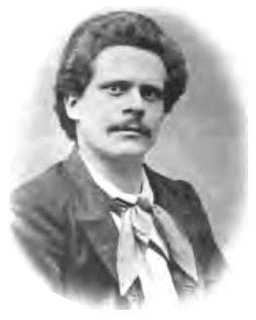
Giosuè Carducci in a photograph  taken in about 1870
Giosuè Carducci in a photograph
 taken in about 1870
Giosuè Carducci, the first Italian to receive the Nobel Prize in Literature, was born on this day in 1835 in Tuscany.

Christened Giosuè Alessandro Giuseppe Carducci, he lived with his parents in the small village of Valdicastello in the province of Lucca.

His father, a doctor, was an advocate of the unification of Italy and was involved with the Carbonari, a network of secret revolutionary groups. Because of his politics, the family was forced to move several times during Carducci’s childhood, eventually settling in Florence.

During his time in college, Carducci became fascinated with the restrained style of Greek and Roman literature and his work as an adult often used the classical meters of such Latin poets as Horace and Virgil. He published his first collection of poems, Rime, in 1857.

He married Elvira Menicucci in 1859 and they had four children.

Carducci in around 1900
Carducci taught Greek at a high school in Pistoia and was then appointed as an Italian professor at the University of Bologna.

Carducci was a popular lecturer and a fierce critic of literature and society. He was an atheist, whose political views were vehemently hostile to Christianity generally and the Catholic Church in particular.

These opinions were voiced in a deliberately blasphemous and provocative poem, Inno a Satana - Hymn to Satan. This poem was published in Bologna’s radical newspaper, Il Popolo, at a time when feelings against the Vatican were running high and the public were pressing for an end to the Vatican’s domination over the papal states.

In 1890 Carducci met Annie Vivanti, a writer and poet with whom he had a love affair.

His greatest works have been judged to be his collections of poems, Rime Nuove (New Rhymes) and Odi Barbare (Barbarian Odes).

A bust of Carducci stands proud in Castagneto Carducci
A bust of Carducci stands proud
in Castagneto Carducci
Carducci received the Nobel Prize in Literature in 1906 and was also made a Senator of Italy.

In the words of the citation, the award was made to Carducci "not only in consideration of his deep learning and critical research, but above all as a tribute to the creative energy, freshness of style, and lyrical force which characterize his poetic masterpieces"

The Nobel Prize in Literature has been awarded subsequently to five other Italians - Grazia Deledda, Luigi Pirandello, Salvatore Quasimodo, Eugenio Montale and Dario Fo.

During his life, Carducci wrote 20 volumes of literary criticism, biographies, speeches and essays.

He died in 1907 at the age of 71 in Casa Carducci, his home in Bologna and was buried in the Certosa di Bologna monumental cemetery.  His achievement is commemorated with busts and statues in public places in several Italian towns, including Castagneto Carducci, a hill town in the province of Livorno where he spent some years as a child.

Marina di Pietrasanta's beach is considered  to be in among the best in Italy
Marina di Pietrasanta's beach is considered
to be in among the best in Italy
Travel tip:

Valdicastello, where Carducci was born, is part of Pietrasanta, a small town in the province of Lucca in the north-west corner of Tuscany. The town has Roman origins and part of the Roman wall still exists. The town is three kilometres (two miles) inland from the coastal resort of Marina di Pietrasanta. The Marina, with its golden sand, is considered to have one of the best beaches in Italy.

The Casa Carducci in Bologna houses the  Civic Museum of the Risorgimento
The Casa Carducci in Bologna houses the
Civic Museum of the Risorgimento


Travel tip:


Casa Carducci, where the poet lived until his death in 1907, is a 16th century villa in Piazza Giosuè Carducci in Bologna. The ground floor now houses the Civic Museum of the Risorgimento, which tells the story of the unification of Italy from a cultural, social and economic perspective. Visitors can also see Carducci’s bedroom, with the small granite washbasin he used, and the family dining room, which has a large clock with the hands stopped at the exact moment of the poet’s death. In his office there is a framed fragment of a tunic belonging to Petrarch and an armchair, where Garibaldi is said to have sat while he was recovering from an injury. The library contains about 40,000 books, pamphlets and documents, meticulously catalogued by Carducci himself.