Showing posts with label World Championships. Show all posts

5 January 2026

Giuseppe Gibilisco - pole vaulter

World champion who later faced doping ban

Giuseppe Gibilisco, world champion in 2003, is the most successful pole vaulter in Italian history
Giuseppe Gibilisco, world champion in 2003, is
the most successful pole vaulter in Italian history
Italy’s most successful pole vaulter, the Sicilian Giuseppe Gibilisco, was born on this day in 1979 in Siracusa (Syracuse), the historic city in the southeast of the island.

Generally known as Peppe, Gibilisco won the gold medal at the 2003 World championships in Paris and followed this with a bronze at the 2004 Athens Olympics.

His personal best of 5.90m (19ft 4ins), which clinched gold in Paris, remains the Italian record.

Before Gibilisco, only two Italian pole vaulters had won major international medals - Aldo Righi, who took the bronze at the 1969 European championships, and Renato Dionisi, bronze medallist at the 1971 European championships and European indoor champion in 1973.

Later in his competitive career, Gibilisco changed to an entirely different athletic discipline, taking up bobsleigh, in which he became accomplished enough to compete in the 2017 World championship as brakeman in the four-man event, although without winning a medal.

Since retiring from sport, Gibilisco has become prominent in local politics in his home town, recently appointed chief of staff for the city of Siracusa, following a successful stint as councillor for sport and municipal police.


In 2024, he won many admirers for his frank confession that he suffered depression and contemplated suicide after being handed a two-year ban from competition in 2007 over his links to the disgraced former sports doctor Carlo Santuccione, who was banned for life over his alleged role in supplying athletes with the performance-enhancing hormone, EPO. 

Gibilisco fought successfully to have his suspension overturned but his career suffered nonetheless
Gibilisco fought successfully to have his suspension
overturned but his career suffered nonetheless
Gibilisco’s suspension was overturned on appeal on the basis that he had never tested positive for any banned substance. But the process took a toll on him mentally and financially, not only costing him vital sponsorship deals but requiring him to sell personal possessions, including his car, to pay for a defence lawyer.

In an interview with sports daily Gazzetta dello Sport, Gibilisco - an officer with the Guardia di Finanza law enforcement agency - admitted that at one stage, with only 43 euros in his bank account, he held his service pistol in his hand and thought about using it on himself.

In another part of the interview, he reflected that had it not been for his prowess in sport he would probably have been drawn into a life on the other side of the law, having followed “a bad path” as an adolescent. The ban made him feel that sport, having perhaps saved his life then, was now taking it away.

An outstanding pole vaulter as a junior, Gibilisco was Italian Under-18 champion as a 16-year-old, prompting his coach in Siracusa, Silvio Lentini, to encourage him to leave home a year later.

Lentini thought he would benefit from basing himself at Formia, the resort on the Lazio coastline 90km (54 miles) north of Naples, in order to work with Vitaliy Petrov, the Ukrainian who had coached his countryman, Sergey Bubka, to Olympic gold at Seoul in 1988 as well as six consecutive world pole vault titles.

Gibilisco is an influential figure in his home city of Siracusa
Gibilisco is an influential figure
in his home city of Siracusa
Within a year of coming under Petrov’s wing, Gibilisco had won a bronze at the World junior championships, before making his Olympic debut in Sydney in 2000, where he finished tenth but improved his personal best to 5.70m.

An injury in 2001 set him back, but he returned to form strongly at the start of the 2003 season. He broke the Italian national record twice in the space of half an hour, clearing 5.77m and then 5.82m in finishing second at the Rome Golden League meeting in July, celebrating with a lap of the Stadio Olimpico on the Honda motorcycle on which Valentino Rossi had won his own world title.  

At the World championships in Paris a month later, he failed his first two tries at 5.75m, but gambled with his remaining attempt by trying 5.80m, which he successfully cleared. 

Inspired by that success, he went on to vault 5.85m and then 5.90m, which rivals Okkert Brits, the South African, and Patrick Kristiansson, from Sweden, were unable to match.

Gibilisco’s success continued with bronze at the Athens Olympics in 2004 and a victory in his event at the 2005 European Cup in Florence.

The doping ban and his subsequent fight to have it nullified cost him almost a year out of competition arguably at the peak of his career, after which he was unable to reach the level of his pre-suspension form, although he did win gold at the Mediterranean Games in 2013, before retiring from competition the following year.

After taking part in the 2016-17 bobsleigh season, he retired definitively from competitive sport, continuing his career with the Guardia di Finanza and entering local politics in 2023. 

He was appointed head of the cabinet in the Siracusa municipal authority in November 2025, having previously supervised a number of successful projects to improve sports facilities in the city in his former role.

Siracusa's Duomo, on the island of Ortigia, is  a fine example of Sicilian Baroque architecture
Siracusa's Duomo, on the island of Ortigia, is 
a fine example of Sicilian Baroque architecture 
Travel tip:

Siracusa, often called Syracuse, is a city on the Ionian coast of Sicily. It is steeped in history, being particularly well known for its ancient ruins, notably the Neapolis Archaeological Park, which comprises the Roman Amphitheatre, the Teatro Greco and the Orecchio di Dionisio, a limestone cave shaped like a human ear. The city is the birthplace of the Ancient Greek polymath, Archimedes, born in 287BC. The fourth largest city in Sicily, after Palermo, Catania and Messina with a population of 115,636, it was the island’s capital for several hundred years until the Muslim invasion of 878. During the Spanish era, it was transformed into a fortress, with its historic centre, on the island of Ortigia, rebuilt in the style that became known as Sicilian Baroque, following the devastating earthquake of 1693 that destroyed much of the southeast of the island. The best examples can be found around the Piazza Duomo, notably the Duomo itself, with a facade by Andrea Palma, whose combination of columns, niches, and statues is a classic example of Sicilian Baroque exuberance. Its neighbours include the Chiesa di Santa Lucia alla Badia and the Palazzo Beneventano del Bosco.  Siracusa is also home to Caravaggio’s painting, the Burial of St Lucy - Seppellimento di Santa Lucia - which can still be seen, free of charge, in the Santuario di Santa Lucia al Sepolcro, in the more modern part of the city.

Stay in Siracusa with Expedia

The Tomba di Cicerone is one of the attractions for visitors to Formia
The Tomba di Cicerone is one of the
attractions for visitors to Formia 
Travel tip:

Situated on the Tyrrhenian Sea coast between Rome and Naples, in Lazio but close to the border with Campania, Formia is a port town that was a popular resort with the wealthy of Imperial Rome. One of its major attractions is the Tomba di Cicerone, a Roman mausoleum just outside the town which is said to have been built for the great Roman orator Cicero, who was reportedly assassinated on the Appian Way outside the town in 43 BC. Formia is also home to the Cisternone Romano, an underground reservoir built by the Romans. testament to Roman ingenuity.  Other remains include the towers of the forts of Mola and Castellone, once two neighbouring villages. The generally modern feel of much of the resort and harbour today is down to its necessary reconstruction following a bombardment suffered during the Second World War, when Formia was a point on the German army’s Gustav Line and suffered heavy damage during the Allied invasion.

Find accommodation in Formia with Hotels.com

More reading:

Sara Simeoni, Italy’s gold-medal winning Olympic high jumper

Eugenio Monti, double Olympic bobsleigh champion

Emilio Lunghi, winner of Italy’s historic first Olympic medal

Also on this day:

1905: The birth of physician and Mafia boss Michele Navarra

1919: The birth of flautist Severino Gazzelloni

1948: The birth of anti-Mafia activist Giuseppe Impastato

2016: The death of novelist and semiotician Umberto Eco

Home


28 January 2022

Giorgio Lamberti - swimming champion

The first Italian male swimmer to win a World championship gold

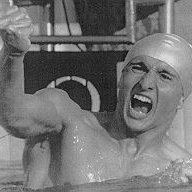
Giorgio Lamberti celebrates his gold medal victory
Giorgio Lamberti celebrates
his gold medal victory
Swimming world champion Giorgio Lamberti was born on this day in 1969 in Brescia in Lombardy.

Lamberti won 33 gold medals in the Italian swimming championships, six at the Mediterranean Games and three in the European championships, but the pinnacle of his career came in Perth in 1991, when he became the first Italian male to win a gold at the World championships.

In the 200m freestyle event, which was his speciality, he beat Germany’s Steffen Zesner by just under a second in a time of 1min 47.27 sec.

His success came almost two decades after Novella Calligaris had become the first Italian woman to win a World championship gold when she took the 800m freestyle title.

Lamberti was already a force in 200m freestyle, having two years earlier set a world record for the event of 1:46.69 in winning gold at the European championships in Bonn in 1989.

The record was to stand for 10 years, the longest stretch in the history of the 200m freestyle, until Australia’s Grant Hackett swam 1:46:67 in Brisbane.

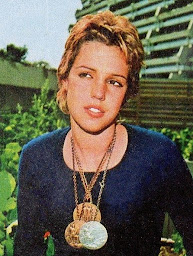
Novella Calligaris was the first Italian to win a world title
Novella Calligaris was the first
Italian to win a world title
Lamberti took up swimming as a six-year-old boy after his parents were advised by a doctor concerned about his slight physique that he might benefit from a sport that would help build some muscle mass.

He showed natural ability in the pool and by his teenage years had developed much more strength. As a 16-year-old he joined the Leonessa Nuoto club in Brescia, where he was coached by Pietro Santi, who entered him for the European youth championships, where he won two medals.

After Santi left, Lamberti was taken under the wing of a new coach, Alberto Castagnetti, who would be his mentor for the rest of his career. At 17, in 1986, he won the first of his Italian championships, reaching the B final of the 200m freestyle of the World championships of the same year. 

In 1988 it became clear that Lamberti was becoming a force to be reckoned with, setting world record times in both the 200m and 400m short course freestyle events, and the following year enjoyed triple gold medal success at the European championships in Bonn.

In addition to his world record performance in the 200m free, he also won gold in the 100m free and the four by 200m freestyle relay.

Lamberti's eldest son, Michele, is also a world champion
Lamberti's eldest son, Michele,
is also a world champion
The disappointment in Lamberti’s career was that he failed to get on the podium at either of the Olympics in which he participated, in 1988 in Seoul, South Korea, or in 1992 in Barcelona, where fifth place in the 4 x 200m freestyle final was his best result.

He retired from competition in 1993 at the age of just 24, having struggled with shoulder problems. In 1998, he married Tanya Vannini, a teammate in the Italy national swimming team. They have three children, all of whom have followed them into the pool.

The eldest, 23-year-old Michele, is already a world champion, having won the 50m short course backstroke title in Abu Dhabi in December, and younger brother Matteo, who is based in Livorno and like his father is a freestyler, is seeking to emulate him. Their sister, Noemi, is still at high school but is also a regular swimmer.

Lamberti insists that he and his wife have not pushed them to swim competitively, despite their own pedigree, introducing them to the water at an early age only to help them stay safe in the sea on holiday.

Now 52 and a former city councillor in Brescia, Lamberti champions swimming in a different way, as a vocal advocate for the sport as a way for Italians of all ages to improve their health and wellbeing.

Despite suffering a serious bout of Covid-19 in March 2021, which put him in hospital and required many months of rehabilitation, he regularly campaigned for public swimming pools to be allowed to open with safety measures in place during Italy’s lockdown, rather than be closed completely, worried that the inability to access sports facilities would reverse the healthy habits adopted by many Italians and have consequences for the nation’s physical health long after the pandemic had passed.

Inducted to the Hall of Fame of international swimming in 2004, the second Italian swimmer to be afforded that honour after Novella Calligaris, Lamberti is a figure held in high esteem throughout the swimming world in Italy. For example, even though he is from Lombardy, swimmers for Team Veneto in regional competition wear a cap badge said to depict Lamberti in celebratory pose at the end of his world title-winning race.

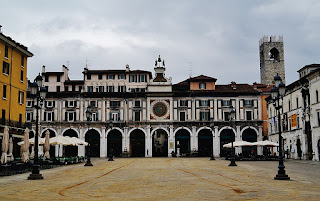
The elegant Piazza della Loggia in Brescia, where the clock tower shows Venetian influence
The elegant Piazza della Loggia in Brescia, where
the clock tower shows Venetian influence

Travel tip:

Brescia, where Giorgio Lamberti was born, tends not to attract many tourists compared with nearby Bergamo or Verona, yet is a city of artistic and architectural importance. Brescia became a Roman colony before the birth of Christ and you can see remains from the forum, theatre and a temple. The town came under the protection of Venice in the 15th century and there is a Venetian influence in the architecture of the Piazza della Loggia, an elegant square, which has a clock tower similar to the one in Saint Mark’s square. Next to the 17th century Duomo is an older cathedral, the unusually shaped Duomo Vecchio, also known as la Rotonda.  The Santa Giulia Museo della Città, a museum that covers more than 3,000 years of Brescia’s history, is housed within the Benedictine Nunnery of San Salvatore and Santa Giulia in Via Musei.


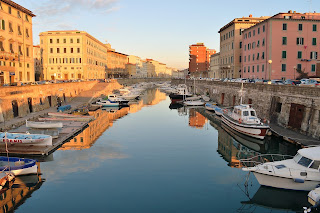
A canal in Livorno's historic Venetian quarter, one of the attractions of the Tuscan city
A canal in Livorno's historic Venetian quarter,
one of the attractions of the Tuscan city
Travel tip:

The port of Livorno, where Lamberti’s son, Matteo, trains, is the second largest city in Tuscany after Florence, with a population of almost 160,000. Although it is an important commercial port with much related industry, it has many attractions, including an elegant sea front – the Terrazza Mascagni - and the historic Venetian quarter, which has its own network of  canals, and a tradition of serving excellent seafood.  The Terrazza Mascagni is named after the composer Pietro Mascagni, famous for the opera Cavalleria rusticana, who was born in Livorno.


Also on this day:

1453: The birth of Simonetta Vespucci, the artist’s model thought to have been the inspiration for the Botticelli masterpiece, The Birth of Venus

1608: The birth of physiologist Giovanni Alfonso Borelli

1813: The birth of scientist Paolo Gorini

1978: The birth of record-breaking goalkeeper Gianluigi Buffon


Home