Showing posts with label Pellegrino Rossi. Show all posts

24 November 2025

Pope Pius IX flees Rome

The day the Pope had to slip out of the side door of his palace

Pope Pius IX fled Rome in the face  of a revolutionary uprising
Pope Pius IX fled Rome in the face 
of a revolutionary uprising 
Fearing for his own safety, Pope Pius IX left his home in Palazzo del Quirinale in Rome, disguised as an ordinary priest, and fled from the city on this day in 1848.

It was an unwelcome change of circumstances for Pius IX, who had enjoyed great popularity since being elected as Pope two years before. But the day before his escape from Rome, he had found himself besieged inside his palace by an unruly mob that had gathered in Piazza del Quirinale.

Revolutionary fever had been whipped up and the city was in turmoil following the murder of Count Pellegrino Rossi at Palazzo della Cancelleria, the seat of the government of the Papal States in Rome. This event eventually led to the formation of the short-lived Roman Republic.

Rossi had been the Minister of the Interior in Pope Pius IX’s government and had been responsible for a programme of unpopular reforms, which gave only the well-off the right to vote and did nothing to address economic and social issues. Street violence was being stirred up by secret societies, such as Giuseppe Mazzini’s Young Italy movement, and Rossi had been declared an enemy of the people by revolutionaries.

There was also anger because of Pius IX’s decision to withdraw the support of the Papal Army from the First Italian War of Independence, being fought between the Kingdom of Sardinia and the Austrian Empire.

When Rossi had arrived at Palazzo della Cancelleria and was climbing the stairs to the Assembly Hall a few days before, he had been stabbed in the neck by an attacker and killed. This sparked an uprising against the papal government and Pius IX found himself a prisoner inside his own palace.


So, he decided to escape and, with the help of close allies and his personal attendant, the Pope slipped out of Palazzo del Quirinale by a side door in the attire of an ordinary priest. He was able to leave through one of the gates of the city and board a carriage which took him to Gaeta, situated 120km (75 miles) south of Rome, where the King of the Two Sicilies, Ferdinand II, provided him with a refuge.

Pope Pius IX, who was born Giovanni Maria Mastai-Ferretti in Senigallia in Le Marche in 1792, studied theology and was ordained as a priest, working his way up to become Archbishop of Spoleto, and developing a reputation as a Liberal, who visited prisoners in jail and organised programmes for street children.

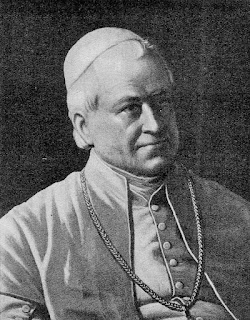
Pope Pius IX, pictured three years before he died, was initially a popular figure
Pope Pius IX, pictured three years before
he died, was initially a popular figure
His election as Pope in 1846 was greeted with enthusiasm in Italy and elsewhere in Europe. For the first 20 months his popularity was high and it was assumed by his supporters that he would back the cause of Italian unification. 

But unification would have meant the end of the Papal States and Pius IX would also have had to back aggression against Austria, another Catholic country. When he revealed that he opposed the campaign for a united Italy, he was regarded by many people as a traitor.

The murder of his chief minister made the Pope realise that Rome was no longer safe for him and so he fled to Gaeta, where he continued papal business from a comfortable distance.

Pius IX ignored all requests for him to return to Rome until a French army had marched on the city in 1849 and taken it from Giuseppe Garibaldi and his army, who had arrived to defend the new republic.

It was not until April 1850 that Pius IX finally returned to Rome and, ignoring Palazzo del Quirinale, he went straight to the Vatican, from where he was to govern the Catholic Church for another 28 years.

He is thought to have had the second longest papal reign since Saint Peter, who, it is believed, was Pope for 37 years, although this cannot be verified.

Pius IX died at the age of 85 in 1878. All his successors to the papacy have followed his example and chosen to live in the Vatican. 

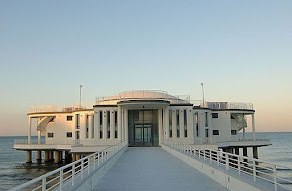
Senigallia's pier, the Rotonda al Mare, sits on the resort's renowned Spiaggia di Velluta
Senigallia's pier, the Rotonda al Mare, sits on the
resort's renowned Spiaggia di Velluta
Travel tip:

Senigallia, where Pope Pius IX was born, is a port town on the Adriatic coast in the province of Ancona in Le Marche, which is now a popular seaside resort. It was fought over by opposing sides in the Guelph and Ghibelline wars in the 13th and 14th centuries and in 1503, Cesare Borgia, the son of Pope Alexander VI, carried out a raid on the town to punish disloyal supporters. The port was then ruled by the Della Rovere family and Medici families in turn before being annexed to the papal states. It suffered damage during World War I, was hit by a powerful earthquake in 1930, and during World War II was damaged again. Senigallia has now become popular with holidaymakers because of its soft, sandy beach, known as Spiaggia di Velluta, Velvet Beach. Also notable is Senigallia's circular pier, known as the Rotonda al Mare.

Stay in Senigallia with Hotels.com

The Palazzo del Quirinale, now the official residence of presidents, used to be the home of the Pope
The Palazzo del Quirinale, now the official residence
of presidents, used to be the home of the Pope
Travel tip:

The Palazzo del Quirinale in Rome, from which Pope Pius IX fled, was originally built in 1583 by Pope Gregory XIII as a summer residence. It served both as a papal residence and as the offices responsible for the civil government of the Papal States until 1870. When, in 1871, Rome became the capital of the new Kingdom of Italy, the palace became the official residence of the kings of Italy. When the monarchy was abolished in 1946, the Palazzo del Quirinale became the official residence and place of work for the presidents of the Italian Republic. During its history, the palace has housed 30 popes, four kings and 12 presidents.

Find Rome hotels with Expedia

More reading:

The murder of Pellegrino Rossi

Giuseppe Mazzini, journalist and revolutionary

How the Bersaglieri corps became key to completing Italy’s unification

Also on this day:

1472: The birth of sculptor Pietro Torrigiano

1826: The birth of Pinocchio creator Carlo Collodi

1897: The birth of Mafia boss Charles ‘Lucky’ Luciano

1926: The birth of painter Vittorio Miele

Home


7 February 2022

Pope Pius IX

Pontiff who regarded himself as a prisoner

Pope Pius IX's reign was the longest in history but ended in controversy
Pope Pius IX's reign was the longest in
history but ended in controversy
Pope Pius IX, who died on this day in 1878 in the Apostolic Palace in Vatican City in Rome, had the longest verified papal reign in history, having been head of the Catholic Church since 1846.

He is also remembered for permanently losing control of the Papal States, which became part of the Kingdom of Italy in 1870. Afterwards he refused to leave Vatican City and often referred to himself as ‘a prisoner of the Vatican’.

Pius IX was born Giovanni Maria Mastai Ferretti in 1792 in Senigallia in Le Marche which was then part of the Papal States.

While studying theology, Mastai Ferretti met Pope Pius VII when he was visiting his hometown and afterwards, he entered the Papal Noble Guard. He was dismissed after he suffered an epileptic seizure, but Pius VII supported him continuing with his theological studies and he was ordained a priest in 1819.

Pope Leo X chose him to support the Apostolic Nunzio on a mission to Chile and although it ended in failure the Pope gave him new roles and appointed him Archbishop of Spoleto in 1827, where he gained the reputation of being both efficient and liberal.

Mastai Ferretti became Cardinal Priest of Santi Marcellino e Pietro, where he was known for visiting prisoners, devising programmes to help street children and sympathising with the nationalist movement in Italy.

The murder of Pellegrino Rossi sparked an  angry uprising against the papal government
The murder of Pellegrino Rossi sparked an 
angry uprising against the papal government
After he was elected Pope in 1846, Mastai Ferretti chose the name Pius IX to honour Pope Pius VII, who had helped him at the beginning of his career. Pius IX was a popular choice at the time, because he was expected to be a reforming liberal who supported the movement to unify Italy.

But after the revolutions of 1848, Pius IX changed his position. He had appointed Pellegrino Rossi, an economist and politician as his Interior Minister and put him in charge of a programme of unpopular reforms. He also withdrew the support of the Papal Army from the First Italian War of Independence against the Austrian Empire.

On November 15 1848, when Rossi arrived at the Palazzo della Cancelleria to present his plans for a new constitutional order, he was stabbed in the neck while climbing the stairs to the assembly hall.

The murder of Rossi encouraged an uprising against the papal government and Pius IX was besieged inside the Palazzo del Quirinale by an unruly mob. Pius IX was forced to negotiate with the revolutionaries and to appoint a more liberal ministry.

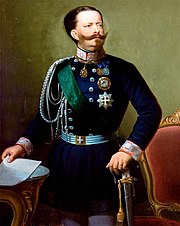
Victor Emanuel II was excommunicated by Pius IX
Victor Emanuel II was
excommunicated by Pius IX
However, on the evening of 24 November, helped by his close allies, he was able to escape from the palace disguised as an ordinary priest and flee to Gaeta, in the Kingdom of Naples, where the King of the Two Sicilies had promised him refuge.

A Roman Republic was declared in February 1849 and Pius IX responded form his exile by excommunicating all those taking part.

When the Pope returned to Rome in 1850, he decided to move from the Quirinale to the Vatican, where popes have resided ever since.

After defeating the papal army in 1860, Victor Emanuel II of Sardinia seized all the papal territories and took the title King of Italy. Pius IX refused to recognise the new Italian kingdom and excommunicated all the leaders, including the King.

Pius IX absolved Victor Emanuel II of all excommunications and punishments before the King died in January 1878 and gave permission for him to be buried in the Pantheon. The Pope died himself one month later on 7 February, aged 85. Although tradition holds that Saint Peter was Pope for 37 years, this can’t be verified, so Pius IX is on record as having had the longest, verified papal reign, at almost 32 years.

He was originally buried in St Peter’s grotto, but his body was moved in a night procession in 1881 to the Basilica of St Lawrence outside the Walls. As the procession approached the river, soldiers had to prevent a group of protesting Romans from throwing the coffin into the Tiber.

Pius IX was beatified in 2000 by Pope John Paul II, who gave him a more elaborate tomb in the Basilica rather than the simple grave where he was originally laid to rest. The annual liturgical commemoration for Pius IX was declared to be 7 February, the date of his death.

The 1930s Liberty-style Rotonda a Mare is  an attraction of modern-day Senigallia
The 1930s Liberty-style Rotonda a Mare is 
an attraction of modern-day Senigallia
Travel tip:

Senigallia, where Pope Pius IX was born, is a port town on the Adriatic coast in the province of Ancona in Le Marche. Senigallia was captured and recaptured many times by opposing sides in the Guelph and Ghibelline wars. In 1503, Cesare Borgia carried out a raid on Senigallia to punish some of his disloyal supporters. The port was then ruled by the Della Rovere family and Medici family in turn before being annexed to the papal states. The town was damaged during World War I, by a powerful earthquake in 1930, and during World War II. It is now a popular summer holiday destination.


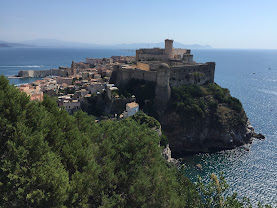
Gaeta is built on a promontory jutting out into the Gulf of Gaeta
Gaeta is built on a promontory jutting
out into the Gulf of Gaeta

Travel tip:

Gaeta, where Pope Pius IX fled after being besieged in Palazzo del Quirinale in Rome, is a city in the province of Latina in Lazio, 120 km (75 miles) south of Rome, set on a promontory stretching towards the Gulf of Gaeta. Today it is a fishing and oil seaport and a popular resort with tourists. It has a huge Aragonese-Angevine Castle, which dates back to the sixth century and the Cathedral of Assunta e Sant’Erasmo, which was built over a more ancient church and consecrated by Pope Paschal II in 1106. 


Also on this day:

1497: The Bonfire of the Vanities

1622: The birth of Vittoria della Rovere, Grand Duchess of Tuscany

1909: The birth of army horseman Amedeo Guillet

1941: The birth of pop singer Little Tony


Home


15 November 2018

The murder of Pellegrino Rossi

Political assassination opened way to creation of Roman Republic


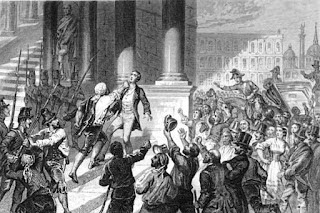
A magazine illustration depicting the murder of  Pellegrino Rossi at the Palazzo della Cancelleria
A magazine illustration depicting the murder of
Pellegrino Rossi at the Palazzo della Cancelleria
One of the key events during the revolutionary upheaval of 1848 in Italy took place on this day in that year when the politician Count Pellegrino Rossi was murdered at the Palazzo della Cancelleria, the seat of the government of the Papal States in Rome.

The event precipitated turmoil in Rome and led eventually to the formation of the short-lived Roman Republic.

Rossi was the Minister of the Interior in the government of Pope Pius IX and as such was responsible for a programme of unpopular reforms, underpinned by his conservative liberal stance, which gave only the well-off the right to vote and did nothing to address the economic and social disruption created by industrialisation.

Street violence, stirred up by secret societies such as Giuseppe Mazzini’s Young Italy movement, had been going on for weeks in Rome and Rossi had been declared an enemy of the people in meetings as far away as Turin and Florence.

Rossi's reforms had failed to address the social and economic problems besetting Rome
Rossi's reforms had failed to address the social
and economic problems besetting Rome
There was also anger in Rome at Pius IX’s decision to withdraw the support of the Papal Army from the First Italian War of Independence, being fought between the the Kingdom of Sardinia (Piedmont) and the Austrian Empire.

On November 15, 1848, Rossi arrived at the Palazzo della Cancelleria to present his plan for a new constitutional order to the legislative assembly. He was warned ahead of the meeting that an attempt would be made on his life but he defied the threat with the words: “I defend the cause of the pope, and the cause of the pope is the cause of God. I must and will go.”

However, as he climbed the stairs leading to the assembly hall, an individual stepped forward and struck him with a cane. Rossi turned towards his attacker and as he did so was set upon by another assailant, who drove a dagger into his neck.

The murderer was said to be Luigi Brunetti, the elder son of Angelo Brunetti, a fervent democrat, acting on the instigation of Pietro Sterbini, a journalist and revolutionary who was a friend of Mazzini. Though members of the Civic Guard were in the courtyard when the attack took place, no one attempted to arrest the count’s killer and when crowds gathered later at the house of Rossi's widow, they chanted ‘Blessed is the hand that stabbed Rossi’.

Giuseppe Mazzini was one of the leaders of the Roman Republic
Giuseppe Mazzini was one of the
leaders of the Roman Republic
The murder spurred the secret societies to foment an uprising against the papal government. The following day, Pius IX was besieged inside the Palazzo del Quirinale by an unruly mob. The pope’s Swiss Guard was able to hold back the mob for a time but when it seemed the crowd was about to disperse, up to 1,000 members of the Civic Guard, the police, and other soldiers marched into the palace’s piazza and opened fire on the palace, including with cannons. Knowing resistance was useless, Pius IX agreed to negotiate with revolutionaries.

Demands were made for a democratic government, social reforms and a declaration of war against the Empire of Austria.  Pius IX had little option but to appoint a liberal ministry, but he refused to abdicate and forbade the government to pass any laws in his name.

In the event, on the evening of November 24, with the help of close allies and his personal attendant, Pius IX escaped from the Palazzo del Quirinale disguised as an ordinary priest, slipping through one of the gates of the city and boarding a carriage that was to take him to Gaeta, a city 120km (75 miles) south of Rome, where the King of the Two Sicilies had promised him a refuge.

Rossi was commemorated with a statue in his native Carrara in Tuscany
Rossi was commemorated with a statue
in his native Carrara in Tuscany
It meant that, for the first time in history, Rome was without a government. Into the void stepped Mazzini, his supporter Aurelio Saffi and the popular Roman activist Carlo Armellini, who formed a triumvirate at the head of a Roman Republic, which was declared officially on February 9, 1849.

The republic put forward some progressive ideas, including religious tolerance and an end to capital punishment, but in the event it was a short-lived revolution. Ironically, it was crushed by a former ally, Napoleon III of France, who had once participated in an uprising against the Papal States but who now, under pressure from the Catholic Church in France, felt compelled to send an army to restore Pius XI to power.

The Romans put up a fight, aided by a Republican army led by Garibaldi, but the city fell in late June and with it the Republic.


The Palazzo della Cancelleria, built between 1489 and 1513, is thought to be the oldest Renaissance palace in Rome
The Palazzo della Cancelleria, built between 1489 and
1513, is thought to be the oldest Renaissance palace in Rome


Travel tip:

The Palazzo della Cancelleria, which is situated between Corso Vittorio Emanuele II and the Campo de' Fiori, is a Renaissance palace, probably the earliest Renaissance palace to be built in Rome. It is the work of the architect Donato Bramante between 1489 and 1513, initially as a residence for Cardinal Raffaele Riario, who was the Camerlengo - treasurer - of the Holy Roman Church under Pope Sixtus V. It evolved as the seat of the Chancellery of the Papal States.  The Roman Republic used it as their parliament building.

Rome hotels by Booking.com

The Palazzo del Quirinale has been the residence in Rome of 30 popes, four kings and 12 presidents
The Palazzo del Quirinale has been the residence in Rome
of 30 popes, four kings and 12 presidents
Travel tip:

The Palazzo del Quirinale was built in 1583 by Pope Gregory XIII as a summer residence and served both as a papal residence and the offices responsible for the civil government of the Papal States until 1870. When, in 1871, Rome became the capital of the new Kingdom of Italy, the palace became the official residence of the kings of Italy, although some monarchs, notably King Victor Emmanuel III (1900–1946), lived in a private residence elsewhere. When the monarchy was abolished in 1946, the Palazzo del Quirinale became the official residence and workplace for the presidents of the Italian Republic. So far, it has housed 30 popes, four kings and 12 presidents.