14 February 2016

San Valentino and Sant’Antonino


Celebrations for two different Italian saints


Saint Valentine, a third century Roman martyr, is commemorated with a feast day on this day every year.

His name has become associated with the tradition of courtly love but all that is really known about him is that he was martyred and buried at a cemetery on the Via Flaminia in Rome on 14 February, 273.

His feast day was first established in 496 by a Pope who revered him. It is thought he was imprisoned and tortured and then hastily buried, but that his disciples later retrieved his body.
Sorrento's Sant'Antonino looks across the square
 to the Basilica named after him.

During the Middle Ages it was believed that birds paired in mid-February and this is probably why Saint Valentine’s Day became associated with romance.

But while lovers all over the world raise a glass to Saint Valentine on this day, residents and visitors in Sorrento celebrate the festival of Sant’Antonino, the city’s patron saint.

Sant’Antonino Abate died on 14 February, 626. He is credited with saving the life of a child swallowed by a whale and also protecting Sorrento against plague and invasion.

Each year on the anniversary of his death, a silver statue of Sant’Antonino is carried in a procession through the streets of Sorrento and there are festive lights, fireworks, and musical events in his name.

Travel tip: 

Sant’Antonino’s body is buried in a crypt that became part of the Basilica di Sant’Antonino, a magnificent church that dates from the 11th century, but has been added to and refurbished over the years and is situated in Sorrento’s Piazza Sant’Antonino. Inside the Basilica, another statue of the saint is surrounded by the many offerings from sailors who have been saved from shipwrecks over the centuries and believe it was thanks to the intervention of Sant’Antonino.

Travel tip:

A statue of the Saint stands among the palm trees in the middle of Piazza Sant’Antonino opposite Sorrento’s town hall. Just off the square, the Via Santa Maria delle Grazie has many interesting shops, bars and restaurants, including the long-established Ristorante Sant'Antonino, named after the saint, which serves fish, seafood and Sorrentine specialities.

Home


13 February 2016

Fire at Teatro di San Carlo

Royal theatre reopens quickly after blaze 


The damage wreaked by the 1816, captured in a painting by an unknown artist
The damage wreaked by the 1816 fire, captured in a
painting by an unknown artist
Fire broke out during a dress rehearsal for a ballet at Teatro di San Carlo in Naples on this day in 1816.

The flames spread quickly, destroying a large part of the building in less than an hour.

The external walls were the only things left standing, but on the orders of Ferdinand IV, King of Naples, the prestigious theatre was rebuilt at once.

It was reconstructed following designs drawn up by architect Antonio Niccolini for a horseshoe-shaped auditorium with 1,444 seats. A stunning fresco was painted in the centre of the ceiling above the auditorium depicting a classical subject, Apollo presenting to Minerva the greatest poets of the world.

The rebuilding work took just ten months to complete and the theatre reopened to the public in January 1817.

Teatro di San Carlo had opened for the first time in 1737, way ahead of Teatro alla Scala in Milan and La Fenice in Venice.

Gioachino Rossini is among the former artistic directors at San Carlo
Gioachino Rossini is among the former
artistic directors at San Carlo
Built in Via San Carlo close to Piazza Plebiscito, the main square in Naples, Teatro di San Carlo had quickly become one of the most important opera houses in Europe, known for its excellent productions.

The original theatre was designed by Giovanni Antonio Medrano for the Bourbon King of Naples, Charles I, and took only eight months to build.

The official inauguration was on the King’s saint’s day, the festival of San Carlo, on the evening of November 4. There was a performance of Achille in Sciro by Pietro Metastasio with music by Domenico Sarro, who also conducted the orchestra for the music for two ballets.

This was 41 years before La Scala and 55 years before La Fenice opened. San Carlo is now believed to be one of the oldest remaining opera houses in the world, if not the oldest.

Both Gioachino Rossini and Gaetano Donizetti served as artistic directors at San Carlo and the world premieres of Donizetti’s Lucia di Lammermoor and Rossini’s Mosรจ were performed there.

During the Second World War the theatre was damaged by bombs but after the liberation of Naples in 1943 it was repaired and was able to reopen.

Between 2008 and 2009 a major refurbishment was carried out but the theatre reopened again to the public in 2010.


Inside Teatro di San Carlo, looking down  from above the royal box
Inside Teatro di San Carlo, looking down
from above the royal box
Travel tip:

In the magnificent auditorium, the focal point is the royal box surmounted by the crown of the Kingdom of the Two Sicilies. Opera enthusiasts can take a guided tour of the theatre and see the foyers, the auditorium, the boxes and the royal box. Tours run at 10.30, 11.30, 12.30, 14.30, 15.30 and 16.30 between Monday and Saturday and at 10.30, 11.30 and 12.30 on Sundays. Booking is recommended.


Travel Tip:

Close to Teatro di San Carlo in the centre of ‘royal’ Naples, there are many other sights, such as Galleria Umberto I, Caffรจ Gambrinus, the church of San Francesco di Paola and Palazzo Reale, that are all well worth visiting.


More reading:

The 1996 fire that destroyed La Fenice opera house in Venice

How Pietro Metastasio progressed from street entertainer to renowned librettist

Donizetti - the musical genius born in a darkened basement

Also on this day:


(Painting: Rossini portrait by Vincenzo Camuccini, Museo del Teatro alla Scala in Milan) 

12 February 2016

Franco Zeffirelli – film director

Shakespeare adaptations made director a household name


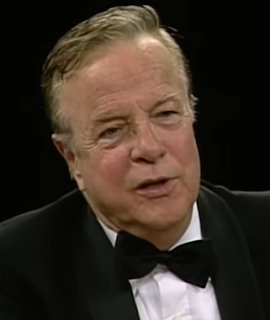
Franco Zeffirelli excelled in adapting classic plays and operas for the big screen
Franco Zeffirelli excelled in adapting
classic plays and operas for the big screen
The film, opera and television director Franco Zeffirelli was born on this day in Florence in 1923.


He is best known for his adaptations of Shakespeare plays for the big screen, notably The Taming of the Shrew (1967), with Richard Burton and Elizabeth Taylor, Romeo and Juliet (1968) and Hamlet (1990) with Mel Gibson. 

Boldly, he cast two teenagers in the title roles of Romeo and Juliet and filmed the tragedy against the backdrop of 15th century buildings in Serravalle in the Veneto region. His film became the standard adaptation of the play and has been shown to thousands of students over the years.

His later films include Jane Eyre (1996) and Tea with Mussolini (1999), while he directed several adaptations of operas for the cinema, including I Pagliacci (1981), Cavalleria rusticana (1982), Otello (1986), and La bohรจme (2008). 

Zeffirelli's name was, in fact, an invention, and a misspelled one to boot.

He was the child of Alaide Garosi, a fashion designer, as a result of an affair with a wool and silk dealer, Ottorino Corsi. Since both his parents were married to other partners, his registered surname could neither be Garosi or Corsi. Instead, his mother intended him to be registered as Zeffiretti - the Italian for 'little breezes' - in a reference to a line in Mozart's opera, Idomeneo. However, it was misspelled in the register and he became Gian Franco Corsi Zeffirelli.
Zeffirelli worked with Luchino Visconti in his early days of film direction
Zeffirelli worked with Luchino Visconti
in his early days of film direction

Alaide died when Franco was six and he subsequently was looked after within expatriate English community in Florence, an experience that later inspired his film Tea with Mussolini, which was semi-autobiographical.

Zeffirelli studied art and architecture at Florence University before fighting as a partisan during the Second World War.

After the war he worked as a scenic painter in Florence until he was hired by Luchino Visconti, initially as an actor and stage director in his theatre company, and subsequently as assistant director on his 1948 film La terra trema (The Earth Trembles). He also worked with directors Vittorio De Sica and Roberto Rossellini in Italy's booming post-war cinema industry.

His focus then switched more to stage design, particularly for opera. His first major design for opera was a 1952-53 production of Gioachino Rossini’s L’Italiana in Algeri for La Scala in Milan. He maintained his link with opera in theatrical and arena settings throughout his career, working on notable productions of La traviata, Lucia di Lammermoor, La Bohรจme, Tosca, Falstaff, and Carmen. He became a friend of Maria Callas, eventually directing her in La Traviata in America and in Tosca at the Royal Opera House in London, with Tito Gobbi.
A 17-year-old Olivia Hussey in Zeffirelli's Romeo and  Juliet, which established the director's reputation
A 17-year-old Olivia Hussey in Zeffirelli's Romeo and
Juliet,
which established the director's reputation

The Taming of the Shrew was Zeffirelli's first film as director in 1967. It was originally planned that Sophia Loren and Marcello Mastroianni would take the starring roles but to help fund production it was decided that Taylor and Burton would give the film a higher profile. 

Zeffirelli's major breakthrough came the year after with Romeo and Juliet (1968), which earned $14.5 million dollars at the box office in the United States and made Zeffirelli's name, earning him a nomination for Best Director at the Oscars, although at the same time it set a standard that some critics believe he never quite met in his subsequent work, for all his success. 

As well as Shakespeare adaptations, Zeffirelli made a number of films with religious themes, such as a life of St. Francis of Assisi entitled Brother Sun, Sister Moon (1972), then his TV mini-series Jesus of Nazareth (1977), although these attracted criticism from some religious groups for what they perceived as the blasphemous representation of biblical figures. 

Zeffirelli, who received the Order of Merit of the Italian Republic in 1977, is a former senator for the Forza Italia political party and received an honorary knighthood in Britain in 2004. 

UPDATE: Franco Zeffirelli died in Rome in June 2019 at the age of 96.


The Florence floods of 1966 did huge damage to precious art treasures
The Florence floods of 1966 did huge damage
to precious art treasures

Travel tip:

The University of Florence can trace its origins back to the 14th century, but the modern University, where Zeffirelli studied, dates back to 1859, when a number of higher studies institutions were grouped together. When his native Florence was flooded in the 1960s, causing millions of pounds worth of damage to precious art and literary treasures and the buildings housing them, Zeffirelli made a documentary film, Florence: Days of Destruction, to raise funds for the disaster appeal.

Book your stay in Florence with Booking.com


A typical Serravalle palace

Travel tip:

Serravalle, where Zeffirelli filmed Romeo and Juliet, was combined with the town of Ceneda nearby and renamed Vittorio in 1866 in honour of King Vittorio Emanuele II. After the last decisive battle of the First World War had taken place nearby, Vittorio was renamed Vittorio Veneto. The small town of Serravalle is the more picturesque of the two places that make up Vittorio Veneto and its fine 15th century palazzi and pretty arcaded streets made a wonderful backdrop for Zeffirelli’s film.  


11 February 2016

Lateran Treaty

How the Vatican became an independent state inside Italy 


The boundary map of the Vatican City as it appeared in the Lateran Treaty, signed on February 11, 1929
The boundary map of the Vatican City as it appeared
in the Lateran Treaty, signed on February 11, 1929
An agreement between the Kingdom of Italy and the Holy See, recognising the Vatican as an independent state within Italy, was signed on this day in 1929.

The Lateran Treaty settled what had been known as ‘The Roman Question’, a dispute regarding the power of the Popes as rulers of civil territory within a united Italy.

The treaty is named after the Lateran Palace where the agreement was signed by prime minister Benito Mussolini on behalf of King Victor Emmanuel III and Cardinal Pietro Gasparri on behalf of Pope Pius XI.

The Italian parliament ratified the treaty on June 7, 1929. Although Italy was then under a Fascist government, the succeeding democratic governments have all upheld the treaty.

The Vatican was officially recognised as an independent state, with the Pope as an independent sovereign ruling within Vatican City. The state covers approximately 40 hectares (100 acres) of land.

The papacy recognised the state of Italy with Rome as its capital, giving it a special character as ‘the centre of the catholic world and a place of pilgrimage.’


The Lateran Palace, where the agreement recognising
the Vatican City as an independent state was signed

The Prime Minister at the time, Benito Mussolini, agreed to give the church financial support in return for public support from the Pope.

In 1947 the Lateran Treaty was incorporated into the new, democratic Italian constitution.

During the Risorgimento, the struggle to unite Italy in the 19th century, the Papal States had resisted being incorporated into the new nation. Italian troops had invaded the Romagna in 1860 and the rest of the Papal States, including Rome, were occupied by the army in 1870.

For the next 60 years, relations between the Papacy and the Government were hostile and the status of the Pope had become known as ‘The Roman Question’.

Travel Tip:

The Lateran Palace was the main papal residence in Rome between the fourth and 14th centuries. It is in Piazza San Giovanni in Laterano, next to the Basilica of San Giovanni in Laterano, the first Christian Basilica in Rome and now the Cathedral Church of the city. Some distance away from the Vatican, the palace is now an extraterritorial property of the Holy See, with similar rights to a foreign embassy.

Hotels in Rome by Booking.com


The Via della Conciliazione was built on the orders of Mussolini
The Via della Conciliazione, built on the orders of Mussolini

Travel tip:

Via della Conciliazione, the wide avenue along which visitors approach Saint Peter’s Basilica from Castel Sant’Angelo, was built on the orders of Mussolini as a symbol of reconciliation beween the Holy See and the Italian state after the Lateran Treaty was signed. Roughly 500 metres long, the vast colonnaded street designed by Marcello Piacentini was intended to link the Vatican to the heart of Rome. At the time it had the opposite effect as many buildings were demolished and residents had to be displaced.


More reading:

How Marcello Piacentini's architectural designs reflected Fascist ideals

Victor Emmanuel III abdicates

Soldiers enter Rome in the final act of unification

Also on this day:

1791: The birth of architect Louis Visconti, who designed Napoleon's tomb in Paris

1881: The birth of Futurist artist Carlo Carrร 

1917: The birth of film director Giueppe De Santis

1948: The birth of footballer Carlo Sartori


(Picture credits: Photo: Lateran Palace by MarkusMark; Via della Conciliazione by Martin Falbisoner; via Wikimedia Commons)

Home