Showing posts with label Industry. Show all posts

12 October 2026

Vincenzo Monti - entrepreneur

Son of street vendor whose clothing brand became a household name

The Monti logo as it appeared on 500,000 garments a year produced at the company's peak in the '60s
The Monti logo as it appeared on 500,000 garments
a year produced at the company's peak in the '60s
Vincenzo Monti, an entrepreneur whose Monti clothing became one of the biggest mass-market fashion brands in Italy in the 1960s, was born on this day in 1906 in Civitella del Tronto, a medieval hilltop town in the Abruzzo region.

At its peak, his company, Monti Confezioni d'Abruzzo, employed over 4,000 workers in three large factories, turning out 500,000 garments a year, supplying not just Italy, but exporting to the rest of Europe and the United States.

Monti opened their own flagship department stores - Grandi Magazzini Monti - as well as boutiques in Rome, L'Aquila, Chieti and Ascoli Piceno. Recognising a market for ready-to-wear fashion at affordable prices, and harnessing the power of TV advertising, Vincenzo turned the Monti brand into a household name.

It was a business phenomenon built on humble beginnings, Vincenzo taking over his father Attilio’s modest textile business in Civitella del Tronto at the age of just 15.


Attilio sold rolls of fabric via street markets in Abruzzo and the neighbouring Marche region. In the Italian tradition, Vincenzo, an only child, was always destined to take over from his father in running the business but the moment he would do so was brought forward when his father suffered an accident and was forced to retire.

Despite his lack of education, having left school at 11, Vincenzo not only maintained the business but expanded it, investing in a truck as soon as he was old enough to drive and, after the family moved from Civitella to the coastal city of Pescara, transitioning from street vending to become a wholesale supplier at the age of just 24. It was not long afterwards that he opened a shop, selling fabrics directly to the public.

Vincenzo Monti took over his father's  textile business at the age of 15
Vincenzo Monti took over his father's 
textile business at the age of 15
Both his wholesale and retail premises were badly damaged during World War Two, when Pescara’s strategic position made it a major target for Allied bombing raids.

Yet the conflict ultimately became the turning point for Vincenzo’s business as money was pumped into Italy’s post-war regeneration. 

He had already decided that selling fabrics had its limitations and believed that increasingly fashion-conscious Italian customers were ready to move away from buying clothes from old-fashioned tailors and embrace ready-to-wear.

Using funding provided by the Cassa per il Mezzogiorno - a government initiative aimed at developing Southern Italy - Vincenzo founded Monti srl in 1950 and opened his first factory manufacturing finished garments in  Pescara the following year, providing employment, in the offices and on the shop floor, for 200 people.

Within three years, with sales going well, he had built a much bigger, state-of-the-art manufacturing plant in Roseto degli Abruzzi, just along the coast from Pescara, employing another 300 people, and officially launched Monti Confezioni Spa.

His ambition, though, was to grow bigger still. To that end, he travelled to the United States to study American mass-production factories. On returning to Italy, he completely modernised his clothing production. 

Monti’s factories were soon equipped with mainframe computers from Olivetti to automatically calculate and process garment patterns. This dramatically reduced production times and slashed costs, allowing the company to sell high-quality garments at a fraction of the price compared with traditional tailors.

Monti Confezioni's headquarters in the Porta Nuova area of Pescara now houses offices and apartments
Monti Confezioni's headquarters in the Porta Nuova
area of Pescara now houses offices and apartments
In tandem with this technological upgrade, Vincenzo launched a major marketing initiative. He understood that the increasingly popular vehicle of television was the ultimate way to reach the Italian public and invested heavily in an advertising campaign via Carosello, a popular evening light entertainment show on Italian television. 

Monti Confezioni commercials were shown several times during the show and it was not long before viewers could recite the company’s slogans without even seeing the ads. ‘Monti: abiti belli, abiti pronti’  - Monti: beautiful clothes, ready-to-wear clothes - became part of the shopper’s vocabulary.

The company cemented its 1960s dominance by adding storefronts to its assembly lines in the form of its Grandi Magazzini Monti department stores and a chain of brand-exclusive retail boutiques across major cities, including Rome.  In Pescara, two of the city’s best-known tailors - Mariani and Tritapepe - were effectively put out of business by Monti’s success. 

In 1969, in nearby Montesilvano, Vincenzo built a new plant, which began operations in 1970 employing 2,000 workers, producing for the most part high-quality men's jackets and coats.

Perhaps what marked Vincenzo Monti as a successful businessman was that, as well as having an eye for an opportunity, he knew when the time was right to walk away. By 1974, only four years after the Montesilvano plant had gone online, he had sold the business to ENI, the state-owned oil company that was diversifying into textiles.

There were a number of factors. Increasingly hostile relations between employers and the trade unions in the late 1960s led to strikes and demonstrations that badly affected production, forcing the company to lay off 500 workers.

At the same time, the landscape of Italian fashion began to shift away from industrial mass production to high-end designers, such as Armani and Versace. As labels began to acquire as much importance as the garment itself, manufacturers such Monti began to be seen as somewhat downmarket. 

Vincenzo, whose wife, Domenica, gave him two sons, Orlando and Attilio, and a daughter, Olga, stepped away from the clothes business, becoming president of the Banca Popolare di Teramo e Città Sant'Angelo, based in Teramo - about 20km (12 miles) from his birthplace in Civitella del Tronto.

He used his personal wealth in charitable projects in his later years, including a substantial contribution in cash and clothing to help the victims of the 1980 Irpinia earthquake. He died in February, 1981, at the age of 74.

The skyline of Civitella del Tronto is dominated by the massive 16th century fortress
The skyline of Civitella del Tronto is dominated
by the massive 16th century fortress
Travel tip:

Civitella del Tronto, where Vincenzo Monti was born, is an historic hilltop town in the province of Teramo, in Abruzzo region, about 25km (16 miles) inland from the Adriatic coast and a similar distance southeast of the city of Ascoli Piceno. Perched dramatically on a travertine cliff at an altitude of 590m (1,936ft) above sea level, within the Gran Sasso e Monti della Laga National Park, it has a well preserved medieval centre and is officially listed among I Borghi più belli d'Italia (The Most Beautiful Villages of Italy).  The town is dominated by the huge Fortezza di Civitella del Tronto, which is the largest fortress in Italy and the second largest in Europe, occupying 25,000msq and stretching for 500m. It was built in the 16th century by King Philip II of Spain over an existing medieval castle, sitting on the border between the Kingdom of Naples and the Papal States. It was famously the last bastion of the Bourbon Kingdom of the Two Sicilies to surrender to the Piedmontese forces during the Unification of Italy, put under siege but not capitulating until March 20, 1861 - three days after the official proclamation of the unified Kingdom of Italy. The fortress, which houses a museum of historical weapons, offers spectacular views from its ramparts. In the village, a maze of alleys between stone-built houses, look out for La Ruetta, which is recognised as one of the narrowest streets in Italy, barely wide enough for a single person to squeeze along.

Stay in Civitella del Tronto with Expedia

Pescara Vecchia, the city's historic quarter, draws visitors to its bars, restaurants and nightlife
Pescara Vecchia, the city's historic quarter, draws
visitors to its bars, restaurants and nightlife
Travel tip:

Pescara, where Vincenzo Monti built his business, is a city of almost 120,000 people on the Adriatic in the Abruzzo region. It is known for its 10 miles of clean, sandy beaches, yet is only 50km (31 miles) from the Gran Sasso mountain range, the snow-capped peaks of which are visible even from the coast on a clear winter’s day. The city is the birthplace of the poet, patriot and military leader, Gabriele D’Annunzio. His childhood home, the Casa Natale di Gabriele D’Annunzio, which can be found in the historic centre of the city on the south side of the Fiume Pescara, which bisects the city, houses a museum about his life and works. The Museo delle Genti d'Abruzzo has exhibitions on regional industries like ceramics and olive oil. Pieces by Miró and Picasso are on view at the Vittoria Colonna Museum of Modern Art. The city’s old quarter, known as Pescara Vecchia, has become a bustling hub of nightlife with wine bars and restaurants lining Corso Manthonè, the menus of many of which feature the local arrosticini - charcoal-grilled mutton skewers. Being by the sea, many fish and seafood dishes are also on offer. The city straddles the Pescara river, which can be crossed near its mouth by the Ponte del Mare, a cable-supported cycle and pedestrian bridge which, at 466m (1,529ft), is the longest such bridge in Italy and one of the longest in Europe. It was built, in part, to facilitate the continuity of the Adriatic Cycle Route, which stretches from Trieste in the north all the way down to Santa Maria di Leuca at the southernmost tip of Puglia, a distance of around 1,000 miles (1,600km).

Pescara accommodation by Hotels.com

More reading:

How Luciano Benetton turned a family clothing company into a worldwide success story

Nino Cerruti, the budding journalist who became a fashion giant

Why designer Roberto Capucci rejected ready-to-wear

Also on this day:

1490: The birth of musician and priest Bernardo Pisano

1492: The death of Renaissance painter Piero della Francesca

1812: The birth of chemist Ascanio Sobrero

1935: The birth of tenor Luciano Pavarotti

2006: The death of film director Gillo Pontecorvo


Home

11 July 2025

The founding of Fiat

The investors and aristocrats who created giant of car industry

Lorenzo Delleani's painting of the founding of Fiat shows 
Bricherasio in the cream jacket, with Agnelli third from the right.
A group of nine Italian investors and aristocrats met at the Palazzo Cacherano di Bricherasio in Turin on this day in 1899 to found the automobile company Fabbrica Italiana Automobili Torino - Fiat, as it would become known.

The group were brought together by Emanuele Cacherano di Bricherasio, a wealthy nobleman and entrepreneur, and his fellow entrepreneur Cesare Goria Gatti, who were founder members of the Automobile Club of Italy. The two had already enjoyed some success in the fledgling world of car manufacture as part of the Ceirano GB & C partnership the previous year and saw the potential of producing vehicles on a much bigger scale.

In addition to Bricherasio and Gatti, the nine consisted of two other nobleman, Count Roberto Biscaretti di Ruffia and the Marquis Alfonso Ferrero de Gubernatis Ventimiglia, the banker and silk industrialist Michele Ceriana Mayneri, the lawyer Carlo Racca, the landowner Lodovico Scarfiotti, the stockbroker Luigi Damevino and the wax industrialist Michele Lanza.

Giovanni Agnelli, who became known as the founder of Fiat and whose descendants ensured kept the family at the heart of the business for 115 years, was not part of the original group but after Lanza dropped out was approached by Scarfiotti, his fellow landowner, to come on board.


After a number of meetings at the Caffè Burello on Corso Vittorio Emanuele in Turin, the group secured the financial support of the Banco di Sconto e Sete of Turin and met in Palazzo Bricherasio to sign the deeds drawn up by Dr Ernesto Torretta, patrimonial notary of the Royal House of Savoy.

The first Fiat off the production line at the Corso Dante factory was the two-seater 3½ HP
The first Fiat off the production line at the Corso
Dante factory was the two-seater 3½ HP
The members paid a capital of 800,000 lire in return for 4,000 shares and entrusted the presidency to Ludovico Scarfiotti. 

The new company’s first outlay was to pay 30,000 lire for the Ceirano business, including all its expertise and workforce. Ceirano had already produced a small car known as the Welleyes - so called because English names had commercial appeal at the time - designed by the engineer Aristide Faccioli and handcrafted by Giovanni Battista Ceirano.

The first car built by Fiat  - the 3½ HP, a modest two-seater with a top speed of just 22mph (35kph) - was a copy of the Welleyes. Eight were built in total in 1899. The first factory was located on Corso Dante, in the southeast of the city, a short distance from the sweep of the Po river that gives the city a natural border. It opened in 1900, producing 24 cars, and remained the company’s production headquarters until the famous Lingotto plant went online in 1923.

Although Giovanni Agnelli quickly became the central figure of Fiat’s expansion and development, he was considered a junior member of the business at first, serving as secretary to the board.

But it soon became clear through his ideas that he had the strategic mindset required to build a profitable enterprise and his status was quickly elevated. By 1902, he was made managing director.

Fiat’s early years were not straightforward. There were various recapitalisations and changes in the composition of the share capital, but Agnelli steered the business through this period and by 1920, having become effectively the owner, he had risen to chairman.

By that time, Fiat had become the dominant player in Italy’s car industry with global expansion under way. Having become profitable by 1903, when it produced 135 cars, by 1906, that number had jumped to 1,149. It produced its first truck in 1903 and its first aircraft engine in 1908.  By 1910, as Italy’s largest car manufacturer, it entered the US market with a plant in New York. 

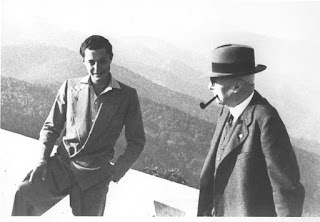
A rare picture of a young Gianni Agnelli (left) in conversation with his grandfather, Giovanni
A rare picture of a young Gianni Agnelli (left) in
conversation with his grandfather, Giovanni
Giovanni Agnelli remained involved with the company until his death in 1945 at the age of 79, although for many years the man at the helm had been Vittorio Valletta, his trusted lieutenant, who had assumed control when Giovanni’s future was compromised by his close ties with the Fascist regime. 

Control would probably have passed to Giovanni’s only son, Edoardo, but he was killed in a plane crash in 1935. In the event, Valletta became president with Giovanni’s death and remained in that role until 1966, when at the age of 83 he finally handed over to Gianni Agnelli, the founder’s grandson.

The Agnelli family's direct operational control of Fiat ended in 2004, a year after the death of Gianni. The last Agnelli to lead Fiat as CEO was Umberto Agnelli, who passed away in May 2004, although the family remains involved, through John Elkann, Gianni Agnelli’s grandson.

Elkann took on a key leadership role and stayed in a prominent management position after the 2014 merger with Chrysler created Fiat Chrysler Automobiles and Fiat as an independent family business ceased to be.

Fiat Chrysler evolved in 2021 into Stellantis, of which Elkann is chairman. Elkann is also CEO of Exor, the Agnelli family’s investment company, which owns major stakes in Stellantis as well as Ferrari, Juventus FC, and The Economist.

The company name still sits proudly above the original factory in Corso Dante, which opened in 1900
The company name still sits proudly above the
original factory in Corso Dante, which opened in 1900
Travel tip:

The original Fiat factory on Corso Dante in Turin still exists today and is open to the public as a museum, the Centro Storico Fiat, which has a large number of exhibits, including cars and aeroplanes, outlining the company’s history up to about 1970. The Fiat exhibits are part of the Museo Nazionale dell’Automobile. Tickets cost €10 for adults, with opening times from 10am until 6pm. The factory opened in 1900 and was active for 22 years before the massive Lingotto plant came into use, and became associated with the Fiat Brevetti car.  The museum can be found at the junction of Corso Dante and Via Gabriele Chiabrera about 5km (3 miles) from the centre of Turin, near the southern end of the Parco del Valentino and a few streets from where the Ponte Isabella crosses the Po river.

The Palazzo Cacherano di Bicherasio, which dates back to 1636, now houses a bank
The Palazzo Cacherano di Bicherasio, which
dates back to 1636, now houses a bank
Travel tip:

The Palazzo Cacherano di Bricherasio, located on Via Lagrange in central Turin, between Via Giovanni Giolitti and Via Cavour, was built in 1636 as a noble residence in the Contrada dei Conciai. It became the home of the now-extinct Cacherano di Bricherasio family in 1855, known for their military honours and cultural patronage. Count Emanuele Cacherano di Bricherasio, a key figure in Italy’s early automotive industry, hosted the founding meeting of Fiat in his study, making the palace a cradle of industrial history. His sister Sofia, a painter and patron, transformed the residence into a vibrant cultural salon, welcoming artists such as Lorenzo Delleani and Arturo Toscanini. After World War Two, the palace housed a school and then an exhibition venue for the Palazzo Bricherasio Foundation, following its restoration in 1994. Since 2010, it has housed Banca Patrimoni Sella & C, preserving its architectural elegance and historical significance while remaining partially open to the public for guided visits.

Also in this day:

138: Antoninus Pius becomes Roman Emperor following the death of Hadrian

1576: The murder of noblewoman Eleonora di Garzia di Toledo, wife of Don Pietro de’ Medici

1593: The death of painter Giuseppe Arcimboldo

1934: The birth of fashion designer Giorgio Armani


Home


.


13 May 2025

Luciano Benetton - entrepreneur

Co-founder of iconic clothing and accessories brand

Luciano Benetton, who turns 90 today, has been active in the business much of his life
Luciano Benetton, who turns 90 today, has
been active in the business much of his life
The entrepreneur Luciano Benetton, co-founder of a family clothing company that became a worldwide success story in the 1980s and 1990s, was born in Treviso on this day in 1935.

Along with his sister, Giuliana, and their brothers, Carlo and Gilberto, Luciano launched the Benetton Group in 1965, specialising at first in colourful knitwear. From its original store in Belluno, a town in the northern part of the Veneto region, opened in 1965, the group enjoyed a rapid expansion in the 1970s and 80s and at the peak of its success had as many as 6,000 outlets around the world.

Although it has faced tougher trading conditions in more recent years, the group continues to preside over more than 3,500 stores.

Since 1989, the Benetton empire has traded under the name United Colors of Benetton, a brand adopted as part of a long-running collaboration with photographer Oliviero Toscani, who masterminded the group’s provocative and often controversial advertising campaigns.

The Benetton story began in 1955 when Luciano, who had left school at age 14 to work in a clothing store after the death of his father, was working as a knitwear salesman. He had the idea to launch his own business, selling sweaters based on the colourful garments that his sister, Giuliana, designed and knitted for friends and family.


To raise the money needed to buy a knitting machine, he and Giuliana reportedly sold Luciano's accordion and a bicycle belonging to Carlo.  Giuliana was responsible for making the sweaters, which Luciano sold to shops in and around Treviso, using his own bicycle to deliver them.

The subtext of much of Benetton's advertising has reflected the company's embrace of diversity
The subtext of much of Benetton's advertising has
reflected the company's embrace of diversity

As the business grew, they were joined by Carlo and Gilberto. Together, they launched the Benetton Group and opened the company’s first factory in 1965 in Ponzano Veneto, a small town about 6.5km (four miles) north of Treviso, where the group still has its headquarters at the historic Villa Minelli.

The first Benetton shop was opened shortly afterwards, about 70km (43 miles) further north in the beautiful and prosperous town of Belluno in the Eastern Dolomites.  

More outlets were opened in Italy and in 1969 Benetton ventured outside their home country to open a store in Paris. By the early 1970s, the company had a network of 200 shops around Europe. 

The business steadily grew throughout the decade, expanding its range beyond simply sweaters. In 1974, the French fashion company, Sisley, became part of the Benetton Group. 

The first Benetton store in New York opened in 1980, followed by a store in Tokyo in 1982. By the mid-1980s, a Benetton store was opening almost daily. This decade, and the early ‘90s, saw the business at its peak.

United Colors of Benetton was adopted as the company's brand name from the late 1980s
United Colors of Benetton was adopted as the
company's brand name from the late 1980s
Apart from the quality and originality of its clothing ranges, the Benetton name maintained its high profile thanks to the controversial advertising campaigns devised by Toscani, appointed by Luciano as his creative director.

Luciano wanted his advertising to reflect the company’s values, namely having a social conscience and being advocates of tolerance and diversity, but much of it was designed to shock, particularly after Toscani became involved. Billboard images such as those showing a duck drenched with crude oil, a naked man with “HIV Positive” branded on his buttock, and an unwashed new-born baby with umbilical cord still attached, all labelled with United Colors of Benetton, became the company’s stock in trade. 

The campaigns prompted a number of lawsuits in different countries but at the same time ensured the Benetton brand remained in the public eye. 

Luciano also identified sports sponsorship as a way to consolidate public awareness of the company name. After first sponsoring Treviso’s rugby team, AS Rugby Treviso, which became a major force in Italian rugby, Benetton became an even bigger influence in motor racing.

Benetton took their colourful image into the world of Formula One racing with considerable success
Benetton took their colourful image into the world
of Formula One racing with considerable success
Benetton sponsored Formula One teams starting with Tyrrell in 1983, then Alfa Romeo, and eventually set up their own Benetton F1 team, which competed from 1986 to 2000 and achieved significant success under the management of Flavio Briatore. Michael Schumacher won the first two of his seven world championships driving for Benetton. 

As the clothing market became more challenging, Benetton’s success began to wane in the 2000s and Luciano and the other family members stepped back from management roles, although Luciano would twice return to the boardroom out of concern for the company’s ailing fortunes, resigning from his latest stint only in 2024, at the age of 89.  

Away from business, Luciano Benetton served as a senator for the Italian Republican Party from 1992 to 1994, while his Fondazione Benetton Studi Ricerche has developed the Imago Mundi Collection, a vast collection of contemporary art.

In Treviso, where he still lives, his Gallerie delle Prigioni - so called because it is housed in an historic prison from the Habsburg era - provides an exhibition space dedicated to contemporary culture. 

Piazza dei Signori is the beautiful square at the centre of the city of Treviso
Piazza dei Signori is the beautiful square
at the centre of the city of Treviso
Travel tip:

For many visitors to Italy, Benetton’s home town of Treviso in the Veneto is no more than the name of the airport at which they might land en route to Venice, yet it is an attractive, historic city worth visiting in its own right, rebuilt and faithfully restored after the damage suffered in two world wars. Canals are a feature of the urban landscape – not on the scale of Venice but significant nonetheless – and the Sile river blesses the city with another stretch of attractive waterway, lined with weeping willows. The arcaded streets fanning out from the central square, Piazza dei Signori, have an air of refinement and prosperity and there are plenty of restaurants, as well as bars serving prosecco from a number of vineyards. The prime growing area for prosecco grapes in Valdobbiadene is only 40km (25 miles) away to the northeast.  Treviso also claims to be the birthplace of the famous Italian dessert, tiramisu. 

Benetton's headquarters remains the Villa Minelli in Ponzano Veneto, which the family bought in 1968
Benetton's headquarters remains the Villa Minelli in
Ponzano Veneto, which the family bought in 1968
Travel tip:

The Benetton Group headquarters is located in Villa Minelli, in Via Villa Minelli in Ponzano Veneto. It is a building complex built in the 17th century by a family of merchants, which includes a central villa, two colonnades and a small church. After the Minelli family, the villa was abandoned for over 150 years until the Benetton family purchased it in 1968. The renovation project was granted to Afra and Tobia Scarpa, the same architects responsible for the construction of the company’s first factory, the Maglierie Benetton, also in Ponzano Veneto. The renovation took over 15 years to complete. The architects won praise for preserving the solemnity of the villa while also transforming it into an efficient working place, with offices and meeting rooms. The villa is surrounded by vineyards and the park.

Also on this day:

1726: The death of singer and composer Francesco Pistocchi

1804: The birth of Venetian revolutionary leader Daniele Manin

1909: The first Giro d’Italia cycle race

1938: The birth of politician Giuliano Amato 


Home


27 December 2024

Giovanni Battista Pirelli - industrial entrepreneur

Founder of the giant Pirelli tyre company

Giovanni Battista Pirelli began his company with 45 employees
Giovanni Battista Pirelli began
his company with 45 employees
Giovanni Battista Pirelli, who in 1872 founded a business making products in rubber that would in time became the sixth largest tyre producer in the world, was born on this day in 1848 in Varenna, a village on the shore of Lake Como about 85km (53 miles) north of Milan.

Launched in January 1872 as GB Pirelli & Co, the firm initially produced a range of goods involving rubber, which included drive belts and hoses, underwater electrical and telegraph cables, waterproof clothing and footwear.

It began to manufacture tyres, first for bicycles, in around 1890, followed by motor vehicles in 1901. Pirelli & Co SpA was listed on the Borsa Italiana, the Milan-based Italian stock exchange, in 1922. It was the first Italian company to be listed on the New York Stock Exchange in 1929.

A fervent supporter of the Risorgimento movement, Giovanni Battista Pirelli fought in The Third War of Italian Independence, signing up with the third regiment of Garibaldi's volunteers while still a student, helping the Kingdom of Italy’s forces defeat the Austrians at the Battle of Monte Suello near Brescia in July 1866.

The eighth of 10 children born to baker Santino Pirelli and housewife Rosa Riva, Giovanni attended schools in Varenna - then itself part of the Austrian Habsburg empire - and Como and he was able to pursue higher education in Milan despite his father dying when he was only eight years old.

The elongated 'P' of the Pirelli logo has been a feature
of the tyre company's advertising since 1906
After studying physics and mathematics at the University of Pavia, he entered the Higher Technical Institute in Milan (later Milan Polytechnic) in 1867. At first he studied civil engineering before opting for industrial engineering in his second year. His marks in acquiring a diploma of industrial engineering were so impressive he was granted one of the two 3,000-lire scholarships established by the Milanese noblewoman Teresa Berra Kramer.

This allowed him to embark on a tour of Europe with the aim of identifying and studying a new industry. His travel plans were often disrupted by the political turmoil in parts of Europe at the time but the tour was a success nonetheless; Pirelli came into contact with some of the foremost protagonists of European industrial development.  His first inclination was to become involved with textiles but after taking advice from his professor, the engineer Giuseppe Colombo, he identified the nascent elastic rubber industry as the one he wanted to pursue.


When he returned to Italy, after Colombo had helped him raise the capital to set up his company, Pirelli appointed Antoine Aimé Goulard, a contact he had made in France who understood the rubber industry, as his technical director, responsible for instructing Pirelli in the technical processes used for manufacturing items in elastic rubber and for training employees.

The first Pirelli factory in Milan opened for the production of rubber products in June, 1873
The first Pirelli factory in Milan opened for the
production of rubber products in June, 1873

The company’s first factory, near Porta Nuova in the northeastern quarter of Milan, began operations in June, 1873, with five office staff and 40 workers in a 1,000sqm plant. The first articles produced were pipes, belts, valves, and gaskets.  It was the first factory in Italy to produce rubber goods and one of the first in Europe.

Built alongside the Sevesetto stream, on more or less the site where the Pirelli Tower skyscraper stands today, the factory grew to employ more than 250 people in less than ten years.

Committed to the future prosperity of Milan, Pirelli became involved with local politics, joining the city council, where he remained from 1877 until 1889. He was concerned with the problems of the neighbourhood where he lived and where the factory was located. As a member of the city's Chamber of Commerce, he gained enough experience to become a driving force in a successful campaign to reform the tariff laws that were holding back the development of the company.  In 1909, King Victor Emmanuel III of Italy appointed Pirelli as a Senator of the Kingdom of Italy.

The company expanded rapidly from the 1880s after Pirelli began the industrial production of electrical conductors and underwater electric cables. Pirelli laid the first submarine telegraph cables in the Red Sea and the Mediterranean on behalf of the Italian government, and was engaged by the Spanish government to lay submarine cables between Spain, the Balearic Islands and Morocco. 

But it was Pirelli’s identifying the potential of tyre manufacturing that was to turn Pirelli & Co into an industrial giant. In 1891 it began the production of bicycle tyres and in 1901 tyres for cars and motorcycles. 

The Pirelli Family tomb in the Monumental Cemetery in Milan
The Pirelli Family tomb in the
Monumental Cemetery in Milan
The company’s foreign expansion began with a subsidiary factory opened in Spain in 1902, shortly before Pirelli’s two sons, Piero and Alberto, joined the business. Factories were built in countries across Europe, in Great Britain, Turkey and the Americas. Eventually the Pirelli businesses at home and abroad employed more than 55,000 people. 

Pirelli adopted the famous elongated ‘P’ in the company logo in 1906, and began his company’s long and successful association with motor sport. The motor car race from Peking to Paris in 1906 was won on Pirelli tyres. Today, Pirelli is the exclusive tyre partner for the FIA Formula One World Championship and for the FIM World Superbike Championship.

More recently, the company was the primary sponsor of Inter-Milan football club between 1995 and 2021 and has sponsored other football teams in Europe and South America. 

Although it is 92 years since Giovanni Battista Pirelli died - he was laid to rest in the Monumental Cemetery of Milan - the company name lives on, albeit since 2015 under Chinese ownership. It employed 31,000 people at 19 facilities in 12 countries with a market capitalisation of $6.69 billion as of May, 2024. 

The Pirelli family tomb at the Monumental Cemetery is marked by a monument, the Edicola Pirelli, designed by the Milan architect Luca Beltrami.

The beautiful waterfront at the Lake Como
village of Varenna, Pirelli's birthplace
Travel tip:

Established by local fishermen in the eighth century, Varenna, where Pirelli was born, is an enchanting village nestled on the eastern shore of Lago di Como in northern Italy, located about 23km (14 miles) along the shore from the town of Lecco just opposite the peninsula of land where the lake divides into its Lago di Como and Lago di Lecco forks. Varenna offers stunning views of the lake and surrounding mountains, while the village is known for the vibrant, pastel-coloured houses that line the waterfront, and the narrow, steep streets leading away from the water. Historic sites include the 11th-century Chiesa di San Giovanni Battista and the beautiful Villa Monastero, which features well tended gardens and a museum. The Passeggiata degli Innamorati (Lovers' Walk) is a romantic lakeside promenade perfect for leisurely strolls.  Varenna hosts cultural events and festivals throughout the year, celebrating Italian traditions and arts.

The Pirelli Tower used to be the tallest building in Italy
The Pirelli Tower used to be
the tallest building in Italy
Travel tip:

In 1950, Alberto Pirelli, who had succeeded his father, Giovanni Battista Pirelli as president and owner of the Pirelli tyre company, commissioned the architect Gio Ponti to build a skyscraper in the area where the corporation's first factory was located in the 19th century. Ponti was assisted in the project by Pier Luigi Nervi and Arturo Danusso. Built between 1956 and 1958, it became a symbol not only of Milan, but also of the economic recovery of Italy after the devastation of World War II. At 127m (417 feet) and with 32 floors, it was initially the tallest building in Italy until the pinnacle of the Mole Antonelliana in Turin was restored in 1961. Characterized by curtain wall façades and tapered sides, it was among the first skyscrapers to abandon the customary block form and was hailed as one of the most elegant tall buildings in the world. In a career that spanned six decades, Ponti completed more than 100 architectural projects around the world, including 46 in Milan, his home city, but the Pirelli Tower is still his most famous. Pirelli sold the building to the Lombardy regional government in 1978. 

Also on this day:

1660: The birth of Saint Veronica Giuliani

1888: The birth of tenor Tito Schipa

1983: Pope John Paul II visits prison to forgive would-be assassin

1985: Terror attack at Rome’s Fiumicino Airport 


Home


4 March 2024

Alfonso Bialetti – engineer

The genius behind one of the most quintessentially Italian style symbols

Alfonso Bialetti (right) pictured in his workshop at his Crusinallo foundry in the 1920s
Alfonso Bialetti (right) pictured in his workshop
at his Crusinallo foundry in the 1930s
Alfonso Bialetti, who became famous for designing the aluminium Moka Express coffee maker, died on this day in 1970 in Omegna in Piedmont.

Originally designed in 1933, the Moka Express has been a style icon since the 1950s, and it remains a famous symbol of the Italian way of life to this day.

Bialetti was born in 1888 in Montebuglio, a district of the Casale Corte Cerro municipality in Cusio, Piedmont. As a young man, he is said to have alternated between assisting his father, who sold branding irons, and working as an apprentice in small workshops.

He emigrated to France while he was still young and became a foundry worker, acquiring metalworking skills by working for a decade in the French metal industry.

In 1918 he returned to Montebuglio, opened a foundry in nearby Crusinallo and began making metal products. This became the foundation of Alfonso Bialetti & Company.

Moka pots made today have the same design and still carry the L'omino con i baffi logo
Moka pots made today have the same design
and still carry the L'omino con i baffi logo

He came up with the brilliant idea of the Moka Express, which was to revolutionise the process of making coffee in the home.  The process by which hot water in the pot’s lower chamber is forced by the pressure of steam to percolate through a funnel containing coffee grounds is said to have been influenced by Bialetti’s observations of a washing machine used by his wife.

The name given to his invention was inspired by the city of Mokha in Yemen, one of the world’s leading centres for coffee production.

The Moka’s classic design, with its eight-faceted metallic body, is still manufactured by the Bialetti company today and it has become the world’s most famous coffee pot. The use of aluminium was a new idea at the time because it was not a metal that was traditionally used for domestic purposes.

The design transformed the Bialetti company into a leading Italian coffee machine designer and manufacturer.

At the start, Bialetti sold the Moka coffee pot only at local markets, but many millions of Moka coffee pots were to be sold throughout the world during the years to follow. The Moka express was small, cheap to produce, and easy to use, and made it possible for many more people to brew good coffee in their own homes.

When Alfonso Bialetti’s son, Renato, took over the business, he initiated a big marketing campaign to boost the profile of the Moka coffee pot and to ensure the popularity of the Bialetti brand in the face of many copy-cat products coming on to the market. 

Key to that campaign was the introduction of a Moka ‘trademark’ on every Bialetti coffee pot in the form of a cartoon caricature - L'omino con i baffi - the little man with the moustache - his right arm raised with finger outstretched as if summoning a waiter, based on a humorous doodle of Renato drawn by Paul Campani, an Italian cartoonist.

Alfonso Bialetti was the grandfather of Alberto Alessi, president of Alessi Spa, the famous Italian design house.

In 2007, Bialetti’s company was listed on the online stock market of the Italian stock exchange.

Montebuglio sits on a hillside a short distance from the picturesque Lago d'Orta
Montebuglio sits on a hillside a short distance
from the picturesque Lago d'Orta
Travel tip: 

Montebuglio, where Alfonso Bialetti was born, is a tiny village occupying a hillside location overlooking the valley of the Strona river in Piedmont, a short distance from Lago d’Orta, one of the smaller lakes of the Italian ‘lake district’ but no less picturesque than its better-known neighbour, Lago Maggiore, which lies a few kilometres to the east, the other side of Monte Falò.  Montebuglio is a parish of the municipality of Casale Corte Cerro, located 15km (nine miles) from Verbania, 50km (31 miles) from the Swiss town of Locarno and 100km (62 miles) northwest of Milan.  The popular Lake Maggiore resorts of Baveno and Stresa are within a short distance of Casale Corte Cerro. The largely wooded countryside around the area is crossed by a dense network of paths, by which walkers are able to reach vantage points on the steep, mountainous slopes from which, in clear weather, it is possible to enjoy a view that includes the Orta, Maggiore, Varese, Monate and Comabbio lakes. 

Stay in Casale Corte Cerro with Booking.com

Omegna is a beautiful and lively town on the north side of Lake Maggiore's neighbour, Lake Orta
Omegna is a beautiful and lively town on the north
side of Lake Maggiore's neighbour, Lake Orta
Travel tip: 

Omegna, where Bialetti spent the final years of his life and where the Alessi company still has its headquarters, is a lively town on the north side of Lake Orta, an area of outstanding natural beauty where tree-lined mountains meet the shimmering water of the lake. Omegna’s civilisation dates back to the Bronze Age, with settlements subsequently established there by the Ligures - a tribe from Greece - the Celts and Romans. Omegna, which is popular in the summer months, when it hosts many festivals and concerts, is sometimes referred to as the Riviera di San Giulio, named after an early Christian saint buried on an island in Lake Orta.  Among places to visit are a museum of the town’s history, the Romanesque church of Sant’Ambrogio and the Porta della Valle, sometimes called Porta Romana, one of five ancient protective gates still standing. 

Find accommodation in Omegna with Booking.com

More reading:

The Turin bar and hotel owner who invented the espresso machine 

The former peasant farmer who founded the Lavazza coffee company

The opening of Venice’s historic Caffè Florian

Also on March 4:

1678: The birth of composer Antonio Vivaldi

1848: The first Italian Constitution is approved by the King of Sardinia

1916: The birth of writer and novelist Giorgio Bassani

1943: The birth of singer-songwriter Lucio Dalla

(Picture credits: Montebuglio by Bart292CCC; Omegna by Fabio Pocci; via Wikimedia Commons)


Home


13 October 2023

Eugenio Barsanti - engineer

Created the first working internal combustion engine

A model of the Barsanti-Matteucci engine pictured on display at a museum in Milan
A model of the Barsanti-Matteucci engine
pictured on display at a museum in Milan
The engineer Eugenio Barsanti, whose internal combustion engine was the first working example of the technology known to have been produced, was born on this day in 1821 in Pietrasanta, a town in northern Tuscany.

The Belgian-French engineer Étienne Lenoir and the German Nicolaus Otto are credited with the first commercially successful internal combustion engines, but Barsanti’s machine, which he developed with partner Felice Matteucci, was unveiled in 1853 - six years before Lenoir’s and eight years ahead of Otto’s.

Barsanti might have achieved commercial success himself but shortly after reaching an agreement with a company in Belgium to produce his machine on a commercial scale he contracted typhoid fever, from which he never recovered.

A rather sickly child, known by his parents as Nicolò, Barsanti took the name Father Eugenio after entering the novitiate of the Piarists, the oldest Catholic religious order dedicated to education, where was ordained as a priest.

He took a teaching position at Collegio San Michele in Volterra. It was there, while lecturing on the explosive energy created by mixing hydrogen and air that he realised the potential of using combustible gases to lift the pistons in a motor.

He developed the idea further after meeting Matteucci, an engineer, while teaching at an institute in Florence. 

A postage stamp issued to mark the 150th anniversary of the engine's invention
A postage stamp issued to mark the 150th
anniversary of the engine's invention
After exhibiting their first engine at the prestigious Accademia dei Georgofili in Florence to much excitement, Barsanti and Matteucci travelled to London to obtain a patent. 

By 1856, Barsanti and Matteucci had developed a two-cylinder five horsepower motor and two years later built a two-piston engine designed to provide a source of energy to drive machinery in factories and workshops.

The Barsanti-Matteucci engine was quicker and more efficient than the one developed by Lenoir and won a silver medal from the Institute of Science of Lombardy. They believed it could also be used in the propulsion of ships as an alternative to steam.

After the prototype of their engine was built in Milan, the two were all set to go into mass production at a plant near Liège in Belgium owned by the English industrialist John Cockerill when Barsanti fell ill with typhoid fever. He died on April 18, 1864.

After his partner’s death, Matteucci found himself unsuited to the demands of running a commercial business and failed to secure the contracts necessary to make mass production viable. He returned to his previous work in hydraulics. 

Nicolaus Otto, on the other hand, had a background in business, giving him an edge not only in marketing skills but in the contacts he could approach for investment. He was the first to enjoy significant commercial success producing internal combustion engines and tends to be credited with its invention.

Barsanti's ashes are buried at the  Basilica of Santa Croce in Florence
Barsanti's ashes are buried at the 
Basilica of Santa Croce in Florence
Matteucci’s arguments that Otto’s engine was clearly similar to his and Barsanti’s were largely ignored. Nonetheless, many of the documents relating to the original patents he and Barsanti obtained are preserved in the Museo Galileo in Florence, while Barsanti’s achievements are acknowledged in Italy, where a postage stamp was issued to commemorate the 150th anniversary of the Barsanti-Matteucci engine.

In 1954, Barsanti's ashes were moved from the Church of San Giovannino degli Scolopi, the small, Piarist church in Florence, to the Basilica of Santa Croce, to rest alongside the remains of such illustrious Italians as Michelangelo, Galileo, Machiavelli, the poet Ugo Foscolo and the composer Gioachino Rossini among many others.

Copies of Barsanti’s engines can be seen at the Osservatorio Ximeniano in Florence and the Leonardo da Vinci National Museum of Science and Technology in Milan.

The wide, sandy beach at Marina di Pietrasanta is 5km long and attracts thousands of visitors
The wide, sandy beach at Marina di Pietrasanta
is 5km long and attracts thousands of visitors
Travel tip:

Pietrasanta, just north of Viareggio in the province of Lucca in Tuscany, still has part of its Roman wall, although as a mediaeval town it was not founded until 1255, expanding around the Rocca di Sala fortress of the Lombards. Its Duomo - the Collegiate Church of San Martino - dates back to the 13th century. Pietrasanta grew in importance in the 15th century due to its marble, the beauty of which was first recognised by the sculptor, Michelangelo, to be followed in later years by such artists as Fernando Botero, Joan Miró, Henry Moore, and Damien Hirst. The town declined during the 17th and 18th centuries, partly due to malaria, but underwent reconstruction in the 19th century. It has a pleasant central square, while the seaside resort of Marina di Pietrasanta is just 3km (1.9 miles) away.  Part of the Versilia coastline, Marina di Pietrasanta boasts some of the area's best beaches, stretching for 5km (3 miles).


The waterfront at Viareggio is notable for its many examples of Liberty-style architecture
The waterfront at Viareggio is notable for its many
examples of Liberty-style architecture
Travel tip:

Viareggio, which can be found just 13km (8 miles) south of Pietrasanta, is a popular resort also known for its excellent sandy beaches and for its carnival, a month-long event dating back to 1873 that runs from February through to March and features parades of giant papier-mache floats designed to represent well-known public figures. The Tuscan resort is also notable for its beautiful Liberty-style architecture, much of it built in its heyday in the late 19th and early 20th century, many examples of which thankfully survived heavy bombing in World War Two when the town was a target because of its shipbuilding industry.  The body of the English poet Shelley, who drowned at sea, was washed up on a beach near the resort in 1822.  He was cremated on the beach under the supervision of his friend, the poet Lord Byron. There is a monument to Shelley in the town’s Piazza Paolina.

Also on this day:

54: The death of Roman emperor Claudius

1687: The birth of architect Giorgio Massari

1815: The execution of Joachim Murat, former king of Naples

1884: The birth of anarchist Mario Buda

1988: The birth of sportsman and entrepreneur Piero Dusio

1985: The death of silent movie actress Francesca Bertini


Home


15 April 2023

Italy’s first nuclear reactor opens

Facility based on pioneer Enrico Fermi’s historic Chicago-Pile series

The Ispra-1 reactor was the first nuclear reactor to be built on Italian soil
The Ispra-1 reactor was the first nuclear
reactor to be built on Italian soil
The first nuclear reactor to be built on Italian soil was inaugurated on this day in 1959 at Ispra, a small town on the eastern shore of Lago Maggiore.

The facility, which preceded the first generation of nuclear power plants serving the need for clean, reliable and plentiful electricity sources for industrial and domestic use, was built purely for research purposes.

It was opened four years ahead of the country’s first commercial nuclear plant, at Latina in Lazio.

The 5 megawatt Ispra-1 research reactor, as it was titled, was modelled on the latest version of the Chicago-Pile 5 series developed by Enrico Fermi, the Rome-born nuclear physicist who created the world’s first nuclear reactor, the Chicago-Pile 1, following his discovery that if uranium neutrons were emitted into fissioning uranium, they could split other uranium atoms, setting off a chain reaction that would release enormous amounts of energy.

The Ispra-1 reactor was built by Italy’s National Nuclear Research Council. It was officially transferred to the European Community in March 1961, becoming a Joint Research Centre (JRC) of the European Commission. 

It was used for studies and research on core physics, new materials for the construction of nuclear power reactors, as well as neutron fluxes and their interaction with living matter.

Until the 1960s, much of Italy’s electricity had been generated from renewable sources. Although the first power plant in continental Europe, opened in Milan in 1883, was carbon-fuelled, the country’s abundance of mountains and lakes enabled it to develop a huge hydroelectric power sector.

The Trino Vercellese nuclear plant was named after the Italian nuclear pioneer Enrico Fermi
The Trino Vercellese nuclear plant was named
after the Italian nuclear pioneer Enrico Fermi
Fossil fuels began to take over in the 1960s to meet the needs of a growing population but there was a common belief that nuclear energy could provide, within only a few years, safely and economically, all the power that Italy needed. 

By 1964, three nuclear power plants had been built, all approximately 50km (31 miles) from major cities. They were at Trino Vercellese, north of Turin, at Sessa Aurunca in Campania, north of Naples, and at Latina, south of Rome.

Yet after the electricity sector in Italy was nationalised in 1962, investment in nuclear stalled. It was not until 1978 that a fourth nuclear power station, at Caorso in Emilia-Romagna, was completed.  The 1973 world oil crisis had prompted another round of enthusiastic plans for the nuclear sector, but again they were ultimately downgraded.

The most significant setback of all followed the Chernobyl disaster of 1986, fallout from which affected parts of northern Italy and was blamed for a decline in birth rate in 1987. The Italian government organised a referendum to gauge public feeling about the future of nuclear power, the results of which led to a decision to close two plants and terminate work on another.

Another referendum in 2011 following a nuclear accident in Japan confirmed that public opinion had not shifted and a new company was created to take charge of decommissioning all nuclear sites in Italy, including the research facility at Ispra.

The Cattedrale di San Marco is an example of Latina's architecture
The Cattedrale di San Marco is an
example of Latina's architecture
Travel tip:

Latina, where one of Italy’s now-decommissioned nuclear power stations was opened in 1963, is a city built during the Fascist era of the 1920s and 1930s when Mussolini’s government fulfilled a pledge to drain the inhospitable, mosquito-ridden Pontine Marshes, visitors to which frequently became infected with malaria. Built on that reclaimed land, and originally called Littoria when it was established in 1932, its stands as a monument to the architectural style that typified the era, which combined some elements of classicism, with its preponderance of columns and arches, with the stark lines of 1920s and 30s rationalism. It has a large number of monuments and edifices, including a town hall with a tall clock tower and a cathedral, designed by architects such as Marcello Piacentini and Angiolo Mazzoni. Renamed Latina in 1946, it has grown into a substantial city with a population of 126,000, making it the second largest city in Lazio after Rome.

Ispra's coastal pathways are popular with visitors to the Lago Maggiore town
Ispra's coastal pathways are popular with
visitors to the Lago Maggiore town
Travel tip:

Ispra, which sits on the eastern shore of Lago Maggiore about 25km (16 miles) west of its provincial capital, Varese, is an area popular with walkers for its lakeside footpaths, including the poetically named passeggiata dell’amore, and with golfers for the Parco del Golfo della Quassa. The Joint Research Centre still exists, despite the decommissioning of the nuclear plant. It comprises the Institute for the Protection and the Security of the Citizen (IPSC), the Institute for Environment and Sustainability (IES) and the Institute for Health and Consumer Protection (IHCP). The site itself is an area of natural preservation, covering an area of 157 hectares (390 acres) of pine, birch, oak and chestnut trees.


Also on this day:

1446: The death of architect Filippo Brunelleschi

1452: The birth of Renaissance genius Leonardo da Vinci

1754: The death of mathematician Jacopo Riccati

1882: The birth of anti-Fascist politician Giovanni Amendola


Home